Are Robot Vacuums Worth It in 2026? Honest Pros and Cons
Are robot vacuums worth it in 2026? Honest breakdown of who benefits, who doesn't, and what to expect from $200 to $800 robot vacuums.
Table of Contents
- Are Robot Vacuums Worth It in 2026? Honest Pros and Cons
- What Robot Vacuums Are Actually Good At
- The Honest Case Against Robot Vacuums
- Who Should Buy a Robot Vacuum
- Who Should Skip It and Why
- What You Get at Different Price Points
- Real-World Expectations: What No One Tells You
- Best Robot Vacuums at a Glance
- The Bottom Line
- Frequently Asked Questions
Are Robot Vacuums Worth It in 2026? Honest Pros and Cons
When robot vacuums first appeared in the early 2000s, they were novelty items. Expensive, loud, ineffective, and prone to getting stuck under the couch for days at a time. People bought them out of curiosity, watched them bump into furniture in circles, and quietly returned them.
That era is over.
In 2026, robot vacuums have genuinely matured into capable household tools. LiDAR navigation, self-emptying bases, simultaneous vacuuming and mopping, AI-powered obstacle avoidance, and multi-floor mapping have transformed the category from gimmick to appliance. The question is no longer “do robot vacuums work?” — they do. The question is whether one is actually worth it for you, in your specific home, with your specific cleaning needs and budget.
This guide gives you the honest answer.
What Robot Vacuums Are Actually Good At
Before getting into the trade-offs, it helps to understand what robot vacuums are genuinely built to do — and where they genuinely excel.
Daily Maintenance Without Any Effort
The clearest and most legitimate value proposition of a robot vacuum is automated daily maintenance. The single biggest problem with floor cleanliness in most homes is not deep-embedded dirt — it is the constant accumulation of surface dust, crumbs, pet hair, and debris that builds up between manual cleaning sessions.
A robot vacuum scheduled to run every morning while you are at work handles exactly this problem without you lifting a finger. You come home to floors that look and feel clean every single day. The effort required from you: zero. This is not a small thing.
Studies and user data consistently suggest that households with robot vacuums reduce the frequency of manual vacuuming by approximately 80%. That is not because the robot replaces deep cleaning — it does not — but because the constant light maintenance means surfaces never get to the point of requiring an urgent session.
Pet Hair and Dust Accumulation
If you have pets or live in a dusty environment, the daily maintenance benefit of a robot vacuum is amplified dramatically. Pet hair does not accumulate linearly — it multiplies. A single shedding dog or cat can coat a hardwood floor in a visible layer of fur within 24 hours during high-shedding seasons.
A robot vacuum running on a daily schedule eliminates this accumulation before it becomes a visible problem. For pet owners especially, this is where robot vacuums consistently earn strong reviews. The Tikom G8000 Max (4.4 stars, nearly 4,000 reviews) illustrates this well — with 5000Pa of suction and a 150-minute runtime, it handles pet-hair-heavy homes on hard floors and low-pile carpets without requiring owner involvement.
Works While You Are Away
One of the most underrated advantages of a robot vacuum is temporal flexibility. You can schedule it to run while you are at work, while you sleep, or during any window when the house is empty. It does not require you to be present, to move around the space, or to coordinate your schedule around cleaning.
This matters more than it sounds for busy households. A manual vacuuming session requires you to be home, mentally engaged, and physically active for 20–45 minutes depending on home size. A robot vacuum removes all of that entirely.
Low-Profile Cleaning Under Furniture
Most robot vacuums are 3–4 inches tall. They clean under sofas, beds, dressers, and entertainment centers that a standard upright vacuum literally cannot reach. The eufy RoboVac 11S Max (4.1 stars, 16,000+ reviews) stands at just 2.85 inches — one of the slimmest profiles available. Under-furniture dust accumulation, which is substantial in most homes, gets addressed on every cycle.

Tikom G8000 Max robot vacuum and mop combo delivers 5000Pa suction, 150-min runtime, and 4 cleaning modes for hard floors, carpets, and pet hair.
The Honest Case Against Robot Vacuums
The case for robot vacuums is real — but so are the limitations. Being honest about what they cannot do is just as important as understanding what they can.
They Cannot Replace Deep Cleaning
This is the most important thing to understand before buying: a robot vacuum is a maintenance tool, not a deep-cleaning tool.
A robot vacuum runs in a relatively thin, high-speed pass across your floors. It is excellent at picking up surface debris, dust, and pet hair. It is not designed to — and does not — perform the slow, high-pressure multi-pass agitation that a full-size upright vacuum uses to extract embedded dirt from carpet fibers.
If your carpets have ground-in dirt, deep-seated pet dander, or debris that has been compacted over weeks, a robot vacuum will not fix that. You will still need a powerful upright or canister vacuum for thorough periodic deep cleaning. Think of the robot as the maintenance between those sessions — not the replacement for them.
Struggles With Thick Carpet and Stairs
Most robot vacuums perform well on hard floors, tile, laminate, and low-pile to medium-pile carpets. They begin to struggle on high-pile, shag, or thick carpet where the brush head and suction geometry are not optimized for deep fiber penetration. The robot may slow down significantly, lose navigation accuracy, or fail to clean effectively on these surfaces.
Stairs are a firm limitation. No consumer robot vacuum currently available can clean stairs. The anti-fall sensors that prevent robots from tumbling down staircases also prevent them from cleaning stair risers or treads. If stairs are a significant part of your cleaning workload, a robot vacuum does not address that.
Multi-level homes can use a robot vacuum on each floor separately, but you need to manually move the unit or purchase multiple robots — adding both cost and complexity.
Requires Floor Preparation
A robot vacuum does not know the difference between a cable it should avoid and a small rug it should drive over. Before running a cycle, most owners need to do a quick prep pass: picking up loose cables, securing rug fringes, removing small items from the floor, and clearing low-hanging items that might confuse the robot’s sensors.
For households with children or simply chaotic floor situations, this prep work can erode some of the time savings. If your floors are regularly littered with toys, shoes, bags, and cables, a robot vacuum will get stuck, tangled, or confused far more often — and the experience will be frustrating rather than liberating.
Higher-end models with AI obstacle avoidance (like the Roborock QRevo QV35A) do a much better job navigating cluttered environments, but even these are not infallible.
Initial Investment of $150–$800+
Capable robot vacuums start around $150–$200 at the budget end. Mid-range models with smart navigation and app control run $300–$500. Premium models with self-emptying bases, LiDAR mapping, and simultaneous mopping can reach $700–$900+.
This is a meaningful upfront investment compared to a $50–$100 manual vacuum. If you are replacing a vacuum that already works fine, the financial case for a robot vacuum depends entirely on how much you value the time savings — and that is genuinely personal.

Roborock Qrevo QV 35A robot vacuum and mop with 8000Pa suction, all-in-one dock, anti-tangle brushes, and dual spinning mops. Smart LiDAR navigation.
Who Should Buy a Robot Vacuum
Understanding your lifestyle and home situation is the key to knowing whether a robot vacuum will genuinely earn its keep.
You have pets that shed. This is the strongest use case. Pet hair accumulation is a daily battle that a robot vacuum handles silently and automatically. For households with one or more shedding dogs or cats on hard floors or low-pile carpet, a robot vacuum that runs daily will visibly transform the baseline cleanliness of your floors. This is one of the clearest value propositions in the entire product category.
You travel frequently or have an irregular schedule. If you are regularly away from home for days at a time, coming back to clean floors instead of a dust-and-hair accumulation is a genuine quality-of-life improvement. Scheduling a robot to run while you are away means you return to a maintained home.
You live in a mostly open-plan single-level home. Robot vacuums are most effective in homes where the floor layout is relatively clear and navigation is uncomplicated. Open-plan spaces on a single level are ideal — the robot can map and cover the entire space efficiently without the confusion of tight corners, multiple levels, or complex furniture arrangements.
You have hard floors as your primary surface. Robot vacuums perform at their best on hard floors: hardwood, tile, laminate, and vinyl plank. If 70% or more of your floor area is hard surface, a robot vacuum will deliver excellent, consistent results.
You have a busy schedule and genuinely find vacuuming a burden. The time savings argument is real for people with demanding jobs, children, or simply full lives. If vacuuming is a task that consistently falls to the bottom of your priority list, a robot vacuum that runs automatically removes it from your mental load entirely. That has real value even if you cannot quantify it precisely.
You or a family member have mobility limitations. For elderly individuals, people with chronic back pain, arthritis, or mobility challenges, a robot vacuum can make a meaningful practical difference in maintaining floor cleanliness without physical exertion.
Who Should Skip It and Why
The case against a robot vacuum is just as specific as the case for one.
Your home is primarily high-pile or shag carpet. Robot vacuums are not optimized for thick carpet. The suction-to-coverage tradeoff means they will run slower, struggle to navigate, and miss embedded debris. A powerful upright vacuum used weekly will outperform a daily robot run on these surfaces.
You have multiple stories with significant cleaning needs on each level. Moving a robot vacuum between floors manually, or buying multiple units, adds friction and cost that may not justify the investment. A well-executed 30-minute manual vacuum session on carpeted stairs and multiple floors may serve you better.
Your floors are consistently cluttered with objects. Cables, toys, shoes, and small objects are the natural enemy of a robot vacuum. If floor prep before every run takes 10–15 minutes, you are replacing one chore with another. Higher-end models reduce this problem, but do not eliminate it entirely.
You are on a tight budget and have modest cleaning needs. If you live in a small apartment, vacuum once a week without much trouble, and do not have pets or allergies, a $200 robot vacuum is hard to justify. A $50 lightweight stick vacuum that you use manually will likely serve you better and give you more control over the result.
You want deep carpet cleaning. If embedded dirt, allergens, and deep-fiber extraction are your primary concern, a robot vacuum is not the right primary tool. Budget for a powerful upright or canister vacuum first, and consider a robot vacuum as a complementary addition later.
What You Get at Different Price Points
$150–$250: Entry Level — Worth It for Simple Homes
At this price, you get basic robot vacuum functionality that works reliably on hard floors and low-pile carpet. Expect random or basic gyroscope navigation (not laser-mapped), no self-emptying base, moderate suction in the 2000–5000Pa range, basic app control or remote control, and 90–120-minute battery life.
The eufy RoboVac 11S Max is a strong example: 4.1 stars from over 16,000 buyers, a 2.85-inch ultra-slim profile that reaches under almost any furniture, BoostIQ technology that automatically increases suction on carpet, and a 100-minute runtime. No Wi-Fi or app is required — just a remote control. It runs quietly and handles daily maintenance on hard floors and area rugs without complication.
The Tikom G8000 Max at 4.4 stars takes the budget case a step further with 5000Pa of suction, a 150-minute runtime, and both vacuum and mop functionality — all for well under $250. Four control methods (app, remote, voice, button) make it accessible to everyone in the household.
Best for: Apartments, single-story homes with hard floors, light pet hair, straightforward layouts. Not ideal for large homes or complex carpet coverage.
$300–$500: Mid-Range — The Sweet Spot for Most Buyers
This is where the experience of owning a robot vacuum changes substantially. At this price range, you gain LiDAR or structured light navigation that maps your home accurately, app-based zone control (set no-go zones, prioritize specific rooms), reliable obstacle detection, simultaneous vacuum and mop functionality, and battery runtime sufficient for most homes.
The Uninell UR3 is an excellent example of what this range now delivers: 4.6 stars, 7000Pa suction with Auto-Carpet Boost, 360-degree LiDAR navigation, a self-emptying base with 90-day capacity, and a 180-minute runtime covering up to 2,000 square feet. 3-in-1 sweep, vacuum, and mop functionality in a single session. Multi-floor mapping for up to five separate floor plans. At this price, you get a robot that genuinely manages your home rather than just running laps around it.
The ROPVACNIC S1 (4.5 stars) also demonstrates the value available at the lower end of this tier: 5200Pa suction, electronically controlled water flow for precise mopping, anti-tangle brush design for pet owners, and full app and voice control including Alexa and Google Assistant.
Best for: Families with pets, multi-room homes, anyone who wants set-it-and-forget-it automation with smart scheduling and zone control.
$600–$900+: Premium — Serious Technology, Premium Convenience
Above $600, you enter the tier where every friction point has been engineered away. Self-emptying bases that hold 60–90 days of debris without manual intervention. Self-washing mop systems that rinse and dry the mop pad automatically between passes. AI-powered obstacle recognition that identifies cables, shoes, and pet waste. Carpet detection that automatically lifts the mop pad to avoid wetting rugs. 360-degree LiDAR with centimeter-level precision mapping.
The Roborock QRevo QV35A (4.3 stars, 1,400+ reviews) represents this tier: 8000Pa of suction through PreciSense LiDAR navigation, 200 RPM dual-spinning mops with 10mm mop lift on carpet, 30 adjustable water flow levels, coverage of up to 3,552 square feet, and multi-floor mapping for up to four levels. The self-emptying dock holds 2.7 liters — approximately 10 weeks of debris. This is a complete automated floor care system, not just a vacuum.
Best for: Large homes, households that place very high value on convenience, anyone willing to pay for a near-zero-maintenance experience.
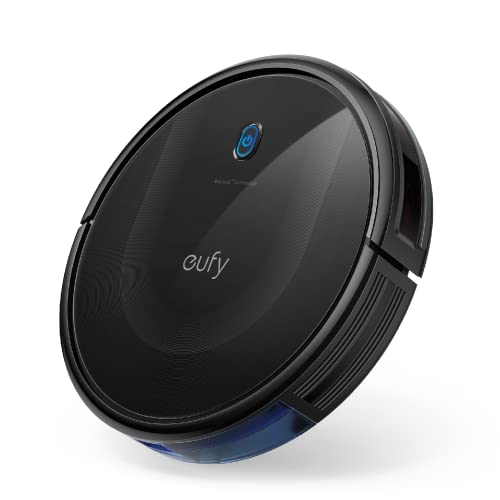
eufy RoboVac 11S Max super-thin robot vacuum with BoostIQ technology, 100-min runtime, and quiet operation. Ideal for hard floors and medium-pile carpets.
Real-World Expectations: What No One Tells You
The first week requires patience. Most smart robot vacuums need one to three complete runs to build an accurate map of your home. Initial runs may be slower or less efficient as the robot learns the layout. Give it time before judging performance.
Dustbin emptying is still required. Unless you buy a model with a self-emptying base, you will need to empty the robot’s onboard dustbin after each run or every few runs. For small homes, this is a minor 30-second task. For larger homes with pets, it can be more frequent. Factor this into your expectations.
Battery runtime claims are optimistic. Manufacturers typically cite runtime on hard floors in quiet mode. Real-world runtime — on mixed surfaces, with carpet boost engaged, in standard or max mode — is often 20–30% shorter. A robot rated for 150 minutes may cover a 1,500 square foot home in one session; a 2,500 square foot home may require a mid-session recharge.
Maintenance matters. Side brushes need replacement every 3–6 months. Filters require cleaning weekly and replacement every few months. The main brush roll needs periodic clearing of hair tangles even on anti-tangle designs. Factor in approximately $20–$50 per year in maintenance parts for most models.
They will not get every corner perfectly. Round robots have a geometric limitation — they cannot clean into 90-degree corners completely. Most leave a small crescent of debris in tight corners that requires occasional manual attention.
Best Robot Vacuums at a Glance
| Model | Rating | Price Range | Best For |
|---|---|---|---|
| Uninell UR3 | 4.6 stars | $300–$400 | Large homes, pet owners, LiDAR navigation |
| ROPVACNIC S1 | 4.5 stars | $150–$250 | Budget buyers, mopping, app control |
| Tikom G8000 Max | 4.4 stars | $150–$230 | Simple homes, budget, long runtime |
| Roborock QRevo QV35A | 4.3 stars | $600–$800 | Premium coverage, self-emptying, mopping |
| eufy RoboVac 11S Max | 4.1 stars | $150–$200 | Small homes, slim profile, quiet, simple |
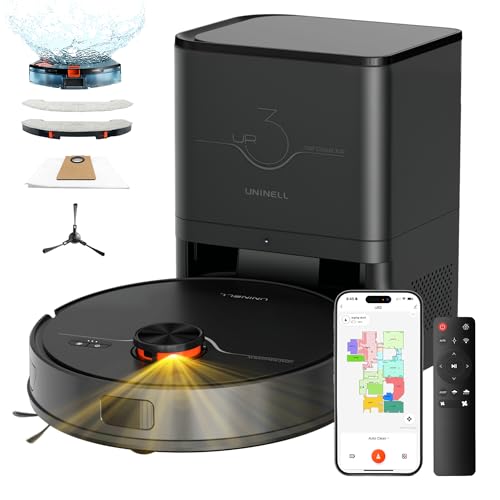
Uninell UR3 robot vacuum and mop combo with 7000Pa suction, LiDAR navigation, self-emptying base, and 180-min runtime. Full expert review.
The Bottom Line
Are robot vacuums worth it in 2026? For the right household, they are one of the most practically valuable home appliances you can buy. For the wrong household, they are an expensive piece of equipment that gets stuck, requires prep work, and underdelivers relative to a $50 stick vacuum used manually.
The right households: pet owners, busy professionals, people with mobility limitations, open-plan single-story homes, hard-floor-dominant spaces, and anyone who genuinely finds vacuuming a burden worth paying to eliminate.
The wrong households: multi-story carpet-heavy homes, budgets under $150, apartments with complex layouts or consistently cluttered floors, and anyone whose primary cleaning need is deep carpet extraction rather than surface maintenance.
The honest framing is this: a robot vacuum does not clean your home. It maintains your home between the times you actually clean it. If that distinction is valuable to you — and for many people it genuinely is — then yes, a robot vacuum is absolutely worth it.
Frequently Asked Questions
Do robot vacuums really keep floors clean? For daily surface maintenance on hard floors and low-pile carpet, yes. Robot vacuums are excellent at preventing the accumulation of dust, crumbs, and pet hair. They do not replace periodic deep cleaning with a full-size vacuum but they dramatically reduce how often you need to do it — most owners report vacuuming manually 80% less after adding a robot to their routine.
Can a robot vacuum replace a regular vacuum entirely? No, not for most homes. Robot vacuums handle surface maintenance exceptionally well but lack the deep-cleaning agitation, carpet extraction power, and stair-cleaning capability of a traditional upright or canister vacuum. Think of them as complementary tools: the robot runs daily for maintenance, a manual vacuum handles the quarterly or monthly deep clean.
How long do robot vacuums last? Most quality robot vacuums last 4–7 years with proper maintenance. Side brushes, filters, and main brush rolls require periodic replacement (typically $20–$50 per year in parts). The battery is usually the first component to degrade noticeably, typically after 2–3 years of daily use, and replacement batteries are available for most popular models.
Are robot vacuums good for pet hair? Yes — this is one of their strongest use cases. A robot vacuum running daily prevents pet hair from building up on hard floors and low-pile carpet. Most mid-range and premium models include anti-tangle brush designs specifically for pet hair. For homes with heavy shedding on thick carpet, the limitations of robot vacuum carpet performance become more significant.
Do robot vacuums work in the dark? Modern LiDAR-based robot vacuums navigate entirely by laser measurement, which is unaffected by lighting conditions. They work perfectly in complete darkness, making overnight or pre-dawn scheduling fully viable. Older camera-based navigation systems require some ambient light to function — check the navigation technology before scheduling nighttime runs.
What is the difference between a $200 and a $600 robot vacuum? The biggest differences are navigation precision, self-emptying capability, mopping quality, and obstacle avoidance. A $200 robot uses basic gyroscope or sensor navigation and maps roughly. A $600 model uses LiDAR for centimeter-accurate mapping, may include a self-emptying base that holds 60–90 days of debris, offers precise zone control through a smartphone app, and handles obstacle avoidance with significantly more reliability. The cleaning result on a clear flat floor is similar; the automation experience is dramatically different.
Is a robot vacuum worth it for a small apartment? It depends on your tolerance for the upfront cost. A small apartment can be manually vacuumed in 10–15 minutes, which reduces the time-savings argument significantly. However, if you have pets, allergies, or simply dislike vacuuming even for short sessions, a budget-friendly model like the eufy RoboVac 11S Max at under $200 can be a reasonable quality-of-life investment. For a studio apartment without pets, a $50 stick vacuum is probably the smarter financial choice.
Do I still need to vacuum manually if I have a robot vacuum? For most homes, yes — but far less frequently. A robot vacuum handles daily surface maintenance. A full manual vacuum session (ideally with a strong upright) is still valuable for deep carpet cleaning, stair cleaning, upholstery, and the periodic thoroughness that a robot cannot replicate. Most robot vacuum owners report doing manual deep-cleaning sessions once or twice a month instead of weekly.
eufy RoboVac 11S Max super-thin robot vacuum with BoostIQ technology, 100-min runtime, and quiet operation. Ideal for hard floors and medium-pile carpets.
Ready to Find Your Perfect Vacuum?
Browse our expertly reviewed vacuum cleaners and make an informed decision
Browse All Vacuums