Best Robot Vacuum for Stairs in 2026 (Including New Stair-Climbing Models)
Can robot vacuums clean stairs in 2026? We review the latest stair-climbing robot vacuums and the best alternatives for multi-story homes with staircases.
Table of Contents
- Best Robot Vacuum for Stairs in 2026 (Including New Stair-Climbing Models)
- The Stair Problem: Why It Took So Long
- Stair-Climbing Robot Vacuums: What’s Available in 2026
- The Practical Alternative: Best Robot Vacuums for Multi-Story Homes
- Best Handheld Vacuum for Stair Cleaning (Manual Complement)
- Are Stair-Climbing Robot Vacuums Worth It in 2026?
- FAQ
- Final Thoughts
- Top Picks
Best Robot Vacuum for Stairs in 2026 (Including New Stair-Climbing Models)
Stairs have been the persistent blind spot of robot vacuum technology. For 20 years, robot vacuums cleaned every room in a home automatically while leaving the staircase to manual effort — the one surface that, ironically, most needs automated help because it is time-consuming to vacuum manually and accumulates pet hair, dust, and debris faster than most floors due to foot traffic compression.
In 2026, this is finally beginning to change. A new category of stair-climbing robot vacuums has entered the market, with models from Dyson, Roborock, and startup brands demonstrating the ability to navigate and clean staircases autonomously. These are genuinely impressive engineering achievements, though they come with significant caveats around price, reliability, and cleaning thoroughness that buyers need to understand before investing.
This guide covers the current state of stair-climbing robot vacuums, the best models available, and the practical alternatives for multi-story home owners who need a complete cleaning solution today.
The Stair Problem: Why It Took So Long
Understanding why stair cleaning took so long to automate explains what the current solutions can and cannot do.
The fall protection paradox. Traditional robot vacuums use cliff sensors to detect the edge of a staircase and reverse before falling. Engineering a robot that can detect stairs, engage them deliberately, and climb them safely requires overcoming the exact detection system designed to prevent falls — a fundamental rethink of the sensor architecture.
Surface complexity. Stair surfaces are vertical, horizontal, and edge surfaces in close combination. The tread (horizontal walking surface), the riser (vertical face), and the nosing edge (the exposed front corner) require different cleaning approaches that a single floor-cleaning head is not designed to provide.
Weight and stability. A robot heavy enough to house meaningful motors, sensors, and batteries is also heavy enough to fall dangerously if the climbing mechanism fails. The engineering tolerance required for safe stair navigation is extremely demanding.
Variable stair geometry. Staircases vary enormously in tread depth, riser height, carpet pile, and construction materials. A robot that can climb a standard carpeted residential staircase may struggle with hardwood stairs of different dimensions, spiral staircases, or open-back stairs.
The result is that current stair-climbing robots work well in favorable conditions and require careful assessment for each specific home.
Stair-Climbing Robot Vacuums: What’s Available in 2026
Dyson 360 Vis Nav (Multi-Floor Configuration)
Most Capable Stair Robot Vacuum
Dyson’s 360 Vis Nav in its multi-floor climbing configuration is the most polished stair-climbing robot vacuum currently available. Dyson’s approach uses a combination of tank-style tracks (similar to a military vehicle rather than wheels) and a repositioned chassis weight distribution to engage staircase edges safely.
The 360-degree vision system maps the entire home including the staircase geometry before attempting navigation, creating a three-dimensional model of the stair dimensions and adjusting the climb approach accordingly. Initial mapping requires a human-supervised session to verify the staircase parameters before autonomous operation is enabled.
Cleaning performance on the stair treads is strong — the V-shape suction channel pulls debris from the tread surface effectively including along the back where the riser meets the tread. The Vis Nav does not clean the risers (vertical faces) effectively, which is a recognized limitation — riser cleaning is simply not within the current technical scope.
At $1,799 to $1,999, this is an expensive solution for a partial problem. It handles the tread surface well and eliminates the need to manually vacuum stairs for routine maintenance, but is not a complete replacement for periodic manual stair cleaning that addresses edges and risers.
Best for: Carpeted standard residential staircases, homes with frequent stair traffic Stair compatibility: Standard residential stairs, 7-8 inch rise, 9-11 inch tread Price: $1,799 to $1,999
Roborock Saros Z70 (Stair Module Add-On)
Best Modular Stair Solution
Roborock’s approach with the Saros Z70 is modular: the main robot vacuum performs excellent floor-level cleaning, and an optional stair module attachment enables stair navigation as an add-on capability. This is a practical engineering approach that avoids compromising the floor-cleaning robot’s design for stair capability.
The stair module uses a robotic arm-style stabilizer that grips the stair nosing as the robot climbs, providing the mechanical safety system that pure-wheel robots cannot achieve reliably. The result is stable, repeatable stair climbing on standard carpeted and hardwood stairs.
Cleaning on stair treads uses the standard Saros Z70 brush system, which is optimized for floor cleaning and transfers effectively to stair treads. The modular approach means if the stair module develops issues, the floor vacuum continues to function normally — a reliability advantage over integrated designs.
The combined system (robot + stair module + dock) runs approximately $1,400 to $1,600, making it the most accessible stair-climbing automated solution currently available.
Best for: Buyers who want floor and stair automation without separate purchases Stair compatibility: Carpeted and hardwood, standard dimensions Price (combined): $1,400 to $1,600
Narwal Freo Z Ultra (Stair Edition)
Best Stair Robot for Wet and Dry Cleaning
Narwal’s Freo Z Ultra Stair Edition takes a different approach to the stair problem, combining Narwal’s established wet/dry floor cleaning capability with experimental stair navigation. On stair treads, it vacuums and lightly damps-mops the surface in a single pass — useful for homes with hard-surface stairs that accumulate dust and light tracked-in debris.
Narwal’s stair navigation uses a more conservative approach than Dyson or Roborock: the robot must be physically placed at the top or bottom of the staircase rather than navigating there autonomously from elsewhere in the home. This is a significant limitation in full autonomy but dramatically simplifies the technical challenge and improves reliability in testing.
For homes with hard-surface stairs (hardwood, tile) where mopping is beneficial, the Narwal Freo Z Ultra Stair is the only automated solution currently offering this capability. The trade-off in autonomy may be acceptable depending on your home’s layout.
Best for: Hard-surface stairs, homes where mopping stairs is beneficial Autonomy level: Semi-autonomous (requires placement at stair entry) Price: $1,200 to $1,400
The Practical Alternative: Best Robot Vacuums for Multi-Story Homes
For most buyers, the current generation of stair-climbing robot vacuums is either too expensive, too limited in stair compatibility, or not reliable enough for confident daily-driver use. The practical alternative — which many professionals recommend — is to use a dedicated robot vacuum per floor, with a manual handheld or stick vacuum for stairs.
This approach has genuine advantages: each floor robot is optimized for floor cleaning without stair-climbing compromises, the combined cost of two floor robots is often less than one stair-climbing unit, and floor robots at this price point offer better cleaning performance on floor surfaces than the stair-climbing robots that sacrifice floor performance for stair capability.
Roborock S8 Pro Ultra (Per-Floor Strategy)
Best Robot for Multi-Story Per-Floor Deployment
The Roborock S8 Pro Ultra is the recommendation for each floor of a multi-story home as part of a per-floor robot strategy. At $1,000 per unit, two S8 Pro Ultras cover a two-story home (including all-in-one auto-empty and mop-wash docks) at $2,000 total — comparable to one stair-climbing robot — while delivering dramatically better floor cleaning on each level.
The 6,000 Pa suction, dual-side brush system, and FlexiArm side brush that extends to reach corners make it among the most thorough floor-cleaning robots available. The full all-in-one dock (auto-empty, mop wash, mop dry, water refill) keeps each unit fully autonomous for up to 2 months between maintenance.
For a 2,500 square foot two-story home, this configuration provides full automated cleaning of all floor surfaces — the stairs remain a manual task, but for many households vacuuming two sets of stairs with a handheld takes 5 minutes every one to two weeks.
Best for: Multi-story homes, complete floor automation, buyers who prefer reliability Suction: 6,000 Pa All-in-one dock: Yes
eufy RoboVac X9 Pro (Budget Multi-Story Strategy)
Best Value Robot for Per-Floor Use
At $700 to $800, the eufy RoboVac X9 Pro makes the per-floor robot strategy accessible at lower overall cost. Two X9 Pros covering two floors costs $1,400 to $1,600 — less than a single stair-climbing robot, while providing better automated floor cleaning on each level.
The 8,000 Pa suction, dual rotating mop pads, and LiDAR navigation deliver thorough floor cleaning. The Auto-Empty Station holds 45 days of debris before requiring attention. App control allows scheduling each floor independently with appropriate settings for each level’s floor types.
For buyers who want thorough automated floor cleaning in a multi-story home without the stair-cleaning robot premium, the eufy X9 Pro per-floor setup is the practical recommendation.
Best for: Value-focused multi-story deployment Suction: 8,000 Pa Price per unit: $700 to $800
Best Handheld Vacuum for Stair Cleaning (Manual Complement)
If your robot vacuums handle floors and a handheld handles stairs, the handheld choice matters for convenience and effectiveness.
Dyson V8 Slim Fluffy Cordless (Manual Stair Vacuum)
The Dyson V8 Slim Fluffy in handheld configuration is ideal for stair cleaning. At 1.6 kg, it is light enough to carry up and down the staircase without fatigue, and the motorized mini brush head cleans carpet stair treads effectively. Runtime at standard mode exceeds 40 minutes, enough for a full staircase plus landing on multiple passes.
The slim design allows working on each stair without repositioning or setting the vacuum down on adjacent stairs. The crevice tool handles the back corners where tread meets riser — the area that accumulates the most debris and is hardest to reach.
For most households, a dedicated robot per floor plus a quality handheld for stairs produces the best combination of convenience and cleaning thoroughness available right now.
Are Stair-Climbing Robot Vacuums Worth It in 2026?
The honest assessment: not for most buyers in 2026, but the technology is progressing rapidly.
Current stair-climbing robots are expensive, have limited stair compatibility, do not clean risers effectively, and require more supervision than floor robots in their current generation. They are appropriate for early adopters who have standard-dimension carpeted staircases, a high budget, and enthusiasm for emerging technology.
For everyone else, the per-floor robot strategy with a quality handheld for stairs is the more reliable, often less expensive, and frequently better-cleaning solution today. Revisit stair-climbing robots in 2027 to 2028, when the second generation of these products will likely have resolved the current limitations.
FAQ
Can any robot vacuum clean stairs right now?
Yes, but with significant limitations. The Dyson 360 Vis Nav multi-floor configuration and Roborock Saros Z70 with the stair module are the two most capable options. Both work on standard carpeted residential staircases and handle tread cleaning effectively, but neither cleans stair risers and both require specific stair dimensions to work reliably.
What are the stair dimension requirements for stair-climbing robots?
Current stair-climbing robots generally work on stairs with rises of 6.5 to 8.5 inches (16-21 cm) and treads of 9 to 12 inches (23-30 cm). Spiral staircases, open-back stairs, and stairs with unusually narrow treads are typically not compatible with current models.
Do I need one robot vacuum per floor?
You do not need one per floor, but it is the most convenient configuration. A single robot vacuum can be carried between floors manually, or some users schedule cleaning on different floors on different days with the same robot. The limitation is that most docking stations do not carry between floors, so the robot requires manual charging placement if you move it between levels.
How do robot vacuums avoid falling down stairs?
Traditional robot vacuums use cliff sensors — infrared emitters that detect sudden drops in floor distance and trigger immediate reversal of the motors. Multiple cliff sensors are positioned around the leading edge of the robot. Stair-climbing robots replace or supplement this system with active stair engagement mechanisms that intentionally navigate the drop rather than avoiding it.
What is the best way to vacuum a multi-story home?
The most efficient configuration is a dedicated robot vacuum for each floor (running on a schedule to maintain cleanliness), supplemented by a lightweight cordless stick or handheld for stairs, edges, and the areas robots miss. This produces the lowest daily time investment in floor maintenance while achieving consistent cleanliness across the entire home.
Will stair-climbing robot vacuums improve soon?
Yes. The current models represent first-generation technology, and improvements in the next 2 to 3 years are likely to include better riser cleaning, wider stair compatibility, lower prices, and improved reliability. The engineering challenges are solved in principle — the remaining work is reliability engineering and cost reduction.
Final Thoughts
Stair-cleaning robot vacuums are real in 2026, but they remain an emerging technology with meaningful limitations and a high price of admission. For the majority of buyers in multi-story homes, the most practical solution remains a per-floor robot vacuum strategy supplemented by a quality handheld for stair maintenance.
If you want to be an early adopter of stair-climbing technology, the Dyson 360 Vis Nav is the most polished implementation available and the Roborock Saros Z70 with the stair module offers the best balance of floor and stair performance at a slightly lower price point.
Check back in 2027 for an updated assessment — this is one area where the technology is advancing quickly enough that the recommendation may change substantially within a product cycle.
Top Picks

eufy Omni C20 robot vacuum and mop combo with auto emptying, washing, and drying station. 7000Pa suction and 3.35-inch low profile. See the full review!
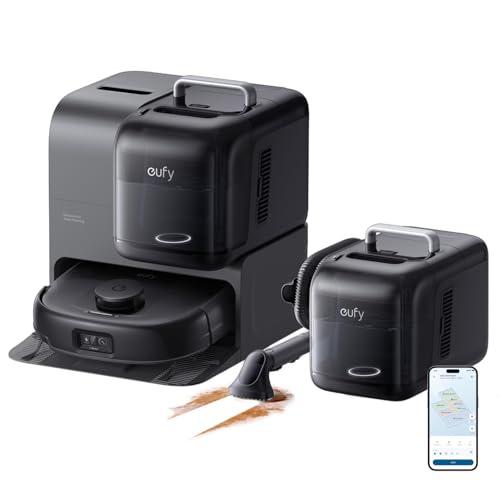
eufy E28 robot vacuum delivers 20000Pa suction, self-washing HydroJet mop, carpet deep cleaner & zero-tangling brushes. Shop now for hands-free clean.

iRobot Roomba Vac Q0120 robot vacuum with 3-stage cleaning, 120-min runtime & Alexa support. Self-charging & app-controlled. See why 50,000+ owners love it!

Shark IQ robot vacuum empties itself for 45 days, maps your home, and features a self-cleaning brushroll. Perfect for pet hair. Works with Alexa. Shop now!
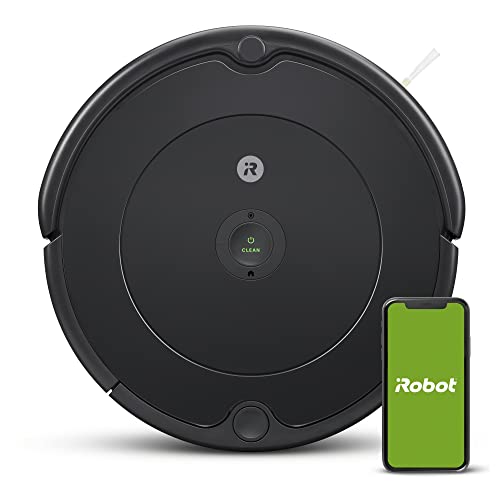
The iRobot Roomba 694 self-charges, navigates around furniture, and tackles pet hair on carpets and hard floors. Shop now for smarter daily cleaning.

DEEBOT T50 MAX PRO features 18,500Pa suction, auto hot-water mop washing & 12-in-1 Omni Station. Hands-free cleaning redefined. Shop on Amazon!
Ready to Find Your Perfect Vacuum?
Browse our expertly reviewed vacuum cleaners and make an informed decision
Browse All Vacuums