Best Vacuum for Allergies: HEPA-Sealed Picks That Actually Reduce Allergen Exposure
The wrong vacuum makes allergies worse by recirculating pet dander, pollen, and dust mite allergens. Find the best vacuum for allergies with sealed HEPA filtration systems.
Table of Contents
- The Household Allergens That Trigger Your Symptoms
- HEPA Filter vs. HEPA-Sealed System: The Distinction That Changes Everything
- Bagged vs. Bagless for Allergy Sufferers
- Key Features Allergy Sufferers Must Prioritize
- Top 5 Vacuums for Allergy Sufferers
- Comparison Table
- Vacuuming Technique for Allergy Sufferers
- Frequently Asked Questions
- Conclusion
Most people assume that vacuuming automatically improves air quality. The uncomfortable truth is that the wrong vacuum can do the opposite. A vacuum without proper sealed filtration acts like a particle blower rather than a particle remover, pulling allergens off the floor and redistributing them into the air you breathe. For the roughly 50 million Americans who suffer from allergies, choosing a vacuum with genuine allergen containment is not a minor detail. It is a health decision.
This guide cuts through the noise. We explain exactly what you need to look for, why the difference between a HEPA filter and a HEPA-sealed system matters far more than most buying guides acknowledge, and which five vacuums have earned their place on this list based on real specifications, filtration engineering, ratings, and review volume.
The Household Allergens That Trigger Your Symptoms
Before you can choose the right vacuum, you need to understand what you are fighting. The four major indoor allergens behave differently in your home, and their microscopic sizes determine exactly what your filtration system needs to capture.
Dust mite feces are the number one indoor allergen trigger. Dust mites themselves are 200 to 300 microns in size and live in carpet fibers, mattresses, and upholstered furniture. But it is their fecal particles, ranging from 10 to 40 microns, that become airborne and cause allergic reactions. Every time you walk across a carpet, sit on a sofa, or run a vacuum without adequate filtration, you launch those particles into the air.
Pet dander consists of tiny flakes of skin shed by cats, dogs, birds, and other animals. At 2.5 to 10 microns, dander particles are small enough to remain suspended in the air for hours and penetrate deep into your respiratory tract. Pet dander also adheres to surfaces, clothing, and furniture with exceptional persistence, making it one of the most difficult allergens to eliminate from a household.
Pollen enters your home on clothing, through windows, and on pets. Outdoor pollen grains range from 10 to 100 microns, but the allergenic proteins that break away from pollen grains can be as small as 0.5 microns. Standard vacuum filters allow particles in this sub-micron range to pass straight through.
Mold spores typically range from 1 to 30 microns and thrive in humid environments including bathroom grout, window frames, and even inside vacuum cleaners that are not properly maintained. Vacuuming mold-contaminated surfaces with an inadequate filter aerosolizes spores and spreads them to clean areas of your home.
The critical number to remember: a true HEPA filter captures particles at 0.3 microns and above at 99.97 percent efficiency. This is the most penetrating particle size for fiber-based filters, and it covers every major household allergen by a significant margin.
HEPA Filter vs. HEPA-Sealed System: The Distinction That Changes Everything
This is the most important piece of information in this entire guide. Many allergy sufferers purchase a vacuum advertised as having a HEPA filter, use it faithfully, and still experience no improvement in their symptoms. The reason is almost always the same: the vacuum has a HEPA filter, but not a HEPA-sealed system.
A HEPA filter alone traps the particles that pass through it. But if the vacuum’s housing, hose connections, lid seals, and dust cup are not airtight, particles can bypass the filter entirely through gaps and seams. A HEPA filter in a leaky housing is like a hospital-grade air purifier with holes cut in the sides.
A HEPA-sealed system (also called a complete seal or whole-machine HEPA system) means the entire vacuum is engineered as an airtight enclosure. Every joint, connection, and seal is designed to prevent air from bypassing the filter. The only air that exits the vacuum has passed through the HEPA media. This is the standard used in laboratory and hospital environments, and it is what allergy sufferers actually need.
When evaluating any vacuum for allergy use, look for specific language such as “Anti-Allergen Complete Seal,” “whole-machine HEPA filtration,” or “HEPA Sealed Allergen System.” Generic mentions of “HEPA filter” without sealed housing claims should be treated with skepticism until you can verify the actual construction.
The minimum standard for serious allergy relief is an H13 HEPA filter within a sealed system. H13 refers to the European classification for filters that capture 99.95 percent of particles at the most penetrating particle size. Some premium vacuums use H14 filters at 99.995 percent efficiency, though in real-world household use, H13 within a sealed housing is more than sufficient for allergy management.
Bagged vs. Bagless for Allergy Sufferers
The ongoing debate between bagged and bagless vacuums takes on different dimensions when allergies are the primary concern.
Bagless vacuums are convenient and cost-effective on the surface. But the emptying process is a significant allergen exposure event. When you open the dust cup over a trash can, a visible cloud of fine particles — including the dander, pollen, and dust mite debris you just collected — releases into the air. For allergy sufferers, this moment of emptying can trigger an immediate reaction. Manufacturers have improved this with “one-touch ejection” systems that reduce direct contact, but no bagless system eliminates the exposure entirely.
Bagged vacuums contain collected debris within a sealed bag that can be removed and discarded without opening. Many allergy-rated bags use multi-layer construction with their own filtration, providing an additional barrier before the main filter. When the bag is full, you pull it out with the opening sealed and throw it directly in the trash. This is a meaningfully cleaner process for allergy sufferers.
The practical conclusion: if allergies are your primary concern and you are comfortable with the ongoing cost of replacement bags, a bagged system from a brand like Miele (which engineers its S-Bag system specifically for allergen containment) is worth serious consideration. However, the bagless models in this guide all include sealed systems and anti-exposure emptying mechanisms that make them highly viable alternatives, particularly at their price points.
If you use a bagless vacuum, empty it outdoors or in a well-ventilated space. Never empty it in a bedroom or on a carpeted surface.
Key Features Allergy Sufferers Must Prioritize
Before reviewing individual products, these are the non-negotiable features that should guide any allergy-focused vacuum purchase.
H13 HEPA filtration or better. The filter must be genuine HEPA, not “HEPA-style” or “HEPA-like” media that meets no verified standard. Look for H13 or H14 classification, or the US standard of 99.97 percent efficiency at 0.3 microns.
Sealed housing. Confirmed by manufacturer specifications, not implied. The terms to look for are “complete seal,” “whole-machine HEPA,” or “sealed allergen system.”
Upholstery and crevice tools. Allergens do not limit themselves to floors. Pet dander, dust mite particles, and pollen accumulate on sofas, mattresses, curtains, and upholstered chairs. A vacuum without above-floor capabilities addresses only part of the allergen load in your home.
Anti-tangle brushroll. This is a practical durability feature that also affects allergen containment. A heavily hair-tangled brushroll loses cleaning effectiveness and can create gaps in the seal around the nozzle as the brush spins unevenly.
Washable or accessible filters with clear replacement schedules. A clogged HEPA filter reduces suction and may force air through alternative pathways. Filters should be washable or inexpensive to replace, and the manufacturer should specify replacement intervals.
Top 5 Vacuums for Allergy Sufferers
1. Shark Rotator Pet ZU102 — Best Overall for Allergy Relief
Rating: 4.4/5 | 12,979 reviews
The Shark Rotator Pet ZU102 earns the top position on this list because it addresses allergen control at every stage of the cleaning process. The Anti-Allergen Complete Seal Technology paired with a true HEPA filter captures 99.99 percent of dust, dander, pollen, and mold spores down to 0.3 microns. That 99.99 percent figure is notable: most sealed HEPA vacuums advertise 99.9 percent, and the additional decimal point represents a tenfold improvement in particle capture at the filter.
For pet allergy sufferers, the combination of PowerFins HairPro and a self-cleaning brushroll is especially valuable. The brushroll actively clears hair during operation rather than accumulating it, which means consistent suction performance session after session. A degraded brushroll does not just clean poorly; it also creates mechanical stress on the vacuum housing that can compromise the seal over time.
The 3XL dust cup at 2.9 liters is the largest in this comparison. Larger capacity means less frequent emptying, which means fewer allergen exposure events during cleaning. The extendable hose provides 12 feet of reach for upholstery, stairs, and curtains, covering the above-floor allergen sources that many vacuumers neglect.
One practical note: the Odor Neutralizer Technology cartridge requires periodic replacement. This is a minor ongoing cost, but it addresses a real issue in pet households where accumulated dander and organic matter inside the vacuum can generate unpleasant odors that recirculate during operation.
View the Shark Rotator Pet ZU102

Shark Rotator Pet ZU102 upright vacuum with PowerFins HairPro self-cleaning brushroll, Odor Neutralizer Technology, HEPA filtration, and 3XL dust cup.
2. Shark Navigator Lift-Away Deluxe NV360 — Best Value for Allergy Sufferers
Rating: 4.4/5 | 52,141 reviews
With over 52,000 reviews and a maintained 4.4-star average, the Shark Navigator NV360 represents the most battle-tested allergy vacuum at its price point. The Anti-Allergen Complete Seal technology with a true HEPA filter traps 99.9 percent of dust and allergens, and the sealed housing design has been refined through millions of units to eliminate the kind of manufacturing tolerances that allow particles to bypass filters in cheaper sealed-claim vacuums.
The Lift-Away detachable pod transforms the NV360 from a floor vacuum into a portable cleaning unit with a single button press. For allergy sufferers, this versatility is directly meaningful: the ability to detach the canister and vacuum upholstery, drapes, and mattress surfaces without changing machines means those high-allergen surfaces actually get cleaned instead of being skipped in favor of convenience.
The brushroll shutoff switch is a feature that allergy-focused buyers should pay attention to. On hard floors with the brushroll disengaged, the vacuum operates in pure suction mode without agitating settled particles back into the air. This is the correct technique for allergen-conscious vacuuming on hardwood and tile, and the NV360 makes it easy.
The corded design is typical for uprights at this level and provides consistent suction without battery degradation concerns. Allergy-grade filtration requires sustained airflow to function as rated; a vacuum with declining battery suction toward the end of a session may perform below its certified efficiency.
View the Shark Navigator Lift-Away NV360
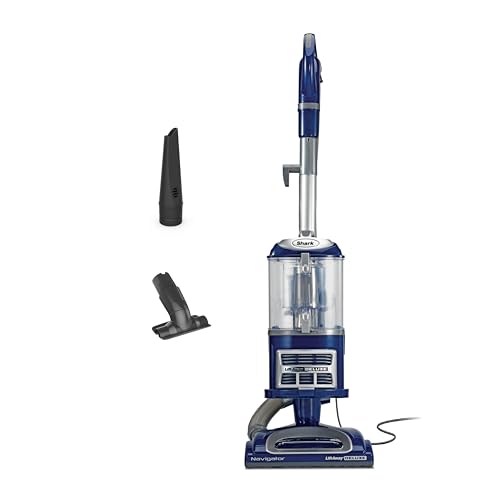
Shark Navigator Lift-Away NV360 delivers powerful suction with HEPA filtration and swivel steering. Perfect for pet hair and allergens. See full expert review.
3. Bissell Pet Hair Eraser Allergen Lift-Off 39883 — Best for Pet Allergy Households
Rating: 4.5/5 | 1,804 reviews
The Bissell Pet Hair Eraser Allergen Lift-Off carries the highest individual rating on this list at 4.5 stars, and its name signals its design intent without ambiguity. The HEPA Sealed Allergen System is engineered as a complete containment system — the word “sealed” in the product name is not marketing language but a specification that means the housing, connections, and filtration system work together to prevent allergen escape.
Scatter-Free Technology is a genuinely underappreciated feature for allergy management on hard floors. Standard vacuum heads create airflow turbulence at the leading edge that can launch lightweight particles — particularly pet dander and pollen — ahead of the cleaning path rather than capturing them. Bissell’s scatter-free design controls this airflow to draw particles in rather than push them away, which makes a measurable difference when vacuuming the kind of hard floors where allergens settle.
The tangle-free brushroll is the practical daily-use feature that keeps this vacuum performing as designed. In a multi-pet household where hair accumulation is constant, a brushroll that resists tangling maintains its cleaning contact with the floor surface and preserves the suction pathway that allows the sealed HEPA system to function correctly.
The included TurboEraser Pet Tool is worth highlighting specifically for allergy purposes. It is a motorized attachment that agitates fabric surfaces to dislodge embedded pet dander and dust mite particles that suction alone cannot reach. Using this tool on sofas, upholstered chairs, and mattresses is among the most impactful allergy-reduction steps a pet owner can take.
View the Bissell Pet Hair Eraser Allergen Lift-Off

Bissell Pet Hair Eraser Allergen Lift-Off with HEPA filtration, tangle-free brush roll, and scatter-free tech. Built for pet owners. See our expert review.
4. Shark POWERDETECT HZ4002 — Best Smart Vacuum for Allergy Sufferers
Rating: 4.3/5 | 6,746 reviews
The Shark POWERDETECT HZ4002 brings sensor-driven intelligence to allergy vacuuming in a format that is genuinely practical. At under 10 pounds for a corded stick vacuum with this feature set, it occupies a category that most allergy-focused vacuums do not: lightweight enough for daily above-floor cleaning without the battery anxiety of cordless models.
The Anti-Allergen Complete Seal with HEPA filtration captures 99.99 percent of particles down to 0.3 microns, matching the ZU102 at the top of this list. The addition of Intelli-Sense sensors that automatically detect floor type and cleaning direction adds a layer of efficiency that matters for allergen management: optimal brushroll speed on carpets means more dander extraction per pass, while automatic reduction on hard floors reduces particle aerosolization during transitions.
For allergy households, the Direction Detect feature has a specific benefit. Many vacuumers concentrate their effort on the forward push stroke and simply drag the vacuum back without engaging the brushroll effectively. The POWERDETECT applies suction optimization to both strokes, ensuring that the return pass captures what the forward pass disturbed.
The Odor Neutralizer Technology cartridge is included, addressing the vacuum-sourced odor issue that affects sensitive households. As with the ZU102, cartridge replacement is an ongoing maintenance consideration but a minor one relative to the benefit.
The self-cleaning brushroll with no hair wrap keeps the nozzle-to-housing seal intact through extended use — a consideration that matters more in a daily-use scenario than in a vacuum used once per week.
View the Shark POWERDETECT HZ4002

Shark POWERDETECT HZ4002 ultra-light corded stick vacuum with DuoClean Detect, self-cleaning brushroll, HEPA filtration, and odor neutralizer technology.
5. Dyson Ball Animal 3 — Best Premium Corded Vacuum for Allergen Capture
Rating: 4.2/5 | 2,341 reviews
The Dyson Ball Animal 3 earns its place on this list through the credibility of its whole-machine HEPA filtration approach. Dyson’s sealed design is engineered and independently tested as a complete system, not as a filter installed within a separately designed housing. The Radial Root Cyclone technology continuously separates particles from the airstream before they reach the filter, which means the filter stays cleaner longer and maintains its rated efficiency across a full cleaning session rather than declining as debris loads up the media.
The 290 air watts of suction is the most powerful spec in this comparison. For deeply embedded allergens in carpet — dust mite feces compacted into the base of carpet fibers, pet dander driven deep by foot traffic — raw suction power is directly relevant to extraction effectiveness. A filter rated at 99.97 percent efficiency is only meaningful if the vacuum first extracts the particles from the surface. The Ball Animal 3’s suction ensures that particles are actually removed from carpet rather than simply redistributed within the pile.
The de-tangling Motorbar cleaner head addresses the hair wrap problem through a different mechanism than its Shark competitors: polycarbonate teeth comb through the brush bar during operation, actively clearing wrapped hair rather than preventing it from wrapping initially. Both approaches are effective; Dyson’s is mechanically distinctive and has been proven across years of production.
Ball technology steering enables the kind of thorough room coverage that allergy vacuuming requires. Missed areas and skipped corners are common with heavier, less maneuverable uprights, and thoroughness of coverage is the other half of the allergen extraction equation.
The 5-year limited warranty and lifetime Dyson customer support reflect the brand’s confidence in its engineering and make this premium investment a more defensible one for long-term household allergen management.

Dyson Ball Animal 3 upright vacuum delivers 290AW suction with de-tangling Motorbar head, Ball technology steering, 3 suction modes, and HEPA filtration.
Comparison Table
| Vacuum | Rating | Reviews | Filtration | Seal Type | Filter Efficiency | Weight | Best For |
|---|---|---|---|---|---|---|---|
| Shark Rotator Pet ZU102 | 4.4 | 12,979 | HEPA | Complete Seal | 99.99% | 15.2 lbs | Pet allergy sufferers |
| Shark Navigator NV360 | 4.4 | 52,141 | HEPA | Complete Seal | 99.9% | 16 lbs | Value allergy buyers |
| Bissell Pet Hair Eraser 39883 | 4.5 | 1,804 | HEPA Sealed | Complete Seal | HEPA-grade | 15.7 lbs | Pet households |
| Shark POWERDETECT HZ4002 | 4.3 | 6,746 | HEPA | Complete Seal | 99.99% | Under 10 lbs | Smart/lightweight |
| Dyson Ball Animal 3 | 4.2 | 2,341 | Whole-machine HEPA | Whole-machine | 99.97%+ | 17.3 lbs | Premium deep clean |
Vacuuming Technique for Allergy Sufferers
Owning the right vacuum is the first step. Using it correctly is the second. Even the best-sealed HEPA vacuum does not help much if your technique works against allergen reduction.
Vacuum at least twice per week in high-traffic areas and pet zones. Once-weekly vacuuming allows allergen loads to rebuild between sessions. For pet owners or households with children, twice-weekly is a practical minimum. Dust mite populations in carpet can reach 100,000 per square meter in peak conditions; regular vacuuming alone will not eliminate dust mites but reduces the allergen load significantly.
Vacuum in a consistent direction, then cross-vacuum. Running the vacuum in one direction lifts surface debris but leaves particles embedded in the carpet pile. Running a second pass perpendicular to the first agitates the fibers from a different angle, releasing deeper-embedded allergens for suction capture. This technique is particularly effective on medium and high-pile carpet where pet dander and dust mite particles concentrate at the base of fibers.
Ventilate the room during and immediately after vacuuming. Even with a sealed HEPA system, the physical agitation of vacuuming temporarily increases airborne particle counts. Opening a window for 20 to 30 minutes after vacuuming allows any disturbed particles to dilute and settle. Allergy sufferers should ideally leave the room for this period and allow a non-allergic household member to vacuum when possible.
Vacuum slowly. Most people vacuum too quickly. A deliberate pace of approximately 12 inches per second gives the vacuum’s suction adequate time to extract particles, particularly on carpet. Fast passes on carpet provide the visual appearance of cleaning while leaving a significant portion of allergens behind.
Replace or wash filters on schedule. A HEPA filter operating beyond its rated service interval develops resistance that reduces airflow and may force the motor to work harder, potentially stressing housing seals. Most manufacturer schedules call for filter washing every one to three months and replacement every six to twelve months depending on use intensity. If you own pets or have allergies, maintain the more aggressive end of those schedules.
Use above-floor tools on a regular rotation. Vacuuming floors while neglecting upholstery, mattresses, and curtains is like mopping the floor while leaving muddy surfaces at counter height. Pet dander on a sofa releases back onto the floor within hours of your having vacuumed it. Schedule above-floor cleaning with the upholstery tool at least once per week in rooms where allergen-sensitive household members spend time.
Frequently Asked Questions
What is the best vacuum for pet allergies specifically?
The Shark Rotator Pet ZU102 is the strongest choice for pet allergy sufferers. It combines 99.99 percent sealed HEPA filtration with the PowerFins HairPro self-cleaning brushroll and a 2.9-liter dust cup, which means powerful dander extraction, consistent brushroll performance, and less frequent emptying exposure. The included motorized pet multi-tool extends allergen removal to upholstery and stairs. The Bissell Pet Hair Eraser Allergen Lift-Off 39883 is a close alternative with its HEPA Sealed Allergen System and Scatter-Free Technology specifically designed for hard floor pet hair capture.
Are Dyson vacuums good for allergies?
Yes, provided you choose a model with whole-machine HEPA filtration. Dyson’s whole-machine filtration design seals the entire vacuum as an airtight system rather than simply placing a HEPA filter in the exhaust path. The Dyson Ball Animal 3 reviewed here uses this approach, as does the Dyson V8 Plus and V11 Origin in the cordless category. However, not every Dyson model uses whole-machine sealed filtration, so check specifications rather than assuming brand-wide consistency. Dyson vacuums perform well for allergen extraction due to their sustained high suction, which is critical for pulling deeply embedded particles from carpet.
How often should you replace a HEPA filter in an allergy vacuum?
For households with pets or allergy sufferers, replace the HEPA filter every six months under regular use (two to three times per week). Washable HEPA filters should be rinsed monthly and allowed to air dry completely for at least 24 hours before reinstallation. A damp filter installed in the vacuum dramatically reduces airflow and creates conditions favorable to mold growth inside the machine. Filter replacement intervals in the owner’s manual are usually written for light-use households; interpret them conservatively if your home generates above-average allergen loads.
Does vacuuming release allergens into the air?
Yes, temporarily. The physical agitation of vacuuming disrupts settled particles and can increase momentary airborne allergen counts even when using a sealed HEPA system. The critical difference is that a sealed system prevents the vacuum’s exhaust from adding to this load. Studies have shown that vacuuming with an unsealed vacuum can increase airborne pet allergen concentrations for up to 30 minutes after cleaning. With a sealed HEPA system, this post-vacuum spike is substantially lower. Ventilating the room after cleaning and using a vacuum with genuine sealed filtration are the two most effective ways to minimize this effect.
Is bagless or bagged better for allergies?
Bagged vacuums are technically superior for allergen containment because bag removal is a sealed, low-exposure process. However, the best bagless vacuums on this list — particularly the Shark and Dyson models — use anti-exposure emptying mechanisms and sealed dust cups that reduce the bagless disadvantage significantly. The practical recommendation is this: if you are severely allergic and do not mind the ongoing bag cost, choose bagged. If you prefer bagless, choose a model with a sealed housing and empty outdoors or in a well-ventilated space, never into an indoor trash can.
Can a vacuum eliminate dust mites?
No vacuum eliminates dust mites entirely. Dust mites live deep in carpet fibers, mattresses, and upholstered furniture in numbers that no consumer vacuum can reduce to zero. What vacuuming does accomplish is reducing the load of dust mite feces and shed body parts — the actual allergenic material — in your home environment. Regular vacuuming with a sealed HEPA system, combined with allergen-barrier mattress and pillow covers, hot washing of bedding weekly at 130 degrees Fahrenheit or higher, and maintaining indoor humidity below 50 percent, creates an environment where dust mite allergen levels are clinically manageable even if the mites themselves cannot be fully eliminated.
What does “anti-allergen complete seal” actually mean?
Anti-Allergen Complete Seal is Shark’s proprietary name for a manufacturing and design process that ensures the entire vacuum body is sealed against particle leakage. This includes the dust cup connection, the filter housing, all hose connections, and the body seams. Third-party testing under ASTM F1977 standards verifies that particles of 0.3 microns or larger are trapped within the vacuum system at the stated efficiency. The word “complete” is meaningful: it refers to whole-system sealing, not simply the presence of a HEPA filter element.
Conclusion
The best vacuum for allergies is not the one with the highest suction rating or the most attachments. It is the one that combines genuine HEPA-sealed filtration with the practical features needed to actually clean the surfaces where allergens accumulate most.
For the majority of allergy and asthma sufferers, the Shark Rotator Pet ZU102 delivers the most complete package: 99.99 percent sealed filtration, self-cleaning brushroll for consistent performance, a large-capacity dust cup that reduces emptying exposure events, and motorized above-floor tools for sofa and stair cleaning. The Shark Navigator NV360 covers the same sealed HEPA technology at a lower investment with the benefit of 52,000 real-world users confirming its reliability.
For those who prioritize the premium engineering of whole-machine HEPA filtration and maximum suction for deeply embedded carpet allergens, the Dyson Ball Animal 3 is the correct choice. Its 290 air watts ensure that particles are actually extracted from carpet fibers rather than being redistributed within the pile.
Whatever vacuum you choose from this list, pair it with correct technique: vacuum slowly, vacuum frequently, ventilate after cleaning, and service your filters on schedule. The technology can only work if the process supports it.
Ready to Find Your Perfect Vacuum?
Browse our expertly reviewed vacuum cleaners and make an informed decision
Browse All Vacuums