Best Vacuum for Bad Knees 2026: Low-Effort Cleaning Solutions
Best vacuums for bad knees that minimize bending and heavy lifting. Top robot vacuums and lightweight picks for pain-free cleaning.
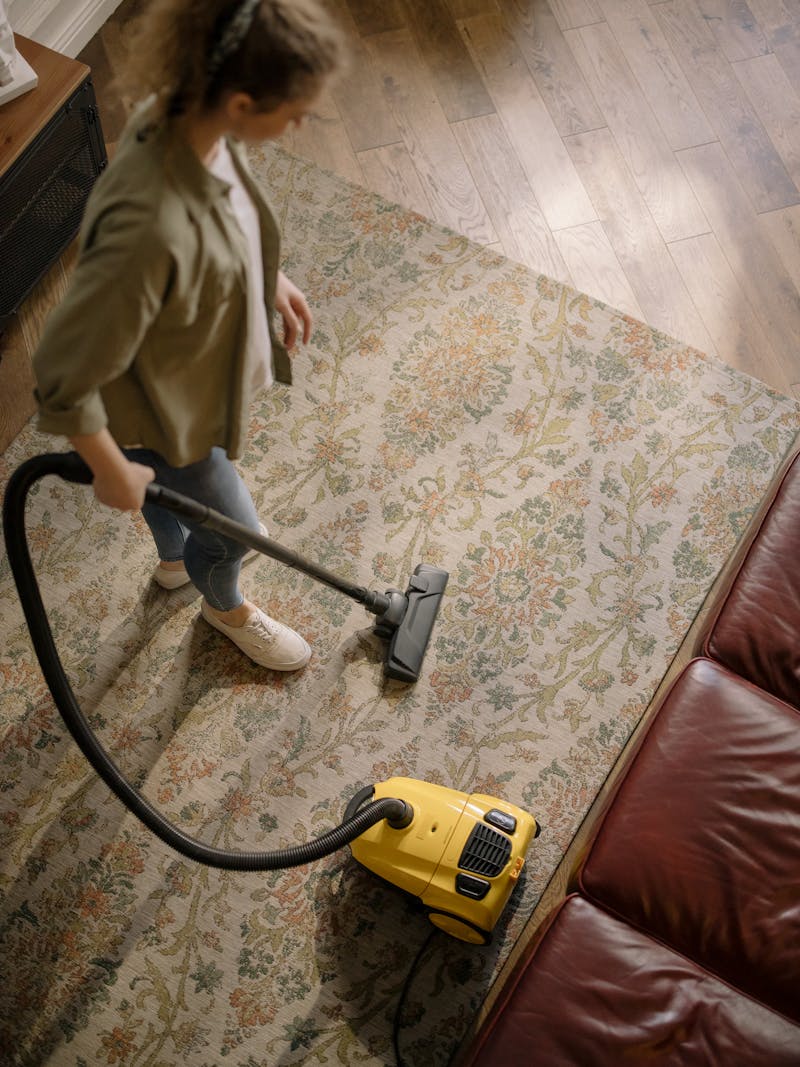
Table of Contents
Anyone who has dealt with chronic knee pain, a recent knee surgery, or the gradual stiffness that comes with osteoarthritis knows that vacuuming is one of the most deceptively punishing household chores. It looks simple from the outside — you push a machine across the floor, and the floor gets clean. But the reality involves repeated squatting to move the vacuum around furniture legs, bending forward to empty a floor-level dustbin, hauling a heavy machine up and down stairs, and wrestling with awkward angles that force your knees into uncomfortable positions for minutes at a time.
For people with bad knees, this is not just inconvenient. It is genuinely painful. Pushing a heavy upright vacuum around a living room for 20 minutes can leave knee joints aching for hours. Emptying a canister vacuum that requires kneeling down to the floor can be the kind of task you dread all week. And conventional vacuuming posture — the slight forward lean, the wide stance, the repetitive back-and-forth motion — creates compressive forces on the knee joint that physical therapists actively warn patients to avoid.
The good news is that the vacuum industry has never offered better options for people who need to clean their homes with minimal physical strain. Robot vacuums that operate entirely without human effort, cordless stick vacuums that weigh under 6 pounds, and self-emptying docking stations that eliminate the need to touch a dustbin for weeks at a time have made genuinely hands-off home cleaning a reality. This guide walks through everything you need to know to choose the right vacuum for your situation.
Why Traditional Vacuuming Is Hard on Bad Knees
To understand what makes a vacuum good or bad for knee pain, it helps to look at exactly what traditional vacuuming asks your body to do.
Weight and resistance. A standard corded upright vacuum weighs between 14 and 20 pounds. Pushing and pulling that weight across carpet creates resistance that transfers force through your arms and into your core and lower body. On anything other than a perfectly smooth hard floor, there is friction to overcome with every push stroke. Your knees absorb a portion of that force, especially when you lean into the machine to get under furniture or into corners.
Bending and squatting. Almost every vacuuming task involves some form of bending. Emptying an upright vacuum’s floor-level dustbin requires either kneeling or a deep forward bend. Plugging and unplugging the cord, moving furniture, and picking up obstacles in the robot’s path all add additional bending demands that compound over the course of a cleaning session.
Maneuvering in tight spaces. Getting a vacuum under a bed, around the legs of a dining table, or into the tight space between a sofa and the wall requires awkward body positioning. These are the moments when knee pain tends to spike — when you are forced into a semi-squat, or when you are pushing sideways against the vacuum rather than in a natural forward or backward direction.
Stairs. Carrying a vacuum up and down stairs is one of the most physically demanding household tasks for anyone with knee problems. Even a relatively light corded vacuum becomes hazardous when you are navigating stairs with compromised knee stability.
Repetitive motion over time. Unlike lifting a box, which is a single effort, vacuuming is repetitive. The same muscles, the same joints, the same range of motion, repeated hundreds of times across a single cleaning session. For joints that are already compromised by arthritis, post-surgical recovery, or injury, this repetition accelerates fatigue and pain.
Features to Prioritize When Choosing a Vacuum for Bad Knees
Robot Vacuums: The Ultimate Hands-Off Solution
If your knee pain is severe or you are in post-operative recovery, a robot vacuum is in a category of its own. You literally do not have to touch the floor. Set a cleaning schedule through an app, and the robot handles daily maintenance automatically. The only physical interaction required is occasionally emptying the dustbin — and with self-emptying models, even that step is eliminated for 30 to 75 days at a stretch.
Modern robot vacuums are not the bumbling, ineffective machines of a decade ago. Premium models with LiDAR navigation create accurate floor maps, clean in systematic rows rather than randomly bouncing around, avoid obstacles reliably, and can be directed to specific rooms via smartphone app or voice command. They handle both hard floors and carpet, and the best models also mop simultaneously.
Lightweight Stick Vacuums Under 6 Pounds
When you do need a vacuum you can manually guide — for quick spot cleanups, stairs, or areas the robot misses — weight is everything. The difference between a 5-pound cordless stick vacuum and a 16-pound corded upright is the difference between a tool you can operate with one hand from a standing position and a piece of equipment that demands your full physical attention.
Look for stick vacuums in the 3 to 6 pound range. At this weight, you can guide the vacuum without leaning into it, keep your posture upright, and stop and start without the machine pulling on your joints. Cordless models eliminate the additional weight and management of a power cord, which can itself create tripping hazards and awkward maneuvering situations for people with impaired mobility.
Ergonomic Handles and Adjustable Tube Length
A handle that sits at the right height allows you to vacuum in an upright, neutral spine position. Too short, and you lean forward, compressing the knee. Too long, and you overextend, losing control. Telescopic tubes that adjust to your specific height are a meaningful ergonomic feature that most buyers overlook.
Pistol-grip style handles — where the trigger mechanism lets you start and stop suction with minimal finger effort — reduce the hand and wrist strain that can accompany conventional vacuum controls. This is worth considering if your knee issues are part of broader musculoskeletal challenges.
Self-Emptying Bins and Elevated Docking Stations
For robot vacuums, the location and design of the dustbin matters enormously for bad-knee users. Basic robot vacuums require you to remove and empty a small onboard dustbin after every few cleaning sessions — a process that often requires bending to floor level. Self-emptying bases solve this entirely. The robot returns to its dock after cleaning and transfers collected debris into a larger container in the base station. Premium models hold 30 to 75 days of debris before you need to touch anything.
Hard Floor Performance
People with knee pain often find hard floors easier to manage than carpet because vacuuming on carpet requires more physical effort to push against the resistance of carpet fibers. If your home has primarily hard floors, you can prioritize suction efficiency and lightweight design over high-powered brushroll systems, which opens up a wider range of options at lower weight.
The 6 Best Vacuums for Bad Knees in 2026
1. Roborock Qrevo QV 35A — Best Overall Robot Vacuum for Bad Knees
View the Roborock Qrevo QV 35A
If you could design a vacuum specifically to eliminate physical effort for someone with bad knees, the result would look very much like the Roborock Qrevo QV 35A. This premium robot vacuum and mop combination handles the full cleaning cycle — vacuuming, mopping, dustbin emptying, water refilling, mop washing, and mop drying — entirely through its all-in-one docking station. For weeks at a time, you do not have to interact with this machine at all.
The 8000Pa HyperForce suction engine is among the most powerful in the robot vacuum category, capable of extracting embedded pet hair from carpet and fine dust from hard floors with equal effectiveness. The dual spinning mop pads rotate at 200 RPM and lift 10mm automatically when the robot crosses onto carpet, preventing wet floors where you do not want them. PreciSense LiDAR navigation maps your home in precise detail, allowing the robot to clean in efficient systematic rows and navigate to specific rooms on command through the Roborock app.
The self-emptying dock is the feature that matters most for bad-knee users. Its 2.7-liter sealed dust bag lasts seven to nine weeks before replacement. A 4-liter clean water tank covers approximately 3,552 square feet of mopping. After every cleaning session, the dock washes the mop pads and dries them automatically, preventing mildew. You schedule cleaning through the app or via voice command and let the system run. Emptying the dock takes under a minute and involves no bending to floor level — the dock sits on a counter or flat surface and the sealed bag lifts straight out and drops into a trash can.
The tangle-free brush system, certified at a 0% hair tangling rate by SGS, means the brushes stay functional without you crouching down to clear wrapped hair. Multi-floor mapping supports four levels of your home, so the robot can be moved between floors and knows where it is each time.
Rating: 4.3/5 | 1,457 reviews
Pros:
- True hands-free cleaning for weeks at a time through the all-in-one dock
- 8000Pa suction handles both carpet and hard floors thoroughly
- Dual spinning mops with automatic 10mm carpet lift
- Tangle-free brushes require no manual clearing
- LiDAR navigation cleans efficiently in systematic rows
Cons:
- Large dock footprint requires planning for placement
- 2.4GHz Wi-Fi only — may need router configuration
- Ongoing cost for dust bags and mop pad replacements

Roborock Qrevo QV 35A robot vacuum and mop with 8000Pa suction, all-in-one dock, anti-tangle brushes, and dual spinning mops. Smart LiDAR navigation.
2. Shark AI Ultra AV2511AE — Best Self-Emptying Robot for Pet Owners
View the Shark AI Ultra AV2511AE
The Shark AI Ultra Robot Vacuum with Self-Empty Base is one of the most practically designed robot vacuums for people who need to minimize physical interaction with their cleaning routine. Its 60-day bagless self-empty base stores two full months of accumulated debris before requiring attention, and when emptying time does arrive, the process requires no tools, no bending, and less than a minute of effort.
Shark’s Matrix Clean navigation system sets this robot apart from simpler models. Rather than a single back-and-forth pass, Matrix Clean makes multiple overlapping passes in a precision grid pattern over every section of floor. The difference is immediately visible on carpet — areas that a single-pass robot would leave looking partly cleaned emerge from the Shark’s path genuinely clean. On hard floors, the systematic pattern picks up debris that random-navigation robots push into corners and miss.
The 360-degree LiDAR vision system builds detailed floor maps and detects obstacles accurately even in complete darkness, so the robot can run scheduled overnight cleaning cycles without hitting furniture or getting stuck. The self-cleaning brushroll technology actively resists hair tangling, reducing the frequency of manual brush maintenance to a minimum. Recharge and Resume means the robot automatically returns to its dock when battery runs low, recharges, and then continues cleaning exactly where it left off — completing large multi-room cleaning sessions without any intervention from you.
Shark’s compatibility with Amazon Alexa and Google Assistant means you can start a cleaning session by voice without touching a phone or a button. For someone whose knee pain makes getting up and down from the couch painful, the ability to say “Alexa, ask Shark to start cleaning” from anywhere in the house is a genuine quality-of-life feature.
Rating: 4.0/5 | 8,260 reviews
Pros:
- 60-day bagless self-empty base eliminates frequent bin emptying
- Matrix Clean multi-pass navigation ensures thorough whole-home coverage
- LiDAR mapping works accurately in complete darkness
- Self-cleaning brushroll minimizes manual maintenance
- Recharge and Resume handles large homes automatically
Cons:
- Vacuum-only — no mopping function
- Very cluttered floors can occasionally confuse navigation
- Bagless base still needs periodic filter cleaning

Shark AI Ultra robot vacuum with Matrix Clean navigation, 60-day self-empty base, LiDAR mapping, and voice control. Expert review for pet owners.
3. Tikom G8000 Max — Best Budget Robot Vacuum for Bad Knees
Not everyone needs to spend $400 or more on a robot vacuum to get genuine relief from vacuuming with bad knees. The Tikom G8000 Max delivers the core benefit — automated cleaning that requires no physical effort from you — at a budget-friendly price point that makes it accessible to a much wider audience.
With 5000Pa of suction power and an ultra-slim 2.99-inch profile, the G8000 Max handles daily maintenance on hard floors and low-to-medium pile carpets reliably. The 300ml water tank allows simultaneous vacuuming and mopping in a single pass, cutting cleaning time and floor contact in half compared to running separate cycles. At 150 minutes of runtime in quiet mode, it has enough battery life to clean the entirety of most apartments and medium-sized homes on a single charge before returning to its dock automatically.
Where the G8000 Max particularly stands out for accessibility is in its four control methods. Beyond the standard smartphone app, it includes a physical remote control — a meaningful feature for users who find smartphone apps cumbersome, including older adults and those managing multiple health challenges simultaneously. Voice control via compatible assistants and physical buttons on the robot itself round out the options.
Anti-collision and anti-fall sensors prevent the robot from bumping into furniture or falling down stairs, and its large wheels handle threshold transitions between different flooring types smoothly. The 4.4-star rating from nearly 4,000 buyers reflects genuine satisfaction from users who needed an effective, no-fuss cleaning solution.
Rating: 4.4/5 | ~4,000 reviews
Pros:
- 150-minute runtime covers most homes on a single charge
- 5000Pa suction with simultaneous vacuuming and mopping
- Four control methods including remote control for non-smartphone users
- Ultra-slim profile reaches under low-clearance furniture
- Accessible price point compared to premium robot vacuums
Cons:
- No self-emptying base — dustbin requires manual emptying
- Random-path navigation is less efficient than LiDAR-mapped competitors
- No LiDAR or camera mapping; zig-zag pattern can miss some areas

Tikom G8000 Max robot vacuum and mop combo delivers 5000Pa suction, 150-min runtime, and 4 cleaning modes for hard floors, carpets, and pet hair.
4. Dyson V8 Plus — Best Lightweight Cordless Stick Vacuum
When you need to vacuum an area the robot has not reached — stairs, a cluttered room that needed clearing first, or a quick spot cleanup after a spill — the Dyson V8 Plus is the cordless stick vacuum that asks the least of your knees while delivering cleaning performance that rivals corded machines twice its weight.
At 5.7 pounds, the V8 Plus is light enough to hold at your side and guide with minimal effort across any floor surface. There is no cord to manage, no resistance from a power cable pulling back on the vacuum, and no need to lean into the machine to generate cleaning force. The Motorbar cleaner head adapts automatically to both hard floors and carpet, so there is no mode-switching required as you move from room to room — one less interaction that might force awkward body positioning.
The single-click handheld conversion turns the V8 Plus into a compact cleaning tool for stairs. Rather than carrying an upright vacuum up each step, you detach the motor unit from the wand, hold a 5-pound handheld vacuum at waist or chest height, and work the stair carpet from a standing position. This fundamentally changes the ergonomics of stair cleaning for bad-knee users — no more crouching on each step.
Dyson’s whole-machine HEPA filtration captures 99.99% of particles at 0.3 microns, making the V8 Plus a strong choice for anyone who combines bad knees with allergy or asthma concerns. The trigger-style power control means the vacuum only runs suction when you are actively cleaning — press to run, release to stop — conserving battery and preventing the machine from pulling or tugging when you pause. Up to 40 minutes of fade-free runtime in standard mode is sufficient for complete apartment or single-floor cleaning.
Rating: 4.0/5 | 4,724 reviews
Pros:
- 5.7 lbs is genuinely light enough to guide with one hand
- Motorbar head adapts to hard floors and carpet without mode-switching
- Converts to handheld vacuum for safer, more ergonomic stair cleaning
- Whole-machine HEPA filtration for allergy-safe cleaning
- No cord means no resistance or tripping hazard
Cons:
- Max mode runtime is only 5 minutes
- No removable battery for extended sessions
- Small dustbin compared to some competing cordless models

Dyson V8 Plus cordless vacuum with Motorbar cleaner head, 40-min runtime, whole-machine HEPA filtration, and Hair screw tool for pet hair removal.
5. eufy RoboVac 11S Max — Best Simple Robot Vacuum for Bad Knees
The eufy RoboVac 11S Max occupies an important niche: it is a robot vacuum that is genuinely simple to operate — no smartphone required, no app setup, no Wi-Fi configuration — while still delivering reliable automated cleaning that completely removes manual vacuuming from your daily routine.
At 2.85 inches tall, the 11S Max is one of the thinnest robot vacuums available, allowing it to slip under beds, dressers, and sofas that taller robots cannot reach. These under-furniture zones are notorious dust collectors, and the ability to clean them automatically means you never have to get down on your knees to address them manually. BoostIQ technology automatically increases suction when the robot moves from hard floors onto carpet, ensuring it cleans each surface type appropriately without any input from you.
The remote control interface is deliberately simple. You can start a cleaning session, schedule regular cleans, direct the robot to a specific area, or return it to the dock — all without a smartphone. For older adults, individuals managing multiple health conditions, or anyone who finds app-based control frustrating, this straightforward approach makes the 11S Max genuinely accessible.
At 100 minutes of runtime on hard floors, the 11S Max handles most single-story homes on a single charge. When battery runs low, the robot autonomously navigates back to its charging base. The self-charging function means the robot is always ready for the next scheduled clean without you having to think about it. The anti-scratch tempered glass top panel protects the unit during its regular travels under furniture, extending the vacuum’s operational life.
Rating: 4.1/5 | 16,258 reviews
Pros:
- No app or Wi-Fi required — simple remote control operation
- Ultra-slim 2.85-inch profile cleans under most furniture automatically
- BoostIQ auto-adjusts suction for hard floors vs. carpet
- 100-minute runtime covers most homes on one charge
- Self-charging base keeps robot always ready
Cons:
- Random navigation is less efficient than LiDAR-mapped competitors
- No Wi-Fi means no scheduling from outside the home
- Single side brush may miss some edge debris
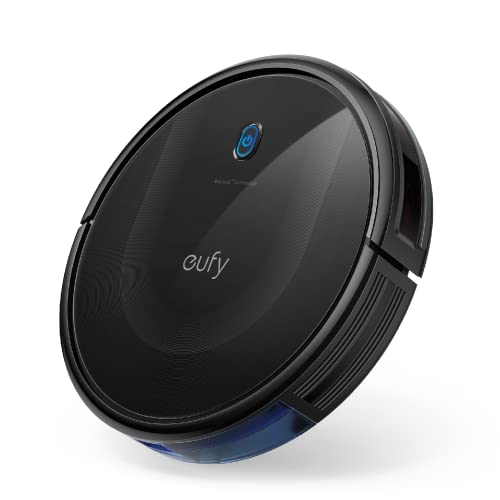
eufy RoboVac 11S Max super-thin robot vacuum with BoostIQ technology, 100-min runtime, and quiet operation. Ideal for hard floors and medium-pile carpets.
6. Bissell Featherweight 2033 — Best Ultralight Manual Vacuum for Bad Knees
View the Bissell Featherweight 2033
At 2.6 pounds, the Bissell Featherweight is in a category by itself for people who need a grab-and-go vacuum that exerts virtually no physical demand. It is lighter than most water bottles, light enough to carry in one hand without fatigue, and compact enough to store in a coat closet or behind a door rather than in a dedicated cleaning utility space.
The 3-in-1 convertible design makes the Featherweight genuinely versatile despite its minimal weight. In stick vacuum configuration, it handles quick floor cleanups on hard floors and low-pile carpets. Detach the main unit, and you have a handheld vacuum for furniture, countertops, and upholstery. The included crevice tool extends reach into the narrow gaps around baseboards, along furniture edges, and into tight corners where dust accumulates.
For bad-knee users, the Featherweight fills a specific role: the vacuum you grab when you need a quick spot cleanup and the robot has not run yet today, or when you need to address something the robot cannot reach. It is not a deep-cleaning machine for heavily soiled carpet. What it excels at is the daily maintenance cleaning that keeps floors livable between deeper cleans — crumbs from the kitchen, tracked-in debris in the entryway, dust bunnies on the hardwood.
Corded operation provides consistent suction without any battery management, and the 15-foot cord handles most single-room cleanups without switching outlets. The bagless design with a washable filter means ongoing costs are essentially zero. With over 116,000 reviews and a 4.2-star average rating, the Featherweight is one of the most widely validated vacuum purchases on the market.
Rating: 4.2/5 | 116,086 reviews
Pros:
- Exceptionally light at 2.6 lbs — easily held with one hand
- 3-in-1 converts to handheld for furniture and spot cleaning
- Bagless with washable filter — minimal ongoing costs
- Compact storage in any closet or tight space
- Consistent corded suction with no battery concerns
Cons:
- 2-amp motor is not suitable for deep carpet cleaning
- Small 0.67-liter dustbin fills quickly in larger spaces
- 15-foot cord limits range in larger rooms
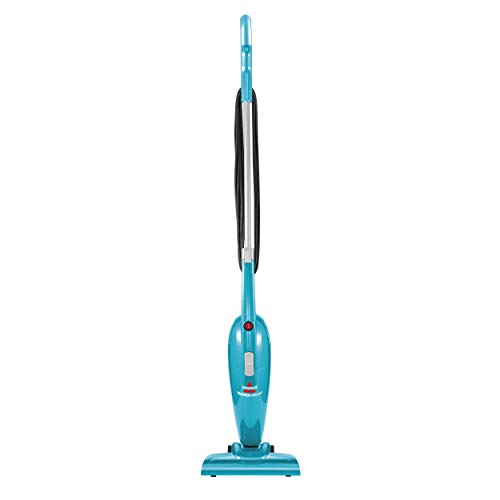
Bissell Featherweight 2033 lightweight stick vacuum converts to handheld. Bagless, corded, with crevice tool for carpets, hard floors, and stairs.
Robot Vacuums: The Ultimate Solution for Knee Pain
It deserves emphasis that for anyone with significant knee impairment — whether from osteoarthritis, rheumatoid arthritis, a recent knee replacement, ligament injury, or chronic pain — a robot vacuum is not just a convenience. It is a meaningful health accommodation.
The fundamental problem with manual vacuuming for bad-knee sufferers is not just the acute pain during the cleaning session. It is the recovery time afterward, the inflammation that can last for hours or days, and the way that pain accumulates and worsens when joints that need rest are repeatedly stressed by household chores. A robot vacuum removes vacuuming from the list of activities that challenge your joints entirely.
Modern robot vacuums with LiDAR navigation clean more systematically and thoroughly than the average person vacuums manually. They clean daily — most people vacuum once a week at best — which means floors stay cleaner over time, not dirtier. They clean under furniture that manual vacuuming rarely reaches. They do all of this while you are at work, asleep, or sitting comfortably without a vacuum in your hands.
The self-emptying feature takes this one important step further. Standard robot vacuums still require you to remove a small dustbin from the robot’s underbelly approximately every two to four cleaning sessions — a process that involves either kneeling to floor level or awkwardly lifting the robot to a comfortable working height. Self-emptying bases like those on the Roborock Qrevo QV 35A and Shark AI Ultra eliminate this entirely for weeks at a time.
If you are managing knee pain and choosing between spending money on a self-emptying robot vacuum versus a premium lightweight stick vacuum, the robot vacuum will deliver more total physical relief — because you are not just reducing the effort of vacuuming, you are largely eliminating it.
Frequently Asked Questions
What type of vacuum is easiest to use with bad knees?
Robot vacuums are the easiest option for bad-knee sufferers because they operate entirely without physical effort. You set a schedule and the robot cleans automatically. If you also need a manual vacuum for stairs or spot cleaning, choose a cordless stick vacuum under 6 pounds. Avoid heavy corded uprights over 12 pounds, canister vacuums that require bending to floor level, and any vacuum with a non-self-emptying dustbin located close to the floor.
Are robot vacuums good enough to replace manual vacuuming entirely?
For hard floors, most modern robot vacuums — especially LiDAR-mapped models like the Roborock Qrevo QV 35A and Shark AI Ultra — provide cleaning quality that matches or exceeds average manual vacuuming. On carpet, high-powered robot vacuums are effective for daily maintenance but may benefit from periodic supplemental cleaning with a powered brushroll. For bad-knee users, a robot vacuum plus an occasional lightweight stick vacuum pass is an excellent combination that eliminates the vast majority of knee stress.
How heavy is too heavy for a vacuum when you have bad knees?
As a general guideline, stick vacuums over 8 pounds become noticeably more demanding to maneuver, while upright vacuums over 12 pounds require meaningful physical effort to push and pull. For daily cleaning, aim for stick vacuums in the 3 to 6 pound range. The Dyson V8 Plus at 5.7 lbs and the Bissell Featherweight at 2.6 lbs represent opposite ends of the lightweight spectrum — both are manageable for most bad-knee users.
What features should I avoid in a vacuum if I have bad knees?
Avoid vacuums with floor-level dustbins that require bending or kneeling to empty, heavy corded uprights with tangled cords that can create trip hazards, and models without adjustable tube height that force an uncomfortable hunched posture. Short power cords that require frequent outlet changes are also problematic, as they force repeated bending and maneuvering. For any robot vacuum without a self-emptying base, look for models where the dustbin is accessible from the top of the robot at a comfortable height.
Can I use a robot vacuum on stairs?
No — current robot vacuums cannot clean stairs. All robot vacuums include drop sensors to prevent them from falling down stairs, but they stop at the edge. For stair cleaning with bad knees, the best approach is a lightweight handheld vacuum or a convertible stick-to-handheld model like the Dyson V8 Plus, which you can use from a standing or seated position on each step rather than kneeling.
Is a self-emptying robot vacuum worth the extra cost for someone with bad knees?
Yes, for most bad-knee sufferers the self-emptying feature is worth prioritizing. Standard robot vacuums require you to empty a small dustbin every 2 to 4 sessions — roughly twice a week for daily use. Over the course of a year, that is 100 or more times you need to interact with a floor-level dustbin. A self-emptying base like the one on the Roborock Qrevo QV 35A reduces that to roughly 6 to 8 interactions per year, each of which involves removing a sealed bag from the dock rather than accessing a bin near floor level.
What is the best vacuum for someone who just had knee replacement surgery?
In the immediate post-operative period, a robot vacuum is the recommended choice — you should not be vacuuming manually at all during the first several weeks of recovery. Set up a robot vacuum before your surgery date if possible, schedule daily cleaning sessions, and allow it to handle all floor maintenance during recovery. The Tikom G8000 Max offers the lowest entry cost for this purpose, while the Roborock Qrevo QV 35A provides the longest hands-free period through its self-emptying dock. Once cleared by your physical therapist for light household activity, transition to a lightweight cordless stick vacuum like the Dyson V8 Plus for spot cleaning and stairs.
Ready to Find Your Perfect Vacuum?
Browse our expertly reviewed vacuum cleaners and make an informed decision
Browse All Vacuums