Best Vacuum for Car Detailing in 2026: Pro-Level Picks
The best vacuums for car detailing in 2026 — from professional wet/dry shop vacs to precision cordless handhelds for detailers who demand spotless results.
Table of Contents
Best Vacuum for Car Detailing in 2026: Pro-Level Picks
Car detailing is a discipline that rewards the right tools. You can spend an hour hand-polishing a hood to a mirror finish, but if the interior still has pet hair embedded in the seat fibers, grit packed into the carpet pile, and dust sitting in every crevice, the car does not look clean. The vacuum is the foundation of every interior detail, and using the wrong one wastes time, leaves debris behind, and can even scratch interior trim.
Professional detailers know this well. They do not grab whatever handheld vacuum happens to be in the garage. They select purpose-built tools with the suction power, nozzle geometry, and filtration quality to extract debris from even the most neglected interiors. This guide covers what those professionals actually use and what the rest of us should consider when we want professional-level results at home.
Why Car Detailing Requires a Different Approach
A standard household vacuum is designed for open floor plans. Its floor head is wide, its hose is relatively short, and the airflow pattern assumes that debris is sitting loosely on a flat surface. Car interiors present the opposite challenge: tight angles, deeply textured materials, narrow gaps, and debris that is often ground in or tangled into fibers.
Detailers face several specific challenges that drive their tool choices:
Deep carpet extraction. Car carpets are short-pile but dense, and they accumulate a surprising volume of fine sand and grit. Extracting this requires strong suction delivered through a stiff brush attachment that agitates the fibers as it cleans.
Pet hair removal. Pet hair wraps around carpet fibers and weaves into upholstery in a way that weak suction cannot overcome. The hair needs to be physically lifted and separated, which requires either a motorized brush attachment or a rubber nap tool that generates static to pull the hair free.
Crevice access. The gaps along seat rails, the channel between the seat base and the door sill, and the slot around the parking brake all require narrow crevice tools that can reach several inches into confined spaces.
Wet extraction. Many detailers do a wet shampoo of the carpets and upholstery, then use the vacuum to extract the soapy water. This requires a vacuum with a wet/dry capability or a dedicated extractor.
Fine dust on hard surfaces. Dashboard trim, air vents, and door panel inserts collect fine dust that must be vacuumed before any dressing is applied. A soft brush attachment with controlled suction prevents scattering the dust into the air.
What to Look for in a Car Detailing Vacuum
Suction Power
This is the most important specification. Detailing requires pulling debris out of fibers, not just collecting loose material. Look for at least 15,000 Pa in cordless handheld models, or a minimum of 5 peak horsepower in wet/dry shop vacuums intended for thorough carpet extraction.
Wet/Dry Capability
Any detailer who shampoos upholstery or uses a foam extractor needs a vacuum that can handle wet debris. Standard household vacuums will be permanently damaged by liquid ingestion. A proper wet/dry vacuum is not optional if wet extraction is part of your process.
Hose Length and Flexibility
Professional detailers move around the car, not the vacuum. A long hose — at least 6 to 8 feet — lets you position the vacuum outside the vehicle and reach every interior surface without dragging it through the door repeatedly.
Attachment Set Quality
The quality of the included attachments separates useful detailing vacuums from mediocre ones. A crevice tool, a soft round brush, a stiff upholstery brush, and an upholstery nozzle are the minimum kit for thorough interior work.
Filtration
Detailing stirs up large quantities of fine particulate, including brake dust, road grime, and pollen. A vacuum without effective filtration simply redistributes this dust into the air. HEPA filtration or a quality multi-stage cyclone system is essential for a clean working environment.
Tank Capacity
For a single vehicle, a 4- to 6-gallon tank is generally sufficient. Mobile detailers cleaning multiple cars per day often prefer 10- to 16-gallon units to reduce the frequency of emptying.
The 5 Best Vacuums for Car Detailing
1. DeWalt DXV09P 9-Gallon Poly Wet/Dry Vacuum
Best Professional Shop Vac for Detailing
The DeWalt DXV09P is a compact professional-grade shop vac that hits a sweet spot between power and portability that detailers genuinely appreciate. The 9-gallon poly tank is large enough for a full interior extraction without constant emptying, and the motor produces exceptional airflow for thorough carpet agitation.
The hose is 7 feet long with a smooth interior that resists clogging, and the included accessory kit covers the essentials: a crevice tool, a round brush, and a wide floor nozzle. The unit runs on standard 120V current, so it is appropriate for garage detailing or a mobile setup with a generator.
The poly tank is more durable than metal alternatives on job sites where it gets knocked over, and the motor filter system captures fine debris without frequent clogging. At roughly 22 pounds when empty, it is heavier than a handheld but lighter than many comparable shop vacs.
Best for: Garage detailers, mobile detailers, anyone doing full carpet extractions Capacity: 9 gallons Power: 4 peak HP
2. Dyson V15 Detect Absolute
Best Cordless Vacuum for Precision Detailing
The Dyson V15 Detect Absolute is not marketed as a car vacuum, but detailers who use it for interior work consistently report that it outperforms dedicated car vacuums in suction power and attachment versatility. The motorized mini brush head is exceptional for upholstery, and the laser dust detection feature reveals fine particles on dark surfaces that would otherwise be missed.
At 230 AW of suction, the V15 delivers more cleaning power than most portable car vacuums at maximum output. The 60-minute runtime on the lowest setting is more than sufficient for a full detail, and the range of included attachments — including a dedicated crevice tool and a soft dusting brush — covers every surface in a car interior.
The limitation is that you are holding the vacuum while cleaning, which is less convenient than a remote shop vac with a long hose. But for the final pass over upholstery and tight crevices, the V15 is hard to beat.
Best for: Thorough upholstery work, pet hair extraction, fine dust removal Runtime: Up to 60 minutes Suction: 230 AW
3. Bissell Garage Pro Wet/Dry Car Vacuum (Model 18P03)
Best Value Garage Detailing Vacuum
The Bissell Garage Pro 18P03 is designed specifically for vehicles and garages, which shows in the thoughtful accessory set. It comes with a flexible 10-foot hose, a long crevice tool, a pet hair turbo brush, a general brush, and a wide floor nozzle — more coverage than most vacuums in this price range.
The 5-peak-HP motor provides strong suction for embedded grit, and the 10-gallon tank handles wet extraction without issue. A wall-mount kit is included, which is a nice touch for detailers with a dedicated garage space. The noise level is moderate and the filter is washable, keeping operating costs low.
At under $150, it undercuts professional shop vacs significantly while providing a purpose-built attachment set that covers most detailing needs. The hose durability is the main area where it falls behind commercial options.
Best for: Home detailers, value-focused buyers, garage setups Capacity: 10 gallons Hose length: 10 feet
4. Ridgid 50328 6-Gallon 3.5 Peak HP NXT Wet/Dry Vac
Best Compact Shop Vac for Mobile Detailing
The Ridgid 50328 occupies a compact footprint that makes it ideal for detailers working from a van or trailer. The 6-gallon capacity is manageable for passenger vehicles, and the 3.5 peak HP motor produces consistent suction across a full tank without the performance drop that affects cheaper shop vacs as the tank fills.
Ridgid’s build quality is a step above the entry-level competition. The drum is impact-resistant polypropylene, the hose connectors are tight with no air leakage, and the lock latch system keeps the lid secure when the unit is tilted. The included accessories cover basics, though dedicated detailers typically supplement with professional crevice tools.
Replacement filters and accessories are widely available, which matters for professionals who need fast replacements without waiting for specialty parts.
Best for: Mobile detailers, compact shop setups, durability-focused buyers Capacity: 6 gallons Power: 3.5 peak HP
5. Shark UltraCyclone Pet Pro+ Cordless Handheld (CH951)
Best Cordless Handheld for Quick Detail Work
The Shark UltraCyclone Pet Pro+ is the go-to cordless handheld for detailers who need a precise, lightweight tool for final pass work and between-service touch-ups. The motorized pet tool is effective at pulling hair out of upholstery, and the crevice tool reaches into door pockets and console gaps that larger vacuums cannot access.
At under 3 pounds, it is genuinely easy to maneuver inside a vehicle without fatigue. The 12-minute runtime at maximum power is a limitation for full details, but for targeted work on specific problem areas it is more than adequate. Charging takes about 3 hours from empty.
The cyclone filtration system is good at separating fine dust from the airstream, which extends the intervals between filter cleaning and maintains consistent suction throughout the runtime.
Best for: Touch-up detailing, crevice work, pet hair spot treatment Weight: Under 3 lbs Runtime: Up to 12 minutes at max, longer at standard power
Professional Detailing Vacuum Technique
The vacuum is only as effective as the technique behind it. Professional detailers follow a systematic approach that ensures no area is missed.
Work top to bottom, rear to front. Start with the headliner and sun visors, then work down through the dashboard, seats, door panels, and finally the floor. Gravity means dislodged debris falls downward, so cleaning the floor first only requires you to redo it after cleaning the seats. Work from the rear of the car toward the front so debris you push forward gets caught in subsequent passes.
Use a natural-bristle brush in combination with the vacuum. A detailing brush agitates dust from vents, seams, and textured surfaces while the vacuum nozzle held nearby immediately captures the released particles. This prevents them from settling back onto surfaces you have already cleaned.
Make multiple passes over carpet. A single pass rarely fully extracts embedded grit. Professional detailers make three to four overlapping passes, alternating direction, with a stiff brush attachment for the first passes and a softer nozzle for the final pass.
Do not rush crevice work. The gaps around seat rails, the perimeter of the center console, and the area under the pedals are where the most debris accumulates and where skimping shows. Take extra time on these areas.
FAQ
Can I use a regular household vacuum for car detailing?
You can use a household vacuum for light interior cleaning, but it has significant limitations for serious detailing. The cord is restrictive, the floor head is too wide for most car surfaces, the suction profile is designed for flat carpets rather than seat upholstery, and most household vacuums cannot handle wet debris. For occasional cleaning they work, but for thorough detailing a purpose-built tool produces noticeably better results.
What is the difference between a car detailing vacuum and a regular car vacuum?
A car detailing vacuum prioritizes suction power, wet/dry capability, attachment quality, and tank capacity over portability and compact size. Standard car vacuums optimize for small footprint and cordless convenience. Detailing vacuums are built around the assumption that you are thoroughly cleaning one car, not quickly tidying between errands.
Do I need a wet/dry vacuum for car detailing?
If your detailing process includes any wet steps — carpet shampooing, foam seat extraction, steam cleaning followed by extraction — then yes, a wet/dry vacuum is essential. If you only do dry interior vacuuming, a high-powered dry vacuum is sufficient. Most serious detailers eventually add wet/dry capability because it dramatically improves carpet and upholstery results.
How often should I vacuum my car?
For daily drivers, a thorough vacuum every two weeks maintains a clean interior without requiring the deep-extraction work that neglected cars need. Cars used by children, pets, or for frequent food consumption benefit from weekly vacuuming. Professional detailers typically recommend a full interior detail every 3 to 6 months.
What is the best attachment for removing pet hair from car seats?
A motorized mini brush attachment — the kind with a rotating bristle bar — is the most effective for embedded pet hair. For cars without severe pet hair accumulation, a rubber nap attachment or a dedicated pet upholstery tool that generates static to lift hair also works well. Avoid wide upholstery tools with felt lining for pet hair, as the hair wraps around the felt and is difficult to clean out.
Is more suction always better for car detailing?
Maximum suction is useful for initial extraction of heavily soiled carpets, but too much suction can make some attachments difficult to move smoothly across upholstery. Most professional detailers use variable-speed vacuums and reduce suction for upholstery work while maximizing it for carpet extraction. A vacuum with adjustable suction is more versatile than one locked at a single power level.
Final Thoughts
Car detailing is one area where vacuum quality genuinely determines the outcome. A thorough detail with a quality vacuum removes debris that a mediocre one leaves behind, and those results stay visible every time you get in the car. The DeWalt DXV09P is the recommendation for anyone doing serious wet and dry extraction work, while the Dyson V15 is the choice for cordless precision cleaning. The Bissell Garage Pro offers the most value for home detailers who want a purpose-built tool without a professional price tag.
Whichever vacuum you choose, consistent technique and the right attachments matter as much as the hardware. A systematic top-to-bottom approach with the appropriate nozzle for each surface will produce results that rival professional shops.
Top Picks

BLACK+DECKER Dustbuster AdvancedClean cordless handheld vacuum with cyclonic suction and 16V battery. Great for home and car. Read our expert review now.
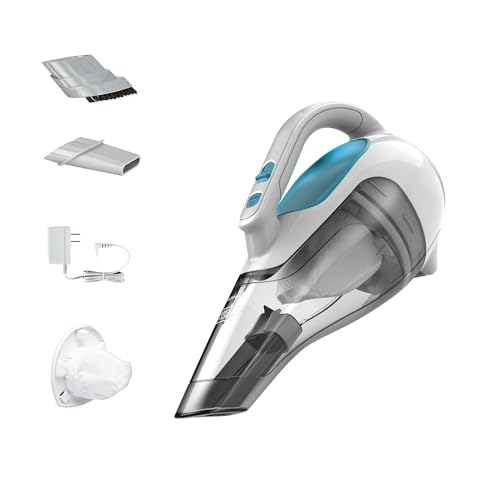
Expert review of the BLACK+DECKER Dustbuster HHVI315JO42 cordless handheld vacuum. Lithium-powered suction, wide mouth, and wall-mount base.
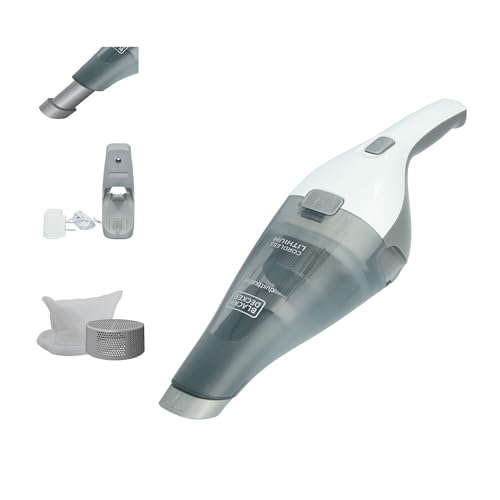
BLACK+DECKER Dustbuster QuickClean cordless handheld vacuum with wall mount and built-in crevice tool. Lightweight and rechargeable. See the full review!

Discover the Bissell Pet Hair Eraser 2390A cordless hand vacuum with motorized brush tool and triple filtration. Perfect for pet owners. Read our expert review!
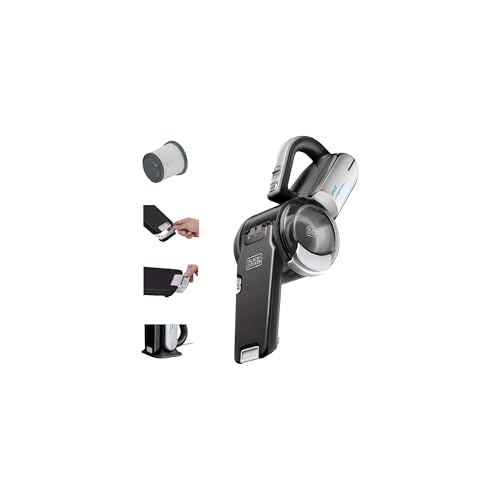
BLACK+DECKER Dustbuster Pivot Vac 20V MAX cordless handheld vacuum with pivoting nozzle and cyclonic action. Expert review with pros, cons, and specs.
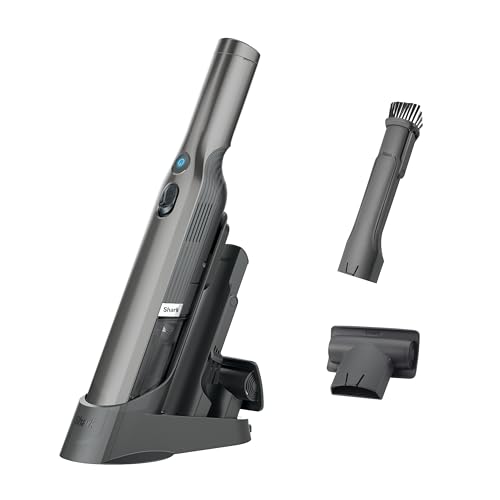
Shark WANDVAC WV201 cordless handheld vacuum weighs just 1.4 lbs with powerful brushless motor suction, charging dock, and one-touch empty. Expert review.
Ready to Find Your Perfect Vacuum?
Browse our expertly reviewed vacuum cleaners and make an informed decision
Browse All Vacuums