Best Vacuum for Concrete Floors: Garage, Basement & Polished Concrete Picks
Concrete floors — whether raw garage, sealed basement, or polished — have specific vacuuming needs. Find the best vacuums for concrete in 2025.

Table of Contents
- Best Vacuum for Concrete Floors: Garage, Basement & Polished Concrete Picks
- The Three Types of Concrete Floors (and Why They Vacuum Differently)
- What to Look for in a Vacuum for Concrete Floors
- Best Vacuums for Concrete Floors in 2025
- When NOT to Use a Regular Vacuum on Concrete
- Frequently Asked Questions
- Bottom Line
Best Vacuum for Concrete Floors: Garage, Basement & Polished Concrete Picks
Concrete is one of the most common floor surfaces in American homes, but it is also one of the most misunderstood when it comes to vacuuming. Most vacuum guides treat “hard floors” as a single category — hardwood, tile, laminate — and apply the same recommendations to all of them. Concrete does not belong in that group. Depending on whether your concrete is raw and unsealed, painted or sealed, or professionally polished and decorative, the requirements for the right vacuum change significantly.
This guide breaks down all three concrete types, explains what each one demands from a vacuum, and gives you specific product picks that will actually work in each situation.
The Three Types of Concrete Floors (and Why They Vacuum Differently)
Raw and Unsealed Concrete — Garage, Workshop, Utility Areas
Raw concrete is porous. Every crack, divot, and pore in the surface holds fine concrete dust — a silica-based particle so small it becomes airborne easily and re-settles as fast as you try to clean it. On top of that, a working garage or shop floor also accumulates coarse debris: wood chips, gravel, dried mud, metal filings, sand, and general workshop grit.
This combination of fine dust and heavy debris puts serious demands on a vacuum. The motor needs enough suction to pull fine particles out of the surface texture. The filtration system needs to trap those particles instead of exhausting them back into the air. And the capacity needs to be large enough that you are not stopping every few minutes to empty a small bin.
Oil stains on raw garage concrete are a separate issue — vacuums do not clean them — but dried oil residue and automotive grit mix into the debris field and add to the difficulty of a thorough clean.
Sealed and Painted Concrete — Basement Floors, Coated Garage Floors
Sealed and painted concrete is far more forgiving. The surface coating closes the pores, which means fine concrete dust is no longer being shed in the same way. The primary debris on a sealed basement floor is the same as any hard floor: dust, hair, tracked-in grit, and pet dander if animals use the space.
Standard upright and canister vacuums perform well here. The main considerations are suction strong enough to pull debris off a flat hard surface, a floor head that does not scratch the coating, and HEPA filtration if allergens or fine dust are a concern.
Polished and Decorative Concrete — Living Spaces, Showrooms, Modern Homes
Polished concrete has become a mainstream interior flooring choice. Properly finished, it looks like marble or high-gloss tile and requires similar care. The aggressive brush rolls common on carpet vacuums can scratch and dull a polished surface. Wheels and housing made of hard plastic can leave marks.
Vacuuming polished concrete calls for soft rubber wheels, a gentle floor head — ideally a smooth suction-only head rather than a spinning brush — and filtration capable of handling the fine dust that still exists in any concrete environment. Think of it as vacuuming marble: the surface is beautiful and the finish is permanent.
What to Look for in a Vacuum for Concrete Floors
Strong Suction
Concrete surface texture creates micro-level friction. Fine dust and light debris can sit in small irregularities and require real pulling force to extract. Look for a vacuum with strong advertised suction — this matters more on raw concrete than on sealed or polished surfaces.
HEPA Filtration
Concrete dust contains crystalline silica. Repeated inhalation of fine silica dust is a documented health risk. A HEPA-rated filter captures 99.97% of particles at 0.3 microns, including fine concrete dust. This is not optional for raw or unsealed concrete environments — it is a genuine safety consideration.
Large Capacity Dustbin or Bag
Garage and basement floors accumulate far more debris volume than interior living floors. A small bagless bin that holds a cup of dust will be emptied repeatedly before you finish a two-car garage. Look for generous capacity — canister vacuums with large tanks or bagged models with high-capacity bags are better suited to concrete work than compact cordless units.
Durable Construction
A vacuum that lives in a garage or workshop needs to be physically tough. Exposure to dust, occasional moisture, tool storage pressure, and rougher handling than an interior vacuum sees means that build quality matters. Metal components, reinforced hoses, and solid connectors last longer in this environment.
Floor Head Design — Hard Floor vs. Brush Roll
For raw and sealed concrete: a floor head that can switch between brush roll off and suction-only mode is ideal. An active brush roll can scatter debris on a hard concrete surface rather than picking it up cleanly.
For polished concrete: use a soft-bristle or suction-only attachment. Avoid spinning brush rolls entirely. The goal is the same as with hardwood or marble — pick up debris without abrading the surface.
Best Vacuums for Concrete Floors in 2025
1. Shark Navigator Lift-Away NV360 — Best All-Around Pick for Concrete
Rating: 4.4 stars | 52,000+ reviews
View the Shark Navigator NV360
With over 52,000 reviews and a 4.4-star average, the Shark Navigator NV360 is one of the most field-tested uprights available. For concrete floors, its combination of HEPA filtration, strong suction, and genuine multi-surface capability makes it the most versatile choice on this list.
The NV360 lifts away from its floor base to become a portable canister, which is useful on concrete where you may want to vacuum walls, corners, foundation ledges, or above-floor storage areas in addition to the floor itself. The HEPA filter is sealed into the system, meaning fine concrete dust captured stays captured rather than leaking back through seams.
Its brush roll can be set to “hard floor” mode, making it safe for sealed and polished concrete. On raw concrete, the direct suction is strong enough to pull debris from surface irregularities.
Best for: Sealed basement floors, multi-surface homes with concrete in some areas, users who want one vacuum that handles concrete alongside carpet and hardwood.
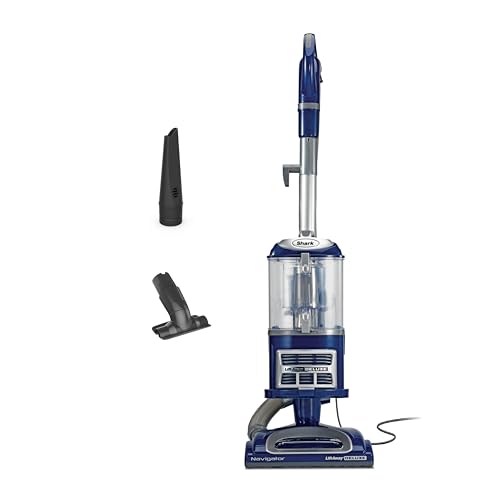
Shark Navigator Lift-Away NV360 delivers powerful suction with HEPA filtration and swivel steering. Perfect for pet hair and allergens. See full expert review.
2. Kenmore Elite 21814 Bagged HEPA Canister — Best for Raw Garage and Workshop Concrete
Rating: 4.0 stars
For a working garage or shop floor, a heavy-duty bagged canister is the right tool. The Kenmore Elite 21814 is a full-size HEPA canister with genuine industrial pulling power and the construction to handle demanding environments.
The bagged design is a significant advantage in dusty concrete settings. When you remove a bag from a raw concrete cleanup, the dust stays inside the sealed bag — there is no cloud of fine silica released back into the air the way there can be when emptying a bagless bin. HEPA bags add another layer of filtration efficiency. For garage and workshop use where silica dust is a real occupational health concern, bagged is the safer choice.
The Kenmore Elite 21814 also includes a wide range of attachments and a variable suction control, which gives you the ability to drop suction for light dust pickup or push it up for embedded grit on rough concrete.
Best for: Raw unsealed garage and workshop concrete, heavy debris loads, users who prioritize dust containment during emptying.

Kenmore Elite 21814 bagged HEPA canister with Pet PowerMate lifts pet hair on all floors. Dual-motor power, LED dirt sensor. Read our full review.
3. Eureka WhirlWind Bagless Canister NEN110A — Best Value Concrete Vacuum
Rating: 4.2 stars | 43,000+ reviews
View the Eureka WhirlWind NEN110A
With 43,000+ reviews at 4.2 stars, the Eureka WhirlWind NEN110A has earned its place as one of the most trusted value canisters on the market. For sealed basement concrete, light workshop floors, and general utility concrete cleaning, it delivers strong performance at a price point that makes it easy to dedicate a vacuum specifically to the concrete areas of your home.
The canister format is inherently better for concrete than an upright for one reason: it keeps the motor unit off the floor. On concrete, floor-level debris is often coarser than what most upright vacuums expect. Pulling a canister behind you across a concrete floor while using a wand attachment gives you more control over the head angle and keeps the main unit away from rough surfaces.
The WhirlWind’s bagless design is convenient, though we recommend emptying it outside or over a trash bag to minimize silica dust re-exposure.
Best for: Sealed and painted basement floors, apartment concrete, budget-focused buyers who want proven reliability without paying for premium filtration.

Eureka WhirlWind NEN110A bagless canister vacuum with 2.5L dust cup, swivel steering, and multi-surface cleaning. Lightweight and easy to use.
4. Eureka NEN186BL Bagless Canister with HEPA — Best Budget HEPA Option for Concrete Dust
Rating: 4.2 stars
The Eureka NEN186BL is the HEPA-equipped version of Eureka’s canister lineup, and it fills an important gap: a budget canister vacuum with genuine HEPA filtration for concrete dust. If your concrete floor is raw or semi-porous and fine dust is a concern, but budget prevents you from stepping up to the Kenmore Elite, the NEN186BL is the right compromise.
HEPA filtration at this price point is not common. The NEN186BL delivers it without the bagged design of the Kenmore, which keeps ongoing costs low since you are not buying replacement bags. The tradeoff is the loose-bin emptying that comes with any bagless design — again, empty it outside or into a sealed bag.
For polished concrete in a finished space, the NEN186BL is also a sound choice: its attachments allow for suction-only floor cleaning, and HEPA ensures that fine particles stirred up from even a finished surface are captured properly.
Best for: Raw and semi-sealed concrete where HEPA is needed but budget is constrained, polished concrete in finished spaces.

Eureka NEN186BL bagless canister vacuum with 1000W motor, 16KPa suction, washable HEPA filter, and 2L dustbin. Lightweight and ideal for carpets and floors.
5. Shark PowerPro IZ382H HEPA Cordless — Best for Polished and Decorative Concrete
Rating: 4.1 stars
View the Shark PowerPro IZ382H
Polished and decorative concrete in living spaces benefits from a different type of vacuum than a garage floor. A corded canister dragged across a polished surface risks cord-related scratches along baseboards and walls. A cordless vacuum gives you better control, less mechanical interaction with the floor, and enough maneuverability to clean under low furniture where polished concrete extends.
The Shark PowerPro IZ382H is a cordless HEPA vacuum with FloorDetect technology, which automatically adjusts suction based on what type of floor it is cleaning. For polished concrete, this means the vacuum is not over-driving its brush against a delicate surface. The HEPA filter captures fine concrete dust even from a finished surface — polished concrete still sheds particles, just at a much lower rate than raw concrete.
The cordless format also means you can move easily between polished concrete in a living area and other floor types in adjacent rooms without swapping vacuums. Battery life is sufficient for most residential cleaning sessions.
Best for: Polished and decorative concrete in living spaces, finished basement floors, modern homes where polished concrete is a design element.
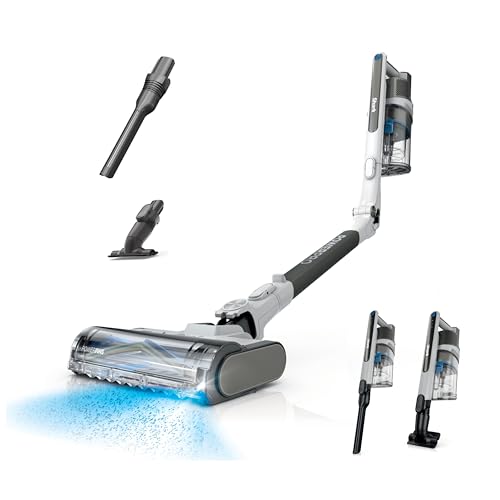
Shark IZ382H cordless vacuum with FloorDetect, Dirt-Reveal tech, HEPA filter & 50-min runtime. No hair wrap, converts to hand vac. Shop now.
When NOT to Use a Regular Vacuum on Concrete
There are scenarios where a standard household vacuum — even the best ones on this list — is the wrong tool for the job.
Wet or damp concrete. Liquid in a dry vacuum causes motor damage and can create an electrical hazard. If concrete is wet from cleaning, flooding, or condensation, use a wet/dry shop vac designed for liquid pickup first. Let the surface dry before using a household vacuum.
Heavy sand or construction debris. After concrete work, renovation, or major tracked-in sand, the volume and particle weight can overwhelm a household vacuum’s motor and clog filters rapidly. A wet/dry shop vac handles this load better — it is built for high-debris-volume situations.
Metal shavings or sharp debris. Metal filings, shards of broken tile, staples, or nails in a workshop or garage floor will puncture a standard vacuum’s hose and potentially damage the fan or motor. Clean these mechanically with a broom and dustpan first, or use a shop vac designed for debris pickup.
Post-renovation concrete dust. If concrete was recently cut, drilled, or ground — by contractors or during home renovation — the resulting dust volume and particle concentration exceeds what HEPA household vacuums can handle safely in one session. Use a contractor-grade HEPA vacuum or shop vac first to reduce the bulk load, then follow with a household HEPA vacuum for the fine residual dust.
Frequently Asked Questions
Can I use a regular vacuum on concrete floors?
Yes, for sealed and polished concrete in residential settings, a standard household vacuum works well. For raw or unsealed concrete — especially in garages and workshops — choose a vacuum with HEPA filtration and a large capacity bin or bag to handle the volume of fine concrete dust and coarse debris.
What is the best vacuum for a concrete garage floor?
A heavy-duty bagged HEPA canister like the Kenmore Elite 21814 is the strongest choice for raw garage concrete. It provides strong suction, HEPA dust containment, and sealed-bag emptying that prevents fine silica dust from re-entering the air. For lighter garage use, the Eureka NEN186BL offers HEPA at a lower price point.
Will a vacuum scratch polished concrete?
A vacuum with soft rubber wheels and a suction-only or soft-bristle floor head will not scratch polished concrete under normal use. Avoid vacuums with hard plastic housing that drags on the floor and avoid aggressive spinning brush rolls. The Shark PowerPro IZ382H is designed for delicate hard floors and is a safe choice for polished concrete.
Do I need HEPA for concrete floors?
For raw and unsealed concrete — especially in garages and workshops — HEPA is strongly recommended. Concrete dust contains crystalline silica, a fine particle linked to respiratory issues with repeated long-term exposure. HEPA filtration captures these particles rather than exhausting them back into the air. For sealed or polished concrete in finished living spaces, HEPA is still a good idea but less urgent.
Why does my vacuum lose suction on concrete?
Concrete debris — especially fine dust — clogs filters faster than typical household dust. Check and clean your filter regularly when vacuuming concrete. With bagless vacuums, fine concrete dust can also coat the bin walls and reduce effective capacity. Empty the bin more frequently when cleaning concrete than you would on carpet or hardwood.
Can I vacuum concrete dust with a shop vac?
Yes, and for heavy or post-construction concrete dust, a wet/dry shop vac is often the better first step. However, most shop vacs do not have HEPA-grade filtration unless you purchase a HEPA filter attachment specifically. For fine silica dust cleanup in a living or workshop environment, add a HEPA filter to your shop vac or follow shop vac cleanup with a HEPA household vacuum.
Is a canister or upright vacuum better for concrete?
Canisters generally perform better on bare concrete because they keep the motor off the floor, allow better wand control for angled cleaning, and tend to have larger capacity than uprights. The Kenmore Elite 21814 and Eureka NEN110A/NEN186BL are all canister designs for this reason. Uprights like the Shark Navigator NV360 work well on sealed and polished concrete but are less ideal for heavy raw-concrete debris work.
Bottom Line
Concrete floors are not a single category, and the right vacuum depends on what type of concrete you are dealing with. For raw garage and workshop concrete, prioritize HEPA filtration, large capacity, and a bagged canister design — the Kenmore Elite 21814 is the strongest pick. For sealed and painted basement floors, the Eureka WhirlWind NEN110A or Eureka NEN186BL delivers reliable performance at strong value. For polished and decorative concrete in finished living spaces, the Shark PowerPro IZ382H brings the cordless convenience and gentle floor handling that delicate concrete finishes need. And for a single vacuum that handles concrete alongside every other floor type in the house, the Shark Navigator NV360 remains one of the most proven multi-surface HEPA uprights available at any price point.
Match your vacuum to the concrete type, empty the bin or bag regularly to maintain suction, and replace HEPA filters on schedule — concrete environments tax filtration faster than any other residential floor surface.
Ready to Find Your Perfect Vacuum?
Browse our expertly reviewed vacuum cleaners and make an informed decision
Browse All Vacuums