Best Vacuum for Construction Dust: HEPA-Sealed Picks for Job Sites & Renovations
Construction dust is dangerous and destroys regular vacuums. Find the best HEPA vacuums safe for construction dust, drywall, concrete, and sawdust cleanup in 2025.

Table of Contents
- Best Vacuum for Construction Dust: HEPA-Sealed Picks for Job Sites & Renovations
- Understanding Construction Dust: Not All Dust Is the Same
- Why Regular Vacuums Fail at Construction Sites
- What You Actually Need: Filtration Standards Explained
- Safety Procedures for Construction Dust Cleanup
- Top Picks: Best Vacuums for Construction Dust
- When to Rent a Commercial HEPA Vacuum Instead of Buying
- Frequently Asked Questions
- Final Thoughts
Best Vacuum for Construction Dust: HEPA-Sealed Picks for Job Sites & Renovations
Renovation projects and construction work create some of the most hazardous dust you will ever encounter in a residential or commercial setting. Drywall dust coats every surface in a room. Concrete grinding generates microscopic silica particles that cause permanent lung damage. Sawdust from cutting pressure-treated lumber carries toxic preservatives. And insulation fibers irritate skin, eyes, and airways long after the work is done.
The problem is that most homeowners — and even some contractors — reach for a standard shop vac or household vacuum to clean up after construction work. That is a serious mistake. Regular vacuums lack the filtration to capture the finest and most dangerous particles, and many simply exhaust construction dust back into the room at high velocity, making the air quality worse than if you had swept. This guide explains exactly what you need in a vacuum for construction dust, why the stakes are higher than most people realize, and which specific models are genuinely up to the task.
Understanding Construction Dust: Not All Dust Is the Same
Construction environments produce several distinct types of dust, each with different particle sizes, compositions, and health implications. Knowing what you are dealing with determines what level of filtration you actually need.
Drywall Dust
Drywall dust — generated by cutting, sanding, and finishing gypsum wallboard — is among the most common construction dust types in residential renovation. It consists primarily of calcium sulfate (gypsum), with smaller amounts of paper fiber and, in some products, additives. Drywall dust is extremely fine: particles can range from under 1 micron to over 100 microns in size. The finest particles stay suspended in air for hours after sanding, infiltrating HVAC systems, settling on furniture and electronics in adjacent rooms, and being inhaled deep into the lungs.
While drywall dust is not acutely toxic in the way silica dust is, chronic exposure causes respiratory irritation, and the dust’s abrasive quality makes it destructive to vacuum motors and filters that are not rated for fine particulates.
Silica and Concrete Dust
This is the most dangerous category of construction dust and the one that demands the highest filtration standard. Cutting, grinding, or drilling into concrete, brick, mortar, sandstone, or tile generates crystalline silica dust — particles of silicon dioxide (SiO2) that measure below 10 microns and often below 4 microns. At that size, particles travel past the nose and throat and lodge permanently in the deepest tissues of the lungs.
The result is silicosis — an incurable, progressive, and potentially fatal lung disease. OSHA regulates worker exposure to respirable crystalline silica under 29 CFR 1926.1153, with a permissible exposure limit of 50 micrograms per cubic meter of air as an 8-hour time-weighted average. Silica exposure is also linked to COPD, kidney disease, and lung cancer. There is no safe level of exposure, and damage accumulates silently over years before symptoms appear.
No standard household vacuum — and no standard shop vac — is adequate protection against silica dust. This category of dust requires a vacuum with at minimum HEPA Class H13 filtration in a fully sealed system.
Sawdust and Wood Dust
Sawdust from carpentry and millwork is generally less hazardous than silica dust, but it is not benign. Hardwood dust — particularly from oak, ash, beech, and walnut — is classified as a human carcinogen by the International Agency for Research on Cancer (IARC). Softwood dust and dust from processed wood products (MDF, particleboard, plywood) can contain adhesives, formaldehyde, and other volatile compounds that add to the health burden.
Sawdust particle sizes vary widely depending on the cutting method, but fine sawdust from sanding or routing can reach sub-10-micron sizes and behave similarly to other fine dust hazards.
Insulation Fibers
Fiberglass and mineral wool insulation shed short glass or mineral fibers during installation and removal. These fibers irritate skin and mucous membranes on contact and can cause respiratory irritation when inhaled. While the long-term carcinogenic risk of fiberglass fibers has been substantially revised downward compared to asbestos, older insulation materials — and any vermiculite insulation from before 1990 — may contain asbestos and must be handled with extreme caution under professional abatement protocols. Never vacuum material you suspect contains asbestos.
Why Regular Vacuums Fail at Construction Sites
Standard Filters Let Hazardous Particles Through
A standard household vacuum filter, even one marketed as a “multi-layer” or “allergen” filter, is not rated to capture the finest and most dangerous construction dust particles. Filters in consumer vacuums are typically rated for particles down to 5 or 10 microns — which means silica particles, fine drywall dust, and fine sawdust particles pass directly through the filter and are expelled into the room air.
Unsealed Housings Create Bypass Paths
Even if a vacuum has a HEPA filter installed, an unsealed housing means air can bypass the filter through gaps around the dustbin, between housing components, or at hose connection points. Construction dust is so fine that it finds any gap. An unsealed vacuum with a HEPA filter may still exhaust significant amounts of fine dust.
Motors Are Destroyed by Construction Dust
The abrasive quality of drywall dust, concrete dust, and silica is extreme. These particles wear down motor bearings, armatures, and brushes far faster than household dust. A regular vacuum used regularly for construction dust cleanup will have a dramatically shortened lifespan.
What You Actually Need: Filtration Standards Explained
True HEPA vs. HEPA-Type vs. HEPA-Sealed — A Critical Distinction
This is the most important thing to understand before buying any vacuum for construction dust.
HEPA-Type / HEPA-Like: Marketing language. These filters are made to resemble HEPA filters but are not tested to the HEPA standard. They typically capture around 85–95% of particles at 0.3 microns. Not acceptable for construction dust.
True HEPA: A filter that has been tested and certified to capture at least 99.97% of particles at 0.3 microns — the “most penetrating particle size” (MPPS). This is the minimum filter rating for dealing with construction dust.
HEPA H13 (Class H13): The European EN 1822 standard defines HEPA H13 as capturing at least 99.95% of particles at the MPPS. In practice, H13-rated filters perform very similarly to True HEPA, and the distinction matters most in high-volume industrial settings.
HEPA-Sealed System: This is where the critical distinction lies. A vacuum can be equipped with a True HEPA or H13 filter and still be inadequate for construction dust if the vacuum’s housing is not fully sealed. A sealed HEPA system means all airflow through the vacuum is forced through the HEPA filter — there are no bypass paths. Look specifically for this designation on any vacuum you consider for construction dust cleanup.
Bagged vs. Bagless for Construction Dust: Bagged vacuums have a strong advantage for construction dust disposal. The bag acts as a primary filtration layer throughout the vacuuming session, and when the job is done, you seal the bag and discard it without exposing yourself to a cloud of collected dust. Bagless vacuums require you to open and empty a dustbin full of hazardous particles — a significant re-exposure risk. For silica and fine drywall dust, the bagged approach is safer. If using a bagless vacuum, empty the dustbin outdoors while wearing a respirator.
Safety Procedures for Construction Dust Cleanup
The vacuum is only one layer of protection. Construction dust cleanup should follow a hierarchy of controls.
Use wet methods first where possible. Misting a surface with water before sweeping or vacuuming suppresses fine particles and prevents them from becoming airborne. Many OSHA-compliant silica control programs require wet methods as a primary control.
Ventilate the work area — but carefully. Opening windows and running fans helps dilute airborne dust, but be aware that fans can also carry fine dust into adjacent clean areas of a building. Seal doorways with plastic sheeting before beginning dusty work.
Wear appropriate PPE. At minimum, wear an N95 respirator rated for fine particulates during construction dust cleanup. For silica-generating work — concrete grinding, tile cutting, masonry work — OSHA requires a half-face respirator with a P100 filter or a N95 at minimum, depending on exposure levels. Safety glasses and disposable coveralls are also advisable for heavy dust environments.
Vacuum before sweeping or blowing. Never use compressed air to blow down construction dust — this launches fine particles into the air in concentrations far exceeding safe exposure levels. Vacuum first, then use damp methods for residual dust on surfaces.
Dispose of collected dust safely. Seal vacuum bags before removing them. Double-bag collected construction dust before placing it in trash. For large volumes of silica-containing material, check local regulations on disposal.
Top Picks: Best Vacuums for Construction Dust
These picks are selected for their sealed HEPA filtration, real-world performance with fine dust, build quality relative to price, and verified user feedback across tens of thousands of reviews.
Best Bagged Canister: Kenmore Elite 21814 CrossOver Canister
Rating: 4.0 stars | Bagged HEPA Filtration
The Kenmore Elite 21814 CrossOver Canister is the top bagged pick for construction dust cleanup in residential renovation settings. The bagged design addresses the single most important disposal consideration: when you finish vacuuming drywall dust or sawdust, you seal the bag and discard it without re-exposing yourself to collected material. The HEPA filtration system captures fine particles throughout the session, with the bag adding a substantial primary filtration layer before air ever reaches the HEPA filter.
The CrossOver design combines the capacity and power of a canister vacuum with upright-style maneuverability. Multiple suction settings let you dial back power when working on softer surfaces or preserve full suction for heavy construction debris. Replacement bags are widely available and reasonably priced.
For renovation-specific use — finishing a drywall installation, cleaning up after tiling, or post-construction final cleanup in a completed room — this is the choice that prioritizes safe dust containment at every stage of the process.
Best for: Drywall dust cleanup, final renovation cleanup, households prioritizing safe disposal of fine construction dust.

Kenmore Elite 21814 bagged HEPA canister with Pet PowerMate lifts pet hair on all floors. Dual-motor power, LED dirt sensor. Read our full review.
Best Overall Sealed HEPA Upright: Shark Navigator NV360
Rating: 4.4 stars | 52,000+ reviews | Sealed HEPA
The Shark Navigator NV360 is consistently one of the highest-rated vacuums in its class for a reason: it combines a fully sealed HEPA filtration system with strong, sustained suction and a Lift-Away canister design that adds real versatility for construction cleanup situations.
The sealed HEPA system is the defining feature for construction dust purposes. Airflow is fully routed through the HEPA filter with no bypass paths — the standard that separates useful from dangerous when you are dealing with fine silica-containing particles. With over 52,000 reviews and a 4.4-star rating, the NV360’s real-world performance across a wide range of dust types is extensively documented by users.
The Lift-Away feature detaches the canister pod, allowing you to carry it independently and use hose attachments for vacuuming walls, window trim, ceiling corners, and other surfaces that collect construction dust during a renovation. This is particularly useful during the detailed cleanup phase after framing, drywall, or finish carpentry work.
As a bagless vacuum, empty the dustbin outdoors and wear your respirator when doing so. Clean the HEPA filter after each heavy construction dust session.
Best for: Whole-room construction dust cleanup, multi-surface renovation vacuuming, users who want a strong all-around machine with verified sealed HEPA performance.
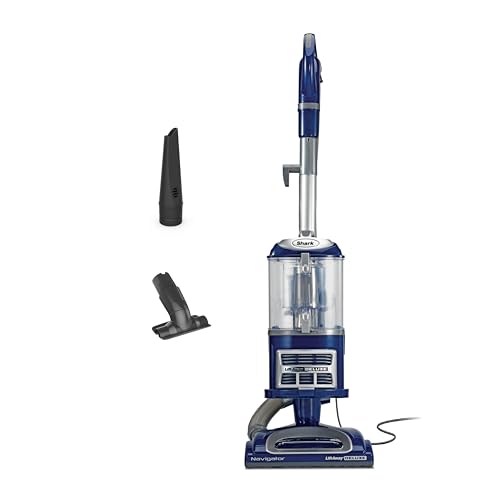
Shark Navigator Lift-Away NV360 delivers powerful suction with HEPA filtration and swivel steering. Perfect for pet hair and allergens. See full expert review.
Best Cordless Option: Shark PowerPro IZ382H
Rating: 4.1 stars | 25,000+ reviews | HEPA Filtration
The Shark PowerPro IZ382H addresses a real problem on construction job sites and active renovation projects: power cords and hoses are obstacles and hazards when you are working around tools, building materials, and unfinished spaces. The cordless format eliminates that problem and allows you to move freely through a space without managing a cord around debris.
With over 25,000 reviews and a 4.1-star rating, the IZ382H has a strong track record for suction performance in real-world conditions. The HEPA filtration captures fine construction dust particles, and the FloorDetect technology automatically adjusts suction and brush settings based on surface type — useful in renovation environments where you are transitioning between bare subfloor, plywood, concrete, and finished surfaces in the same cleaning session.
Battery life is the practical limitation to keep in mind: cordless vacuums are best suited for cleanup of contained areas or targeted dust control rather than whole-house post-renovation cleanup. For large jobs, have a backup battery charged and ready.
Best for: Job site cleanup in active construction environments, cordless convenience in spaces where running cords is impractical, contractors who clean as they work rather than in a single end-of-day session.
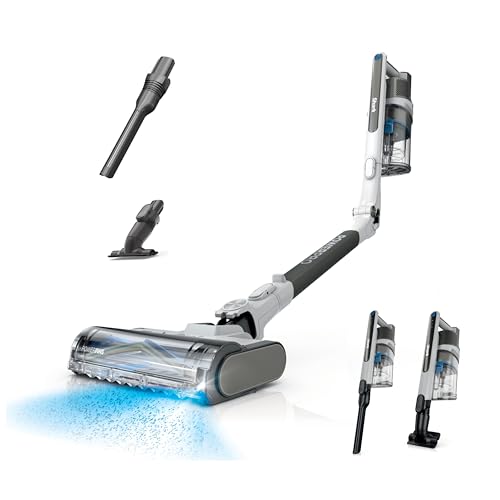
Shark IZ382H cordless vacuum with FloorDetect, Dirt-Reveal tech, HEPA filter & 50-min runtime. No hair wrap, converts to hand vac. Shop now.
Best Lightweight Canister: Eureka NEN186BL
Rating: 4.2 stars | HEPA Filtration
The Eureka NEN186BL Canister Vacuum is a lightweight, maneuverable canister that delivers HEPA filtration at an accessible price point. For homeowners undertaking a single renovation project — replacing flooring, doing a bathroom tile job, or finishing a basement — who need a capable vacuum without a large investment, this is a practical choice.
The canister form factor provides real advantages for construction dust cleanup: the motor and filtration unit sit away from the cleaning head, giving you reach into corners, along baseboards, and into the details of trim work where fine construction dust accumulates. The lightweight design reduces fatigue during extended cleanup sessions.
As a bagless canister, take the same precautions as with any bagless vacuum for construction dust: empty the dustbin outdoors with respiratory protection in place, and clean the HEPA filter after each use. The filter load from a single drywall sanding cleanup can be substantial, and a clogged filter will drop suction noticeably.
Best for: Single renovation projects, homeowners who want capable HEPA filtration without a large investment, canister users who prefer maneuverability over upright bulk.

Eureka NEN186BL bagless canister vacuum with 1000W motor, 16KPa suction, washable HEPA filter, and 2L dustbin. Lightweight and ideal for carpets and floors.
When to Rent a Commercial HEPA Vacuum Instead of Buying
For some construction dust situations, buying even a high-quality consumer vacuum is not the right answer. Here is how to know when renting a commercial unit makes more sense.
Silica-generating work (concrete grinding, masonry cutting, tile work): OSHA-compliant silica dust control on job sites typically requires a vacuum rated to HEPA or better that is also certified to meet specific airflow and capture standards. Commercial HEPA vacuums designed for construction — brands like Nilfisk, Festool, and Pullman-Holt — are specifically rated for use with angle grinders, chop saws, and other silica-generating tools. They are larger, heavier, and significantly more expensive than consumer units, but they are the appropriate tool for occupational silica exposure control. Renting from a construction equipment rental company for a single project is often the most practical option.
Asbestos abatement: Any suspected asbestos-containing material requires professional abatement with industrial HEPA vacuums rated for asbestos capture. This is a legal requirement in most jurisdictions, not just a safety recommendation.
Large commercial renovation projects: Whole-floor drywall finishing, post-fire cleanup, or remediation work after flooding involves dust volumes that consumer vacuums are not built to handle continuously. Commercial rental units offer the filter capacity, motor durability, and airflow rates for sustained high-volume use.
For most residential renovation scenarios — adding a room, redoing a bathroom, finishing a basement — a quality consumer vacuum with a sealed HEPA system is appropriate, provided you follow the safety procedures above.
Frequently Asked Questions
Can I use a regular shop vac for construction dust cleanup?
A standard shop vac without a HEPA filter is not safe for fine construction dust, particularly drywall dust or any dust containing silica. Standard shop vac cartridge filters allow fine particles to pass through and are expelled back into the room at high velocity. If you use a shop vac for construction dust, you must upgrade it with a HEPA-rated cartridge filter or HEPA filter bags specifically designed for fine dust. Even then, the sealed-system standard that applies to purpose-built HEPA vacuums may not be met by a modified shop vac.
What is the difference between HEPA-filtered and HEPA-sealed?
A HEPA-filtered vacuum has a HEPA filter installed but may allow air to bypass the filter through gaps in the housing. A HEPA-sealed vacuum routes all airflow through the HEPA filter with no bypass paths. For construction dust — particularly fine silica dust — only a HEPA-sealed system provides meaningful protection, because fine particles will find any gap in an unsealed housing and be expelled into the air you breathe.
How often should I replace the HEPA filter when vacuuming construction dust?
Construction dust loads HEPA filters far faster than regular household dust. Check your filter after every construction cleanup session and replace it according to manufacturer guidance — but expect to replace far more frequently than the standard interval listed in the owner’s manual. A HEPA filter that appears clean may still be at or near capacity from fine particulate loading. When suction drops noticeably, inspect and replace the filter. For washable HEPA filters, allow them to dry completely before reinstalling — a damp filter restricts airflow significantly.
Is drywall dust dangerous enough to require a HEPA vacuum?
Yes. While drywall dust is not acutely toxic in the way silica dust is, fine drywall particles in the sub-10-micron range can cause respiratory irritation and, with prolonged or repeated exposure, contribute to chronic respiratory conditions. Beyond the health consideration, drywall dust will clog and destroy a standard vacuum filter rapidly, and a clogged filter recirculates collected dust into the room. A sealed HEPA system is the correct tool for drywall dust cleanup.
Can I vacuum silica dust with any of these consumer vacuums?
Consumer vacuums with sealed HEPA systems provide meaningful protection for incidental silica dust cleanup — post-tile-work cleanup in a bathroom, for example. However, for occupational silica exposure during active cutting, grinding, or drilling into masonry or concrete, OSHA regulations require specific engineering controls including tool-mounted vacuum capture systems with vacuums certified to meet OSHA’s silica rule requirements. Consumer vacuums are not substitutes for OSHA-compliant engineering controls on job sites. For a DIY homeowner doing occasional tile work, a sealed HEPA consumer vacuum combined with proper respirator use provides a reasonable level of protection.
Should I use a wet or dry vacuum for construction dust?
The choice depends on the situation. For dry construction dust — drywall, sawdust, concrete dust after grinding — a dry vacuum with sealed HEPA filtration is the right tool. Some wet/dry vacuums with HEPA filtration can handle both dry construction dust and liquid cleanup, which is useful in active construction environments. If you use a wet/dry vacuum for fine dust, ensure the filter configuration is rated for fine dry dust — some wet/dry vacuums require a different filter configuration for dry use than for wet use, and using the wrong filter allows fine particles to bypass filtration entirely.
Final Thoughts
Construction dust is not a cleanup nuisance — it is a genuine health hazard that demands the right equipment. The risks range from the chronic respiratory irritation of repeated drywall dust exposure to the permanent, potentially fatal lung damage caused by crystalline silica. Regular vacuums without sealed HEPA systems make the problem worse by recirculating the most dangerous fine particles back into the air.
The core requirement is simple: a sealed HEPA filtration system, ideally in a bagged vacuum for safer disposal. The Kenmore Elite 21814 CrossOver Canister delivers that combination with the added safety of bagged collection. The Shark Navigator NV360 offers the most proven sealed HEPA performance across tens of thousands of real-world users. The Shark PowerPro IZ382H solves the cord problem on active job sites. And the Eureka NEN186BL brings HEPA capability to budget-conscious single-project renovators.
Choose the right vacuum for the job, follow proper safety procedures, and treat construction dust with the respect it deserves. Your lungs will still be working decades after the renovation is finished — make sure the dust does not shorten that timeline.
Kenmore Elite 21814 bagged HEPA canister with Pet PowerMate lifts pet hair on all floors. Dual-motor power, LED dirt sensor. Read our full review.
Ready to Find Your Perfect Vacuum?
Browse our expertly reviewed vacuum cleaners and make an informed decision
Browse All Vacuums