Best Vacuum for COPD 2026: Clean Air Starts With the Right Vacuum
Best vacuums for COPD sufferers with true HEPA filtration and sealed systems to minimize airborne particles and protect lung health.
Table of Contents
Medical Disclaimer: This article is for informational purposes only and does not constitute medical advice. Always consult your physician or pulmonologist before making changes to your home environment or cleaning routine. Managing COPD is a medical matter, and your healthcare provider is your most important resource.
Chronic obstructive pulmonary disease affects more than 16 million Americans who have received a diagnosis, with millions more living with undetected symptoms. One of the least-discussed aspects of managing COPD at home is something almost everyone does without thinking: vacuuming. What should be a routine cleaning task can become a genuine health event for someone with compromised lung function if the wrong vacuum is used. Choosing the best vacuum for COPD is not about brand loyalty or price — it is about filtration quality, system integrity, and, increasingly, the option to let an autonomous robot do the hard work entirely.
This guide breaks down exactly what to look for, recommends six specific vacuums that earn their place on this list for real, measurable reasons, and closes with practical COPD-friendly cleaning habits that can make a meaningful difference in your daily indoor air quality.
Why COPD Makes Vacuuming a Respiratory Risk
COPD is an umbrella term for a group of progressive lung diseases — most commonly chronic bronchitis and emphysema — that obstruct airflow and make breathing difficult. The airways become inflamed, the alveoli (tiny air sacs in the lungs) lose their elasticity, and the body’s ability to exchange oxygen and carbon dioxide is steadily diminished.
The lungs of a person with COPD are, by definition, already working harder than healthy lungs just to manage normal breathing. Introducing airborne irritants — dust, dust mite debris, pet dander, mold spores, pollen, and fine particulate matter — forces those compromised airways to respond. Inflammation intensifies. Airways tighten. Mucus production increases. The result can range from a mild exacerbation with increased coughing and breathlessness to a serious flare-up requiring medical attention.
Here is the problem with vacuuming specifically: a conventional vacuum cleaner does not just pick up debris from the floor. It processes large volumes of air through its motor and exhausts that air back into the room. If the vacuum’s filtration is inadequate — or if it has air leaks in its housing, hose connections, or dust cup seals — it acts as an airborne particle dispersal machine. Fine particles that were settled on the floor become suspended in the air you breathe. Research has shown that vacuuming with a poorly sealed vacuum can temporarily increase airborne particle concentrations by a factor of several times above baseline.
For people with healthy lungs, this is mildly unpleasant. For someone with COPD, it can be dangerous.
There is also the physical exertion factor. Pushing a heavy upright vacuum across carpet requires sustained physical effort. For a person with COPD, physical exertion elevates the demand for oxygen and increases breathing rate, both of which stress already-limited lung capacity. This is why robot vacuums — which eliminate the need for the person to vacuum at all — are not just a convenience option for COPD sufferers; they are a genuinely therapeutic choice.
Key Features to Look For in a Vacuum for COPD
True HEPA Filtration
Not all HEPA filters are created equal. True HEPA (also called Absolute HEPA) filtration is a specific standard: a filter must capture at least 99.97% of airborne particles at 0.3 microns in diameter. Why 0.3 microns? Because that particle size is the hardest to trap — smaller particles follow air currents more predictably, while larger ones are captured more easily. A filter certified to capture 99.97% at 0.3 microns is capturing virtually everything else at even higher efficiency rates.
Filters marketed as “HEPA-type,” “HEPA-style,” or “99% HEPA” do not meet this standard. For COPD, only a true HEPA filter provides the level of particle capture that matters. Look for explicit True HEPA certification or labeling that states 99.97% capture at 0.3 microns.
Sealed System (Anti-Allergen Complete Seal)
A true HEPA filter inside a vacuum that leaks air is almost worthless. The vacuum housing, hose connections, dust cup seals, and filter housing must all work together as a sealed system to ensure that all air exiting the vacuum passes through the HEPA filter before being exhausted into the room.
Shark’s Anti-Allergen Complete Seal technology is the best-known implementation of this concept in the consumer vacuum market. It means every airflow pathway in the vacuum — from intake to exhaust — is sealed so that no unfiltered air escapes. Other brands use similar sealed-system designs, and some premium robot vacuums use allergen-locking dust bags in their docks. When shopping for a vacuum for COPD, the combination of True HEPA plus a sealed system is the non-negotiable starting point.
Robot Vacuum Options
For many COPD patients, the most important feature is not a filter — it is the ability to remove themselves from the vacuuming process entirely. Robot vacuums clean autonomously on a schedule, while the person is in another room, outside, or asleep. This eliminates the physical exertion of pushing a vacuum and also eliminates the exposure to disturbed particles during the cleaning process.
Modern robot vacuums with LiDAR navigation, self-emptying docks with allergen-locking bags, and strong suction are genuinely capable of handling whole-home floor maintenance. For COPD patients who live alone or who find traditional vacuuming physically taxing, a robot vacuum should be at or near the top of the shopping list.
Quiet Operation
COPD patients often experience fatigue and anxiety, and excessive noise can add to respiratory discomfort by triggering stress responses. A quieter vacuum — whether robotic or handheld — is a meaningful quality-of-life improvement. The eufy RoboVac 11S Max, discussed below, operates at noise levels comparable to a running microwave, which is notably quieter than most upright vacuums.
Lightweight Design
If a person with COPD does vacuum manually, weight matters enormously. Lifting, carrying, and maneuvering a heavy vacuum consumes oxygen and elevates breathing rate. Cordless stick vacuums and robot vacuums both minimize the physical burden of cleaning. Among upright vacuums, models with swivel steering reduce the force required to push and maneuver.
The 6 Best Vacuums for COPD in 2026
1. Shark NV501 Rotator Professional Lift-Away — Best Overall Sealed HEPA Upright
With over 44,000 verified ratings and a 4.4-star average, the Shark NV501 Rotator has been proven across thousands of households, including many with allergy and asthma concerns. For COPD patients, its core credential is the Anti-Allergen Complete Seal Technology paired with a true HEPA filter — a combination that traps 99.9% of dust, allergens, pollen, and fine particles and keeps them locked inside the vacuum instead of being recirculated into your breathing air.
The Lift-Away detachable pod is a genuine advantage here. When you need to clean stairs or above-floor surfaces, you detach the canister and carry it rather than dragging the entire upright — reducing the physical exertion required. The LED headlights illuminate hidden debris along baseboards and under furniture, so you can clean more thoroughly in fewer passes and spend less time vacuuming overall.
The comprehensive accessory kit includes a wide upholstery tool, dusting brush, and crevice tool. Advanced swivel steering means you can guide the NV501 through a room with minimal wrist and shoulder strain.
Why it works for COPD: True HEPA plus sealed system in a proven, widely trusted platform. Every particle that enters stays inside the vacuum until you empty the dust cup — and even then, the bottom-release mechanism minimizes dust exposure during disposal.
Weight: 15.5 lbs | Filtration: Anti-Allergen Complete Seal + True HEPA | Rating: 4.4/5 (44,242 reviews)
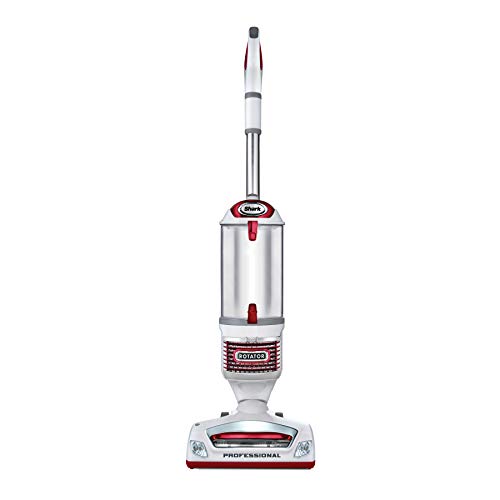
Shark NV501 Rotator Professional Lift-Away upright vacuum features HEPA filtration, swivel steering, LED headlights, and a detachable pod for portable cleaning.
2. Shark Navigator NV360 Lift-Away Deluxe — Best Budget Sealed HEPA Upright
View the Shark Navigator NV360
The Shark Navigator NV360 delivers the same Anti-Allergen Complete Seal with True HEPA filtration as more expensive Shark models, at a significantly more accessible price point. For COPD patients who need the core filtration credentials without a premium budget, this is the starting point.
With 52,141 customer reviews and a 4.4-star rating, the NV360 is one of the most validated vacuums in its class. Its Lift-Away detachable canister makes cleaning stairs and furniture effortless without requiring the person to wrestle the full machine into awkward positions. Swivel steering keeps maneuvering easy and low-effort.
The brushroll shutoff is an underrated feature for COPD patients specifically: on hard floors, disengaging the brushroll stops the mechanical agitation that can stir up fine particles. The vacuum relies on pure suction to capture debris on hard surfaces, which minimizes how much dust gets launched into the air during cleaning.
Why it works for COPD: The same sealed HEPA system as the NV501 at a lower price. The brushroll shutoff on hard floors reduces airborne particle disturbance.
Weight: 16 lbs | Filtration: Anti-Allergen Complete Seal + HEPA | Rating: 4.4/5 (52,141 reviews)
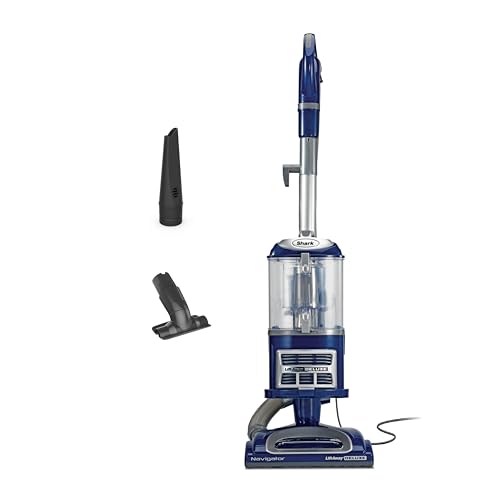
Shark Navigator Lift-Away NV360 delivers powerful suction with HEPA filtration and swivel steering. Perfect for pet hair and allergens. See full expert review.
3. Roborock Qrevo QV 35A Robot Vacuum & Mop — Best Premium Robot Vacuum
View the Roborock Qrevo QV 35A
For COPD patients who want to remove themselves from the vacuuming process entirely, the Roborock Qrevo QV 35A is one of the most capable autonomous floor care systems available. It generates 8,000Pa of HyperForce suction — powerful enough to extract fine dust and pet dander from carpet fibers — while the person can be in another room, outside, or asleep.
The all-in-one docking station is particularly important for COPD management. After every cleaning session, the robot returns to its dock and empties its dustbin automatically into a sealed 2.7-liter bag. This means you are not opening the robot’s bin and releasing a cloud of captured particulates into your breathing space. The bag holds seven to nine weeks of debris and is designed for clean, hands-free disposal when it needs changing.
PreciSense LiDAR navigation creates accurate, systematic floor maps so the robot cleans in efficient rows rather than bouncing randomly — ensuring thorough coverage in fewer passes. Dual spinning mops handle hard floor residue, and the 10mm mop lift automatically protects carpets when transitioning between surfaces.
Why it works for COPD: Complete removal of the person from the vacuuming process. Self-emptying dock with sealed bags means no dust exposure during maintenance. Strong suction ensures fine particles are captured rather than redistributed.
Suction: 8,000Pa | Dock Capacity: 2.7L sealed bag (~7-9 weeks) | Navigation: LiDAR | Rating: 4.3/5

Roborock Qrevo QV 35A robot vacuum and mop with 8000Pa suction, all-in-one dock, anti-tangle brushes, and dual spinning mops. Smart LiDAR navigation.
4. iRobot Roomba 105 Vac with AutoEmpty Dock — Best Self-Emptying Robot for Allergen Control
View the iRobot Roomba 105 Vac
The iRobot Roomba 105 Vac paired with its AutoEmpty Dock addresses one of the biggest COPD-related concerns with robot vacuums: what happens when the bin fills up. The AutoEmpty Dock holds up to 75 days of debris in a sealed bag engineered to trap 99% of allergens as small as 0.7 microns. When you change the bag, you lift it out and dispose of it with no dust exposure — a critical advantage for COPD patients who need to minimize every potential particle exposure event.
ClearView LiDAR navigation maps your home quickly and guides the robot in precise, row-by-row cleaning patterns rather than random bouncing. The 70X power-lifting suction (versus the older Roomba 600 series) is strong enough to extract embedded dirt and fine particles from both carpets and hard floors. The 3-stage cleaning system combines the powerful main brush with an edge-sweeping brush that cleans 20% better than previous generations along walls and in corners where dust accumulates.
Multiple control options — app, voice commands via Alexa or Google Assistant, or physical button — mean the robot can be operated from anywhere in the home without requiring physical proximity to the vacuum.
Why it works for COPD: 75-day sealed bag dock eliminates frequent bin-emptying dust exposure. LiDAR navigation ensures thorough floor coverage without any physical effort from the user.
Dock Capacity: 75 days | Allergen Filtration: 99% of particles ≥0.7 microns | Navigation: ClearView LiDAR | Rating: 3.6/5 (935 reviews)
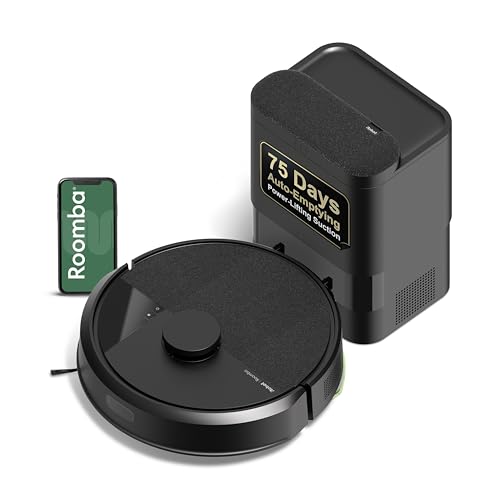
iRobot Roomba 105 Vac with AutoEmpty Dock offers 75-day hands-free cleaning, LiDAR navigation, and 70X power-lifting suction for all floor types.
5. Shark AZ2002 Vertex Powered Lift-Away — Best High-Performance Sealed HEPA Upright
The Shark AZ2002 Vertex represents the upper tier of Shark’s upright vacuum lineup, and it earns its place on this list for COPD patients who need the most thorough floor cleaning possible in a single pass. The Anti-Allergen Complete Seal with HEPA filtration traps 99.9% of dust and allergens down to 0.3 microns — identical to Shark’s other sealed models — but the Vertex adds DuoClean PowerFins technology that provides noticeably deeper cleaning performance on both carpets and hard floors.
The Powered Lift-Away feature is a step up from the standard Lift-Away found on the NV360 and NV501: when you detach the pod, the motorized nozzle remains powered, so you get full brushroll performance even when cleaning under low-clearance furniture in canister mode. This means fewer cleaning passes are needed, which translates directly to less time spent vacuuming and less physical exertion for the person doing the cleaning.
The self-cleaning brushroll prevents hair wrap without manual maintenance, and the 30-foot power cord with 5.5-foot hose provides excellent reach without requiring constant outlet changes.
Why it works for COPD: DuoClean PowerFins extract more debris per pass, reducing total vacuuming time and physical exertion. Powered Lift-Away mode enables deep under-furniture cleaning without awkward maneuvering.
Weight: 16.4 lbs | Filtration: Anti-Allergen Complete Seal + HEPA | Power: 1,344W | Rating: 4.3/5 (10,240 reviews)

Shark AZ2002 Vertex upright vacuum with DuoClean PowerFins, self-cleaning brushroll, Powered Lift-Away, and HEPA filtration. Ultimate power for pet hair and deep cleaning.
6. eufy RoboVac 11S Max — Best Quiet Budget Robot Vacuum
For COPD patients on a tighter budget who still want to eliminate the physical act of vacuuming, the eufy RoboVac 11S Max delivers genuinely useful autonomous cleaning at a fraction of the cost of premium robot vacuums. Its most distinctive quality for COPD is its exceptionally quiet operation — noise levels comparable to a running microwave — which makes it comfortable to run any time of day without contributing to stress or respiratory discomfort.
At just 2.85 inches tall, the 11S Max cleans under furniture, beds, sofas, and dressers that taller robot vacuums cannot reach. These under-furniture spaces are some of the most significant dust accumulation zones in any home, and addressing them consistently is important for maintaining low overall indoor particle levels.
BoostIQ technology automatically increases suction when transitioning from hard floors to carpet, ensuring adequate cleaning power on different surfaces without manual adjustment. The 100-minute runtime on hard floors is enough to cover the floor area of a typical apartment or single-story home on a single charge. When the battery runs low, the robot self-docks and recharges automatically.
Why it works for COPD: Budget-friendly autonomous cleaning eliminates the need to vacuum manually. Ultra-quiet operation is easy to tolerate and does not trigger stress responses. Slim profile cleans under furniture where dust concentrates.
Weight: 6.3 lbs | Height: 2.85 inches | Runtime: 100 minutes | Rating: 4.1/5 (16,258 reviews)
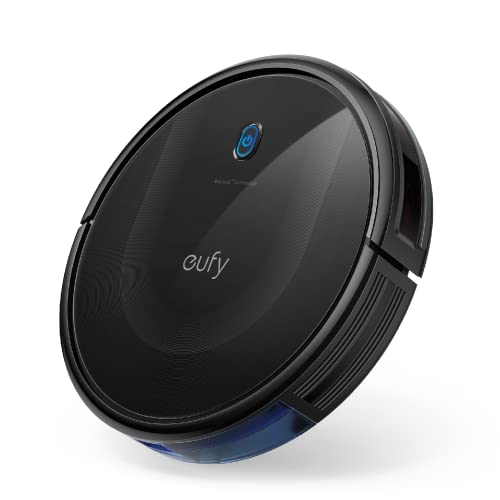
eufy RoboVac 11S Max super-thin robot vacuum with BoostIQ technology, 100-min runtime, and quiet operation. Ideal for hard floors and medium-pile carpets.
COPD-Friendly Vacuuming Habits
Choosing the right vacuum is half the battle. How you vacuum — or more precisely, how you set up your cleaning routine — matters just as much for managing indoor air quality with COPD.
Vacuum More Frequently, Not Less
The instinct for many COPD patients is to vacuum less often because of the particle disturbance it causes. The right response is actually the opposite: vacuum more frequently, but with the right equipment and habits. Shorter, more frequent sessions disturb fewer settled particles per session than infrequent deep cleans. A robot vacuum running daily on a schedule is ideal because it removes particulate matter before it has a chance to accumulate to significant concentrations.
Time Your Vacuuming Strategically
If you are vacuuming manually, choose a time when you can ventilate the home afterward. Open windows after vacuuming to exchange air and allow any particles that were disturbed during cleaning to clear. Avoid vacuuming immediately before bed or before spending extended time in a room, since even sealed HEPA vacuums disturb some airborne particles during operation.
If you use a robot vacuum, schedule it to run while you are out of the home or in a different part of the house — ideally with good ventilation in the area being cleaned.
Never Empty the Dust Cup Near Your Face
Even with a sealed HEPA vacuum, emptying the dust cup releases captured particles into the air. Always empty the dust cup into a sealed trash bag, hold your breath or wear a mask if possible, and dispose of the contents immediately. Some COPD patients ask a family member or caregiver to handle dust cup emptying entirely. Self-emptying robot vacuums with sealed docks eliminate this exposure risk altogether.
Replace Filters on Schedule
A HEPA filter that is clogged with captured particles loses effectiveness and can allow particle bypass. Follow the manufacturer’s recommended filter replacement schedule — typically every 6 to 12 months depending on usage — or more frequently if you have pets. Washable HEPA filters must be fully dry before reinstallation; a damp filter can develop mold that then circulates through the vacuum’s exhaust.
Pair Your Vacuum With an Air Purifier
A HEPA vacuum addresses floor-level particle sources. An air purifier with a true HEPA filter runs continuously to capture airborne particles throughout the room. For COPD patients, using both tools together provides the most comprehensive control over indoor particle levels. Position the air purifier in the room where you spend the most time, typically the bedroom.
Address Other Particle Sources
Vacuuming is one component of indoor air quality management for COPD. Other sources of indoor particles include cooking fumes, incense, candles, cigarette or wood smoke, and excessive humidity that supports mold growth. Minimizing these sources alongside a rigorous vacuuming routine provides the most complete protection for your airways.
Frequently Asked Questions
Is HEPA really necessary for COPD, or is any good vacuum sufficient?
For COPD, true HEPA filtration is strongly recommended rather than optional. Standard vacuum filters allow fine particles — the ones that penetrate deepest into the lungs — to pass through and be exhausted back into room air. The particles most harmful to COPD patients are precisely the ones that standard filters miss. True HEPA captures 99.97% of particles at 0.3 microns, which includes dust mite debris, mold spores, pollen, pet dander, and fine dust. These are the particles that trigger COPD exacerbations.
What is the difference between a HEPA filter and a sealed HEPA system?
A HEPA filter alone only guarantees filtration of the air that passes through that specific filter element. If the vacuum housing has gaps, loose connections, or unsealed seams, some of the air the vacuum processes bypasses the filter entirely and is exhausted unfiltered into the room. A sealed system ensures that every cubic foot of air the vacuum intakes must exit through the HEPA filter. Shark’s Anti-Allergen Complete Seal and similar technologies from other brands address this by sealing the entire vacuum as a unit. For COPD, the sealed system is just as important as the filter itself.
Can a robot vacuum really handle the job on its own, or do I still need a traditional vacuum?
Modern premium robot vacuums with LiDAR navigation and strong suction are capable of handling the majority of routine floor maintenance in most homes. They are particularly effective on hard floors and low-to-medium pile carpet. For deep carpet cleaning or homes with very heavy debris loads, an occasional session with a powerful upright like the Shark Vertex may still be needed. However, for COPD patients, a robot vacuum running daily or every other day significantly reduces the need for manual vacuuming, which is a meaningful health benefit. Many COPD patients use a robot vacuum as their primary cleaning tool and supplement it with a sealed HEPA upright only for periodic deeper cleaning.
Is vacuuming always bad for COPD, even with the right vacuum?
The right vacuum with true HEPA filtration and a sealed system dramatically reduces but does not completely eliminate all particle disturbance during cleaning. Mechanical action on carpet always dislodges some particles. However, net indoor air quality is significantly better in regularly vacuumed homes than in poorly vacuumed ones — the question is using equipment that minimizes rather than amplifies particle exposure. Using a sealed HEPA vacuum is almost certainly better for your indoor air quality over time than not vacuuming, or using a poor-quality vacuum that redistributes particles.
How often should I vacuum if I have COPD?
More frequent, shorter sessions are generally better than infrequent deep cleans. If using a robot vacuum, running it daily or every other day keeps particle accumulation low. If vacuuming manually, two to three times per week is a reasonable frequency for most homes. High-traffic areas, pet owners, and homes with carpeting may benefit from more frequent cleaning. Discuss your specific home environment with your pulmonologist or respiratory therapist for personalized guidance.
Should I wear a mask while vacuuming?
Even with a sealed HEPA vacuum, wearing an N95 respirator while vacuuming provides an additional layer of protection for COPD patients who vacuum manually. This is especially relevant during dust cup emptying. That said, exerting yourself physically while wearing a respirator increases breathing effort, so discuss this approach with your doctor. The simplest solution for many COPD patients is a robot vacuum that eliminates direct exposure entirely.
Are bagged vacuums better than bagless for COPD?
Bagged vacuums offer a hygiene advantage during disposal: the bag seals the captured debris inside, and you replace the entire bag without releasing particles. Bagless vacuums require opening the dust cup and emptying it, which can release a puff of fine particles even when done carefully. However, modern bagless sealed HEPA vacuums with bottom-release mechanisms minimize this exposure, and self-emptying robot vacuum docks with allergen-locking bags essentially solve the problem entirely. Either type can work for COPD if the filtration and sealing credentials are strong.
VacuumExperts is reader-supported. When you click through to Amazon and make a purchase, we may earn a small commission at no extra cost to you. We only recommend products we have thoroughly researched and believe provide genuine value.
Ready to Find Your Perfect Vacuum?
Browse our expertly reviewed vacuum cleaners and make an informed decision
Browse All Vacuums