Best Vacuum for Disabled Person: Accessible Cleaning in 2026
Finding the right vacuum when mobility, strength, or dexterity is limited makes a genuine difference in daily quality of life. These are the best vacuums for people with disabilities, chronic illness, or limited mobility.
Table of Contents
Cleaning is a task most people take for granted — bend down, push a vacuum, empty a bin. But for the estimated 61 million adults in the United States living with some form of disability, those simple physical actions can be genuinely difficult, painful, or impossible. Chronic fatigue conditions, arthritis, multiple sclerosis, spinal injuries, visual impairments, Parkinson’s disease, and dozens of other conditions affect the ways people are able to interact with everyday appliances.
The right vacuum does not just make cleaning easier. For many people with disabilities, it means the difference between maintaining an independent living situation and relying on others for basic home tasks. It can reduce pain flares, conserve limited energy reserves, and restore a sense of control over one’s environment that chronic illness often takes away.
This guide approaches vacuum selection through the lens of genuine accessibility — not marketing language, but practical engineering considerations that affect real people’s ability to use these machines.
Understanding the Different Accessibility Needs
Not all disabilities affect vacuum use in the same way. Before identifying specific products, it helps to think through which physical demands of vacuuming are most relevant to a given situation.
Grip Strength and Dexterity Limitations
Conditions like rheumatoid arthritis, Parkinson’s disease, carpal tunnel syndrome, and stroke-related weakness can make gripping, squeezing trigger handles, and manipulating small controls difficult or painful. For these users, vacuums with ergonomic handle designs, large button controls, and trigger-free operation are important.
Upper Body Strength and Reach
Spinal conditions, post-surgical recovery, and shoulder injuries can limit the user’s ability to push, pull, or maneuver a heavy vacuum. Lightweight cordless stick vacuums or robot vacuums that eliminate physical effort entirely are often the most appropriate solutions.
Fatigue and Energy Conservation
Conditions like fibromyalgia, ME/CFS (chronic fatigue syndrome), lupus, MS, and cancer treatment side effects all involve some degree of post-exertional malaise — the significant worsening of symptoms after physical activity. For these users, the energy cost of cleaning is not trivial. Robot vacuums and lightweight cordless models can dramatically reduce the exertion required.
Mobility and Balance
For users who use wheelchairs, walkers, canes, or prosthetics, the physical layout of a vacuum matters enormously. Can it be operated from a seated position? Are the controls accessible from a wheelchair height? Is the weight distribution manageable for a user with limited lower body stability?
Visual Impairment
Vacuums with tactile button markings, simple and consistent controls, and audible feedback are more accessible for users with low vision. Voice-controlled robot vacuums via Amazon Alexa or Google Assistant are a significant accessibility tool for this group.
What to Look for in an Accessible Vacuum
Weight
This is the single most important specification for most users with disabilities. A vacuum under 5 pounds is genuinely lightweight. Most full-size uprights weigh 12 to 18 pounds — too heavy for many users with limited upper body strength. Cordless stick vacuums have made dramatic progress in this area; many quality models now weigh under 6 pounds with the battery installed.
Cordless Operation
Managing a power cord is a significant physical demand that is often overlooked. It requires constant spatial awareness, repositioning, and occasionally dealing with tangles. For users with cognitive challenges or fatigue conditions, eliminating the cord removes a meaningful source of frustration and potential hazard. Battery life of at least 30 minutes is the practical minimum for full-apartment cleaning.
Robot Vacuums
For users who cannot vacuum at all — whether due to wheelchair use, severe fatigue, or other physical limitations — a robot vacuum is not a luxury. It is an accessibility tool. Modern robot vacuums from Roborock, Dreame, and eufy can be scheduled daily via smartphone app, respond to voice commands through smart home integrations, and return automatically to dock and recharge. The best models require user intervention only for emptying the dustbin, which can often be extended to weekly with auto-empty base stations.
Handle Design and Trigger Operation
Vacuum handles vary enormously in ergonomic quality. Look for handles with large-diameter grips rather than thin handles that concentrate pressure on the palm. Trigger-style power controls that require sustained squeezing are problematic for users with arthritis — look for simple on/off button controls on the handle body instead.
Dustbin Access
Emptying a vacuum dustbin involves multiple physical steps: finding the release, holding the bin over a trash can, depressing a release button, and managing the cloud of dust that results. For users with limited hand strength, one-button bin release mechanisms are significantly easier to manage. Some models — notably the Shark IZ series — have particularly well-designed empty mechanisms that require minimal grip force.
Best Vacuums for Disabled Users
1. Roborock S8 MaxV Ultra Robot Vacuum
Roborock S8 MaxV Ultra Robot Vacuum
For users who need to eliminate physical vacuuming effort entirely, the Roborock S8 MaxV Ultra represents the current state of the art. Its auto-empty, auto-wash, and auto-refill base station means the vacuum can operate for weeks without requiring manual intervention. Scheduling via the Roborock app or through Amazon Alexa or Google Assistant voice commands requires only minimal smartphone interaction.
The S8 MaxV Ultra uses AI-powered obstacle avoidance with a front-facing camera system, meaning it navigates around power cords, pet toys, shoes, and other floor-level clutter without manual clearing. For users who cannot pre-clear rooms before vacuuming, this matters enormously. Suction power at 10,000 Pa is strong enough to extract debris from carpet pile as well as hard floors.
The primary limitation is cost — this is a premium product. The base station does require periodic attention to empty the dust collection bag and refill the clean water tank. For users with very limited hand function, the bag-based auto-empty system is significantly easier to manage than emptying a standard dustbin.
Best for: Users who cannot vacuum at all, wheelchair users, severe fatigue conditions.
2. eufy RoboVac 11S Robot Vacuum
eufy RoboVac 11S Slim Robot Vacuum
For users who want a capable robot vacuum without the complexity or cost of top-tier mapping systems, the eufy RoboVac 11S is the most accessible entry-level robot vacuum available. At 2.85 inches high, it navigates under most furniture. The remote control is simple and large-buttoned, and Alexa and Google Assistant support is included.
The RoboVac 11S does not have mapping capabilities — it navigates using bump-and-redirect logic rather than systematic room coverage. For straightforward floor plans, this is adequate. For users with complex home layouts or multiple rooms, a mapping-capable robot like the Roborock is a better choice. But at its price point, the eufy 11S delivers reliable daily floor maintenance that genuinely reduces the vacuuming burden.
Best for: Simple floor plans, budget-conscious users, basic daily floor maintenance.
3. Dyson V8 Absolute Cordless Stick Vacuum
Dyson V8 Absolute Cordless Stick Vacuum
When a user’s accessibility needs permit some active vacuuming but require a lightweight, ergonomic tool, the Dyson V8 strikes a strong balance. At 5.6 pounds, it is not the lightest cordless on the market, but the weight is distributed along the machine’s length in a way that reduces wrist and forearm strain compared to vacuums with front-heavy designs.
The Dyson V8’s trigger-style power control is the one legitimate ergonomic criticism — sustained trigger pressure is required to keep the motor running, which is problematic for users with arthritis or grip weakness. However, the V8 can be used in MAX mode with a single trigger press and a brief sustained hold that some users find manageable. Dyson’s point-and-shoot dustbin emptying mechanism is one of the cleanest implementations in the industry, requiring only a single lever pull rather than grip force.
For users with mild to moderate mobility limitations who can still vacuum but need a machine that does not strain their joints, the V8 is one of the best options available.
Best for: Users with mild mobility limitations, arthritis (excluding severe grip weakness), older adults.
4. Shark IZ462H Stratos Cordless Stick Vacuum
Shark IZ462H Stratos Cordless Stick Vacuum
Shark’s Stratos line represents some of the best ergonomic vacuum design currently on the market from an accessibility standpoint. The IZ462H weighs approximately 8.6 pounds — heavier than the Dyson V8 — but the handle geometry and weight distribution make it feel lighter in actual use than the spec suggests. The handle is positioned at a more neutral wrist angle than most stick vacuums, which meaningfully reduces the torque stress on the wrist during extended cleaning sessions.
The large button controls on the handle body are accessible for users with limited fine motor control, and the Clean Sense IQ automatic suction adjustment means users do not need to manually switch between floor types. The bin release is a smooth single-action mechanism that does not require strong grip pressure. Battery life of up to 60 minutes on the standard setting is sufficient for most apartment and small home cleanings in a single charge.
Best for: Users with wrist pain, those who need longer battery life, chronic pain conditions.
5. Bissell Featherweight Stick Vacuum 2033
Bissell Featherweight Stick Vacuum
For users on a tight budget who need the absolute minimum weight and physical demand, the Bissell Featherweight is a category of its own. At under 3 pounds, it is among the lightest powered vacuums available. It is a corded unit — not battery powered — which limits some use cases, but for users in small spaces where an outlet is always nearby, the cord is a manageable tradeoff for the dramatically reduced weight.
The Featherweight is not a high-performance vacuum. It is not designed for deep carpet cleaning or high-volume debris. But for users who need to quickly vacuum a small area — a bathroom, a kitchen — and who cannot manage the weight of a standard cordless machine, it fills a genuine gap. The simple two-position design (stick vacuum or handheld) requires no assembly or configuration, which reduces both the physical and cognitive demands of use.
Best for: Very limited strength, small spaces, users who need the simplest possible operation.
Accessibility Tips for Vacuum Use
Use a robot vacuum as your primary tool. Even if you can manage light vacuuming some days, scheduling a robot vacuum for daily maintenance dramatically reduces how much manual effort is needed on your hardest days.
Store your vacuum at accessible height. A vacuum stored in a closet that requires bending or reaching is a barrier to use. Wall-mount your cordless stick vacuum at chest height, or keep it on a counter or shelf where it can be retrieved without bending.
Schedule cleaning tasks strategically. For energy management, vacuuming is better done in the morning when energy reserves are higher for most chronic fatigue conditions. Short sessions of 5 to 10 minutes followed by rest are more sustainable than attempting to clean an entire home in one session.
Consider voice control integration. If you use a robot vacuum, setting up Alexa or Google Assistant voice control allows you to start, stop, and schedule cleaning without reaching for a phone or remote control.
Talk to an occupational therapist. OTs specialize in adapting daily living activities to individual physical capabilities. Many can suggest specific tools or techniques that would not appear in a standard product review — adaptive handles, grip aids, or vacuum modifications that make a meaningful difference.
FAQ: Vacuums for People with Disabilities
What is the lightest vacuum available?
The lightest powered vacuum cleaners weigh between 2.5 and 3 pounds. The Bissell Featherweight and similar ultra-light stick vacuums are in this category. Among cordless vacuums with good suction, the LG CordZero and several Dreame models are under 6 pounds including battery.
Can a robot vacuum replace manual vacuuming entirely?
For hard floors and low-pile carpets, a quality robot vacuum can handle 80 to 90 percent of routine vacuuming needs. High-pile carpets and stairs require manual attention. For users who cannot vacuum at all, even partial coverage represents a meaningful improvement in floor cleanliness.
Are there vacuums designed specifically for wheelchair users?
There are no mainstream vacuums marketed specifically for wheelchair users, but several designs work well from a seated position. Handheld vacuums and robot vacuums are the most accessible. Cordless stick vacuums can sometimes be used from a wheelchair for hard floors, with the handle adjusted to sitting height.
How do I vacuum stairs with limited mobility?
Stairs are the hardest surface for users with mobility limitations. A lightweight handheld vacuum — the Dyson V15 Detect in handheld mode, or the Black+Decker Dustbuster — is the most practical option. Using the vacuum from a seated position on a stair step while cleaning the step above is a common technique recommended by occupational therapists.
What about vacuums for users with visual impairment?
Robot vacuums with voice control via Alexa or Google Assistant are the most accessible option for users with significant visual impairment. The Roborock and eufy lines both support robust voice command integration. For manual vacuuming, simple two-setting machines with large tactile buttons are more accessible than vacuums with digital control panels.
The Bottom Line
The most important principle in choosing a vacuum for accessibility is to match the machine to the specific physical demands that are challenging rather than simply choosing “the lightest” or “the most automated.” A robot vacuum is transformative for a wheelchair user but may be unnecessary for someone who simply needs a lighter weight stick vacuum.
The Roborock S8 MaxV Ultra is the best option for users who need to eliminate manual vacuuming effort. The Dyson V8 and Shark Stratos are the best choices for users who can vacuum but need ergonomic improvements. The Bissell Featherweight serves users with extreme strength limitations at an accessible price. Whatever your specific situation, the right vacuum exists — and finding it genuinely improves quality of daily life.
Top Picks

eufy Omni C20 robot vacuum and mop combo with auto emptying, washing, and drying station. 7000Pa suction and 3.35-inch low profile. See the full review!
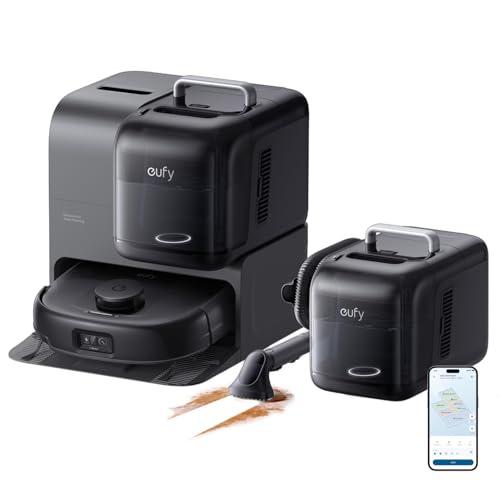
eufy E28 robot vacuum delivers 20000Pa suction, self-washing HydroJet mop, carpet deep cleaner & zero-tangling brushes. Shop now for hands-free clean.

iRobot Roomba Vac Q0120 robot vacuum with 3-stage cleaning, 120-min runtime & Alexa support. Self-charging & app-controlled. See why 50,000+ owners love it!

Shark IQ robot vacuum empties itself for 45 days, maps your home, and features a self-cleaning brushroll. Perfect for pet hair. Works with Alexa. Shop now!
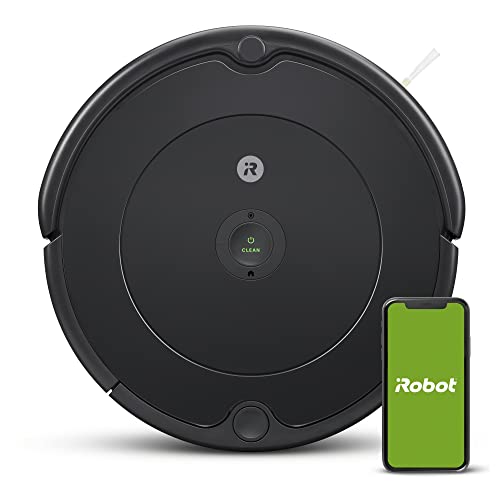
The iRobot Roomba 694 self-charges, navigates around furniture, and tackles pet hair on carpets and hard floors. Shop now for smarter daily cleaning.

DEEBOT T50 MAX PRO features 18,500Pa suction, auto hot-water mop washing & 12-in-1 Omni Station. Hands-free cleaning redefined. Shop on Amazon!
Ready to Find Your Perfect Vacuum?
Browse our expertly reviewed vacuum cleaners and make an informed decision
Browse All Vacuums