Best Vacuum for Double Coat Dogs: Surviving the Bi-Annual Blowout Season
Double-coated dogs like Huskies, Shepherds and Collies dump pounds of undercoat twice a year. Find the best vacuums for double coat dog breeds that handle coat blowouts.
Table of Contents
- Best Vacuum for Double Coat Dogs: Surviving the Bi-Annual Blowout Season
- What Is a Double Coat?
- What Happens During a Blowout?
- Why Regular Vacuums Fail During Blowout Season
- What to Look for in a Vacuum for Double-Coated Dogs
- The 5 Best Vacuums for Double Coat Dogs
- Frequently Asked Questions
- Conclusion
Best Vacuum for Double Coat Dogs: Surviving the Bi-Annual Blowout Season
Owning a double-coated dog is one of the most rewarding experiences a person can have. It also involves finding fur in your morning coffee, pulling clumps of undercoat off the couch cushions, and watching a perfectly clean floor re-coat itself within hours of vacuuming. Twice a year, this situation escalates into something that defies ordinary cleaning logic. Your dog sheds so much, so fast, that your current vacuum may simply not be built for the job.
This guide exists for that exact reason. Below you will find everything you need to understand the double coat shedding phenomenon — including what actually happens during a blowout, why most vacuums fail to keep pace, and which specific models have the capacity, suction, and engineering to handle it.
What Is a Double Coat?
The term “double coat” refers to a two-layer fur system that evolved in dogs bred for cold climates, herding work, and demanding outdoor conditions. Understanding the structure of this coat matters, because the two layers behave completely differently when they shed, and they pose entirely different challenges to your vacuum.
The Guard Hair Layer
The outer coat, called the guard hair or topcoat, is composed of longer, coarser, water-resistant hairs. These form a physical barrier against the elements — repelling moisture, blocking wind, and protecting the skin from debris and UV exposure. Guard hairs are the hairs you typically see when you look at the dog. They shed steadily throughout the year, but in modest amounts that most vacuums can handle.
The Undercoat
Beneath the guard hairs lies the undercoat: a dense, soft, insulating layer made up of shorter, finer fibers that trap heat close to the body. In winter, this layer thickens to provide insulation against cold. In warmer months, it sheds to allow the dog to regulate body temperature. It is this undercoat — not the guard hairs — that is responsible for the catastrophic shedding events double-coated dogs are known for.
Undercoat fibers are short, fine, and extraordinarily good at embedding themselves into carpet, upholstery, and fabric. They do not just sit on the surface — they work their way down into the pile through foot traffic and static charge, forming a matted layer that resists surface-level cleaning.
Which Breeds Have Double Coats?
The list is longer than most people expect. Common double-coated breeds include:
- Siberian Husky and Alaskan Malamute
- German Shepherd and Belgian Malinois
- Golden Retriever and Labrador Retriever
- Bernese Mountain Dog and Greater Swiss Mountain Dog
- Border Collie and Australian Shepherd
- Chow Chow, Samoyed, and Keeshond
- Shiba Inu and Akita
- Pomeranian and Corgi
- Newfoundland and Saint Bernard
If your dog is on this list — or any breed with a notably thick, plush, or weather-resistant coat — blowout season is a recurring reality you need to plan for.
What Happens During a Blowout?
Twice a year, typically in spring and fall, double-coated dogs shed their undercoat in a compressed, high-volume event triggered by changes in daylight and temperature. This is called a coat blowout, and it bears almost no resemblance to ordinary year-round shedding.
During a blowout, your dog is not simply losing the usual daily quota of fur. The entire undercoat is being replaced — the dog is physically pushing out the previous season’s insulating layer to make room for a new one. A medium-sized Husky or German Shepherd can shed several pounds of undercoat over the course of two to four weeks. A large Bernese Mountain Dog or Newfoundland may shed even more.
The Timeline
The blowout typically follows a recognizable progression:
Week 1: Shedding increases noticeably. You find more fur on furniture and floors. Your vacuum fills faster than usual but still manages.
Week 2: Shedding accelerates significantly. Clumps of undercoat begin to detach from the dog in visible tufts. Brushing produces alarming amounts of fur. Your vacuum bin fills in a single room.
Weeks 3 to 4: Peak shedding. Undercoat comes out in sheets. Furniture, carpet, and clothing are covered regardless of how often you clean. This is the phase where underpowered or small-capacity vacuums give up entirely.
Week 5 and beyond: Shedding gradually decreases. The new coat begins to set. Normal maintenance shedding resumes.
Indoor dogs and dogs in climate-controlled environments may experience less pronounced seasonal triggers, but the underlying biological process still occurs. Dogs that spend time outdoors in natural daylight cycles tend to have the most dramatic blowout events.
Why Blowout Fur Is Different
The undercoat fibers shed during a blowout have specific physical properties that make them particularly difficult to vacuum. They are:
- Short — typically one to three inches — which means they settle deep into carpet pile rather than lying on the surface
- Fine — thin enough to pass through non-HEPA filters and recirculate into the air
- Light — easily airborne, spreading through the home via HVAC systems and foot traffic
- Dense — in sufficient volume, they form matted layers that resist suction unless agitation is applied
A vacuum that handles normal pet shedding perfectly well may be completely overwhelmed by these characteristics when they appear in blowout volumes.
Why Regular Vacuums Fail During Blowout Season
Standard household vacuums — and even many vacuums marketed as “good for pets” — are engineered around typical shedding loads. During a blowout, your dog produces roughly ten to twenty times the normal daily volume of fur. The gaps in regular vacuum performance become instantly apparent.
Brushroll Jamming
This is the most common failure point. Long guard hairs and clumps of undercoat wrap around the spinning brushroll, creating friction, reducing rotation speed, and eventually stopping the brush entirely. At that point, the vacuum is generating suction but delivering almost no agitation to the carpet — meaning it is picking up surface debris but leaving the embedded undercoat untouched. Clearing a jammed brushroll mid-session is time-consuming and messy.
Dust Bin Overflow
The average upright vacuum has a dust bin capacity of 0.6 to 1.0 liters. During a blowout, a single pass through a medium-sized living room can fill that bin. When the bin is at capacity, suction drops sharply because airflow is restricted. You either stop constantly to empty it — breaking your cleaning rhythm — or you push on with reduced performance and leave behind more than you pick up.
Filter Clogging
Fine undercoat fibers penetrate filter media faster than coarser dust and debris. In a standard vacuum without a sealed HEPA system, fine fibers either clog the filter rapidly (dropping suction) or pass through it and re-enter the room air as airborne dander. Neither outcome is acceptable during a blowout when the volume of fine particulate is at its yearly peak.
Inadequate Suction Depth
Standard vacuum suction is calibrated for surface dirt. Embedded undercoat fibers that have been ground into carpet pile by foot traffic require significantly more suction power to extract. Vacuums without dedicated high-power modes or motorized brushrolls designed for deep carpet penetration leave the majority of embedded undercoat in place.
No Sealed System
Even vacuums that include a HEPA filter often allow air leakage around the filter housing. This means fine dander and undercoat particles bypass the filter entirely, returning to the air you breathe. For households with allergy or asthma sufferers, this is more than an inconvenience — it is a genuine health concern.
What to Look for in a Vacuum for Double-Coated Dogs
When selecting a vacuum specifically for managing coat blowouts, these are the features that separate adequate from exceptional.
1. Large Bin Capacity
Aim for at least 1.0 liter of dust bin capacity for an upright vacuum. During peak blowout, you will fill this with every session. Larger bins mean fewer interruptions and more consistent suction throughout the cleaning pass. On cordless stick vacuums, look for models with quick-release bins that empty cleanly in seconds.
2. Sustained High Suction Power
Look for a motor design that maintains strong suction as the bin fills. Multi-cyclonic suction systems are particularly well-suited here: they separate debris from the airstream before it reaches the filter, meaning suction degrades much more slowly than in single-cyclone designs. For upright models, look for multi-stage cyclonic suction. For cordless sticks, look for high-wattage motors in the 250W range or above.
3. Anti-Tangle or Motorized Brushroll
This is non-negotiable for double-coated breeds. During a blowout, you will be vacuuming hair in volumes that will jam a standard brushroll within minutes. Look for:
- Anti-tangle brushroll designs that use rubber fins or spiral blade configurations to resist hair wrap
- Motorized pet tools that power a separate brushroll for upholstery and stairs
- Easily removable brushrolls that allow rapid clearing when tangles do occur
4. True HEPA Filtration with a Sealed System
For households with allergy sufferers or anyone sensitive to airborne particles, true HEPA filtration is essential during blowout season. The filter must capture 99.97% of particles at 0.3 microns. Equally important is the system seal — all airflow must pass through the filter, with no gaps in the housing that allow bypassing. Look for vacuums that specify “sealed” or “Anti-Allergen Complete Seal” systems.
5. Specialized Pet Attachments
The blowout extends beyond floors. Undercoat embeds in sofas, car seats, area rugs, stairs, and bedding. A vacuum that comes with a motorized pet brush tool — one with a powered mini-brushroll — allows you to tackle these surfaces with the same effectiveness as hard floors and carpet. Crevice tools handle corners, baseboards, and the gap between cushions.
6. Surface Versatility
Double-coated dogs leave fur on every surface in the home. A vacuum that transitions easily between carpet, hard floor, and above-floor surfaces eliminates the need for multiple tools and means blowout season does not require a complete cleaning system overhaul.
The 5 Best Vacuums for Double Coat Dogs
The following five vacuums were selected based on real customer ratings, review volume, specifications that directly address double coat shedding challenges, and value for the specific demands of blowout season. All links go to full expert reviews.
1. Bissell CleanView Swivel Pet 2252 — Best Overall Upright for Blowouts
Rating: 4.4/5 | 105,000+ verified reviews
The Bissell CleanView Swivel Pet 2252 is the most-reviewed upright pet vacuum in this price category, and for good reason: it is purpose-built for exactly the kind of high-volume shedding that double-coated breeds produce. The Triple Action brush roll is the centerpiece — it aggressively loosens, lifts, and removes embedded pet hair from carpet in a single pass, addressing the deep-pile penetration problem that trips up standard vacuums during blowout season.
At 12.5 lbs, it is light enough to move quickly through multiple rooms without fatigue, which matters when you are vacuuming daily or twice daily at peak shedding. The swivel steering provides genuine maneuverability around furniture legs, which is where undercoat accumulates fastest. The multi-cyclonic suction system separates large and small debris in stages, maintaining strong airflow even as the bin fills with blowout fur.
Scatter-free technology — a low-profile foot design that creates a seal against hard floor surfaces — prevents lightweight undercoat fibers from being pushed ahead of the vacuum rather than captured by it. This is a specific engineering response to the exact problem fine, light undercoat creates on hard floors.
What makes it exceptional for blowouts: The combination of multi-cyclonic suction, Triple Action brush roll, and scatter-free technology directly addresses the three main ways blowout fur escapes ordinary vacuums. The edge-to-edge cleaning path reaches hair that accumulates along baseboards and in corners.
Specifications:
- Weight: 12.5 lbs
- Cleaning system: Multi-Cyclonic
- Brush roll: Triple Action
- Surfaces: Carpet, Hard Floor
- Power: Corded
Pros:
- Triple Action brush roll pulls embedded undercoat out of carpet pile
- Scatter-free design captures fine fibers on hard floors rather than pushing them
- Swivel steering navigates furniture with minimal effort
- Edge-to-edge cleaning path reaches corners and baseboards
- Purchase supports the Bissell Pet Foundation
Cons:
- Corded design requires outlet switching in larger homes
- Can be loud at full power
- Limited included attachments compared to premium-tier models
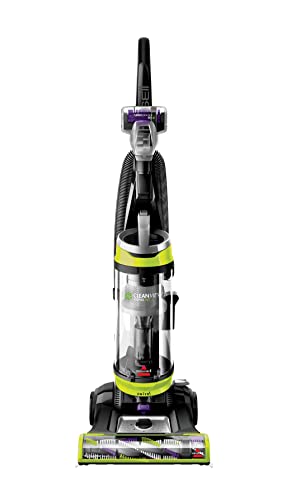
Bissell CleanView Swivel Pet 2252 upright vacuum with triple action brush roll and scatter-free technology. Designed for pet homes. Buy now!
2. Bissell CleanView Swivel Rewind Pet 2254 — Best Upright for Large Homes
Rating: 4.4/5 | 105,000+ verified reviews
If you have a larger home or find yourself vacuuming every day during blowout season — which is not unreasonable — the Bissell CleanView Swivel Rewind Pet 2254 adds one critical upgrade to the proven CleanView platform: a 27-foot cord with automatic rewind. In practice, this means you can cover considerably more floor space from a single outlet, and when you are done, the cord winds itself up at the press of a button rather than requiring manual wrapping.
The 13.5-inch cleaning path is wider than many comparable uprights, which reduces the number of passes required to cover a room. During a blowout when you may be vacuuming the same room multiple times per day, this efficiency matters. The Triple Action brush roll and multi-cyclonic suction system are identical to the core CleanView platform, delivering the same deep-carpet undercoat extraction that makes this family of vacuums the reference point for pet hair removal at this price range.
On-board pet tool storage ensures the specialized pet attachments are always accessible — no hunting for accessories in a drawer while your dog continues to shed. The automatic cord rewind eliminates the one small but recurring frustration of corded upright vacuuming.
What makes it exceptional for blowouts: The extended cord coverage and wide cleaning path make it the most efficient choice for owners vacuuming large areas repeatedly throughout blowout season. The rewind functionality reduces the friction that makes frequent vacuuming feel like a chore.
Specifications:
- Weight: 6.2 kg
- Cleaning path: 13.5 inches
- Cord: 27 feet with automatic rewind
- Brush roll: Triple Action
- Surfaces: Carpet, Area Rugs, Bare Floors, Sealed Hard Floors, Stairs, Upholstery
Pros:
- 27-foot cord with one-touch automatic rewind covers large homes from fewer outlets
- Triple Action brush roll excels at extracting embedded undercoat
- Wide 13.5-inch cleaning path covers more floor per pass
- Edge-to-edge cleaning captures fur along walls and corners
- On-board storage keeps pet tools always accessible
Cons:
- Multi-cyclonic suction can lose some performance on very high-pile carpet
- Corded design limits range compared to cordless alternatives
- Dust tank emptying can release some dust into the air if not done carefully
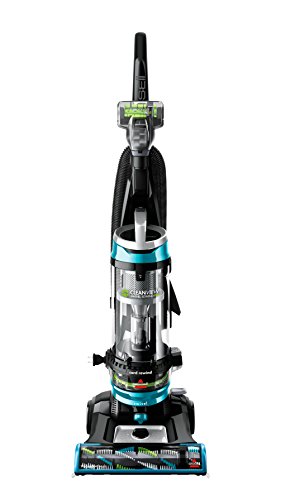
Bissell CleanView Swivel Rewind Pet 2254 bagless upright vacuum with triple action brush roll, swivel steering, and automatic cord rewind for pet hair.
3. Shark Navigator Lift-Away NV360 — Best HEPA Upright for Allergy Households
Rating: 4.4/5 | 52,000+ verified reviews
For households where someone has allergies or asthma, the Shark Navigator Lift-Away NV360 stands apart from its competition in one critical area: filtration. Its Anti-Allergen Complete Seal system pairs a true HEPA filter with fully sealed housing, meaning all air exhausted from the vacuum has passed through HEPA-grade filtration. During a blowout, when your home air contains more airborne dander and fine undercoat fibers than at any other point in the year, this distinction has real health implications.
The Lift-Away feature — the ability to detach the motorized canister pod from the main body with one button press — transforms this vacuum from a standard upright into a portable cleaning tool that reaches stairs, under furniture, and above-floor surfaces. This is particularly valuable during a blowout, when undercoat accumulates on every surface, not just floors. The brushroll shutoff allows seamless transition between carpet cleaning (with brushroll engaged) and hard floor cleaning (brushroll off, preventing scatter).
At 16 lbs, it is on the heavier side compared to some of the Bissell uprights, but the weight is partially offset by the swivel steering and the Lift-Away flexibility that eliminates the need to carry the full vacuum up stairs.
What makes it exceptional for blowouts: The sealed HEPA system is the most important feature for allergy households during blowout season. The Lift-Away functionality addresses the reality that blowout fur is not confined to floors — it is on every surface in your home.
Specifications:
- Weight: 16 lbs (7.2 kg)
- Dust cup capacity: 0.9 quart
- Filtration: HEPA Anti-Allergen Complete Seal
- Surfaces: Carpet, Hard Floor
- Power: Corded
Pros:
- Sealed HEPA system traps 99.9% of dust, allergens, and fine undercoat particles
- Lift-Away pod detaches for portable above-floor and stair cleaning
- Brushroll shutoff prevents fine undercoat from scattering on hard floors
- Swivel steering navigates around furniture efficiently
- 0.9-quart dust cup minimizes interruptions during extended blowout sessions
Cons:
- At 16 lbs, heavier than comparable Bissell uprights
- Does not include a motorized pet tool for deep upholstery cleaning
- Corded design limits range between rooms
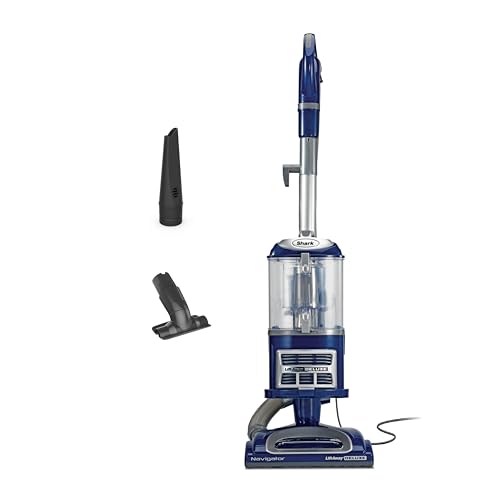
Shark Navigator Lift-Away NV360 delivers powerful suction with HEPA filtration and swivel steering. Perfect for pet hair and allergens. See full expert review.
4. Bissell CleanView XR Pet 300W — Best Cordless Stick for Blowouts
Rating: 4.2/5 | 116,000+ verified reviews
The cordless stick category presents a real challenge for double-coated dog owners: blowout season demands more suction, more capacity, and more runtime than most cordless vacuums provide. The Bissell CleanView XR Pet 300W addresses this challenge more directly than anything else in its category. Its 300W motor is 60% more powerful than leading cordless competitors, which translates directly into the kind of suction depth required to pull embedded undercoat fibers from carpet pile.
The Deep Cleaning FurBrush is a standout accessory: a motorized attachment specifically engineered to remove stubborn, embedded pet hair from upholstery and stairs. This is the tool you need when your couch has absorbed two weeks of blowout fur and a standard upholstery nozzle barely makes a dent. LED headlights on the main floor head reveal hidden fur under furniture and in low-light areas, which is genuinely useful when you are trying to determine whether a surface is actually clean or just appears clean.
The removable 24V lithium-ion battery allows separate charging and the option to purchase a spare battery — effectively doubling your runtime for large homes or extended blowout cleaning sessions. At up to 40 minutes in standard mode, a single charge covers most average-sized homes in one pass.
What makes it exceptional for blowouts: The 300W motor and Deep Cleaning FurBrush combination makes this the most capable cordless option for households where blowout fur has embedded into upholstery and carpet. The 3-in-1 convertible design means one tool handles floors, furniture, stairs, and ceiling corners.
Specifications:
- Motor power: 300W
- Battery: 24V MAX Lithium-Ion (removable)
- Runtime: Up to 40 minutes (standard mode)
- Cleaning modes: 3
- Special features: Deep Cleaning FurBrush, LED headlights, swivel steering
Pros:
- 300W motor provides significantly more suction than comparable cordless competitors
- Deep Cleaning FurBrush removes embedded blowout fur from upholstery and stairs
- Removable battery allows extended runtime with a spare
- LED headlights reveal hidden fur under furniture
- 3-in-1 design handles floors, furniture, and above-floor surfaces with one tool
Cons:
- 40-minute runtime is in standard mode only; high-power mode shortens this considerably
- Dust bin capacity may require frequent emptying during peak blowout
- Higher price point than entry-level cordless stick vacuums

Bissell CleanView XR Pet 300W cordless stick vacuum with 40-min runtime, deep cleaning FurBrush, and removable battery. Expert review with full specs.
5. Bissell CleanView XR 200W Cordless — Best Budget Cordless for Light-to-Moderate Blowouts
Rating: 4.2/5 | 116,000+ verified reviews
For smaller dogs or households where blowout volume is moderate — smaller double-coated breeds like Shiba Inus, Corgis, or Pomeranians rather than large shedders like Huskies or Bernese Mountain Dogs — the Bissell CleanView XR 200W provides capable cordless performance at a more accessible price point. The 200W motor is 40% more powerful than leading competitive stick vacuums in its tier, and the tangle-free brushroll is specifically engineered to resist the hair-wrap problem that plagues standard brushrolls during shedding season.
At up to 35 minutes of cordless runtime, it covers most medium-sized homes in a single charge. The 3-in-1 convertible design handles floors, above-floor surfaces, and an extension wand configuration for hard-to-reach areas. The removable 24V MAX lithium-ion battery charges separately, and the included wall mount keeps it organized and accessible between the frequent cleaning sessions that blowout season demands.
LED headlights and the included dusting brush and crevice tool make it a complete above-floor cleaning solution without additional accessories.
What makes it exceptional for moderate blowouts: The tangle-free brushroll and 40% power advantage over comparable stick vacuums make it the best value cordless option for smaller double-coated breeds or homes where blowout volume is significant but not extreme.
Specifications:
- Motor power: 200W
- Battery: 24V MAX Lithium-Ion (removable)
- Runtime: Up to 35 minutes
- Brush roll: Tangle-Free
- Included accessories: Dusting brush, crevice tool, wall mount
Pros:
- 40% more powerful motor than leading competitive stick vacuums in its class
- Tangle-free brushroll resists hair wrap during shedding season
- Up to 35 minutes of cordless runtime covers most medium-sized homes
- Removable battery for flexible charging and optional spare
- 3-in-1 design converts to handheld and extension wand for whole-home versatility
Cons:
- 200W motor may struggle with extreme blowout volume from large breeds
- 35-minute runtime may require recharging mid-session in larger homes on high power
- Included accessories limited to crevice tool and dusting brush

Bissell CleanView XR cordless vacuum: 200W motor, 35-min runtime, tangle-free brush roll & 3-in-1 design. Top-rated stick vacuum for home. Shop now.
Frequently Asked Questions
How often should I vacuum during my dog’s blowout season?
During peak blowout — typically weeks two and three of the shedding cycle — daily vacuuming is not excessive for large double-coated breeds like Huskies, German Shepherds, or Bernese Mountain Dogs. Many owners vacuum twice daily during the worst week. The goal is to prevent undercoat from embedding deeply into carpet pile, which becomes exponentially harder to remove the longer it sits. Outside of blowout season, three to four times per week is generally sufficient for most double-coated breeds.
Does grooming reduce how much vacuuming I need to do?
Significantly, yes. Regular deshedding brushing — using a slicker brush or undercoat rake during the blowout — removes loose undercoat before it falls onto your floors and furniture. Professional deshedding treatments at a groomer can remove substantial amounts of undercoat in a single session. However, grooming complements vacuuming rather than replacing it. Even well-groomed double-coated dogs shed enough during a blowout to require frequent vacuuming.
Can I use a robot vacuum as my primary vacuum during a blowout?
Robot vacuums are valuable as a maintenance tool between sessions — running daily helps prevent the accumulation that makes manual vacuuming sessions so lengthy. However, they are not adequate as a primary vacuum during peak blowout for large breeds. Most robot vacuums have limited dust bin capacity, lower suction power on high-pile carpet, and brushrolls that jam easily with blowout-volume fur. Use a robot vacuum to maintain floors between sessions, but rely on an upright or cordless stick for deep cleaning.
What is the fastest way to clear a jammed brushroll during vacuuming?
Most modern pet vacuums include a brushroll access panel on the underside of the floor head. Turn off and unplug the vacuum, flip it over, open the access panel, and use a seam ripper or scissors to cut through the wrapped hair. Pull the cut sections clear and reassemble. On vacuums with removable brushrolls, the entire roll can often be pulled out and cleared in under two minutes. To reduce jam frequency, look for models with tangle-resistant brushroll designs or make a habit of clearing the brushroll every few vacuuming sessions during blowout.
Are bagged vacuums better than bagless for double coat dog hair?
Bagged vacuums offer cleaner disposal — the bag captures everything, including fine dander, and you discard it sealed when full. This is preferable for allergy sufferers. The downsides are ongoing bag costs and the need to keep replacement bags on hand. Bagless vacuums eliminate the ongoing cost and allow you to see when the bin is approaching capacity, but emptying them can release a puff of fine dander back into the air. If you choose bagless, empty it outdoors if possible, or over a lined trash bin, and wash the dust cup periodically to remove residue.
Does HEPA filtration matter for dog hair, or is it just for dander?
HEPA filtration matters for both. While you do not need HEPA to capture visible dog hair — any filter will do that — you do need HEPA to capture the fine dander and microscopic undercoat particles that are invisible to the naked eye but remain airborne long after you finish vacuuming. During blowout season, the volume of these fine particles increases dramatically. For any household member with allergies, asthma, or respiratory sensitivity, a sealed HEPA system during blowout season is not optional — it meaningfully affects air quality.
Should I shave my double-coated dog to reduce shedding?
This is a common misconception worth addressing directly. Shaving a double-coated dog does not eliminate shedding and can cause lasting harm. The double coat is a thermoregulatory system — shaving it disrupts the dog’s ability to both stay warm in winter and cool in summer. It also risks “coat blow” where the coat grows back damaged, unevenly, or with an altered texture that causes further problems. The only sustainable solution for managing a double-coated dog’s shedding is consistent grooming, regular deshedding, and a vacuum capable of handling the load.
Conclusion
Double-coated dogs are extraordinary companions, but blowout season is a twice-yearly test of your cleaning equipment and your patience. The fur produced during a blowout — fine, dense, deep-embedding undercoat in volumes that dwarf normal shedding — requires a vacuum built for the specific demands of high-capacity, high-suction, high-frequency cleaning.
The five vacuums in this guide address the core failure modes of ordinary vacuums: brushroll jamming, bin overflow, filter clogging, and inadequate suction depth. For most households with medium to large double-coated breeds, the Bissell CleanView Swivel Pet 2252 offers the best combination of deep-carpet performance and proven reliability. For allergy households, the Shark Navigator Lift-Away NV360 and its sealed HEPA system is the right choice. For owners who prefer cordless and have large breeds, the Bissell CleanView XR Pet 300W brings the suction power the category typically lacks.
Blowout season does not have to mean surrender. With the right vacuum, it is a manageable four-week event rather than a month-long battle you lose every time.
Ready to Find Your Perfect Vacuum?
Browse our expertly reviewed vacuum cleaners and make an informed decision
Browse All Vacuums