Best Vacuum for Drywall Dust: Don't Ruin Your Vacuum (or Your Lungs)
Drywall dust is ultrafine and destroys regular vacuums fast. Here are the best HEPA-sealed vacuums safe for drywall dust cleanup in 2025.

Table of Contents
- Best Vacuum for Drywall Dust: Don’t Ruin Your Vacuum (or Your Lungs)
- Why Drywall Dust Is Uniquely Dangerous
- Why Regular Shop Vacs Fail for Drywall
- What You Actually Need: The HEPA-Sealed System
- Best Vacuums for Drywall Dust Cleanup
- Bagged vs. Bagless for Drywall Dust: The Definitive Answer
- Safe Drywall Dust Cleanup Procedure
- Health Warning: Take Drywall Dust Seriously
- Frequently Asked Questions
- The Bottom Line
Best Vacuum for Drywall Dust: Don’t Ruin Your Vacuum (or Your Lungs)
You just finished sanding drywall. The room looks like a snowstorm hit it — fine white powder coating every surface, drifting into corners, and hanging visibly in the air. Your first instinct is to grab the shop vac or the household upright sitting in your closet.
Stop. Put it down.
Drywall dust is not ordinary household dust. It is one of the most destructive materials you can run through a vacuum, and it is one of the most dangerous airborne particles you can breathe. The wrong vacuum will either burn out in a single use or simply blow all that fine powder straight back into the air you are standing in — which is arguably worse than not vacuuming at all.
This guide explains exactly why drywall dust is so hazardous, what your vacuum actually needs to handle it safely, and the best HEPA-sealed vacuums worth buying for this specific job.
Why Drywall Dust Is Uniquely Dangerous
Drywall — also called gypsum board or sheetrock — is composed primarily of calcium sulfate dihydrate (gypsum). When you cut, sand, or break it, it releases an extremely fine powder. And “fine” here is not a casual description. Drywall dust particles routinely measure between 1 and 10 microns — smaller than many bacteria, and well within the range that penetrates deep into the lungs without triggering the cough reflex that normally protects you.
The Silica Problem
Here is what makes drywall dust genuinely serious from a health standpoint: many drywall products and joint compounds contain free crystalline silica, a compound also found in concrete, sand, and stone. Inhaling silica dust is the primary cause of silicosis — a progressive, incurable lung disease that destroys lung tissue over time. Even a single heavy exposure event carries risk.
The Occupational Safety and Health Administration (OSHA) regulates silica dust exposure for exactly this reason. For DIYers doing a single weekend renovation, the short-term risk is lower than for professionals, but it is not zero — and it is absolutely not something you should ignore.
Always wear an N95 respirator or better when working with or cleaning up drywall dust. A standard dust mask is insufficient. The particles are small enough to pass straight through paper-fiber filtration.
What Drywall Dust Does to a Vacuum Motor
Beyond the health hazard to humans, drywall dust is catastrophic for vacuum motors for a simple mechanical reason: the particles are so fine and so abundant that they overwhelm standard filtration instantly.
When a regular vacuum — even a decent one — pulls in drywall dust, here is what happens:
- Standard filters get saturated immediately. A foam filter or basic cartridge filter that might last weeks of normal use can clog within minutes of a single drywall cleanup session.
- Clogged filters kill suction. Airflow drops, the motor works harder to compensate, and heat builds up.
- Dust bypasses the filter. Fine particles find any gap in an unsealed system and travel straight through — or around — the filter and into the motor housing.
- Motor bearings and windings accumulate dust. The abrasive gypsum particles grind against moving parts, accelerating wear. Motors that would last years under normal use can fail in hours under drywall conditions.
- Exhaust air carries fine particles back into the room. Even if the motor survives, you have effectively just redistributed the drywall dust into the breathing zone, making the air quality measurably worse.
This is not hypothetical. Contractor forums are full of stories about shop vacs and household uprights destroyed after a single drywall job. The dust is simply too fine, too abundant, and too abrasive.
Why Regular Shop Vacs Fail for Drywall
A standard shop vac — the kind you buy at a hardware store for general debris cleanup — seems like the obvious tool. It is rugged, has high airflow, and is built for construction environments. For sawdust, wood chips, plaster chunks, and general debris it works fine.
For drywall dust, it fails for one critical reason: standard shop vac filters are not rated for ultrafine particles, and the machines are not sealed.
A basic shop vac cartridge filter is typically rated to capture particles above 5 to 30 microns. Drywall dust particles are smaller than that. They pass straight through the filter medium, travel through the motor, and exit through the exhaust — back into your air.
To use a shop vac safely for drywall dust, you need to replace the standard cartridge with a HEPA-rated cartridge filter (rated to capture 99.97% of particles at 0.3 microns) AND add a HEPA exhaust filter at the outlet. Even then, the unsealed construction of most shop vacs allows dust to leak at seams, lid joints, and hose connections.
If you already own a shop vac, upgrading the filters is a reasonable solution. But if you are buying something new, a purpose-built HEPA-sealed vacuum is a cleaner and more reliable answer.
What You Actually Need: The HEPA-Sealed System
For drywall dust cleanup, you need three things working together:
1. True HEPA Filtration
A true HEPA filter captures 99.97% of airborne particles at 0.3 microns — the size at which particles are hardest to trap. Drywall dust particles fall into and around this range, making true HEPA the minimum standard.
Avoid vacuums labeled “HEPA-type,” “HEPA-style,” or “HEPA-like.” These marketing terms indicate filters that do not meet the true HEPA standard and may only capture 85–90% of particles — meaning 10–15% of the most dangerous ultrafine dust returns to your breathing air.
2. A Fully Sealed System
A true HEPA filter installed inside a vacuum with leaky seams accomplishes almost nothing. Air — and the dust suspended in it — will always find the path of least resistance. If there are gaps at the hose connection, the lid joint, or the body seams, fine particles will escape those gaps before ever reaching the HEPA filter.
Look specifically for vacuums described as having a “sealed system” or “complete sealed filtration.” This means the air path from intake to exhaust is fully enclosed and all exhaust passes through the HEPA filter with no bypass routes.
3. Bagged Construction (Strongly Preferred)
This is where most buyers go wrong. Bagless vacuums are popular for convenience, but for drywall dust they introduce a serious problem: emptying the dust bin.
When you remove and empty a bagless bin after a drywall cleanup, you release a cloud of ultrafine dust directly into the air — right in front of your face. You have just undone all the careful filtration work of the collection phase. You will need to wear your respirator to empty the bin, do it outdoors, and deal with fine dust contaminating the filter and the bin interior.
A bagged vacuum solves this cleanly. The dust goes into the bag, the bag stays sealed when you remove it, and you drop it directly into a trash can without disturbing the contents. Bags also provide an additional layer of filtration themselves, giving the HEPA filter less work to do and extending its usable life.
For drywall dust: bagged HEPA wins over bagless every time.
Best Vacuums for Drywall Dust Cleanup
1. Kenmore Elite 21814 CrossOver Bagged Canister — Best Overall for Drywall
Rating: 4.0 stars
The Kenmore Elite 21814 CrossOver Bagged Canister is the top recommendation for drywall dust cleanup because it checks every critical box: it is bagged, it has a true HEPA filter, it has a sealed filtration system, and it provides strong suction through a canister design that keeps the motor at a safe distance from the dirty intake air.
The canister form factor is particularly well-suited to post-construction cleanup. You can maneuver the wand into corners, along baseboards, and into tight spaces without dragging the main body through debris. The bagged system means disposal is clean and sealed. The HEPA filtration means the exhaust air is genuinely clean.
For anyone doing a significant drywall renovation — full room, multiple rooms, or a basement finishing project — this is the vacuum to own or rent.
Why it works for drywall: Bagged HEPA sealed system, canister design for reach and maneuverability, strong motor suction.

Kenmore Elite 21814 bagged HEPA canister with Pet PowerMate lifts pet hair on all floors. Dual-motor power, LED dirt sensor. Read our full review.
2. Shark Navigator NV360 — Best Mid-Range HEPA Option
Rating: 4.4 stars
The Shark Navigator NV360 is one of the most popular mid-range HEPA vacuums on the market, and for good reason. It features Shark’s Anti-Allergen Complete Seal Technology, which means the entire vacuum body is designed to prevent air leakage — all exhaust passes through the HEPA filter.
It is a bagless design, which is a meaningful downside for drywall dust specifically (see the bagged vs. bagless section above). However, for smaller cleanup jobs — touching up after patching a single hole, or vacuuming an already-cleaned surface — the sealed HEPA system makes it genuinely safe to use, and the 4.4-star rating reflects strong real-world performance.
If you already own a Shark Navigator NV360 and are dealing with a minor drywall cleanup, use it — but empty the dust cup outdoors while wearing your respirator.
Why it works for drywall: Anti-allergen complete seal technology, strong suction, widely available and affordable.
Limitation: Bagless emptying requires care and respirator use outdoors.
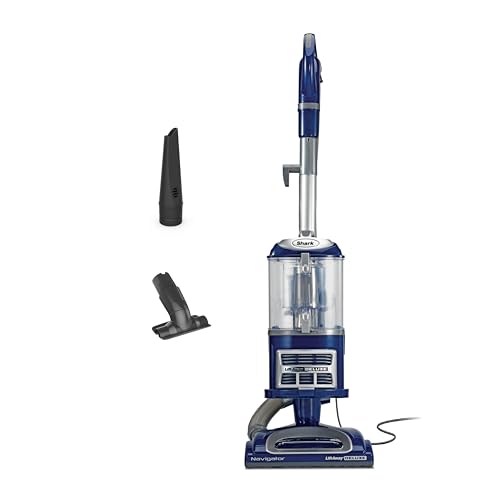
Shark Navigator Lift-Away NV360 delivers powerful suction with HEPA filtration and swivel steering. Perfect for pet hair and allergens. See full expert review.
3. Eureka NEN186BL Bagless Canister with HEPA — Best Budget HEPA Pick
Rating: 4.2 stars | 43,000+ reviews
The Eureka NEN186BL Canister is the best budget entry into HEPA-filtered canister vacuums, and its 43,000-review count at 4.2 stars signals genuinely reliable performance at a low price point. The canister design gives you the reach and maneuverability useful for construction cleanup.
Like the Shark NV360, this is a bagless design. For drywall dust, treat it accordingly: plan to empty it outdoors with a respirator, and rinse the dust cup if the mess is heavy.
For light drywall touch-ups, finishing-coat sanding residue, or post-repair cleanup after a small patch job, the Eureka NEN186BL is an excellent value option that will not send fine dust back into your air.
Why it works for drywall: HEPA filtration at a budget price, canister reach, huge user base confirms real-world reliability.
Limitation: Bagless — requires careful dust-cup emptying.

Eureka NEN186BL bagless canister vacuum with 1000W motor, 16KPa suction, washable HEPA filter, and 2L dustbin. Lightweight and ideal for carpets and floors.
4. Shark PowerPro IZ382H Cordless — Best for Quick Cleanups and Touchups
Rating: 4.1 stars | 25,000+ reviews
The Shark PowerPro IZ382H brings cordless convenience together with a genuine HEPA filtration system, making it a strong choice for quick drywall dust touchups where you need to move freely without dragging a cord through a dusty worksite.
With 25,000+ reviews at 4.1 stars, this is a proven performer with real user validation behind it. The HEPA filter system ensures fine particles are captured rather than exhausted, and the cordless design means you can work around ladders, scaffolding, and construction clutter without wrestling a cord.
This is not the primary vacuum for a full room of heavy drywall sanding dust — for that, you want a corded machine with a dedicated large capacity. But for the second pass, for cleanup after patching, or for keeping a worksite manageable between major sanding sessions, the PowerPro IZ382H earns its place.
Why it works for drywall: HEPA filtration, cordless freedom on cluttered job sites, strong review history.
Limitation: Battery-limited runtime for large jobs; bagless emptying requires care.
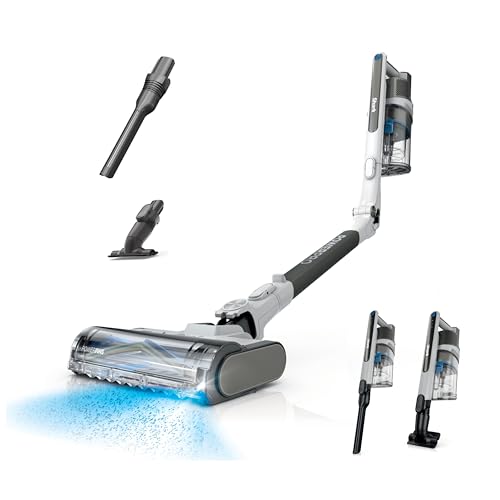
Shark IZ382H cordless vacuum with FloorDetect, Dirt-Reveal tech, HEPA filter & 50-min runtime. No hair wrap, converts to hand vac. Shop now.
Bagged vs. Bagless for Drywall Dust: The Definitive Answer
This comparison matters enough to address directly.
| Factor | Bagged | Bagless |
|---|---|---|
| Dust containment during use | Excellent | Good (sealed cup) |
| Dust containment when emptying | Excellent (sealed bag) | Poor (dust cloud risk) |
| Filter longevity | Longer (bag pre-filters) | Shorter (dust hits HEPA directly) |
| Ongoing cost | Bag replacement | Filter replacement |
| Convenience | Slightly less | More |
| Best for drywall | Yes | Requires extra precautions |
The answer for drywall dust is unambiguous: bagged is better. The single biggest risk moment in the entire cleanup process is emptying the collection vessel. A bag eliminates that risk entirely. A bagless bin introduces it every single time.
If you are choosing a vacuum specifically for post-drywall cleanup, prioritize the bagged option. If you already own a quality bagless HEPA-sealed vacuum, you can use it safely — just empty it outside, wear your respirator, and rinse the bin afterward.
Safe Drywall Dust Cleanup Procedure
Vacuuming alone is not the safest approach for drywall dust. Here is the correct sequence:
Before you start:
- Put on your N95 respirator (minimum). A P100 half-face respirator is better for heavy sanding.
- Open windows and doors if possible to improve ventilation.
- Let the dust settle for at least 15–20 minutes after sanding stops. Vacuuming or disturbing still-airborne dust makes the problem worse, not better.
Step 1 — Wet wipe all horizontal surfaces first. Use a damp cloth or sponge mop to wipe down every horizontal surface: shelves, window sills, baseboards, door frames. Drywall dust sitting on flat surfaces will become airborne again the moment a vacuum disturbs the air. Wet wiping captures it without lifting it back into suspension. Rinse your cloth frequently. Change water when it becomes milky.
Step 2 — Vacuum walls and ceilings with a brush attachment. Work top-to-bottom so any disturbed dust falls to the floor, where you will vacuum it last. Use a soft brush attachment to avoid scratching finished surfaces.
Step 3 — Vacuum the floor. Work methodically from the far end of the room toward the door. Use slow, overlapping passes. Rushing creates turbulence that stirs dust back up.
Step 4 — Wet mop the floor. After vacuuming, damp-mop hard floors to pick up any fine residue the vacuum left behind. For carpet, a second vacuum pass after the first is usually sufficient.
Step 5 — Change or dispose of filters and bags. After a heavy drywall cleanup, inspect your vacuum’s filter. For bagless models, empty the cup outside and wipe the interior with a damp cloth. For bagged models, remove and seal the bag before disposal. HEPA filters that have been through heavy drywall work should be replaced sooner than their normal service interval.
Health Warning: Take Drywall Dust Seriously
This point warrants direct emphasis. Drywall dust, especially from joint compound and older wallboard products, contains crystalline silica. The health effects of silica dust inhalation are severe and irreversible:
- Silicosis: Progressive scarring of lung tissue. No cure exists. The disease continues to progress even after exposure ends.
- Lung cancer: Crystalline silica is classified as a Group 1 human carcinogen by the International Agency for Research on Cancer (IARC).
- COPD: Chronic obstructive pulmonary disease has been linked to repeated construction dust exposure.
For a single weekend project, the risk is meaningfully lower than for a professional doing this work daily. But “lower risk” is not “no risk.” Wear respiratory protection every time. Do not skip the wet-wipe step. Do not rely on a vacuum without genuine sealed HEPA filtration. Do not let children or anyone with existing respiratory conditions into the space until cleanup is complete and the area has aired out.
Frequently Asked Questions
Can I use a regular shop vac for drywall dust?
Not safely without modification. Standard shop vac filters are not rated for ultrafine particles. The drywall dust will pass through the filter and exit through the exhaust back into your air. If you want to use a shop vac, replace the standard cartridge with a HEPA-rated cartridge and add a HEPA exhaust filter. Even then, unsealed body seams remain a concern.
Will drywall dust ruin my vacuum?
Yes, if your vacuum is not designed for fine dust. The particles are abrasive and fine enough to bypass standard filters and enter the motor. A single heavy-duty cleanup can significantly shorten the life of a vacuum with inadequate filtration. A sealed HEPA system protects both you and the motor.
Do I need HEPA specifically, or will any fine-dust filter work?
True HEPA is the standard to meet for drywall dust. Filters labeled “HEPA-type” or “HEPA-like” do not meet the same performance threshold and should not be relied on for crystalline silica-containing dust. Look for “true HEPA” or “H13 HEPA” designations.
Is bagged or bagless better for drywall dust?
Bagged is significantly better. The primary risk moment in drywall dust cleanup is emptying the collection vessel. A sealed bag eliminates this entirely. A bagless bin releases a fine dust cloud during emptying. If you only have a bagless vacuum, empty it outdoors while wearing your respirator.
How do I clean my vacuum after it has picked up drywall dust?
For bagless models: empty the cup outdoors, then wipe the interior of the cup and any accessible surfaces with a damp cloth. Check and clean or replace the pre-filter. Inspect the HEPA filter — if it is grey with fine dust buildup, replace it. For bagged models: remove and seal the bag for disposal, then inspect the secondary HEPA filter and replace if heavily loaded.
How long should I wait after sanding before vacuuming?
Wait at least 15–20 minutes after sanding stops before beginning cleanup. This allows the heaviest airborne particles to settle. The finest particles (the ones you cannot see) may remain airborne for much longer — which is why you should wear your respirator throughout the cleanup process, not just while sanding.
Can I use a cordless vacuum for drywall dust?
Yes, if it has genuine sealed HEPA filtration. The Shark PowerPro IZ382H is a good example. The limitation is battery runtime — for large rooms or heavy dust loads, a corded machine will be more practical. Cordless models are excellent for follow-up passes and touchup work after a primary cleanup with a corded machine.
Shark IZ382H cordless vacuum with FloorDetect, Dirt-Reveal tech, HEPA filter & 50-min runtime. No hair wrap, converts to hand vac. Shop now.
The Bottom Line
Drywall dust is one of the few household cleaning challenges where the wrong equipment does not just do a poor job — it actively makes things worse. A vacuum without sealed HEPA filtration redistributes fine silica-containing particles back into the air you are breathing. A bagless vacuum that gets emptied indoors creates a second dust event at the worst possible moment.
The safest and most effective approach is a sealed HEPA bagged canister vacuum — with the Kenmore Elite 21814 as the top pick for this specific task. Follow the wet-wipe-first procedure, wear respiratory protection throughout, and your lungs — and your vacuum — will thank you.
If you are shopping for a general-purpose HEPA vacuum that can also handle drywall cleanup when needed, the Shark Navigator NV360 at 4.4 stars is the most versatile pick. For budget-conscious buyers, the Eureka NEN186BL at 4.2 stars across 43,000 reviews offers reliable HEPA performance at a lower price point.
Whatever you choose — choose a sealed HEPA system. Everything else is a compromise you will eventually pay for, either with a ruined motor or with your respiratory health.
Kenmore Elite 21814 bagged HEPA canister with Pet PowerMate lifts pet hair on all floors. Dual-motor power, LED dirt sensor. Read our full review.
Ready to Find Your Perfect Vacuum?
Browse our expertly reviewed vacuum cleaners and make an informed decision
Browse All Vacuums