Best Vacuum for Engineered Hardwood Floors: Protect the Veneer Layer
Engineered hardwood has a thin veneer that scratches and cannot be refinished like solid wood. Find the best vacuums for engineered hardwood that clean safely.
Table of Contents
- Best Vacuum for Engineered Hardwood Floors: Protect the Veneer Layer
- What Is Engineered Hardwood — And Why It Behaves Differently
- Why Veneer Thickness Matters for Vacuuming
- What to Avoid on Engineered Hardwood
- What to Look for in a Vacuum for Engineered Hardwood
- Our Top Picks: Best Vacuums for Engineered Hardwood Floors
- Engineered Hardwood Care Guide
- Frequently Asked Questions
- Final Thoughts
Best Vacuum for Engineered Hardwood Floors: Protect the Veneer Layer
Engineered hardwood is the floor of the modern home. Walk through any new construction townhouse, mid-century renovation, or upscale apartment built in the last fifteen years and there is a reasonable chance the floors underfoot are engineered hardwood — not solid wood, and not vinyl, but something in between. It has the warmth and texture of real wood. It installs over radite board, over concrete, over existing tile. It handles mild humidity variation that would cause solid hardwood planks to cup and buckle.
What the flooring salesperson may not have emphasized is this: engineered hardwood is fragile in a way that matters enormously when you choose a vacuum.
The wood surface you see is a veneer — a thin layer of real hardwood bonded to a plywood or high-density fiberboard core. That veneer layer can be as thin as 2 millimeters. It cannot be sanded and refinished the way solid hardwood can, or it can only be refinished once — maybe twice — before it is gone. Scratch it deeply, and the floor is effectively ruined. There is no buffer, no second chance.
This guide explains what engineered hardwood actually is, why its veneer layer is so vulnerable, what vacuum features actively protect it, and which specific vacuums we recommend based on real-world ratings and verified customer data.
What Is Engineered Hardwood — And Why It Behaves Differently
Engineered hardwood is a layered wood product. The top layer is a real wood veneer — genuine oak, walnut, maple, hickory, or whatever species you selected. Beneath that veneer is a multi-ply core made of cross-directional wood plies, high-density fiberboard (HDF), or plywood. The cross-directional construction is what gives engineered hardwood its dimensional stability: where solid wood expands and contracts significantly with moisture and temperature changes, the alternating grain directions in the core layers resist that movement.
The Core Construction
A typical engineered hardwood plank consists of:
- Top veneer layer: Real hardwood, typically 2 mm to 6 mm thick, finished with a clear protective coating (aluminum oxide or similar)
- Middle core layers: Cross-ply hardwood, plywood, or HDF, usually 3 to 9 plies deep
- Backing layer: A stabilizing base ply that balances the tension across the plank
The finish layer on top of the veneer provides some protection — aluminum oxide-coated finishes are quite hard — but the veneer itself is what matters. The finish sits on the veneer. Once you scratch through the finish into the wood, and certainly once you wear through the veneer into the core, the floor is compromised beyond simple repair.
Can Engineered Hardwood Be Refinished?
This is the question that separates it from solid hardwood. Solid hardwood planks are typically 3/4 inch thick, which means they can be sanded and refinished four to eight times over a lifetime. The veneer on engineered hardwood ranges from approximately 1 mm to 6 mm depending on grade, and the sanding process removes a fraction of a millimeter per pass.
- A 2 mm veneer cannot be refinished at all by most flooring professionals — the risk of sanding through to the core is too high
- A 3 mm veneer may allow a single very careful, light sand
- A 4 to 6 mm veneer (sometimes called “thick veneer” or “premium engineered”) can typically withstand one full refinish
This means the primary protection for the overwhelming majority of engineered hardwood floors is the original factory finish — and beneath that, the original veneer. There is no recovery option once the damage is done. Preventing surface damage is not just preferred; it is the only strategy that works.
Why Veneer Thickness Matters for Vacuuming
The thickness of the veneer layer directly determines how much damage any given scratch or abrasion event costs you in floor longevity.
A 2 mm veneer represents nearly zero margin. A single deep scratch from grit ground into the surface by a vacuum’s hard wheel or spinning brush may penetrate through the finish coating, into the wood veneer, and toward the core. That scratch is permanent on a floor with no refinish potential.
A 4 to 6 mm veneer has more resilience — it can absorb minor surface abrasion without exposing the core — but it is still a real wood surface, and repeated abrasion from the wrong vacuum over months and years will visibly dull and damage it.
The cleaning principle is the same regardless of veneer thickness: remove debris from the surface using gentle suction and soft contact, never by grinding it into the wood with a spinning brush or heavy wheel.
What to Avoid on Engineered Hardwood
Rotating Beater Bars in Carpet Mode
A beater bar — or brush roll — is the spinning cylindrical brush inside carpet vacuum heads. On carpet, it agitates fibers to dislodge embedded dirt. On engineered hardwood, it does something quite different: it flicks loose grit and sand particles across the veneer surface at speed, creating micro-abrasions with each pass. Over time, this effect creates a visible dull zone in the middle of high-traffic paths — not a single scratch, but a pervasive haziness in the finish that no amount of cleaning will restore.
Any vacuum used on engineered hardwood must either have no brush roll, a soft roller brush designed for hard floors, or a hard floor mode that completely disengages the brush roll. “Soft bristle” settings that merely slow the brush roll are not sufficient — the roll needs to stop.
Grit Trapped Under Hard Plastic Wheels
This is the damage source most people do not think about. The wheels on a vacuum’s cleaning head or canister body roll across grit on the floor constantly. If those wheels are hard plastic and the vacuum is heavy, each piece of grit becomes a tiny chisel pressed between wheel and veneer under the full weight of the machine. The damage appears as fine parallel scratches following the vacuuming path — sometimes not visible until light hits the floor at an angle.
Rubber or rubberized wheels deform slightly around grit particles rather than grinding them directly into the surface. On any vacuum you use on engineered hardwood, check that the contact wheels are rubber-coated, not bare rigid plastic.
Excessive Suction That Seals to Floor Edges
This sounds counterintuitive, but maximum suction on a smooth, flat surface can cause a problem specific to floating-floor installations. Engineered hardwood installed as a floating floor — meaning it is not glued or nailed down but sits on an underlayment — can have slight edge lift at the plank joints, particularly in older installations or rooms with humidity variation. A vacuum head pressing down at maximum suction can catch these lifted edges, stress the joint, and over repeated cleaning sessions contribute to edge chipping or joint separation.
Use a vacuum with adjustable suction, and dial it back from maximum on floating floors. You do not need maximum carpet suction to clean a hardwood floor. Moderate suction applied through a smooth, gentle head is entirely sufficient for dust, pet hair, and household debris.
Heavy Upright Vacuums Dragged Without Care
The pivot turn at the end of each vacuuming row — when you swing a full-size upright around to begin the next pass — is a moment of real risk. A 15- to 18-pound upright swinging on its front axle can grind the cleaning head edge or a wheel across the veneer under concentrated lateral force. If you use an upright on engineered hardwood, make the turn slowly and deliberately, or lift the cleaning head off the floor before turning.
What to Look for in a Vacuum for Engineered Hardwood
Brush Roll Shutoff or Soft Roller Head
The non-negotiable feature. Either the brush roll must stop completely in a hard floor mode, or the vacuum’s primary floor head must use a soft roller — microfiber, felt, or closed-cell foam construction — that sweeps debris gently into the suction path rather than flicking it across the veneer.
Soft or Rubber-Coated Wheels
Inspect every wheel that contacts the floor. Hard plastic wheels on heavy machines are the primary source of grit-grinding damage. Rubber-coated wheels are meaningfully safer.
Adjustable Suction
A suction control dial, slider, or dedicated hard floor mode that reduces airflow allows you to fine-tune the vacuum’s aggressiveness to the task. For engineered hardwood in a floating installation, this is particularly valuable.
Lightweight Construction
Less machine weight means less downward pressure on whatever particles are temporarily between the vacuum and the floor. A 3-pound stick vacuum and a 17-pound upright with identical head designs cause very different levels of risk when they both roll over the same grain of sand.
Low, Smooth Cleaning Head Profile
A cleaning head that glides flat against the floor without exposed hard edges, raised ridges, or bare metal components reduces the opportunity for point-contact scratching. Some premium hard floor heads include a soft perimeter seal or felt edging that further reduces edge contact risk.
Corded vs. Cordless for Engineered Hardwood
Corded vacuums generally provide consistent suction throughout a cleaning session. Cordless stick vacuums offer lighter weight and easier maneuverability — both meaningful benefits on hard floors. For engineered hardwood, the cordless advantage in weight and maneuverability often outweighs the suction consistency of corded models, since engineered hardwood does not require carpet-grade deep suction.
Our Top Picks: Best Vacuums for Engineered Hardwood Floors
Each vacuum below was selected based on its suitability for hard floor surfaces, its rating from verified purchasers at meaningful volume, and its combination of floor-safe features. We have included different form factors to match different home sizes and cleaning routines.
1. Shark Navigator Lift-Away Deluxe NV360 — Best Upright for Engineered Hardwood
Rating: 4.4 stars | 52,000+ reviews | Category: Upright
View the Shark Navigator NV360
The Shark NV360 is one of the few full-size upright vacuums that earns a genuine recommendation for engineered hardwood, and the reason is a single feature: the brush roll shutoff switch. Flipping that switch to Bare Floor Mode stops the brush roll completely. No spinning. No bristle contact. No grit being flung across the veneer. The cleaning action shifts entirely to suction through a flat, smooth floor contact zone, which is exactly the right approach for real wood surfaces.
The lift-away design adds a meaningful layer of floor protection. You can detach the motorized pod from the floor head and use the hose with the included soft brush attachments to clean along baseboards, under furniture lips, and in the narrow gaps at flooring transitions. This keeps the heavy floor head from making the sharp pivot turns that put concentrated lateral stress on the veneer near the edges of the cleaning path.
HEPA-sealed filtration traps 99.9% of dust and allergens — particularly important on hard floors, which do not trap particles the way carpet does and can allow fine dust to recirculate into the air if suction is poor.
At 16 pounds, this is a full-size machine, and the corded design requires outlet access. But for whole-home engineered hardwood cleaning, particularly in larger rooms where a lightweight stick vacuum would require multiple battery recharges, the NV360 delivers professional-level results safely.
Why it works on engineered hardwood:
- Brush roll stops completely in Bare Floor Mode — no bristle contact with the veneer
- Lift-away feature eliminates floor-contact pivot turns on detailed passes
- HEPA filtration captures fine dust before it settles back onto the floor
- Swivel steering reduces lateral drag forces during maneuvering
- 52,000+ reviews confirm sustained real-world performance across diverse floor types
Consider if: You have a whole home of engineered hardwood, want a single vacuum that handles both carpet and hard floors, and are comfortable with a full-size corded machine.
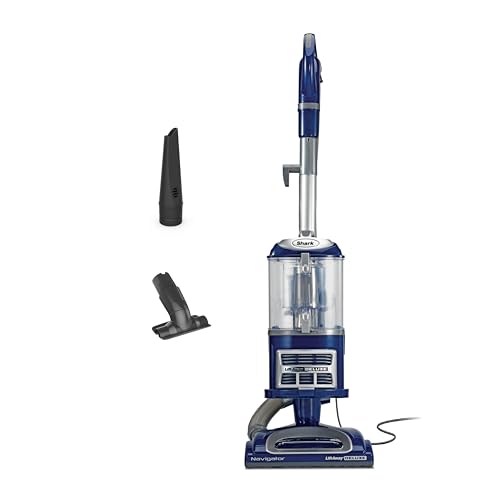
Shark Navigator Lift-Away NV360 delivers powerful suction with HEPA filtration and swivel steering. Perfect for pet hair and allergens. See full expert review.
2. Bissell CleanView Swivel Pet 2252 — Best Value Upright for Engineered Hardwood
Rating: 4.4 stars | 105,000+ reviews | Category: Upright
View the Bissell CleanView Swivel Pet 2252
The Bissell CleanView Swivel Pet 2252 is the most reviewed vacuum in this guide — over 105,000 verified ratings — and its scatter-free technology makes it notably better suited to engineered hardwood than many of its competitors at this price point.
Scatter-free technology is specifically designed to prevent the problem that destroys hard floor vacuum performance: the tendency of a powerful suction head to blast air forward, scattering lightweight debris (fine dust, pet dander, tracked-in grit) across the floor rather than capturing it. On engineered hardwood, scattered debris is not merely an annoyance — it is the exact mechanism by which grit ends up under wheels and brush edges where it can cause scratching. The CleanView’s engineering minimizes this air blast at the front of the cleaning head, pulling debris inward and upward rather than pushing it across the veneer.
Weighing in at 12.5 pounds and featuring swivel steering, this vacuum maneuvers well around furniture without the aggressive pivoting that stresses hard floors. The multi-cyclonic cleaning system provides consistent suction through a full dustbin cycle, so you do not lose suction efficiency partway through a large room.
Why it works on engineered hardwood:
- Scatter-free technology pulls debris into suction path rather than scattering it across the veneer
- 105,000+ reviews represent one of the largest real-world performance samples of any vacuum in its class
- 12.5 lb weight is meaningfully lighter than typical full-size uprights
- Swivel steering reduces lateral pivot forces on the floor head
- Edge-to-edge cleaning head reaches along baseboards without requiring a separate tool change
Consider if: You want the best value-per-dollar on an upright vacuum, have pets, or need the reassurance of over 100,000 customer reviews behind your purchase.
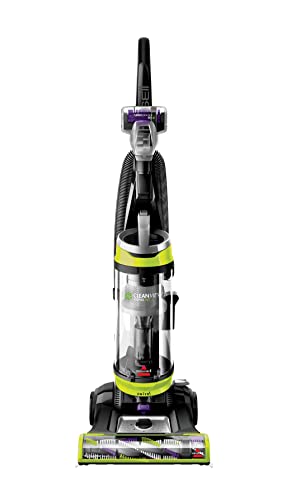
Bissell CleanView Swivel Pet 2252 upright vacuum with triple action brush roll and scatter-free technology. Designed for pet homes. Buy now!
3. Eureka AirSpeed Compact NEU10AE4 — Best Lightweight Upright for Engineered Hardwood
Rating: 4.3 stars | 38,000+ reviews | Category: Upright
View the Eureka AirSpeed Compact NEU10AE4
At 7.7 pounds, the Eureka AirSpeed Compact is less than half the weight of a typical full-size upright vacuum. That weight differential is not trivial on engineered hardwood — it directly translates to less downward pressure on the floor surface during cleaning, and less force transmitted through any grit that passes beneath the wheels or cleaning head contact edges.
The 700-watt motor delivers suction that is more than adequate for engineered hardwood. Hard floors do not require carpet-grade deep-pull suction; they need consistent, moderate suction that lifts surface debris cleanly without creating the turbulent air blast that scatters particles. The AirSpeed Compact’s 700 watts delivers exactly that — enough to capture dust, hair, and tracked-in debris on each pass without overcorrecting.
The compact form factor also means the cleaning head itself is smaller and lighter than full-size uprights, further reducing the mass pressing on the veneer at any given moment. The washable filter eliminates ongoing replacement costs and maintains consistent filtration quality over the vacuum’s lifespan.
Why it works on engineered hardwood:
- 7.7 lb total weight — among the lightest corded uprights available
- Compact cleaning head reduces contact area and pressure on the veneer
- 700-watt motor provides appropriate suction without excessive air blast
- Washable filter maintains airflow quality without ongoing replacement expense
- Quick-release handle with above-floor tools cleans stairs and upholstery without floor contact
Consider if: You want an upright vacuum but prioritize low weight above all else — particularly useful for older adults, anyone with wrist or shoulder discomfort, or homes where the vacuum needs to be carried between floors frequently.

Discover the Eureka Airspeed ultra-lightweight bagless upright vacuum. Just 7.7 lbs with powerful suction for carpet and hard floors. See full review now!
4. Eureka WhirlWind Bagless Canister NEN110A — Best Canister for Engineered Hardwood
Rating: 4.2 stars | 43,000+ reviews | Category: Canister
View the Eureka WhirlWind Canister NEN110A
Canister vacuums have a structural advantage on engineered hardwood that is worth understanding explicitly. In a canister design, the motor, dustbin, and filter assembly — the heavy components — sit on wheels behind you. What actually contacts the floor during cleaning is a lightweight wand connected to a low-profile floor tool. The mass pressing on the veneer surface is a fraction of what an upright vacuum exerts. This design difference is directly relevant to scratch risk.
The Eureka WhirlWind NEN110A weighs 8.15 pounds total, and the floor tool component is a small fraction of that. The canister’s flat, smooth floor head glides across engineered hardwood without the rotating brush contact that upright carpet heads create. The airflow control dial on the handle lets you adjust suction for different zones — reduce it for lighter dust collection passes in bedrooms, increase it for pet hair pickup in high-traffic corridors.
The 2.5-liter dust cup is generous for the machine’s size — a meaningful practical benefit, since frequent dustbin changes mid-session mean setting the machine down and picking it back up, and every additional contact event on an engineered hardwood floor carries some risk. An automatic cord rewind keeps the cord out of the cleaning path and eliminates the dragging cord edge that can scratch floors if allowed to contact the veneer.
Why it works on engineered hardwood:
- Canister design keeps all machine weight off the cleaning floor head
- Smooth flat floor tool has no brush roll — pure suction across the veneer
- Airflow control dial allows suction adjustment room by room
- Automatic cord rewind prevents cord-edge contact with the floor surface
- 43,000+ reviews confirm reliable everyday performance across diverse household types
Consider if: You want the cleanest possible engineering approach for hard floor care, prefer a lighter cleaning head with full machine maneuverability, or have a mix of hardwood and area rugs across open-plan spaces.

Eureka WhirlWind NEN110A bagless canister vacuum with 2.5L dust cup, swivel steering, and multi-surface cleaning. Lightweight and easy to use.
5. Bissell Featherweight Stick 2033 — Best Daily Driver for Engineered Hardwood
Rating: 4.2 stars | 116,000+ reviews | Category: Stick
View the Bissell Featherweight Stick 2033
With 116,000 reviews — the largest review count of any product in this guide — the Bissell Featherweight is the most widely validated light-duty vacuum in the consumer market. It is not a deep-cleaning powerhouse. It is something more valuable for daily engineered hardwood maintenance: a 3-pound, low-friction, grab-and-go vacuum designed for bare floor surfaces as its primary use case.
Three pounds is important. At that weight, the machine has almost no mass to transmit downward force through the cleaning head onto the veneer. The low-profile floor tool sits close to the engineered hardwood without the aggressive contact geometry of a carpet-optimized brush roll head. The 3-in-1 design — stick vacuum, handheld, and stair cleaner — gives you the versatility to handle the whole home without setting down a separate machine.
The ideal role for the Featherweight in an engineered hardwood home is the daily pass: kitchen crumbs after dinner, tracked-in debris at the entryway, pet hair along baseboards. Use it every day or every other day to prevent grit accumulation — which is, ultimately, the primary source of engineered hardwood wear. A weekly pass with one of the heavier upright or canister picks above handles deeper cleaning.
Why it works on engineered hardwood:
- 3 lb total weight — minimal mass pressing on the veneer during daily use
- Designed for bare floors as the primary surface, not carpet-adapted
- 116,000+ reviews represent exceptional real-world confidence
- 3-in-1 versatility covers daily stick passes, spot cleaning, and stair detail work
- Low barrier to daily use — light enough that reaching for it requires no effort
Consider if: You want a daily-use vacuum for engineered hardwood maintenance, already own a more powerful vacuum for weekly deep cleaning, or need an affordable supplementary machine for the home’s hard floor zones.

Bissell Featherweight stick vacuum weighs only 3 lbs and converts into 3 machines. Bagless design with crevice tool for carpet, hard floors, and furniture.
Engineered Hardwood Care Guide
The right vacuum is the foundation of a good engineered hardwood floor care routine, but vacuuming alone is not sufficient. A complete care protocol maintains the finish layer, the veneer, and the structural integrity of each plank.
How Often to Vacuum Engineered Hardwood
- Entryways, kitchens, and pet zones: Daily or every other day. These are the zones where outdoor grit, food debris, and pet hair accumulate fastest. Grit left on an engineered hardwood surface gets walked into the finish under every footstep.
- Living rooms and bedrooms: Two to three times per week is typically sufficient.
- The rule that matters most: Always vacuum before mopping. Running a damp mop over unvacuumed engineered hardwood turns loose grit into an abrasive under the mop pad. Vacuum first, every single time.
Damp Mopping After Vacuuming
Engineered hardwood tolerates limited moisture — considerably less than LVP, but more than solid hardwood. A damp microfiber mop, wrung until barely damp (not wet), removes the fine dust and residue the vacuum captures but does not fully eliminate.
Never allow standing water on engineered hardwood. Water seeping into the seams between planks can swell the HDF or plywood core, causing cupping, edge lift, or plank separation.
Cleaners Safe for Engineered Hardwood
- Use a hardwood floor cleaner specifically labeled safe for engineered or prefinished wood floors
- Dilute per label instructions and apply via damp mop — never spray directly onto the floor
- Avoid vinegar and water mixtures — acetic acid degrades polyurethane and aluminum oxide finishes over time
- Avoid oil soaps and wax-based polishes — these leave a residue that dulls the finish and attracts grit
- Avoid steam mops entirely — the heat and moisture combination is damaging to engineered hardwood, and most manufacturer warranties are voided by steam exposure
Protecting the Veneer Between Cleanings
- Place felt pads under every piece of furniture, including items rarely moved. The legs of chairs dragged across an engineered hardwood floor during a dinner party cause more veneer damage in one evening than months of careful vacuuming.
- Use walk-off mats at every exterior door. Mats capture the tracked-in grit before it reaches the floor. Replace mats when they become saturated with debris.
- Keep pet nails trimmed. Dog nails at full length apply point-contact pressure to the veneer on every step, and in high-traffic dog paths the cumulative effect becomes visible within months on thin-veneer floors.
- When moving heavy furniture or appliances, lay a plywood sheet or hardboard panel over the engineered hardwood first. Dragging or rolling weight directly across the floor without a protective layer risks catastrophic veneer damage.
- Maintain indoor humidity between 35% and 55%. While engineered hardwood handles humidity variation better than solid wood, extreme seasonal swings can still cause planks to swell or contract, stressing the finish layer at seam edges.
Frequently Asked Questions
Can I use a carpet vacuum on engineered hardwood?
Only if it has a hard floor mode that fully stops the brush roll. Carpet vacuums with always-on rotating beater bars should not be used on engineered hardwood. The spinning bristles fling grit across the veneer surface and create micro-scratches in the finish that accumulate into visible dullness over time. If your vacuum only has a “reduce bristle speed” option rather than a true shutoff, use a different machine on your engineered hardwood.
What is the difference between engineered hardwood and solid hardwood for vacuuming?
Both surfaces are real wood and require similar care: no aggressive brush roll, no grit grinding, gentle suction. The key difference is that solid hardwood can be sanded and refinished multiple times to remove surface damage, while engineered hardwood’s thin veneer layer allows at most one refinishing (on thick-veneer grades) or none at all. This means damage to engineered hardwood is more consequential — there is no easy recovery option. Prevention through the right vacuum is even more critical on engineered than on solid hardwood.
My vacuum has a hard floor button. Is that enough?
It depends on what the hard floor mode actually does. The mode needs to stop the brush roll completely — not just slow it, not just change suction. Check your vacuum’s manual. If hard floor mode is described as “reduced brush speed” or “gentle carpet mode,” the brush roll is still spinning and should not contact engineered hardwood. Only a full brush roll stop counts as safe.
How do I know how thick my engineered hardwood veneer is?
The veneer thickness is typically listed in the product documentation from your flooring installer or the manufacturer’s specification sheet. If you do not have documentation, the general rule by product tier is: builder-grade engineered hardwood often carries a 2 to 3 mm veneer; mid-grade products range from 3 to 4 mm; premium or European-sourced engineered hardwood commonly features 4 to 6 mm veneers. Thicker-veneer products are more forgiving of light surface abrasion, but all of them benefit from the same gentle vacuuming practices.
Is a robot vacuum safe for engineered hardwood?
A robot vacuum with a rubber main brush, soft or rubber-tipped side brushes, and adjustable suction can work well for daily maintenance passes on engineered hardwood. Budget robot vacuums with stiff nylon bristle main brushes and hard plastic side brushes represent a higher scratch risk, particularly from the side brushes, which spin rapidly close to the floor surface. If you use a robot on engineered hardwood, verify its brush construction and run it on the lowest suction setting available.
Why does my engineered hardwood floor look dull in the middle of walking paths?
This dullness pattern — bright near walls, dull in the high-traffic center — is almost always finish abrasion from grit tracked in and walked into the surface. The finish coating gradually loses its sheen as fine particles scratch it at a microscopic level. If the floor was vacuumed regularly with an aggressive beater bar, the vacuum itself accelerated the process. The remedy depends on veneer thickness: thick-veneer floors can be lightly screened and recoated; thin-veneer floors may need plank replacement in the affected zones. Going forward, daily vacuuming with a brush-roll-off vacuum and walk-off mats at doors will slow or stop further progression.
Can I use a wet-dry vacuum on engineered hardwood?
In dry mode, a wet-dry vacuum with a smooth floor tool and no brush roll is acceptable for engineered hardwood. Never use a wet-dry vacuum in wet mode on engineered hardwood — the moisture is damaging. Also check the wheels of wet-dry shop vacuums, which are often large hard plastic casters designed for garage and workshop use, not residential flooring. Protect the veneer by using a dedicated floor tool attachment.
Final Thoughts
Engineered hardwood floors represent a meaningful investment in a home’s appearance and value — and that investment is built on a thin veneer of real wood that cannot be recovered once it is damaged. The right vacuum is not a luxury for these floors; it is the primary line of defense between that veneer and the grit, debris, and brush contact that degrade it.
The Shark Navigator NV360 is our top upright recommendation, delivering true brush roll shutoff with lift-away flexibility for whole-home cleaning. The Bissell CleanView Swivel Pet 2252 backs its performance with more than 105,000 reviews and scatter-free technology that directly reduces the debris-scattering risk on hard surfaces. The Eureka AirSpeed Compact NEU10AE4 proves that a lightweight upright at 7.7 pounds can cover a whole home without the floor-contact risk of heavy-duty carpet machines. The Eureka WhirlWind Canister NEN110A gives you the structural advantage of canister design — machine weight behind you, lightweight wand on the floor — with adjustable suction and over 43,000 reviews behind it. And the Bissell Featherweight 2033, backed by 116,000 reviews, is the ideal daily driver for keeping grit off the veneer surface between deeper cleaning sessions.
Pair any of these with felt furniture pads, walk-off mats at every entry, appropriate damp mopping with a hardwood-safe cleaner, and consistent humidity management — and your engineered hardwood floors will hold their finish, their warmth, and their value for as long as the home stands.
Shark Navigator Lift-Away NV360 delivers powerful suction with HEPA filtration and swivel steering. Perfect for pet hair and allergens. See full expert review.
Ready to Find Your Perfect Vacuum?
Browse our expertly reviewed vacuum cleaners and make an informed decision
Browse All Vacuums