Best Vacuum for Fireplace Ash: Safe Cleanup Without Clogging Your Vacuum
Fireplace ash is ultra-fine and can ignite if picked up too soon. Find the best vacuum for fireplace ash — including dedicated ash vacuums and HEPA-sealed household options.
Table of Contents
There is a moment every fireplace owner knows too well. The fire burned beautifully the night before, the hearth looks cold and grey by morning, and the instinct is to grab the nearest vacuum and get it done. That instinct is wrong — and in some cases, it is dangerous.
Fireplace ash is one of the most challenging materials a vacuum will ever encounter. The particles are extraordinarily fine, smaller than nearly anything a standard household filter is designed to capture. A conventional vacuum that appears to work just fine will silently blow those particles straight through its filter and back into the room air you breathe. More urgently, ash that looks completely cold can contain buried embers that remain capable of igniting for up to three days after a fire goes out. Pulling a live ember into a plastic vacuum body packed with dry, flammable ash is a combination that has started house fires.
This guide covers everything you need to know to clean fireplace ash safely and effectively: the science of why ash is so difficult to vacuum, the critical safety window you must respect, what to look for in a vacuum capable of handling fine combustion particles, and honest assessments of the best options available right now.
Safety First: The Hidden Danger Inside “Cold” Ash
The single most important thing to understand about fireplace ash cleanup is this: ash that appears completely cold may not be. Embedded embers can retain heat well above ignition temperature for 24 to 72 hours after a fire appears extinguished. The ash acts as an insulating blanket, trapping heat beneath the surface while the top layer cools.
The three-day rule is the standard recommended by fire safety professionals: wait a minimum of 72 hours after the last fire before vacuuming ash. If you cannot wait that long, or if you are not sure when the last fire was lit, test the ash before touching it.
How to Test Whether Ash Is Truly Cold
Hold the back of your hand approximately six inches above the ash bed. You should feel no heat at all — not warmth, not a slight rise in temperature. If you detect any heat, the ash is not ready. A second test is to carefully press the back of a metal spoon into the surface layer. If it comes away warm, wait longer.
If you need to remove ash before 72 hours have passed — for example, to light another fire — use a metal shovel, transfer the ash to a metal container with a tight-fitting metal lid, and take it outside away from any combustible structure. Leave it outside for several days before disposal. Never transfer warm ash into a paper bag, cardboard box, or any plastic container.
Once ash is confirmed cold — no heat detected, no embers visible, and well past the 72-hour mark — you can proceed with vacuuming.
Why Regular Vacuums Fail on Fireplace Ash
Standard household vacuums are engineered to capture what you typically find on floors: dust, dirt, pet hair, crumbs, and fine debris from everyday living. Fireplace ash is an entirely different category of particle.
Wood ash consists primarily of calcium carbonate, potassium, and magnesium compounds ground to particle sizes well below 10 microns. For comparison, a human hair is roughly 70 microns in diameter. Many ash particles fall below 2.5 microns — the threshold classified as fine particulate matter (PM2.5) by the EPA. These particles are small enough to penetrate deep into the lungs, making respiratory exposure a genuine health concern.
Standard vacuum filters, including basic foam filters and low-grade paper filters, are designed to capture particles in the 20–50 micron range. Particles smaller than that pass directly through the filter media and are exhausted back into the room through the vacuum’s output air stream. The practical effect is that you are not cleaning your home — you are redistributing ultra-fine combustion particles into the air and onto every surface in the room.
Even vacuums sold with a HEPA filter are not automatically suitable for ash. The HEPA standard requires capturing 99.97% of particles at 0.3 microns — but that performance only holds if the entire vacuum housing is sealed. Many vacuums with genuine HEPA filters have unsealed housings: air leaks around the filter housing, through loose seams, or via the motor cooling path, bypassing the filter entirely. For ash cleanup, you need HEPA-sealed filtration, not just a HEPA filter in a vacuum that leaks air around it.
Signs Your Vacuum Is Not Suitable for Ash
- A visible grey cloud appears in the air around the vacuum while in use
- The vacuum motor sounds different or labors after a short period (clogged filter from fine particles)
- Your home smells of smoke or soot after vacuuming
- The area around the vacuum exhaust vent appears grey or dusty
If any of these occur, stop immediately, take the vacuum outside before opening it, clean or replace the filter, and switch to a more appropriate option.
Dedicated Ash Vacuums vs. Household HEPA Vacuums
When it comes to cleaning fireplace ash, you have two fundamentally different approaches.
Dedicated Ash Vacuums
Ash vacuums are purpose-built for combustion debris. Their defining features are a metal construction (body, canister, and often the hose connection point), a filter specifically designed for ultra-fine particles, and a sealed system that prevents ash from leaking around gaskets. Many dedicated ash vacuums also include an interlock that prevents the motor from running until the canister and filter are properly seated — a design choice that prevents the common mistake of running without a filter in place.
The key advantage of an ash vacuum is that the metal body is non-combustible. If an ember that slipped past a 72-hour waiting period is accidentally vacuumed, the metal canister dramatically reduces the risk of ignition compared to a plastic housing full of flammable filter media.
Dedicated ash vacuums do have real limitations. Most are drum-style canisters optimized for one job. They are awkward to use on surrounding hearth surfaces, mantelpieces, and the room floor outside the firebox. Many are sold without high-quality HEPA-level filtration, meaning ultra-fine particles still escape. They are also an additional appliance to store and maintain.
Household HEPA-Sealed Vacuums
A high-quality household vacuum with a fully sealed HEPA filtration system can handle cold, well-settled fireplace ash effectively — as long as the system is genuinely sealed and the filter is clean. The advantage is versatility: you clean your entire home, including the area around the fireplace, with a single machine. A sealed HEPA upright or canister vacuum also tends to have superior filter media compared to budget ash vacuums.
The limitation is cost and specificity. A truly sealed HEPA household vacuum costs more than a basic ash vacuum. You also need to clean or replace the HEPA filter promptly after an ash session, because fine ash loads a HEPA filter far faster than normal household debris. Running a partially clogged HEPA filter with normal household use after an ash session is a good way to shorten the filter’s life.
For most households with one or two fireplaces that are used regularly throughout a heating season, a high-quality sealed HEPA household vacuum is the more practical long-term investment. Households with wood stoves used daily, pellet stoves, or multiple fireplaces may find the dedicated ash vacuum worth owning as a secondary tool.
The Best Vacuums for Fireplace Ash
The following vacuums were selected based on filtration integrity, overall suction performance, build quality, and suitability for handling ultra-fine combustion particles. All use genuinely sealed HEPA or near-HEPA-level filtration systems.
1. Shark Rotator NV752 Powered Lift-Away TruePet — Best Overall for Ash and Whole-Home Cleaning
Rating: 4.4/5 (44,242 reviews)
The Shark Rotator NV752 is the pick for homeowners who want one vacuum that handles fireplace ash and the rest of the house with equal competence. Its Anti-Allergen Complete Seal technology pairs with a true HEPA filter to create a system where air is forced through the filter media — not around it. The practical result is 99.9% capture of dust and fine particles, which translates directly to the PM2.5-range particles found in wood ash.
The Powered Lift-Away feature is particularly useful for fireplace cleaning. The canister detaches from the main upright body while maintaining full motor power to the brushroll. This means you can use the detached pod with a crevice tool or upholstery attachment to clean the hearth surround, mantelpiece, and firebox walls without dragging the full upright into the space.
At 15.4 lbs, it is a full-weight upright vacuum, which is worth acknowledging — but the tradeoff is large dust cup capacity (0.88 quart) and the rigidity of a sealed housing that a lighter, flimsier vacuum cannot match.
The NV752 also benefits from advanced swivel steering and a dedicated Pet Power Brush, making it genuinely useful for homes with both a fireplace and pets — a common combination.
Best for: Homeowners who want a single vacuum for ash cleanup, pet hair, allergens, and whole-home use.

Shark Rotator NV752 Powered Lift-Away TruePet upright vacuum with HEPA filter, swivel steering, LED headlights, and pet power brush for deep cleaning.
2. Shark Navigator Lift-Away Deluxe NV360 — Best Value for Sealed HEPA Performance
Rating: 4.4/5 (52,141 reviews)
With over 52,000 reviews and consistent 4.4-star performance across years of real-world use, the Shark Navigator NV360 is one of the most thoroughly tested household vacuums on the market. For ash cleanup specifically, its value proposition is straightforward: Anti-Allergen Complete Seal with a true HEPA filter at a significantly lower price point than premium alternatives.
The sealed system is the critical specification here. Many vacuums at this price tier include a HEPA filter but do not seal the housing around it, which means fine ash particles bypass the filter through gaps in the chassis. The NV360 eliminates that problem with its Complete Seal construction.
The Lift-Away detachable pod means you can work the firebox area and hearth surround with a handheld configuration, then reattach and cover the full room floor without switching machines. The brushroll shutoff is essential when transitioning to hard flooring around the hearth — engaging the brushroll on stone, tile, or hardwood near ash will scatter debris rather than capture it.
At 16 lbs, it is the heaviest vacuum on this list, but the dust cup holds 0.9 quarts and empties cleanly with a single button press — important when you are dealing with a full load of fine grey ash.
Best for: Budget-conscious buyers who refuse to compromise on filtration integrity.
View the Shark Navigator NV360
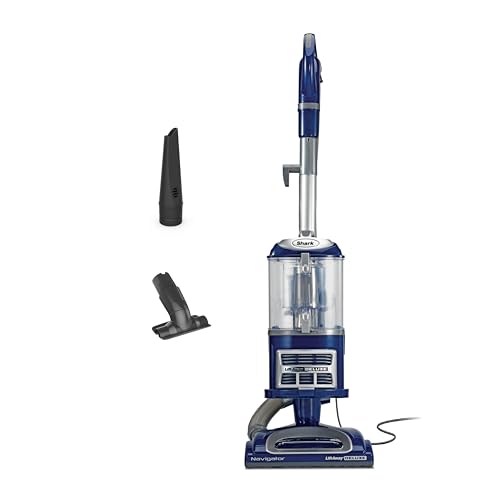
Shark Navigator Lift-Away NV360 delivers powerful suction with HEPA filtration and swivel steering. Perfect for pet hair and allergens. See full expert review.
3. Dyson V11 Animal Cordless — Best Cordless for Ash Cleanup
Rating: 4.4/5 (12,321 reviews)
The Dyson V11 Animal makes the list because of one specification that sets it apart from most cordless vacuums: whole-machine HEPA filtration at 99.99% capture efficiency for particles at 0.3 microns. This is not a HEPA filter inserted into an otherwise open system. Dyson engineering a sealed path from intake to exhaust means that when ash enters the machine, it stays in the machine.
The cordless format is genuinely useful for fireplace cleaning. You are not limited by cord length when reaching into the firebox or maneuvering around hearth furniture. The stick-to-handheld conversion takes seconds and requires no tools, which matters when you are working in an awkward position around a hearth.
The V11’s Hyperdymium motor generates suction power that competes with many corded vacuums — important for fine ash that requires real airflow to lift rather than merely disturb. The intelligent auto-adapt mode adjusts suction to surface type, though for ash you will want manual boost mode to ensure full airflow across the ash bed.
The primary limitation is runtime: the 60-minute maximum is achieved on eco mode, and high-power mode for thick ash deposits will cut that significantly. Have the machine fully charged before a cleaning session, and be prepared to prioritize the firebox first.
Battery sold separately is not a concern here as the V11 Animal ships complete, but replacement batteries carry the premium Dyson pricing.
Best for: Households that prefer cordless cleaning tools and need HEPA-grade ash containment in a flexible format.
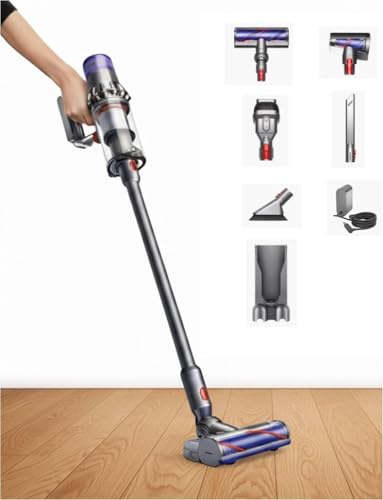
The Dyson V11 Animal offers up to 60 min runtime, auto-adapting suction, and 99.99% filtration. Built for homes with pets. See why it leads the pack!
4. DEWALT 20V MAX Cordless Handheld Vacuum DCV501HB — Best for Workshop and Firebox Detail Work
Rating: 4.7/5 (6,136 reviews)
The DEWALT DCV501HB earns its place on this list through a combination of industrial-grade suction (46 CFM) and true HEPA filtration at 99.97% — the same specification used in certified respiratory protection contexts. This is a vacuum designed for construction job sites where fine particles including drywall dust, concrete dust, and silica are present. Fine wood ash is well within its design envelope.
At 4.7 stars from over 6,000 reviews, the DCV501HB is the highest-rated vacuum on this list, a testament to the consistency of its performance in demanding real-world conditions.
For fireplace and wood stove applications, the handheld format combined with 6 included attachments — including a crevice tool and brush — allows precise work inside the firebox, along brick joints, around grates, and in the ash drawer of wood stoves. The built-in LED light illuminates dark firebox interiors where ash tends to accumulate in corners.
The DEWALT 20V MAX battery platform is one of the most widely used in the cordless tool market, which means most households with DEWALT tools already own a compatible battery. The vacuum body without battery weighs 3.3 lbs, making sustained work inside a firebox far less fatiguing than using a full-size upright.
The dry-only designation is the relevant limitation here: do not use this vacuum on wet or damp ash. Allow the ash to dry completely before vacuuming, which should already be the case if the 72-hour waiting period has been observed.
Best for: Homeowners with wood stoves or insert fireplaces needing precise handheld access and industrial-grade fine-particle filtration.
View the DEWALT 20V Handheld Vacuum
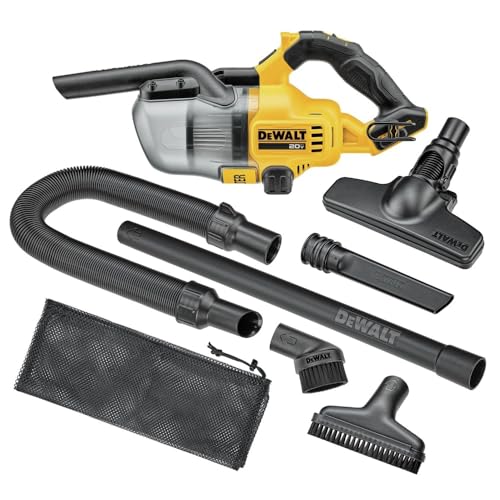
DEWALT 20V cordless handheld vacuum with HEPA filter, LED light, 6 attachments, and 46 CFM suction. Built for jobsites, workshops, garages, and vehicles.
5. Bissell Pet Hair Eraser Allergen Lift-Off 39883 — Best for Households with Pets and a Fireplace
Rating: 4.5/5 (1,804 reviews)
The Bissell 39883 addresses a specific and common household combination: fireplace ash and pet hair. The HEPA Sealed Allergen System locks fine particles including ash into the machine and prevents them from being exhausted back into the room. The 1-liter XL dirt tank is the largest capacity on this list, which matters for ash sessions where the volume of material can fill a smaller cup mid-job.
The Scatter-Free Technology is a feature worth highlighting for hard floor use around fireplaces. Many vacuums set to hard floor mode still generate enough turbulence at the intake to blow fine debris around before capturing it. Scatter-Free uses airflow management to draw particles in without disturbing them, which is exactly what you need when working on a stone or tile hearth covered in fine grey ash.
The Lift-Off detachable pod with extension wand covers the same use case as the Shark Lift-Away systems: detach for confined firebox work and hearth detail, reattach for the surrounding floor area.
The tangle-free brush roll is not particularly relevant to ash cleanup but adds genuine value for households where pet hair is the other major cleaning challenge.
Best for: Pet owners with fireplaces who want a sealed HEPA system with large-capacity dust management.
View the Bissell Pet Hair Eraser 39883

Bissell Pet Hair Eraser Allergen Lift-Off with HEPA filtration, tangle-free brush roll, and scatter-free tech. Built for pet owners. See our expert review.
Fireplace Ash Cleanup Protocol
Following the right sequence makes the difference between a quick, contained cleanup and a prolonged grey mess.
Step 1: Confirm the ash is cold. Apply the three-day rule. Confirm with a hand-hover and metal spoon test as described above. Do not proceed if you detect any heat.
Step 2: Prepare the area. Lay a drop cloth or old newspaper on the floor immediately in front of the firebox. This catches any ash that spills during the manual pre-sweep phase.
Step 3: Remove large debris manually. Use a metal ash shovel and ash rake to loosen and scoop bulk ash into a metal bucket. Remove any remaining logs, grate debris, or large chunks. Depositing bulk ash in the vacuum without this step will overwhelm even a large-capacity vacuum quickly.
Step 4: Check and prepare your vacuum. If using a sealed HEPA household vacuum, ensure the filter is clean or freshly replaced before starting. A partially loaded filter from previous cleaning sessions will not perform to its rated efficiency on the ultra-fine particles in ash.
Step 5: Vacuum with the brushroll off. For any hard surface — firebox floor, hearth surround, stone facing — disengage the brushroll before vacuuming. The brushroll’s rotation creates turbulence that lifts fine ash back into the air rather than channeling it into the intake. Use a crevice tool or bare floor attachment.
Step 6: Work from the inside out. Start inside the firebox with the crevice or detail tool, then work outward to the hearth surround, and finally cover the floor area in front of the fireplace. This prevents re-contaminating cleaned areas.
Step 7: Clean the filter immediately after. Fine ash loads filter media rapidly. After an ash session, take the vacuum outside and remove the filter. Tap it gently to dislodge surface ash before reinstalling. If the filter is heavily loaded, replace it. Running a HEPA vacuum with a fully loaded filter on subsequent cleaning sessions reduces its effectiveness and can damage the motor.
Step 8: Dispose of the ash correctly. Metal container, tight lid, stored outside, away from combustible structures, for a minimum of several additional days before placing in a waste receptacle.
Frequently Asked Questions
How long should I wait before vacuuming fireplace ash?
A minimum of 72 hours (three full days) after the last fire. Ash that appears cold on the surface can contain buried embers that retain ignition-capable heat for up to three days. If you are uncertain when the last fire was lit, wait the full 72 hours from the last time you suspect the fireplace was used.
Can I use a regular vacuum cleaner on cold ash?
Not recommended, for two reasons. First, most household vacuums do not have sealed HEPA filtration, meaning ultra-fine ash particles will pass through the filter and be exhausted into your room air. Second, even if the filter captures the particles, standard filters load rapidly with fine ash and lose effectiveness quickly. Use a sealed HEPA vacuum or a dedicated ash vacuum.
What is the best way to clean a fireplace?
Start with manual removal using a metal shovel and ash rake to take out bulk material into a metal container. Allow all ash to confirm cold over 72 hours before this step. Follow with a sealed HEPA or dedicated ash vacuum for the fine residue. Finish by wiping brick or stone surfaces with a slightly damp cloth to pick up settled surface dust.
Do I need to buy a dedicated ash vacuum?
Not necessarily. A high-quality sealed HEPA household vacuum handles cold, well-settled ash effectively. A dedicated ash vacuum is worth considering if you clean ash very frequently (daily wood stove use, for example), want metal-body protection against undetected embers, or prefer to keep the ash cleaning tool completely separate from your regular household vacuum.
Why does my vacuum smell like smoke after vacuuming ash?
This typically means fine combustion particles are passing through an inadequate filter and depositing inside the motor housing or being exhausted through the output vent. Switch to a vacuum with sealed HEPA filtration, and clean or replace the current vacuum’s filter before further use.
Can ash damage my vacuum?
Yes. Ultra-fine ash particles accelerate filter clogging, which causes the motor to run harder and hotter. Over time, this shortens motor life. Ash particles can also accumulate inside the motor housing in vacuums without fully sealed filtration paths. Using the right vacuum and maintaining the filter after ash sessions prevents this damage.
Is ash from a wood pellet stove different from regular fireplace ash?
Pellet stove ash is generally finer and produced in higher volumes per heating season than wood-burning fireplace ash. It creates the same filtration challenges and the same ember hazard. The same 72-hour rule and sealed HEPA requirement apply. Many pellet stove owners opt for a dedicated ash vacuum because of the frequency of cleaning required.
Conclusion
Cleaning fireplace ash is not complicated — but it has to be done correctly. The risks are real: breathing fine combustion particulate is a genuine health concern, and vacuuming warm ash into a plastic-bodied household vacuum is a documented fire hazard. Both risks are completely preventable with the right approach.
Respect the 72-hour rule without exception. Choose a vacuum with sealed HEPA filtration, not merely a vacuum that claims to have a HEPA filter somewhere in its housing. Clean the filter after every ash session.
If you are buying one vacuum to handle both your home and your fireplace, the Shark Rotator NV752 delivers the most comprehensive combination of sealed filtration, versatile cleaning modes, and long-term reliability at a reasonable price. For households that prefer cordless flexibility, the Dyson V11 Animal’s whole-machine HEPA system is unmatched in its category. The DEWALT DCV501HB is the right answer if your priority is precise handheld access to a wood stove or firebox interior.
Any of the five vacuums on this list, used correctly and maintained properly, will keep your fireplace area clean and your indoor air quality protected through the entire heating season.
Ready to Find Your Perfect Vacuum?
Browse our expertly reviewed vacuum cleaners and make an informed decision
Browse All Vacuums