Best Vacuum for Kids Rooms 2026: Safe, Powerful Cleaning for Children's Spaces
Best vacuums for kids rooms with HEPA filtration and powerful suction to handle crumbs, craft supplies, and allergens.
Table of Contents
A child’s bedroom is one of the most demanding cleaning environments in any home — and one of the most commonly underestimated. Walk into the average kids room on any given afternoon and you will find crumbs from a snack eaten on the floor, glitter from a craft project distributed across a wide radius, Lego pieces lurking under the bed, crayon shavings ground into the carpet edge, and a half-dozen stuffed animals that have not been cleaned since the last school year. This is before factoring in the invisible layer of allergens that accumulate in those same spaces: dust mites living in carpet fibers and bedding, mold spores from a water bottle left near the rug, and pet dander transferred from common areas.
Children spend more time on and near the floor than adults do. They play directly on carpet surfaces, drag their hands across floors, and put objects that have been in contact with those surfaces into their mouths. The particulate load at floor level in a child’s room is not just a cleanliness issue — it is a health variable that affects respiratory development, allergy formation, and sleep quality. The right vacuum for a kids room has to address all of it: the visible debris, the embedded grime, and the microscopic allergens that no broom can capture.
This guide identifies the specific challenges of cleaning children’s rooms, explains what vacuum features actually matter for these environments, and recommends six specific models — ranging from full-sized cordless stick vacuums to compact handheld units — that are well matched to the task.
The Unique Cleaning Challenges of Kids Rooms
Crumbs, Craft Materials, and Small Debris
Children’s rooms accumulate a category of debris that standard household vacuuming does not always account for. Craft supplies — glitter, foam pieces, dried glue bits, construction paper scraps, dried pasta from art projects — behave differently under suction than ordinary dust and pet hair. Some particles are lightweight enough to scatter if the airflow is not well directed. Others are dense and fine enough to clog filters quickly. Crumbs from snacks eaten near the bed or desk are a constant source of debris that attracts pests if not addressed frequently.
Small toy parts are their own category of challenge. A vacuum that lacks the suction to pull small items from carpet pile will leave them embedded. A vacuum without a crevice tool cannot reach the gap between the baseboard and the carpet edge where toy pieces, beads, and broken pencil tips congregate. A machine with a low-clearance cleaning head cannot get under the bed or low furniture where debris migrates during play.
Allergens From Stuffed Animals and Bedding
Stuffed animals are among the highest-density reservoirs of indoor allergens in a typical child’s room. Their fabric surfaces trap shed skin cells, which provide food for dust mites, and their soft interiors maintain the humidity and temperature conditions in which dust mites reproduce. A collection of stuffed animals sitting on a shelf or bed accumulates allergen load over months, and the child who sleeps in proximity to that collection inhales the resulting particulates throughout the night.
Carpet is the second major allergen reservoir. Dust mites thrive in carpet fibers at densities that hard floors cannot support. In a child’s room with carpeted floors, regular deep vacuuming with a sealed HEPA filter is the most effective mechanical intervention for reducing the dust mite allergen load to levels that are not clinically significant. The key word is “sealed”: a HEPA filter in a vacuum with poorly fitted components allows fine particles to bypass the filter through seams and gaskets, undoing the purpose of the filtration system.
Pet Dander in Multi-Pet Households
In homes with pets, children’s rooms are often where dander concentrations are highest. Pets are attracted to the warmth, the soft surfaces, and the food debris in children’s rooms, and they leave dander deposits wherever they rest. Children also handle pets frequently and transfer dander directly to their bedding and clothing. A vacuum for a kids room in a pet-owning household needs both strong suction for hair and embedded debris and a reliable allergen-containment filtration system to prevent dander from being exhausted back into the room during cleaning.
The Mobility Requirement
Kids rooms are rarely simple open rectangles. They contain under-bed clearances packed with toys, desk areas with chair legs and cords, closet thresholds that accumulate debris, bookshelves with objects stored at floor level, and play areas with tight corners. A vacuum that is heavy, awkward to maneuver, or tethered to a cord in a way that limits reach will get used less often — and frequency of cleaning is the most important variable in allergen and debris management. The best vacuum for a kids room is one you will actually use consistently, which means it needs to be easy to grab, easy to maneuver, and quick to put away.
Key Features to Look For in a Kids Room Vacuum
HEPA Filtration for Children’s Health
HEPA filtration is the single most important feature to prioritize in a vacuum for a child’s room. A true HEPA filter captures 99.97% of airborne particles at 0.3 microns, which includes the size range of dust mite allergens, mold spores, pet dander proteins, and fine dust particles. The H13 HEPA standard, which some models meet, captures 99.95% of particles at 0.1 microns — a higher specification that provides additional protection for children with diagnosed allergies or asthma.
The filter is only half the equation. The vacuum must also be sealed end-to-end, meaning all air that enters the machine exits through the HEPA filter before leaving the housing. Vacuums with loose-fitting components, poor gasket seals around the filter housing, or gaps in the body construction will exhaust fine particles around the filter rather than through it. When evaluating any vacuum for a child’s room, look for language that describes sealed filtration, whole-machine HEPA, or anti-allergen complete seal.
Washable HEPA filters are a practical advantage in kids room vacuums. Children’s rooms generate higher debris volumes than other rooms in the house, and filters clog faster under heavy use. A washable filter can be cleaned monthly and dried overnight, maintaining peak filtration efficiency without the ongoing cost of disposable replacement filters.
Powerful Suction for Carpet and Hard Floors
Children’s rooms often have both carpet and hard flooring — a rug over a wood or laminate floor, or a carpeted bedroom adjacent to a hard-floored play area. A vacuum needs adequate suction to extract debris embedded in carpet pile while also performing well on hard surfaces where debris is swept along rather than extracted from fibers. Modern cordless stick vacuums in the 30,000Pa to 40,000Pa range perform comparably to corded uprights for most residential carpet and hard floor cleaning.
Anti-tangle brush rolls are particularly useful in kids rooms where long hair — from children, parents, and pets — is regularly present on the floor. Brush rolls that wrap hair require manual clearing that interrupts cleaning sessions and, if neglected, reduces suction by restricting airflow through the brush head. A V-shaped or self-cleaning brush roll that prevents hair wrap reduces this maintenance burden significantly.
Lightweight and Easy to Maneuver
Weight is a more important specification in a kids room vacuum than it might appear. A lighter machine is easier to carry up stairs, easier to maneuver under low furniture, easier to bring to where the mess actually is rather than vacuuming around it, and easier for older children to operate themselves as they take on cleaning responsibilities. Cordless stick vacuums in the 5 to 7 pound range strike the best balance between power and maneuverability for this use case.
Swivel steering, 180-degree horizontal rotation of the cleaning head, and LED headlights that illuminate debris under furniture and in shadowed corners are practical features that make kids room cleaning more thorough and less effortful. The easier the vacuum is to use well, the more often it will be used, which is the metric that matters most for maintaining clean indoor air quality in children’s spaces.
Handheld Attachment for Tight Spots and Surfaces
The ability to convert from a stick vacuum to a handheld unit transforms a single machine into a complete cleaning system for a kids room. In handheld mode, the same vacuum that handles floor cleaning can clean desk surfaces, bookshelves, mattress surfaces, stuffed animals (with a soft brush attachment), the interior of the closet, and the seat of the desk chair. A crevice tool attachment reaches the gap behind the headboard, between the bed and the wall, and along the baseboard corners where debris accumulates and is not reachable with the standard cleaning head.
This convertibility also makes the vacuum usable for quick spot cleaning without deploying the full stick vacuum setup. When a child spills craft supplies on a surface, a handheld unit removes the debris in two minutes without requiring a full cleaning session. That speed of response prevents debris from spreading, prevents small items from creating tripping or choking hazards, and keeps the room from accumulating a backlog of spot-cleaning needs.
Top 6 Vacuums for Kids Rooms
1. KARDV V06 Cordless Stick Vacuum
With over 2,500 reviews and a 4.4-star rating, the KARDV V06 is one of the most validated cordless stick vacuums at its price point, and its combination of raw power, smart design, and versatility makes it an excellent primary vacuum for a kids room. The 500W motor delivers 40,000Pa of suction in MAX mode — figures that rival many corded upright vacuums — and the 8-in-1 accessory system means the same machine transitions from floor cleaning to handheld spot cleaning, desk surfaces, and under-bed extraction without swapping devices.
The multi-layer sealed HEPA filtration system captures allergens from stuffed animals, pet dander, and fine craft debris, ensuring that nothing extracted from the floor is exhausted back into the room your child sleeps in. The V-shaped anti-tangle brush with built-in LED lights prevents hair wrap — a consistent nuisance in rooms where children’s hair and pet fur are both present — and illuminates the area directly in front of the cleaning head so debris under the bed and in shadowed corners is clearly visible.
A smart color LED display on the handle shows real-time battery level, suction mode, and brush maintenance alerts, which eliminates guesswork about when the filter needs cleaning or when the battery is about to run out mid-session. The 1.5-liter dust cup is generous enough for a complete kids room cleaning session without needing to empty it mid-use, and at 5 lbs the V06 is light enough to carry and maneuver through the tight spaces typical of a child’s bedroom without fatigue.
Runtime reaches up to 60 minutes in standard mode, which is enough to clean multiple rooms in a single charge. MAX mode, which delivers the full 40,000Pa, runs for 20 to 25 minutes — sufficient for a thorough single-room session before returning the machine to charge.
Best for: Primary floor-to-surface kids room cleaning with high suction, anti-tangle brush, and versatile handheld capability.
Key specs: 500W motor, 40,000Pa suction, multi-layer sealed HEPA, 8-in-1, 1.5L dust cup, 60-min runtime (standard), 5 lbs.

KARDV V06 cordless stick vacuum with 500W motor, 40Kpa suction, 60-min runtime, and LED display. 8-in-1 design for pet hair and hard floors. Full review here.
2. Tikom V450 Cordless Stick Vacuum
The Tikom V450 earns its place on this list through an unusually complete feature set for a mid-range cordless stick vacuum. The 450W motor delivers 40,000Pa of suction and is paired with 7-stage HEPA cyclone filtration that captures 99.99% of dust and allergens — a filtration specification that goes beyond the basic HEPA standard and is particularly relevant for children with allergy or asthma diagnoses. The 7-stage cyclone design also helps maintain consistent suction as the dust cup fills, preventing the performance drop that affects simpler filter designs under heavy debris loads.
The LED color touchscreen on the handle displays battery level, suction mode, and malfunction warnings in real time. For a household where the vacuum is used by multiple family members and cleaning habits vary, this visibility ensures the machine is always used at the right settings and that filter and brush maintenance issues are caught before they affect performance. The 90-degree vertical and 180-degree horizontal rotation of the cleaning head, combined with 6 LED headlights, makes reaching under beds, around desk legs, and into closet corners straightforward.
The 6-in-1 design converts to a handheld for stuffed animal cleaning, mattress vacuuming, and desk surface cleaning, and the wall-mounted charging dock keeps the vacuum organized and fully charged between uses. In a kids room where floor space is already at a premium, a wall-mounted storage solution is a meaningful advantage over a vacuum that requires a dedicated standing storage area.
At 2,495 grams (approximately 5.5 lbs), the V450 is light enough for regular daily use without fatigue.
Best for: Households with children who have allergies or asthma, requiring maximum filtration efficiency and real-time performance monitoring.
Key specs: 450W motor, 40,000Pa suction, 7-stage HEPA cyclone (99.99%), 6-in-1, LED touchscreen, wall dock, 6 LED headlights, 5.5 lbs.
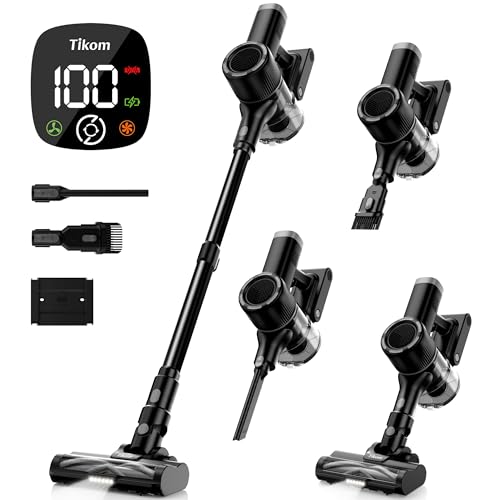
Tikom V450 delivers 450W/40000Pa suction, 6-in-1 versatility, LED touchscreen & wall dock. Ideal for pet hair, carpet & hard floors. Shop now.
3. BSNAW 8-in-1 Cordless Stick Vacuum
The BSNAW 8-in-1 is built around a three-layer filtration system — HEPA, stainless steel mesh, and sponge pre-filter working in sequence — that captures 99.99% of particles down to 0.1 microns. That specification places it among the most effective allergen-containment systems in its price tier, and it matters in kids rooms where the combination of crumbs, fine craft debris, and biological allergens creates a particularly demanding filtration challenge.
The 30,000Pa suction handles embedded carpet debris, crumbs ground into area rug fibers, and fine dust with equal effectiveness. The 45-minute runtime in eco mode provides enough cleaning time for a thorough kids room session and several additional spaces without needing to recharge. The 180-degree swivel steering and LED headlight combination make it easy to reach every part of a children’s room, including the furniture-dense areas around toy chests, bookshelves, and desks where debris accumulates in tight spaces.
Eight included accessories — extending the vacuum into a full cleaning system — include motorized brush head, crevice tool, dusting brush, and flexible extensions that adapt the machine to stairs, car interiors, and upholstered surfaces beyond the kids room itself. The one-touch dust cup emptying mechanism allows hygienic disposal without touching the collected debris, which is a practical advantage when emptying a cup that contains allergen-heavy material from a child’s room.
With 309 ratings averaging 4.3 stars, the BSNAW represents strong value for households that want genuine HEPA-grade allergen containment at an accessible price point.
Best for: Thorough kids room cleaning with best-in-class particle filtration at 0.1 microns, strong runtime, and complete accessory kit.
Key specs: 30,000Pa suction, triple-layer HEPA filtration (99.99% at 0.1 microns), 45-min runtime, 8-in-1, 180-degree swivel, LED headlight.
4. AHNR LT-156 Cordless Handheld Vacuum
With 1,127 ratings at 4.6 stars, the AHNR LT-156 is one of the highest-rated handheld vacuums in this review set, and it addresses the specific use case of quick spot cleaning that is central to maintaining a kids room between full floor-cleaning sessions. At 454 grams — roughly one pound — it is light enough for a child to use themselves, and its ergonomic handle reduces fatigue during the frequent short cleaning bursts that characterize kids room maintenance.
The 16,000Pa suction from a 120W motor running at 72,000 RPM is exceptional for a handheld unit — comparable to many full-sized stick vacuums — and it handles the high-volume spot cleaning jobs that kids rooms generate: spilled beads, scattered Lego pieces, craft supply piles, crumbs on the desk surface, and fine debris on the mattress. Dual HEPA filtration — a steel pre-filter plus a washable HEPA filter — maintains suction over time and captures fine allergens from stuffed animal surfaces and bedding.
The built-in LED light illuminates the area being cleaned, which is useful for surface cleaning on a cluttered desk or in the shadow under a low shelf. Universal Type-C charging works with standard phone chargers, which reduces the number of dedicated chargers needed in a household — a practical advantage in a kids room where charging real estate is limited. The 7,800mAh battery delivers up to 30 minutes of runtime, which covers a complete spot-cleaning session or a thorough handheld cleaning of all non-floor surfaces in a child’s room.
The 400ml anti-escape dust cup is sized appropriately for handheld use — large enough for a complete session without emptying, small enough to empty quickly when full.
Best for: Quick spot cleaning, desk and surface cleaning, stuffed animal and mattress vacuuming, and as a complement to a full-sized stick vacuum.
Key specs: 16,000Pa suction, 120W motor, dual HEPA + steel filter, 454g, 30-min runtime, 400ml dust cup, Type-C charging, LED light.
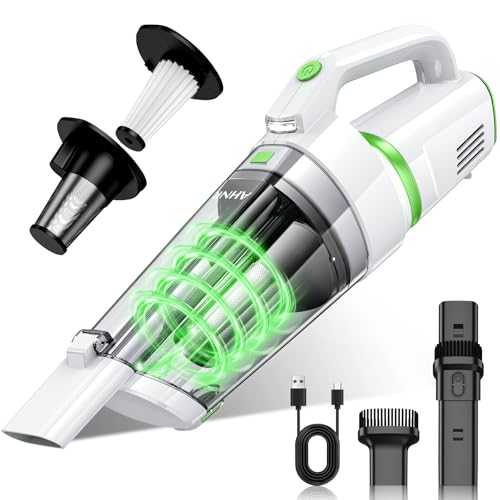
AHNR LT-156 cordless handheld vacuum delivers 16000PA suction, 30-min runtime, dual HEPA filters & LED light. Perfect for car, home & office. Shop now.
5. PowerSpeed CleanView Cordless Handheld Vacuum
The PowerSpeed CleanView DW189 distinguishes itself in the handheld category through one specification that matters considerably in high-use applications like kids rooms: a 1,000ml dust cup capacity. Most handheld vacuums in this suction range operate with dust cups in the 300 to 500ml range, which requires frequent emptying during a room-cleaning session. The CleanView’s 1-liter capacity covers a complete kids room cleaning — including floor surfaces, furniture, and stored toys — without interruption.
Triple washable HEPA filtration — three separate HEPA filter layers included in the box — provides genuine allergen containment and eliminates the cost of disposable filter replacement. In a kids room used by a child with allergy sensitivities, the combination of high-volume dust cup capacity and effective HEPA filtration means less frequent emptying and consistent allergen capture throughout the cleaning session.
The 16,000Pa suction handles both crumbs on hard surfaces and debris on upholstered surfaces, area rugs, and the carpet sections of mixed-flooring rooms. Dual speed modes allow full power for embedded debris on carpet and reduced power for delicate surfaces or quieter operation during homework time. The LED light is built into the front of the unit for surface visibility, and the 7,800mAh battery delivers up to 27 minutes of runtime per charge.
At under 1.8 lbs, the CleanView is practical for sustained handheld use and can serve as the primary vacuum for smaller kids rooms or apartment bedrooms where a full stick vacuum would be unnecessary.
Best for: Kids rooms requiring a large-capacity handheld vacuum for extended cleaning sessions without mid-session emptying interruptions.
Key specs: 16,000Pa suction, 1,000ml dust cup, triple washable HEPA filters, dual speed, LED light, under 1.8 lbs, 27-min runtime.
6. PROMOMO Cordless Handheld Vacuum with H13 HEPA
The PROMOMO 711PRO is the lightest option in this guide at 1.4 lbs, and its combination of H13 HEPA filtration, low noise operation, and true cyclonic suction amplification makes it an ideal choice for parents who prioritize both air quality and noise management. At H13 grade, the filter captures 99.95% of particles at 0.1 microns — one of the highest filtration standards available in a handheld vacuum — which provides meaningful additional protection for children with diagnosed respiratory conditions.
The true cyclonic filtration system delivers approximately twice the suction power of conventional handheld vacuums at equivalent motor specifications, channeling airflow into a high-velocity spiral that separates debris from the airstream before it reaches the filter. This design keeps the filter cleaner between washes and maintains consistent suction output as the dust cup fills — a performance characteristic that matters in kids rooms where crumbs, fine dust, and biological debris are present in the same cleaning session.
The low noise design allows cleaning during quiet hours — during homework, during calls, or in an adjacent room while a younger child naps — without the disruptive noise level that standard vacuums generate. The single-touch dust cup release makes emptying clean and fast, and the included charging dock keeps the unit powered and stored in an accessible location for frequent use. The brushless motor and 2,600mAh battery deliver up to 30 minutes of runtime in eco mode.
The creamy white design and compact form factor make it practical to store in the kids room itself — in a closet or on a shelf — so that spot cleaning can happen immediately rather than requiring a trip to retrieve the vacuum from another room.
Best for: Quiet, frequent spot cleaning in kids rooms where noise management matters, or for children with serious allergy or asthma diagnoses requiring maximum filtration grade.
Key specs: H13 HEPA + cyclonic filtration, 1.4 lbs, low noise, 30-min runtime, brushless motor, single-touch dustbin, charging dock included.
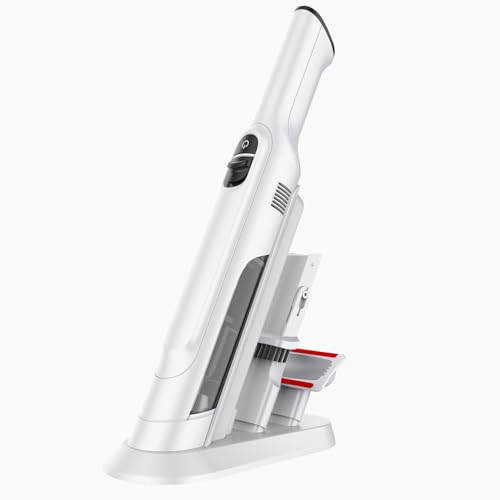
PROMOMO handheld vacuum offers 2x enhanced cyclonic suction, H13 HEPA filter, 30-min runtime & charging dock at just 1.4 lbs. Shop now for cleaner air!
Kids Room Cleaning Schedule
Maintaining a clean kids room requires a structured approach rather than reactive cleaning after obvious messes. Children’s rooms accumulate allergens, debris, and organic material at a faster rate than other rooms in the house, and the health implications of that accumulation are more significant for children than for adults. The following schedule reflects the cleaning frequency that indoor air quality research supports for children’s sleeping and play environments.
Daily (2 to 5 minutes): Use a handheld vacuum or a quick pass with a lightweight stick vacuum to address visible crumbs, craft debris, or spilled materials before they become embedded in carpet fibers or spread further. This does not need to be a thorough cleaning — the goal is to prevent daily accumulation from reaching the level where a single deeper session cannot address it. A quick pass around the desk, the snack area, and the play zone takes less time than making the bed and has a measurable effect on debris levels at floor level.
Three times per week (thorough floor cleaning): Use the primary stick vacuum for a complete floor-cleaning pass, including under the bed, around all furniture, and along baseboards where debris and dust accumulate. Alternate the suction mode between standard and MAX based on carpet condition. In rooms with carpet, this frequency is the minimum recommended for meaningful dust mite population control.
Weekly (full room including surfaces): Combine floor vacuuming with handheld cleaning of desk surfaces, bookshelves, window sills, the mattress, and any upholstered seating. The mattress is the highest-priority surface in the weekly clean: a child’s mattress accumulates shed skin cells, dust mites, and allergen deposits at a rate that requires regular vacuuming with a handheld unit equipped with a soft brush attachment to manage. If the room has a ceiling fan, include the fan blades — accumulated dust on fan blades becomes airborne particulate every time the fan operates.
Monthly (stuffed animals and soft toys): Vacuum stuffed animals with a soft brush attachment on moderate suction. This is particularly important for children with dust mite allergies. Stuffed animals that are machine-washable should be washed on a hot cycle monthly — heat above 130 degrees Fahrenheit kills dust mites effectively. Items that cannot be washed can be placed in a sealed plastic bag in the freezer for 24 to 48 hours, which kills mites through cold exposure, then vacuumed after thawing.
Every 4 to 6 weeks (filter maintenance): Clean washable HEPA filters according to manufacturer instructions. Kids rooms generate high debris volumes and filter loading happens faster than in low-use rooms. Allow the filter to dry for a full 24 hours before reinstalling — running a vacuum with a damp filter reduces suction performance and can create conditions for mold growth inside the filtration system. Maintain a spare filter to use during the drying period so cleaning is not interrupted.
Seasonally (under and behind furniture): Move furniture — beds, dressers, bookshelves, toy chests — and vacuum the floor areas underneath and behind them. These areas accumulate dust bunnies and fine debris over months and are not accessible during routine cleaning sessions. In carpeted rooms, areas under furniture that are not regularly vacuumed can harbor significantly higher allergen concentrations than the open floor areas, contributing to overall room allergen load.
Frequently Asked Questions
Do I really need a HEPA vacuum for a kids room, or is any vacuum sufficient?
For a child without known allergies or respiratory conditions, a standard vacuum maintained with a clean filter provides adequate cleaning performance. For children with diagnosed asthma, dust mite allergies, pet dander sensitivity, or mold allergies, HEPA filtration is not optional — it is the primary mechanism by which vacuuming reduces allergen load rather than redistributing it. A vacuum without sealed HEPA filtration captures debris in the dust cup but exhausts fine allergen particles back into the room through the exhaust. In a child’s bedroom, that means the same room where the child sleeps contains the allergens you extracted from the floor, now suspended in the air at breathing height.
What suction power is adequate for a kids room with carpet?
For residential carpet cleaning with embedded crumbs and debris from normal children’s activity, a vacuum in the 15,000Pa to 30,000Pa range is adequate for most tasks in standard mode. Models in the 30,000Pa to 40,000Pa range handle deeper embedded debris and provide better extraction of fine particles from carpet fibers. The suction specification matters less than consistent cleaning frequency: a 20,000Pa vacuum used three times per week will produce better indoor air quality outcomes than a 40,000Pa vacuum used once a week.
Can I use a handheld vacuum as the only vacuum for a kids room?
For a smaller kids room — a single bedroom with limited carpet area — a high-powered handheld vacuum in the 15,000Pa to 16,000Pa range, such as the AHNR LT-156 or PowerSpeed CleanView, can serve as the primary cleaning tool. For rooms with substantial carpet area or heavy debris accumulation, a handheld used alone requires more time and effort than a stick vacuum for floor cleaning and is better deployed as a complement to a stick vacuum rather than a replacement. The most effective configuration for most kids rooms is a primary cordless stick vacuum for floor cleaning and a dedicated handheld for surfaces, furniture, and spot cleaning.
How do I vacuum stuffed animals without damaging them?
Use a handheld vacuum on its lowest suction setting with a soft dusting brush attachment. Hold the stuffed animal firmly and move the brush over the surface in slow, deliberate strokes. Avoid the lowest-power settings of high-suction models on delicate fabric faces, button eyes, or loose embellishments — a 16,000Pa handheld on high can pull at loosely attached fabric elements. Medium suction with a brush attachment is effective at removing surface dust, dander, and debris without stressing the fabric. For plush animals with long pile fabric, brush in the direction of the pile rather than against it.
My child has a bedroom with both carpet and hard floors. Which vacuum works best for mixed surfaces?
A cordless stick vacuum with a motorized cleaning head that automatically adjusts suction between carpet and hard floor modes is the most practical choice for mixed-surface kids rooms. The KARDV V06, Tikom V450, and BSNAW 8-in-1 all handle this transition effectively. Look for a model with a brushroll that can be controlled or adjusted — on hard floors, a spinning brushroll can scatter lightweight debris rather than capturing it, so the ability to switch to suction-only mode for hard floor sections is a useful feature. Most 8-in-1 and 6-in-1 configurations include a dedicated hard floor tool in the accessory set for exactly this scenario.
How often should I replace HEPA filters in a kids room vacuum?
Washable HEPA filters should be cleaned every four to six weeks under a kids room cleaning schedule. Disposable HEPA filters should be replaced every three to four months rather than the standard six-to-twelve-month recommendation for lower-use rooms, because kids rooms generate higher debris volumes. A clogged filter does not just reduce suction — it reduces allergen capture efficiency, which defeats the primary purpose of HEPA filtration in a health-sensitive environment. Check filter condition before each cleaning session by holding it to the light: if debris is visible through the filter media, it is time to wash or replace it.
Is it safe to vacuum a child’s mattress?
Yes, and it is recommended. Use a handheld vacuum with a soft brush or upholstery attachment on medium suction. Vacuum both sides of the mattress when rotating it seasonally, and vacuum the top surface monthly as part of the regular kids room cleaning schedule. Focus on the seams and edges where debris and mite populations concentrate. If the mattress has a removable cover, remove and wash the cover on a hot cycle before vacuuming the mattress itself. Mattress vacuuming is one of the most effective single interventions for reducing dust mite allergen exposure for children who have known mite sensitivities.
At what age can children vacuum their own rooms?
With a lightweight cordless vacuum in the 1.4 to 5 lb range, children as young as 8 to 10 can manage a basic floor-cleaning pass in their own room with adult supervision and instruction. The ergonomic design of modern cordless stick vacuums makes them accessible to older children, and teaching children to vacuum their own spaces is both practical and valuable for developing cleaning habits. Handheld vacuums in the 1 to 1.8 lb range, like the PROMOMO 711PRO or AHNR LT-156, are lightweight enough for children in the 7 to 9 age range to use for spot cleaning and surface cleaning under supervision.
Conclusion
The best vacuum for a kids room is one that combines genuine HEPA allergen containment, enough suction to extract embedded debris from carpet, and the physical characteristics — light weight, handheld capability, ease of storage — that make frequent use practical rather than effortful. The six vacuums in this guide address those requirements across a range of configurations and price points.
For whole-room floor cleaning with maximum versatility, the KARDV V06 and Tikom V450 deliver the suction, filtration quality, and 6-to-8-in-1 accessory systems that handle every surface in a kids room from a single machine. The BSNAW 8-in-1 provides the highest particle filtration specification in the group at 0.1 microns, making it the right choice for households where allergen containment is the top priority. For handheld spot cleaning, surface work, and mattress vacuuming, the AHNR LT-156 and PowerSpeed CleanView represent the best combination of suction power, dust capacity, and weight. The PROMOMO 711PRO fills the niche of quiet, ultra-lightweight cleaning for noise-sensitive situations and for children with serious respiratory diagnoses who require H13-grade filtration.
The vacuum you choose matters less than the consistency with which you use it. Clean the kids room floor three times per week, vacuum soft surfaces monthly, maintain the filter on schedule, and the indoor air quality in your child’s bedroom will be measurably better regardless of which model from this guide you select. Start there, and adjust the equipment to match your floor types, debris volume, and any specific health requirements your child has.
Ready to Find Your Perfect Vacuum?
Browse our expertly reviewed vacuum cleaners and make an informed decision
Browse All Vacuums