Best Vacuum for Mud on Carpet: The Dry-First Method and the Right Equipment
Vacuuming mud from carpet requires the dry-first method and a powerful upright. These are the best vacuums for mud on carpet that actually clean it completely.
Table of Contents
Mud on carpet is one of those problems where the most natural instinct — clean it up immediately — is exactly the wrong approach. The panic response to a muddy footprint on carpet is to grab a cloth, start blotting, and try to clean it while it is fresh. This almost always makes the problem worse: the clay minerals in wet mud bind aggressively to carpet fibers when wet, and rubbing or blotting spreads the stain rather than containing it.
The correct protocol for mud on carpet starts with doing nothing. Let it dry. Then vacuum it. This guide explains why that approach works, how to execute it correctly, which vacuum products extract dried mud most completely, and when you need to move to wet cleaning for the residual stain that dry vacuuming leaves behind.
Why You Should Never Vacuum Wet Mud
The chemistry of mud explains why wet cleanup attempts fail.
Mud is a suspension of soil particles — primarily clay, silt, and organic matter — in water. Clay minerals, when wet, have an electrical charge that causes them to adhere strongly to surfaces including carpet fibers. The fiber structure of carpet provides enormous surface area for clay particles to bond to when in contact during the wet phase.
When you attempt to blot, scrub, or vacuum wet mud:
Blotting transfers mud laterally from the footprint area to the surrounding clean carpet, enlarging the stained area.
Scrubbing mechanically forces mud particles further into the carpet pile and deeper into the fiber structure, where they are harder to reach with any subsequent cleaning method.
Vacuuming wet mud applies suction to a sticky, clay-rich material that resists extraction. The suction force is not sufficient to break the clay-fiber adhesion when mud is wet. Instead, the vacuum partially picks up surface mud while forcing remaining mud into the backing of the carpet. The wet mud can also clog the vacuum hose and brush mechanism.
What happens when mud dries:
The clay minerals lose their adhesion properties as moisture evaporates. Dried clay particles are mechanically held in the carpet fibers by the pile structure, but they no longer have the chemical bonding characteristic of wet clay. A strong motorized vacuum can agitate these dried clay particles free from the fiber structure and extract them. The dried mud also becomes friable — it breaks apart easily when disturbed, which makes mechanical agitation effective.
The wait-to-dry protocol is not just a theoretical recommendation. It is observably more effective: carpet that has had mud allowed to dry completely, then vacuumed thoroughly, typically looks significantly better after that process than carpet that was immediately blotted and scrubbed.
The Complete Mud-on-Carpet Protocol
Step 1: Do nothing. When the mud lands on carpet, resist all cleanup instincts for at least two to four hours. Remove the footwear, limit traffic in the area, and let the mud dry. If the area is in a high-traffic path, place a towel on either side of the muddy area with a sign if necessary.
Step 2: Confirm complete dryness. Before vacuuming, the mud must be completely dry — not just surface dry, but dry through the full depth of the carpet pile. Press a clean paper towel firmly onto the dried mud area. If any moisture transfers to the paper towel, wait longer.
Step 3: Dry scrape for heavy deposits. For thick mud deposits — boot tread prints, multiple footprints, or a heavy tracked mud field — use a stiff-bristled brush or the edge of a dustpan to gently break up the dried mud crust before vacuuming. This converts a compact dried mud layer into loose particles that vacuum easily.
Step 4: First vacuum pass. Use the strongest motorized vacuum available on a medium pile height setting, moving slowly through the muddy area and extending the pass well beyond the visible stain boundary. Mud particles scatter further than the visible stain area suggests.
Step 5: Multiple pass directions. Following the initial pass, make a perpendicular pass, then vacuum diagonally. Three to four multi-directional passes extract progressively more dried mud from the fiber depth.
Step 6: Assess the remaining stain. After thorough dry vacuuming, assess what remains. Dried clay particles that have been removed leave no stain. Organic matter and pigmented soil in the mud may leave a tan, brown, or gray shadow — a stain rather than debris. This residual stain requires wet cleaning.
Step 7: Wet clean the stain (if necessary). Apply a small amount of carpet cleaning solution or a mixture of cold water and dish soap to the stain area. Blot with a clean white cloth — never rub. Work from the outside of the stain toward the center. Rinse by blotting with clean water. Allow to dry completely.
Step 8: Final vacuum pass. After the wet cleaning area is fully dry, a final vacuum pass removes any residue brought to the surface during the drying process (wicking).
What to Look for in a Mud-on-Carpet Vacuum
High suction power. Dried clay particles are denser than household dust and require above-average suction for extraction. Target 200+ Air Watts.
Powerful motorized brushroll. The brushroll must generate enough mechanical agitation to loosen dried clay particles from the deep fiber structure. Direct-drive brushrolls, which are powered by a dedicated motor rather than driven by the main fan’s airflow, provide more agitation force than fan-driven brush systems.
Adjustable pile height. The brushroll height must be appropriate for the specific carpet. Too low presses the brushroll against the pile and compacts dried mud rather than agitating it free. Too high and the brushroll does not contact the fiber depth where mud accumulates.
Large bin or bag capacity. A mud cleanup session from a significant tracked area generates significant debris. A small bin requires mid-session emptying, which means opening the container and handling mud-laden debris before the session is complete. Larger capacity reduces this.
Easy filter access for post-session cleaning. Dried clay particles load vacuum filters faster than regular household debris. After a significant mud session, the filter should be accessible for cleaning. Vacuums with difficult filter access get cleaned less often, leading to progressive performance degradation.
The 5 Best Vacuums for Mud on Carpet
1. Dyson Ball Animal 3 Extra — Best Overall for Dried Mud on Carpet
Best for: Regular muddy footprint management, deep-pile carpet, pet homes where outdoor dirt is a constant
The Dyson Ball Animal 3 Extra tops this category for the same reason it tops the general dirt-on-carpet category: the direct-drive cleaner head’s mechanical agitation force is the best available for its class, and extracted mud debris requires exactly this kind of powered brushroll engagement.
At 270 Air Watts with the self-adjusting cleaner head that reads pile height and adapts continuously, the Ball Animal 3 Extra manages the transition between the matted pile area around the mud deposit (which may sit lower due to the weight of the dried mud) and the surrounding undisturbed carpet without losing cleaning contact in either zone.
The XL hygienic bin release is particularly relevant for mud cleanup: it empties the bin with a single press of the lever, without your hand entering the collection bin. After a significant mud session, the bin contains a mixture of dried clay, organic matter, and carpet fiber dust that you do not want to handle directly.
The post-motor HEPA filter with fully sealed system ensures fine clay dust does not exit through the exhaust during the mud cleanup session. Fine dried clay particles are in the same size range as fine construction dust — HEPA filtration is appropriate rather than optional.
Pros:
- Direct-drive brushroll provides maximum dried clay agitation force
- 270 Air Watts sustained suction
- Self-adjusting head for matted mud area carpet height variation
- XL hygienic bin release for hands-free mud disposal
- Post-motor HEPA with sealed system for fine clay dust
Cons:
- Premium price
- Heavy at 17.6 lbs
- Bagless bin requires frequent emptying during large mud sessions
2. Shark Vertex Powered Lift-Away AZ1500 — Best for Versatile Mud Cleanup
Best for: Homes where mud tracking occurs on stairs and multiple surfaces, not just flat carpet
Shark Vertex Powered Lift-Away AZ1500
The Shark Vertex Powered Lift-Away stands out for mud cleanup across multiple surface types. Mud is tracked across entire paths — from the door entry, across hard floor, onto carpet, up stairs — and a vacuum that handles all of these surfaces without a tool change is significantly more practical than a pure carpet upright for this scenario.
The Powered Lift-Away configuration detaches the canister while maintaining full power to the motorized DuoClean PowerFins brushroll. This means you can carry the powered brushroll head up the stairs, clean muddy carpet tread surfaces with full motorized agitation, and return to the main floor without mode switching.
The DuoClean PowerFins on the Vertex are the most aggressive brushroll system in Shark’s lineup — the spiral fins penetrate carpet pile deeply and the front roller picks up debris thrown forward during agitation. For dried mud’s clay particles, this combination extracts more from deep pile than a single-element brushroll.
Pros:
- Powered Lift-Away for full-suction cleaning on stairs and above-floor muddy carpet
- DuoClean PowerFins — most aggressive Shark brushroll
- HEPA with Anti-Allergen Complete Seal
- Self-cleaning brushroll reduces mud debris accumulation in mechanism
- Strong suction for dried clay extraction
Cons:
- Heavy in Lift-Away configuration for stair cleaning
- Canister must be managed while maneuvering in Lift-Away mode
- Premium price for the Shark range
3. Hoover WindTunnel 3 Max Pet — Best Value for Mud on Carpet
Best for: Budget-conscious buyers, medium-pile carpet, regular moderate mud tracking
Hoover WindTunnel 3 Max Pet Upright
The Hoover WindTunnel 3 Max Pet is the strongest value recommendation for dried mud extraction from carpet. Its WindTunnel technology creates multiple suction channels across the full width of the cleaning path, providing more even suction distribution than single-channel designs. For mud debris spread across a wide tracked area, this wider suction pattern extracts more per pass than a narrower concentrated suction path.
The triple windtunnel configuration is paired with a motorized brushroll that handles dried mud debris appropriately. Five height settings accommodate the range of carpet pile heights where mud typically lands. The large bag capacity — using Type Y or I bags — handles significant mud debris before requiring replacement.
For a household with kids and dogs where tracked-in mud is a regular event rather than an occasional occurrence, the Hoover WindTunnel 3 Max Pet’s combination of solid performance and much more accessible price than the Dyson or Shark premium options makes it a realistic everyday choice.
Pros:
- WindTunnel technology for wide suction coverage
- Five pile height settings
- Large bag capacity for significant mud sessions
- HEPA media filtration
- Most affordable option with adequate deep-pile extraction capability
Cons:
- Less suction than premium Dyson or Shark options
- Bagged design — replacement bags ongoing cost
- Not as effective as direct-drive brushrolls on deeply embedded mud
4. Bissell ProHeat 2X Revolution Max — Best Carpet Washer for Post-Vacuum Mud Stain Removal
Best for: Removing the residual mud stain that remains after dry vacuuming, deep restorative cleaning
Bissell ProHeat 2X Revolution Max
The Bissell ProHeat 2X Revolution Max is not the vacuum for extracting dried mud debris — that is the job of the upright vacuum recommendations above. It is the tool for what comes after: removing the brown or gray shadow stain that remains in carpet pile after thorough dry vacuuming has removed all the debris.
The ProHeat 2X uses heated water (to 25 degrees above tap temperature) mixed with cleaning solution, distributed through a motorized brush system that agitates the solution into the full pile depth, then extracts the dirty solution with strong suction. The heated water breaks down the residual clay and organic matter bonds that cold water and detergent cannot reach as effectively.
For mud stains that have been in carpet for days or longer — or for the aftermath of a significant mud event like a flooded entry — the ProHeat 2X’s deep cleaning capability restores carpet appearance that dry vacuuming alone cannot achieve.
Protocol: Always dry vacuum thoroughly before using the ProHeat 2X. Wet cleaning over unvacuumed dried mud reactivates the clay-water bonding mechanism and spreads the stain. The correct sequence is always: dry vacuum first, wet clean second.
Pros:
- Heated water improves mud stain removal effectiveness
- Motorized brush system reaches full pile depth
- Addresses residual staining that dry vacuuming leaves
- Can restore heavily mud-stained carpet to near-original appearance
Cons:
- Carpet must dry for several hours after use
- Not appropriate as the first step — dry vacuum first
- Requires clean water and solution management
- Bulkier than standard vacuums
5. Miele Complete C3 Cat and Dog — Best Premium Canister for Mud Cleanup
Best for: Premium households, whole-home mud tracking cleanup, users who prefer canister design
For households where mud cleanup is part of a whole-home cleaning routine rather than an isolated event — entry hallways, mudroom areas, living spaces near exterior doors — the Miele Complete C3 Cat and Dog provides canister maneuverability with upright-class carpet cleaning performance through its Electro Plus motorized floorhead.
The Electro Plus floorhead drives a motorized brushroll through carpet pile with the force needed for dried mud extraction. Five carpet height settings accommodate the range of pile depths where mud lands. The foot-pedal suction adjustment allows full power for mud-heavy areas and reduced suction for more delicate rugs in the same cleaning circuit.
The AirClean filtration and Active AirClean charcoal filter handle both the fine clay particles from dried mud and any residual mud odor — particularly relevant in homes where mud has been in carpet for a day or more before cleanup. The sealed bag system provides safe, hygienic disposal of mud-laden debris.
Pros:
- Electro Plus motorized floorhead for deep carpet mud extraction
- Foot-pedal suction adjustment for mixed-surface mud cleanup circuit
- AirClean filtration for fine clay particles
- Active AirClean charcoal neutralizes mud odor
- Miele engineering longevity
Cons:
- Premium price
- Ongoing bag costs
- Canister less efficient than upright for large continuous carpet areas
Special Case: Mud in High-Traffic Entry Areas
Entry hallways and mudrooms are high-mud-concentration zones that need a different management approach than occasional tracked footprints in living spaces.
Use entry mats. A coarse outdoor mat outside the door collects the majority of mud before it enters the house. A second absorbent indoor mat captures residual moisture and fine soil. These two mats together reduce carpet mud by 80 percent or more. Vacuum the mats as frequently as the carpet beyond them.
Vacuum entry carpet more frequently. Entry areas near exterior doors should be vacuumed two to three times per week during wet or muddy seasons rather than on the standard weekly schedule. The volume of tracked-in soil is significantly higher in these zones than in interior carpet areas.
Consider carpet tile in high-traffic entry areas. Carpet tiles — modular sections of carpet that can be individually removed and cleaned — allow the most mud-affected tiles to be extracted and cleaned separately, or replaced when permanently stained, without disrupting the entire carpet installation.
Keep a hand vacuum at the entry. A compact cordless vacuum permanently stationed at or near the entry point allows immediate response to tracked mud before it migrates beyond the entry area. The goal is not complete mud removal — just quick surface collection to prevent tracking. The thorough dry-method cleanup happens when the mud has dried.
Frequently Asked Questions
How long does mud need to dry before vacuuming?
In typical home conditions, a muddy footprint is dry enough to vacuum in two to four hours. Thick deposits — boot treads with significant mud volume — may need four to six hours or longer. A fan pointed at the area accelerates drying to one to two hours. Press a clean white paper towel onto the dried surface before vacuuming: if any moisture transfers, wait longer.
Will vacuuming dried mud damage my carpet?
No. Dried mud particles are relatively soft (clay-based) and will not damage carpet fibers during vacuuming. The brushroll agitation required for effective dried mud extraction is the same kind of mechanical action that carpet is designed to withstand during regular cleaning. The damage mechanism — the reason not to vacuum wet mud — involves the clay particles being forced into the fiber structure under suction when they are still adhesive. Dried clay particles lack this adhesion.
After vacuuming the dried mud, there is still a stain. What do I do?
The remaining stain is not debris — it is residual clay and organic pigment bonded to the fiber surface at the molecular level. Dry vacuuming cannot remove it. Use a carpet spot cleaner, enzyme-based cleaner, or dilute dish soap solution applied with a clean white cloth and blotted (not rubbed) from the outside of the stain inward. A carpet washer like the Bissell ProHeat 2X addresses larger or more stubborn stains.
Can a robot vacuum handle mud on carpet?
For maintenance vacuuming of lightly tracked dry soil, a robot vacuum provides useful daily pass performance. For dried mud debris extraction — particularly from medium or high pile carpet — current robot vacuums do not generate the mechanical agitation force needed for thorough extraction. Use a full-size upright for the dried mud session, and let the robot vacuum handle subsequent daily maintenance.
My carpet is matted where the mud dried. How do I restore the pile?
After thorough vacuuming, carpet that was matted by the weight and drying of mud may need pile restoration. The most effective method: apply a small amount of water to the matted area, work gently with a stiff-bristled carpet brush in the direction of the pile, and allow to dry. A second vacuum pass after drying lifts the restored pile. Steam cleaning or hot water extraction (like the Bissell ProHeat 2X) also restores pile effectively as part of the stain removal process.
Final Verdict
For mud on carpet, the protocol matters as much as the equipment: always let the mud dry completely before vacuuming, and always vacuum thoroughly before any wet cleaning step.
For the vacuuming step, the Dyson Ball Animal 3 Extra is the strongest recommendation. Its direct-drive brushroll, 270 Air Watts of sustained suction, and self-adjusting head provide the combination of mechanical agitation and extraction power that complete dried mud removal requires.
For households where mud tracking is a multi-surface problem that extends to stairs and entry areas, the Shark Vertex Powered Lift-Away provides full-power motorized brushroll capability in a configurable design that follows mud across every surface type.
And for the stain that remains after thorough dry vacuuming, the Bissell ProHeat 2X Revolution Max carpet washer with heated water provides the next level of cleaning that no dry vacuum can achieve.
The fundamental insight: mud and carpet are a solvable problem, but the solution requires patience (letting it dry) and the right equipment. Skip the drying step, and no vacuum in the world fixes what happens next.
Top Picks
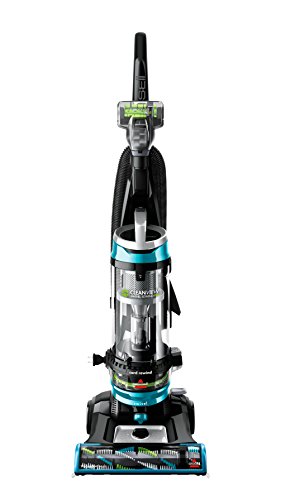
Bissell CleanView Swivel Rewind Pet 2254 bagless upright vacuum with triple action brush roll, swivel steering, and automatic cord rewind for pet hair.

Bissell CleanView Swivel Rewind 3837 upright vacuum with automatic cord rewind, triple action brush roll, swivel steering, and multi-cyclonic suction power.
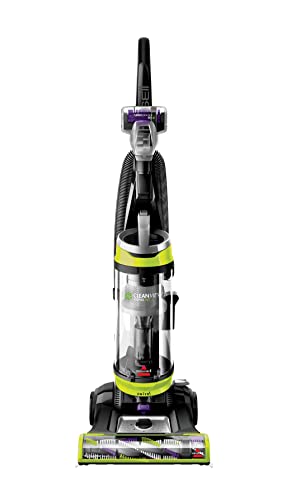
Bissell CleanView Swivel Pet 2252 upright vacuum with triple action brush roll and scatter-free technology. Designed for pet homes. Buy now!
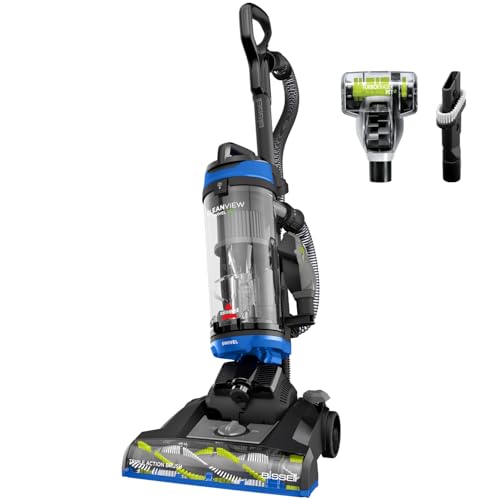
Bissell CleanView Swivel Pet upright vacuum with Triple Action Brush Roll, swivel steering, extension wand, and Scatter-Free Technology. Expert review.
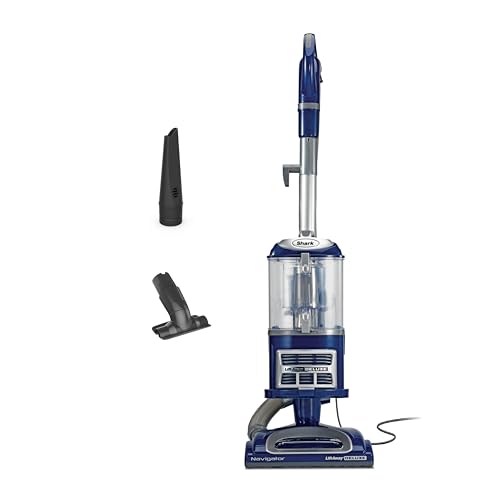
Shark Navigator Lift-Away NV360 delivers powerful suction with HEPA filtration and swivel steering. Perfect for pet hair and allergens. See full expert review.
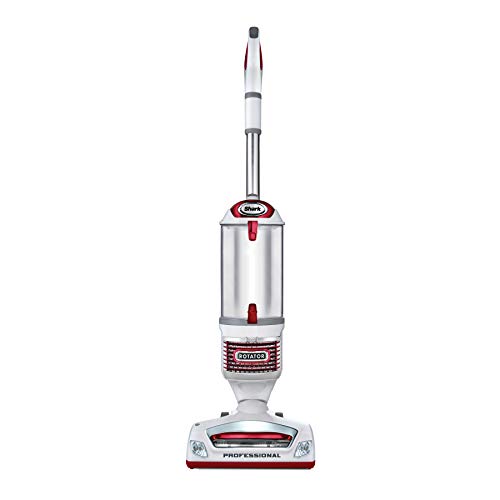
Shark NV501 Rotator Professional Lift-Away upright vacuum features HEPA filtration, swivel steering, LED headlights, and a detachable pod for portable cleaning.
Ready to Find Your Perfect Vacuum?
Browse our expertly reviewed vacuum cleaners and make an informed decision
Browse All Vacuums