Best Vacuum for Households With a New Baby: HEPA, Quiet, and Allergen-Safe
A new baby means more frequent vacuuming for allergen control — but a loud vacuum wakes them. Find the best vacuum for homes with a new baby: quiet, HEPA-sealed, and safe.
Table of Contents
- Why Allergen Control Becomes Critical When You Have a Newborn
- The Noise Problem: Baby Sleep Cycles and Vacuum Timing
- Robot Vacuums for New Parent Households
- What to Look For in a Baby-Household Vacuum
- Top 5 Vacuums for Households With a New Baby
- A Baby-Safe Cleaning Schedule
- Frequently Asked Questions
- Conclusion
Bringing a newborn home changes nearly every routine in the house, and vacuuming is no exception. What used to be a once-a-week chore done at any hour of the day becomes a task that demands more frequency, better filtration, and careful timing. You need to vacuum more often because infants spend large amounts of time on the floor, and the carpet and hard surfaces around them harbor the exact particulates that aggravate immature respiratory systems: dust mites, pet dander, mold spores, and fine debris. At the same time, you cannot vacuum freely during nap time without risking a thirty-minute sleep disruption that leaves both the baby and the parent exhausted.
The result is a narrower, more demanding set of requirements than most vacuum buyers face. This guide covers everything a new parent needs to know: why allergen control matters more than ever in the first year, how to think about vacuum noise in the context of infant sleep, which features genuinely matter for baby-safe cleaning, and which specific models deserve a spot in a household with a newborn.
Why Allergen Control Becomes Critical When You Have a Newborn
An infant’s immune system is not a smaller version of an adult’s. It is a system still under construction. During the first twelve months of life, the immune response is developing the tolerance and reactivity patterns that will shape how that child responds to environmental triggers for decades. The air quality and particulate load inside the home during this window has measurable effects on respiratory health outcomes, including rates of asthma, eczema, and allergic rhinitis.
Dust Mites and Carpets
Dust mites are microscopic organisms that feed on shed skin cells and thrive in the fibers of carpets, rugs, upholstered furniture, and mattresses. A single gram of carpet dust can contain several hundred mites. Their fecal particles and body fragments are among the most potent indoor allergens known. Newborns and infants spend a disproportionate amount of time close to these surfaces — on play mats, blankets laid on carpet, and fabric bouncers — which makes their exposure significantly higher than adults who spend most of their time standing or seated above floor level.
Regular vacuuming with a sealed HEPA filtration system is the most effective non-chemical intervention for reducing dust mite allergen load in the home. A vacuum with a true HEPA filter traps particles down to 0.3 microns at 99.97% efficiency or better. Just as critically, the machine must be sealed end-to-end: a HEPA filter installed in a vacuum with gaps in its housing will allow fine particles to bypass the filter and be expelled back into the room during use.
Pet Dander and the New Baby Equation
Many families already have pets when the baby arrives, and the question of how to manage pet dander with a newborn in the house is one of the most common concerns we hear. Pet allergens are carried on microscopic protein fragments found in dander, saliva, and urine. These particles are lightweight enough to remain airborne for extended periods and settle on surfaces throughout the home.
Vacuuming frequency matters here: daily or near-daily vacuuming in rooms where the baby spends time is a reasonable target when pets are present. A vacuum that makes this frequency feel manageable — one that is lightweight, quick to deploy, and easy to maintain — is far more valuable than a high-powered machine that is cumbersome enough to discourage regular use.
What “HEPA-Sealed” Actually Means
There is a meaningful difference between a vacuum that contains a HEPA filter and one that is HEPA-sealed. A sealed system means all air drawn into the vacuum exits exclusively through the HEPA filter before leaving the machine. An unsealed system may have a HEPA-grade filter but allows some portion of the airflow to escape through seams, gaskets, or poorly fitting components before it is filtered. For allergy and asthma control, the seal is as important as the filter itself. When evaluating vacuums for a newborn household, look for language like “Anti-Allergen Complete Seal,” “whole-machine HEPA filtration,” or “sealed HEPA system.”
The Noise Problem: Baby Sleep Cycles and Vacuum Timing
A newborn sleeps between fourteen and seventeen hours per day in their first months of life, but that sleep is not consolidated into long continuous blocks the way adult sleep is. Newborns cycle through lighter and deeper sleep stages frequently, and the transition between stages is a window of vulnerability during which external sounds are most likely to cause waking. Once disturbed during a sleep cycle transition, getting a baby back to sleep can take an hour or more of effort.
Decibels and What They Mean for Nursery Cleaning
Vacuum cleaners typically operate between 65 and 85 decibels. To put that in context, a normal conversation occurs at roughly 60 dB, a running dishwasher at around 50 to 55 dB, and a lawnmower at approximately 90 dB. The decibel scale is logarithmic, meaning a vacuum at 75 dB is not slightly louder than one at 65 dB — it is perceived as roughly twice as loud.
For a household with a sleeping newborn, vacuums operating at or below 65 to 70 dB are meaningfully better choices than those running at 78 to 85 dB. This is not merely a comfort consideration: it is a practical question of when and how often you can actually use the machine without disrupting your infant’s sleep schedule and the recovery time that depends on it.
Strategic Cleaning Windows
The solution most experienced parents arrive at is not to vacuum more quietly at any time, but to vacuum during defined windows when the baby is awake and active. Vacuuming during an awake period — especially during a morning or post-feeding alert phase — allows full-power cleaning without the sleep disruption concern. Robot vacuums scheduled to run during these windows offer a particularly elegant solution, as they require no attention from the parent while running.
Even with strategic scheduling, a quieter vacuum is still preferable. The baby may not be in the room being vacuumed, but sound travels through walls and floors, and the ambient noise level of the home rises when a loud vacuum is running.
Robot Vacuums for New Parent Households
Robot vacuums solve a specific and real problem that new parents face: the combination of needing to vacuum more often while having fewer free hands and less uninterrupted time. A robot vacuum running on a schedule while the baby is in a bouncer or being fed accomplishes maintenance cleaning that would otherwise require a deliberate effort. For maintenance cleaning — keeping daily dust, debris, and dander levels down between thorough manual cleaning sessions — a robot vacuum is one of the most practical tools a new parent can own.
Scheduling During Baby’s Awake Time
Most app-connected robot vacuums allow you to program cleaning schedules down to the day and time. This enables you to run the robot during predictable awake periods — mid-morning, for instance, or after a post-lunch feeding — when the baby is alert and the noise is least disruptive. Many robot vacuums also offer quiet modes that reduce suction to reduce noise output, which can extend this usable window into lighter sleep phases.
Hands-Free Operation
The operational advantage of a robot vacuum is less about the cleaning performance than it is about the absence of physical demand. Carrying a vacuum up and down stairs, pulling it through rooms, and managing attachments requires two free hands and physical effort. Robot vacuums require neither. They run while you nurse, feed, change, soothe, or simply rest. For the weeks immediately following birth when energy conservation is a genuine priority, this distinction matters more than it might in any other life stage.
Limitations to Understand
Robot vacuums handle maintenance cleaning well but are not substitutes for thorough manual vacuuming. High-pile carpets, stairs, upholstered furniture, and under-bed areas typically require a stick or upright vacuum to clean properly. A two-vacuum approach — a quiet, powerful manual vacuum for weekly deep cleaning and a scheduled robot for daily maintenance — is the configuration that most new parents find most practical.
What to Look For in a Baby-Household Vacuum
Noise Level Under 70 to 75 dB
This is the clearest and most actionable specification to look for. Models advertising “quiet operation” should specify their noise level in decibels. Under 65 dB is excellent. Under 70 dB is good. Above 75 dB requires you to be more strategic about when you use it.
HEPA-Sealed Filtration
As discussed above, the filter and the seal matter equally. Look for vacuums where the filtration system is described as sealed, whole-machine, or anti-allergen complete seal. Washable HEPA filters are a practical bonus — they reduce the cost of filter replacement and ensure you are more likely to keep the filter clean, which directly affects allergen capture efficiency.
Chemical-Free Operation
A vacuum for a newborn household should clean by mechanical suction and filtration alone. Avoid vacuums that use fragrance discs, scented filter covers, or proprietary cleaning solutions unless those products have been verified as safe for infant environments. The exhaust air from your vacuum will circulate through the same space where your baby breathes. There is no benefit to introducing fragrance compounds into that airstream.
Scheduling Capability
For robot vacuums, app-based scheduling is a meaningful feature that converts the machine from a tool you operate into a system that runs on its own. Look for models with reliable Wi-Fi connectivity and stable companion apps that allow day-and-time scheduling with room-level control.
Lightweight or Cordless Design
The frequency with which new parents can vacuum is directly affected by how much effort is required to set up and run the vacuum. Heavy, corded uprights that require moving furniture and managing cords create friction that reduces cleaning frequency. Lightweight cordless stick vacuums that can be grabbed quickly and used for ten minutes without preparation are used more often, which delivers better ongoing allergen control.
Easily Emptied Dustbin
Emptying a dustbin while holding a baby is not practical. Dustbins that release with a single button press and can be emptied over a trash can without touching the contents are meaningfully better for new-parent households. Ideally, the dustbin should be large enough for a complete cleaning session without requiring mid-session emptying.
Top 5 Vacuums for Households With a New Baby
1. Shark Navigator Lift-Away Deluxe NV360
View the Shark Navigator Lift-Away NV360
The Shark Navigator NV360 is among the most thoroughly tested and widely trusted HEPA upright vacuums available, and its credentials for allergen-sensitive households are well established. Its Anti-Allergen Complete Seal technology pairs with a true HEPA filter to capture 99.9% of dust, dander, and allergens inside the machine, releasing none back into the air. The sealed construction means the filtration claim holds in real-world operation, not just in laboratory conditions where filter bypass through gaps in unsealed housings can compromise performance.
The Lift-Away design is particularly practical for a newborn household. With one button press, the canister detaches from the upright body, allowing you to carry the portable pod to clean around a bassinet, along baseboards in the nursery, or up the stairs without dragging the full machine. The brushroll shutoff lets you transition from carpet to hard floor cleaning without stopping. Swivel steering reduces the physical effort of maneuvering around baby gear, bouncer chairs, and floor toys that occupy increasing floor space as your infant grows.
At 16 pounds, the NV360 is heavier than cordless alternatives, which means it is best reserved for thorough weekly cleaning sessions rather than quick daily pickups. The corded design delivers consistent, unrestricted suction for those sessions. With over 52,000 reviews and a 4.4-star rating, it is one of the most validated HEPA-sealed vacuums in its price tier.
Best for: Weekly deep cleaning on carpet and hard floors with best-in-class allergen containment.
Key specs: HEPA Anti-Allergen Complete Seal, corded, 16 lbs, 0.9-quart dust cup, brushroll shutoff, Lift-Away pod.
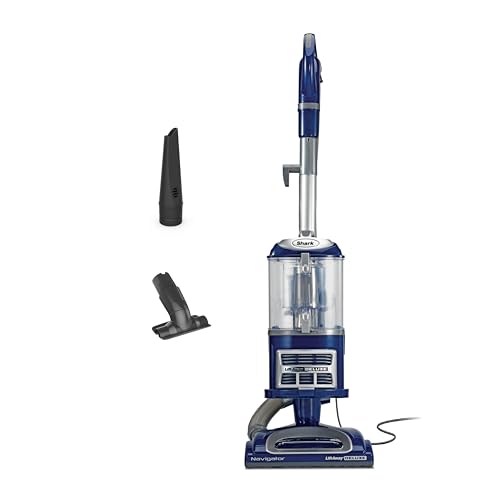
Shark Navigator Lift-Away NV360 delivers powerful suction with HEPA filtration and swivel steering. Perfect for pet hair and allergens. See full expert review.
2. Dyson V8 Plus Cordless Vacuum
The Dyson V8 Plus represents the standard for whole-machine HEPA filtration in a cordless format. Unlike many cordless vacuums where the filtration is localized to a single filter component, Dyson’s whole-machine filtration seals the entire internal airpath so that exhaust air has been cleaned to HEPA standard before leaving the machine. It captures 99.99% of particles down to 0.3 microns — a measurably higher efficiency standard than the 99.97% required for basic HEPA certification.
The Motorbar cleaner head is designed to handle pet hair without tangling, a feature that matters in households where pet dander management is part of allergen control. The Hair Screw Tool, included in the box, is one of the most effective upholstery-cleaning attachments on the market for removing embedded pet hair and fine debris from fabric surfaces — including the fabric-covered bouncers, nursing pillows, and car seat inserts that accumulate a disproportionate amount of debris in baby households.
The V8 Plus converts from a full stick vacuum to a handheld with one click, which gives it the flexibility to clean floors, upholstery, the interior of the stroller, and surfaces around the crib without swapping machines. At 5.7 pounds and with 40 minutes of fade-free runtime, it is easy to deploy quickly for short cleaning sessions throughout the day.
The noise level is not the V8 Plus’s primary selling point — it operates in a similar range to other premium cordless vacuums — but its speed of deployment and filtration quality make it a strong choice for parents who clean in short, frequent sessions rather than long scheduled ones.
Best for: Flexible whole-home cleaning with class-leading HEPA seal quality and fast deployment for short sessions.
Key specs: Whole-machine HEPA (99.99% at 0.3 microns), 115 AW suction, 40-min runtime, 5.7 lbs, cordless, one-click handheld conversion, Motorbar head.

Dyson V8 Plus cordless vacuum with Motorbar cleaner head, 40-min runtime, whole-machine HEPA filtration, and Hair screw tool for pet hair removal.
3. MOHOMO Nova V5 Cordless Stick Vacuum
The MOHOMO Nova V5 earns a place on this list primarily because of one specification: it operates at under 58 dB while delivering 55KPa of suction from a 650W brushless motor. That is a noise level quieter than a typical dishwasher cycle, achieved by a motor powerful enough to extract deeply embedded debris from carpet fibers. For new parents navigating the challenge of needing aggressive suction without the noise penalty, this is a combination that few vacuums at any price point achieve.
The V5 uses a 99.99% efficiency HEPA filtration system combined with cyclonic separation, which provides genuine allergen containment. The V-shaped anti-tangle brush prevents hair from accumulating on the roller — relevant for households where long adult hair, pet fur, and the fibers shed by baby blankets and play mats become a consistent maintenance issue. The LED touch screen on the handle gives real-time battery percentage readout and filter maintenance alerts, reducing the guesswork about when the filter needs washing to maintain peak efficiency.
The 70-minute maximum runtime on the lowest setting is the longest in this guide for a cordless vacuum. A self-standing design means you can set it down mid-cleaning without finding a wall to lean it against — practical in the cluttered terrain of a room stocked with baby gear. Backed by a three-year warranty, the Nova V5 is a well-specified option that punches significantly above its price bracket.
Best for: Households that need quiet operation without sacrificing suction power, particularly during partial-sleep windows.
Key specs: Sub-58 dB operation, 55KPa suction, 650W brushless motor, 99.99% HEPA filtration, 70-min runtime, 8 lbs, anti-tangle V-brush, self-standing.
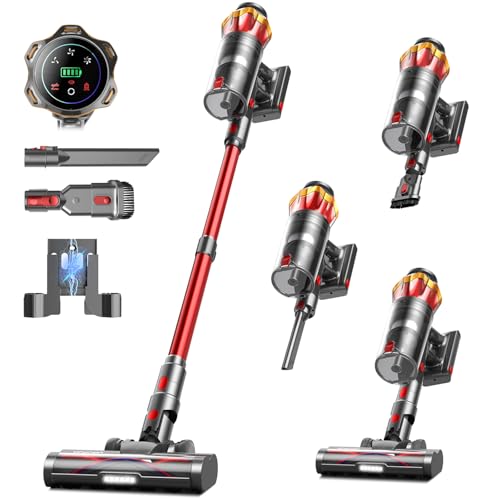
MOHOMO Nova V5 cordless stick vacuum with 55KPa suction, 650W motor, 70-min runtime, LED touch screen, and anti-tangle brush for home and pets.
4. eufy RoboVac 11S Max Robot Vacuum
The eufy RoboVac 11S Max occupies a specific and valuable role in a new-parent cleaning strategy: it is the machine that runs maintenance cleaning without requiring any physical effort from the parent. While the Shark NV360, Dyson V8 Plus, and MOHOMO Nova V5 handle deep and thorough cleaning sessions, the 11S Max handles the in-between days when daily dust, dander, crumbs, and tracked-in debris accumulate on floors. Keeping that baseline level of particulate load down is precisely what allergen control science recommends for households with infants.
At 2.85 inches tall, it is one of the slimmest robot vacuums available, allowing it to clean under furniture, under the crib, beneath the nursing chair, and below the changing table — all of which are close to the floor surfaces where a baby spends their time and where debris tends to collect. The quiet motor, described by eufy as comparable in volume to a running microwave, makes it one of the more baby-compatible robot vacuums in terms of noise output.
BoostIQ technology automatically increases suction when transitioning from hard floor to carpet, ensuring it adjusts to different surface types without manual intervention. With 100 minutes of runtime on a single charge and automatic return to its charging base when power is low, it can cover a complete apartment or single-floor home unattended. It does not require a Wi-Fi connection or smartphone app — it runs on a simple remote control, which means no connectivity setup and no app dependency.
The 11S Max does not include HEPA-grade filtration, which is a meaningful limitation. It captures debris in its dustbin but should be thought of as a particulate-reduction tool rather than an allergen-containment system. For allergen control purposes, it works best as a frequent-cycle dust suppression tool used in conjunction with a sealed-HEPA manual vacuum for weekly thorough cleaning.
Best for: Daily automated maintenance cleaning to suppress baseline particulate levels between thorough manual sessions.
Key specs: 2.85-inch profile, quiet operation, 100-min runtime, BoostIQ auto-suction, self-charging, remote control only, 6.3 lbs.
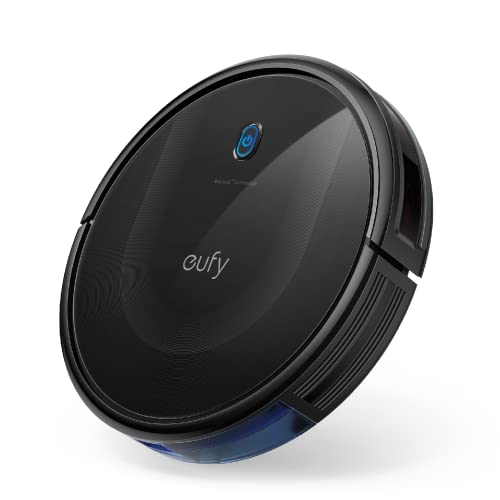
eufy RoboVac 11S Max super-thin robot vacuum with BoostIQ technology, 100-min runtime, and quiet operation. Ideal for hard floors and medium-pile carpets.
5. Intercleaner VC 1701 12-in-1 Corded Stick Vacuum
The Intercleaner VC 1701 represents the lightest and quietest corded option in this guide, and its combination of ultra-quiet operation, 3-layer washable HEPA filtration, and 3-pound weight addresses a set of new-parent needs that heavier, louder vacuums do not. The 400W brushless motor is specifically selected for quiet, low-vibration operation — the manufacturer markets it as suitable for noise-sensitive environments, and this claim is consistent with the motor design choice.
At 3 pounds, it is light enough to carry with one arm while managing the other tasks that constantly compete for a new parent’s attention. The 12-in-1 accessory configuration, built around eleven included attachments, means it adapts to cleaning floors, the inside of the stroller, under the crib, along baseboards, on upholstered surfaces, and in the tight spaces inside baby furniture without needing separate tools. Three-layer filtration with washable HEPA filters provides genuine allergen containment, and the inclusion of two extra filters in the box means you always have a clean filter available while another dries.
The corded design provides unlimited runtime with consistent suction — there is no battery charge level to monitor and no need to plan cleaning sessions around a charge cycle. The 16.4-foot cord covers a reasonable area per outlet, though it does require outlet switching in larger rooms. As a dedicated nursery vacuum, a lightweight secondary machine for daily touch-up cleaning in the baby’s immediate environment, or a primary vacuum for apartment-sized homes, the VC 1701 offers a compelling combination of quiet operation, proven filtration, and minimal physical demand.
Best for: Lightweight daily cleaning in the nursery and baby’s immediate environment, or as a primary vacuum in smaller homes where quiet operation is the top priority.
Key specs: Ultra-quiet 400W brushless motor, 3-layer washable HEPA filtration, 3 lbs, 12-in-1 accessory system, corded, 2 extra HEPA filters included.
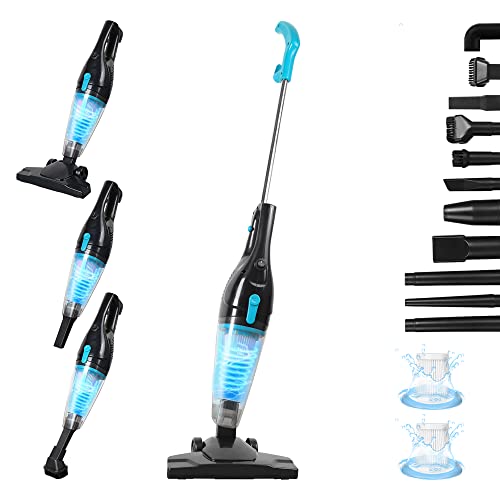
Intercleaner VC 1701 corded stick vacuum offers 15KPa suction, 12-in-1 versatility, ultra-quiet operation, and lightweight 3 lb design for hard floors and pet hair.
A Baby-Safe Cleaning Schedule
Allergen control for a newborn household is as much about consistency as it is about the quality of the equipment. The following schedule reflects the cleaning frequency supported by indoor air quality research for households with infants, particularly those with pets or known allergen sensitivities.
Daily (robot vacuum or quick pass): Run the robot vacuum on a schedule, or do a quick 5-10 minute pass with a lightweight stick vacuum in the rooms where the baby spends the most time. The goal is to prevent daily accumulation of dust, dander, and floor debris from reaching levels that would require heavier cleaning to address.
Two to three times per week (thorough manual vacuuming): Use your HEPA-sealed upright or cordless vacuum for thorough cleaning of all floor surfaces in the main living areas. Pay particular attention to high-traffic areas, the perimeter along baseboards where fine dust accumulates, and any carpet in the baby’s room.
Weekly (nursery deep clean): Vacuum the nursery with extra attention, including under and around the crib, the changing table area, any upholstered surfaces, and the perimeter of the room. If a pet has access to the nursery, increase this to twice weekly.
Monthly (mattress and upholstered furniture): Use a handheld attachment or specialized upholstery tool to vacuum the crib mattress surface, nursing pillow, baby swing fabric, and any upholstered chairs used for feeding. These surfaces collect skin cells and dander at a higher rate than floor surfaces and are in close proximity to the baby during use.
After filter washing: Vacuum filters should be cleaned according to manufacturer schedules — typically every one to three months depending on use frequency. Allow the filter to dry completely before reinstalling (usually 24 hours). Running a vacuum with a damp filter degrades performance and can introduce moisture into the dust cup. Maintain a spare filter during the drying period.
Frequently Asked Questions
Is a HEPA vacuum really necessary for a baby household, or is a standard filter sufficient?
A standard filter captures large particles but allows fine particles — including the dust mite allergen fragments, pet dander proteins, and mold spores that are most problematic for infants — to pass through and be exhausted back into the room. A HEPA filter captures 99.97% or more of particles at 0.3 microns, which covers the size range of the most potent indoor allergens. For households where allergen control is a priority — particularly those with pets, known family allergies, or asthma history — the difference between standard and HEPA filtration in real-world air quality outcomes is significant.
How loud is too loud when vacuuming near a sleeping baby?
Even through walls and floors, a vacuum operating above 75 dB is detectable as a clear disruption to light sleep. Under 65 to 70 dB is the range where most infants will not register the sound as a sleep interruption when vacuuming is happening in an adjacent room. In the same room as a sleeping infant, even quiet vacuums are likely to cause waking during light sleep phases. The practical guidance is to vacuum in the same room only when the baby is awake and to use quieter models for adjacent-room cleaning during nap time.
Can a robot vacuum replace a traditional vacuum in a baby household?
Not as the sole cleaning tool. Robot vacuums handle daily maintenance cleaning effectively, keeping surface dust and debris levels low. They are generally not capable of the deeper extraction that carpet fibers and upholstered surfaces need periodically, and they cannot clean stairs, upholstery, above-floor surfaces, or the crib area. A robot vacuum used alongside a HEPA-sealed manual vacuum — the robot for daily cycles, the manual vacuum for weekly thorough cleaning — is the most effective combination.
Are cordless vacuums as effective as corded vacuums for allergen control?
Modern cordless vacuums with sealed HEPA systems are comparable to corded machines for allergen containment. The filtration quality depends on the seal and filter design, not the power source. The main performance trade-off is suction strength and runtime: high-suction modes reduce battery life, which can limit the thoroughness of deep cleaning sessions on carpet. For allergen control in a newborn household, a sealed HEPA system on a cordless vacuum is meaningfully better than a corded vacuum without a sealed HEPA system.
How often should the HEPA filter be replaced in a baby household?
With more frequent vacuuming, filters reach their loading capacity faster. Washable HEPA filters should be cleaned every four to six weeks under a baby-household cleaning schedule and replaced according to manufacturer guidelines — typically every six to twelve months. Disposable HEPA filters should be replaced more frequently than the standard annual recommendation, typically every three to six months, depending on how often you vacuum and whether pets are present. A clogged filter reduces both suction performance and allergen capture efficiency.
Is fragrance from scented vacuum bags or filter discs safe around a newborn?
This is not recommended. Fragrance compounds, even those labeled as natural, introduce volatile organic compounds into the exhaust airstream. There is no established safe exposure level for many synthetic fragrance components in infant environments, and the benefit of scented vacuum accessories is purely cosmetic. Use unscented bags, filters, and cleaning solutions in any vacuum operated in a newborn household.
Should I vacuum the baby’s play mat and soft toys?
Yes, and regularly. Play mats, soft toys, and padded activity gyms accumulate the same dust mites, dander, and fine particulates as carpet, and the baby has direct face-level contact with these surfaces. A handheld vacuum with a soft brush attachment is suitable for most play mat surfaces. Soft toys can be vacuumed on low suction with an upholstery brush. Hard plastic toys can simply be wiped down. Items that are machine-washable should be washed on a hot cycle regularly, as heat is effective at reducing dust mite populations.
Conclusion
The vacuum needs of a newborn household are genuinely different from standard cleaning requirements, and choosing the right machine makes a measurable difference in the indoor air quality your infant breathes during the developmental months when respiratory health patterns are being established. The five vacuums in this guide each address a specific priority: the Shark Navigator NV360 for maximum allergen containment in a proven corded upright; the Dyson V8 Plus for whole-machine HEPA seal quality in a fast-deploying cordless format; the MOHOMO Nova V5 for the rare combination of quiet operation and high suction power in a cordless stick; the eufy RoboVac 11S Max for daily automated maintenance cleaning without parental effort; and the Intercleaner VC 1701 for ultra-quiet, lightweight corded cleaning in the nursery and immediate baby environment.
None of these are perfect for every household. The best choice depends on your floor types, whether you have pets, the size of your home, and whether the primary challenge is thoroughness, convenience, or noise. What they share is the filtration quality and operational characteristics that matter most when the goal is maintaining a clean, allergen-reduced environment for an infant who depends entirely on the adults in the house to make good decisions about the air they breathe.
Vacuum more often. Use a sealed HEPA filter. Empty the dustbin fully after each session. These three practices, consistently applied with any of the machines above, will deliver meaningfully cleaner air for your growing baby.
Ready to Find Your Perfect Vacuum?
Browse our expertly reviewed vacuum cleaners and make an informed decision
Browse All Vacuums