Best Vacuum for Plaster Dust: Protect Your Lungs and Your Equipment
Plaster dust is some of the most damaging fine particulate for both vacuums and human lungs. Here are the vacuums that handle plaster dust safely and completely.
Table of Contents
Plaster dust is in a different category from ordinary household dirt. It is finer than most construction materials, generates in enormous quantities during wall repair and demolition, and is particularly aggressive in its effects on both human respiratory systems and vacuum equipment. Understanding this before you start a plaster repair project — and choosing equipment accordingly — is the difference between a smooth renovation experience and damaged equipment, persistent health symptoms, and a home that never quite gets clean after construction.
The fine particle profile of plaster dust (calcium sulfate in gypsum plaster, calcium carbonate in lime plaster) means that particles in the PM2.5 and PM1.0 range — particles smaller than 2.5 and 1 micron respectively — are produced in significant quantities. These particles are small enough to penetrate deeply into lung tissue, small enough to remain airborne for extended periods, and small enough to pass through every filtration stage in a standard household vacuum.
The equipment damage mechanism is equally significant. Plaster dust does not simply collect in a vacuum like household dust does. The calcium-based particles absorb moisture from the airflow and from the vacuum’s operating environment, forming a paste that cements itself to filter media. A standard vacuum filter exposed to heavy plaster dust loads can be permanently reduced in airflow capacity in a single session. Consumer vacuums not designed for construction debris regularly fail entirely after being used for plaster cleanup — a $300 to $500 equipment loss in addition to the ongoing cleanup problem.
Health Hazards: What Plaster Dust Does to Your Lungs
This is not alarmism — the respiratory effects of repeated fine particle exposure in the construction context are well-documented and serious.
Short-term exposure. Irritation of the nose, throat, and upper respiratory tract. Coughing, sneezing, and eye irritation during and after exposure. These symptoms resolve when exposure ends.
Repeated exposure without respiratory protection. Fine calcium particle deposition in the lung tissue causes progressive inflammatory response. Silica content in some plasters causes silicosis — a progressively disabling and irreversible lung scarring disease. While pure gypsum plaster has low silica content, traditional lime plasters and mixed plasters may contain silica sand aggregate.
Dust exposure during cleanup. The cleanup phase after plaster work is often more dangerous than the work itself, because the dust that has settled on all surfaces becomes airborne again with any disturbance. Vacuuming with equipment that recirculates fine dust through its exhaust can generate sustained exposure in an enclosed room.
Required protection: An N95 respirator at minimum for any plaster dust cleanup work. A P100 half-face respirator for extended sessions or dusty conditions. Do not vacuum plaster dust without respiratory protection regardless of which vacuum you use — the finest particles are beyond any vacuum’s complete capture.
Why Standard Vacuums Fail with Plaster Dust
Filter overloading and damage. Standard HEPA filters can capture plaster dust particles down to 0.3 microns, but the volume of dust generated in a plaster project — particularly sanding operations — loads filters so rapidly that suction becomes inadequate within minutes of starting. When the filter is overloaded, a standard vacuum either stops drawing adequate suction or the motor protection triggers, shutting the machine down.
Calcium cement on filter media. Even more damaging than overloading is the paste formation described above. Once calcium dust has been wetted by the moisture in the airflow and dried against filter media, it cannot be washed out. The filter’s airflow path is permanently compromised.
Hose clogging from paste accumulation. Plaster dust moistened by airflow humidity accumulates at hose bends and fittings. Over a long cleanup session, this accumulation can restrict airflow significantly.
Motor bearing damage from abrasive particles. Very fine abrasive particles that bypass filter stages in an inadequately sealed vacuum reach the motor and its fan bearings. Calcium particles at high velocity are abrasive enough to accelerate bearing wear significantly.
What to Look for in a Plaster Dust Vacuum
HEPA filtration rated for construction use. H13 class HEPA (99.95 percent at 0.3 microns) or H14 class (99.995 percent) is the appropriate standard. These are the classifications used in construction dust extractors and commercial cleaning. Standard residential HEPA (99.97 percent at 0.3 microns) is technically sufficient for particle size, but construction-grade filter media holds up better to the continuous heavy loading conditions of plaster work.
High-capacity drum. Large volume of debris generation requires collection capacity of at least 6 gallons, ideally 12 to 16 gallons. Frequent interruptions to empty create additional dust disturbance.
Autoclean or self-cleaning filter function. This is a feature found in professional dust extractors rather than consumer shop vacuums. Autoclean periodically pulses the filter to dislodge accumulated dust, maintaining consistent suction through heavy dust loading. For plaster dust specifically, this feature maintains cleaning effectiveness that a standard filter loses within minutes.
Dust class rating. Professional dust extractors are rated L (low hazard), M (medium hazard), or H (high hazard) for dust class. Plaster dust is typically classified as M class. An M or H class rated dust extractor provides the appropriate filter performance and sealed system for plaster work.
Bag disposal option. Some dust extractors accept disposable collection bags inside the main drum. For plaster dust, this is strongly preferred — when the session is done, the bag is sealed and removed with all collected dust inside, without the cloud of dust that escapes when tipping out an unlined drum.
The 5 Best Vacuums for Plaster Dust
1. Festool CT 36 AC HEPA — Best Overall for Plaster Dust
Best for: Professional renovation, extended plaster work, maximum health protection
Festool CT 36 AC HEPA Dust Extractor
The Festool CT 36 AC is the professional recommendation for plaster dust — the tool that renovation contractors and professional plasterers use when they need to meet occupational health standards for dust exposure. Its M class rating (medium hazard dust, which includes plaster and gypsum) combined with HEPA filtration and the Autoclean system makes it the only recommendation on this list where you can run the vacuum continuously through a full plaster sanding session without the filter loading problem degrading performance.
The Autoclean function pulses the filter every 15 seconds, knocking accumulated plaster dust off the filter medium and back into the collection drum. This maintains filter airflow at near-new levels throughout the session, something no standard shop vac with a static filter can match. In a plaster sanding context, this means the vacuum remains effective for the entire room rather than progressively losing suction.
The CT 36’s tool triggering function allows it to start and stop automatically with connected power tools — sanders, grinders, and routers with dust ports. Connecting directly to a drywall sander’s dust port captures 70 to 90 percent of generated dust at the source, before it becomes airborne, which is the most effective approach to plaster dust management.
Pros:
- M-class HEPA certification for plaster and gypsum dust
- Autoclean function maintains suction throughout extended sessions
- Tool triggering for dust-at-source capture with power tools
- 36-liter capacity for extended work sessions
- Professional build quality for repeated renovation use
Cons:
- Significantly more expensive than shop vac alternatives
- Heavier than consumer-grade vacuums
- Professional tool — may be more than needed for a single small repair
2. RIDGID 16-Gallon with Fine Dust Filter — Best Value for Plaster Cleanup
Best for: Homeowner renovation, one-time or occasional plaster work, large room debris volume
RIDGID 16-Gallon Wet/Dry Vac with Fine Dust Filter
For homeowners tackling a plaster repair or renovation without the budget or frequency of use to justify a Festool dust extractor, the RIDGID 16-Gallon with a fine dust filter cartridge is the most capable and practical alternative. The 16-gallon capacity handles the debris output of a substantial plaster repair without interruption. The 6.5 peak HP motor provides strong suction even through extended hose runs.
The critical accessory for this application: the RIDGID VF4000 Fine Dust Filter or equivalent. The standard RIDGID filter is designed for general shop debris — not fine plaster dust. The VF4000 is specifically rated for drywall and plaster dust collection and is the component that makes this combination appropriate for the task.
Additionally, use a RIDGID-compatible vacuum bag inside the drum. The bag captures collected plaster dust in a disposable liner, allowing sealed removal at the end of the session. This prevents the cloud of dust that results from pouring out an unlined drum.
The RIDGID does not have autoclean function, so suction will progressively reduce as the fine dust filter loads. For long sanding sessions, plan on stopping to tap the filter cartridge clean every 30 to 45 minutes to maintain adequate performance. This is the main operational difference from the Festool — it is a manual process rather than automatic.
Pros:
- 16-gallon capacity for large plaster debris volume
- 6.5 peak HP for strong suction through extended hose
- Fine dust filter available for plaster-appropriate filtration
- Compatible with collection bags for sealed disposal
- Widely available and significantly more affordable than professional extractors
Cons:
- No autoclean function — requires manual filter maintenance during long sessions
- Standard included filter not appropriate for plaster dust — fine dust filter must be purchased separately
- Filter performance degrades through session without autoclean
3. DeWalt DXV16PA — Best Professional Shop Vac for Plaster Renovation
Best for: Contractors, frequent home renovation, job site conditions
DeWalt DXV16PA 16-Gallon Wet/Dry Vac
The DeWalt DXV16PA is purpose-built for construction site conditions. Its 6.5 peak HP motor, 16-gallon capacity, and heavy-gauge drum construction match the RIDGID’s core specifications with DeWalt’s job-site engineering philosophy. The key differentiator is the DXV16PA’s higher-grade filter system, which includes a standard cloth bag inside the collection drum that provides an additional layer of debris containment before the filter stage.
For plaster dust, pair the DXV16PA with DeWalt’s DC5001H HEPA filter cartridge — a genuine HEPA-rated filter designed for the DXV series that provides appropriate fine particle capture for gypsum and lime plaster dust. This combination maintains the sealed filtration path needed to prevent fine plaster particles from reaching the motor.
DeWalt’s accessory ecosystem — hose extensions, crevice tools, floor nozzles — is broad and high-quality, which matters for a plaster renovation where you need different attachments for different cleanup stages.
Pros:
- Heavy-gauge job-site construction
- Compatible with HEPA filter cartridge
- Cloth bag plus filter = two-stage debris containment
- Strong DeWalt accessory ecosystem
- 6.5 peak HP for demanding debris profiles
Cons:
- Fine dust and HEPA filter are separate purchases
- No autoclean function
- Bulky when full — difficult to maneuver in confined spaces
- Higher price than consumer wet/dry vacuums
4. Bosch GAS 20 L SFC — Best Compact Dust Extractor for Plaster
Best for: Smaller repair projects, tighter budget than Festool, still needs dust extractor performance
Bosch GAS 20 L SFC Dust Extractor
The Bosch GAS 20 L SFC is Bosch’s M-class dust extractor designed for construction use, positioned between consumer shop vacuums and the premium Festool offering. The SFC (Suction Force Control) system adjusts motor power based on filter loading, maintaining consistent suction as the filter fills rather than simply degrading. This is not as comprehensive as Festool’s Autoclean, but it extends the effective operating time between manual filter maintenance stops.
The 20-liter capacity (approximately 5 gallons) is appropriate for bathroom or small room plaster repair — not a whole-room demolition. The HEPA filter at H13 classification captures fine plaster particles appropriately. The vacuum bags for the GAS 20 are disposable and provide sealed dust containment.
Compatible with most Bosch power tools via tool trigger function — start the vacuum automatically when the connected tool runs, capturing plaster dust at the source for sanding operations.
Pros:
- M-class dust extractor classification for plaster dust
- H13 HEPA filtration
- Suction Force Control extends effective filter life
- Tool trigger function for at-source dust capture
- More affordable than Festool at similar classification level
Cons:
- 20-liter capacity appropriate for small projects only
- Not ideal for large room demolition debris volume
- Less comprehensive than Festool autoclean function
5. Shark Navigator Zero-M — Best Post-Renovation Cleanup Vacuum
Best for: Final fine dust cleanup after primary construction debris is removed
Once primary plaster debris has been collected with a dust extractor or shop vac, the fine plaster haze that settles on carpets, rugs, and soft surfaces throughout the home requires a different approach. The Shark Navigator Zero-M’s Anti-Allergen Complete Seal with HEPA filtration captures fine plaster dust from finished surfaces without redistributing it through the exhaust.
The sealed system design is the critical feature for post-renovation fine dust cleanup — an unsealed vacuum with even small gaps in the housing will re-distribute the finest plaster particles through the exhaust back into the room, undermining the cleanup effort. The Zero-M’s seal is certified to retain 99.9 percent of particles through the system.
Use the Zero-M only after primary debris removal. Do not use it for the primary plaster debris collection — the debris volume and particle loading will overwhelm the filter designed for household use, not construction conditions.
Pros:
- Anti-Allergen Complete Seal for post-renovation fine dust
- HEPA filtration for fine plaster particle capture
- Appropriate for carpets, rugs, and soft surfaces
- Regular household vacuum performance for daily use after renovation
Cons:
- Not appropriate for primary plaster debris collection
- Filter will load quickly if used for heavy plaster dust before primary cleanup is done
- Not a construction-grade product
The Post-Renovation Cleaning Protocol for Plaster Dust
Getting a home back to truly clean after plaster work requires a multi-stage approach:
Stage 1: Source containment. During the work, use the dust extractor connected to the power tool creating the dust. This captures 70 to 90 percent of generated dust at the source before it disperses.
Stage 2: Primary floor and surface collection. Use the shop vac or dust extractor for all horizontal surfaces — floors, windowsills, door frames, any covered furniture — working from the highest accessible surfaces downward. Bag the collected debris.
Stage 3: Air settling time. Allow at least two to four hours for the finest airborne particles to settle before continuing cleanup. An air purifier with a HEPA filter running in the room during this period captures some airborne particles.
Stage 4: Second vacuum pass. After settling, run the shop vac again over all surfaces. The particles that were still airborne during the first pass have now settled.
Stage 5: Damp wipe. Wipe all hard surfaces with a damp microfiber cloth. This picks up the fine plaster haze that vacuuming cannot collect from smooth surfaces.
Stage 6: Household HEPA vacuum. Final pass over carpets and soft surfaces with a sealed HEPA household vacuum. This captures fine dust that settled into carpet pile during the waiting period.
Frequently Asked Questions
Is plaster dust the same as drywall dust?
Similar but not identical. Drywall (gypsum board) dust is primarily gypsum (calcium sulfate dihydrate) from the board core and paper fiber from the facing. Traditional plaster dust may include lime, sand aggregate (which can contain crystalline silica), and various binders depending on the plaster formulation. Both are fine particle hazards, but old lime plaster with silica sand aggregate is potentially more harmful due to silica content.
Can I use a regular HEPA vacuum for plaster dust?
For the final post-renovation fine dust cleanup pass, yes, with conditions: the vacuum must have a fully sealed air path, the filter must be rated to true HEPA standard, and the debris volume must be manageable (primary cleanup already completed by shop vac). Using a household HEPA vacuum as the primary tool for heavy plaster debris collection will damage the filter and likely the motor.
How long does plaster dust stay in the air?
The finest particles — PM2.5 and smaller — can remain airborne for hours in undisturbed indoor air. Particles in the 1 to 10 micron range settle in 30 to 60 minutes in typical conditions. Ventilating the room (opening windows, using fans) accelerates particle settling but distributes fine dust more broadly through the home. Running a HEPA air purifier in the sealed room is more effective for containment.
What respirator do I need for plaster dust cleanup?
N95 minimum for any plaster dust disturbance — scraping, sanding, or vacuuming. For extended sessions, a half-face respirator with P100 filter cartridges provides better protection and is more comfortable for long-wear use. Surgical masks and cloth masks do not provide adequate protection for fine plaster particles.
My shop vac lost suction quickly during plaster cleanup. What happened?
The fine dust filter was overloaded. Remove the filter, take it outside, and tap it firmly against a solid surface to dislodge the plaster dust that has caked onto the filter medium. Reinstall and the suction should recover. This needs to be repeated regularly during plaster dust collection sessions. If the filter has been wetted and the dust has formed a paste, the filter may be permanently compromised and needs replacement.
Final Verdict
For plaster dust — genuinely one of the most demanding cleaning tasks in home renovation — equipment selection is not optional. The Festool CT 36 AC HEPA is the professional-grade recommendation that provides the autoclean performance and M-class certification needed for serious plaster work. If its price point is beyond the scope of a single home project, renting one from a professional tool rental service for the duration of the renovation is worth considering.
For homeowners committed to purchasing equipment, the RIDGID 16-Gallon with Fine Dust Filter and a compatible bag liner is the strongest value combination. It handles the debris volume, provides adequate filtration with the fine dust accessory filter, and the sealed bag disposal keeps collected plaster dust contained.
In all cases: wear your respirator. The equipment protects the home. The respirator protects you.
Top Picks
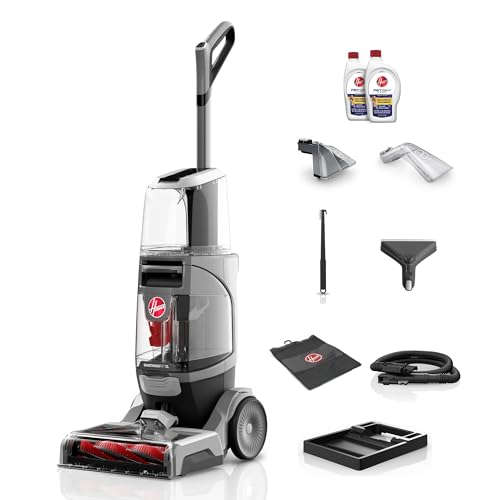
The Hoover SmartWash Pet XL auto-senses wash & dry cycles, features XL 96oz tanks, Spot Boost Mode, and converts to a spot cleaner. Deep clean carpets with ease.

Bissell CrossWave Edge vacuums and mops simultaneously with ZeroGap edge technology. Tangle-free brush roll, self-cleaning mode, and multi-surface design.

Bissell CrossWave Turbo 3888A vacuums and washes floors simultaneously. Two-tank system, 3000 RPM brush roll, safe on tile, wood, laminate, and area rugs.
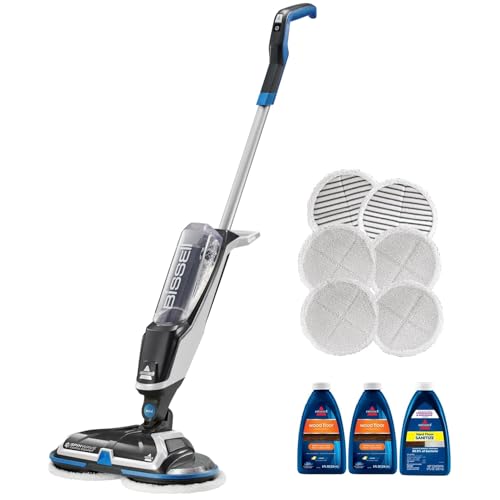
BISSELL SpinWave cordless spin mop with 18V battery, washable pads, and on-demand spray for sealed hard floors. Read the full expert review and specs.

BISSELL ProHeat 2X Revolution Pet Turbo carpet cleaner delivers professional-grade results with 40% more suction, dual cleaning modes, and pet-specific tools.
Ready to Find Your Perfect Vacuum?
Browse our expertly reviewed vacuum cleaners and make an informed decision
Browse All Vacuums