Best Vacuum for Sand: Beach House, Sandbox, and Desert Home Picks
Sand is abrasive, heavy, and damages vacuum components over time. Find the best vacuum for sand — built to handle gritty beach debris on carpet, tile, and hardwood.
Table of Contents
Best Vacuum for Sand: Beach House, Sandbox, and Desert Home Picks
Sand is not just an outdoor problem. It follows you inside. It rides in on flip-flops, on beach towels, on the legs of swimsuits, and on the paws of dogs who think every dune is a playground. If you live near a beach, own a vacation home on the coast, have kids who treat a backyard sandbox as their personal territory, or live in an arid desert region where fine grit blows in through the window screen, you already know what daily life with sand looks like: floors that never quite feel clean, a persistent gritty texture underfoot, and a vacuum that seems to get dirtier every time you use it.
The problem runs deeper than aesthetics. Sand is one of the most mechanically aggressive materials a vacuum encounters. It is essentially tiny pieces of rock — angular, abrasive, and heavy relative to dust or pet hair. It behaves differently on every surface. It embeds differently in carpet than it scatters on hardwood, and it collects in grout lines on tile in ways that a standard floor head cannot address. The wrong vacuum — or the right vacuum used without understanding what sand does to it — becomes a costly and frustrating mistake.
This guide covers why sand is uniquely hard on vacuums, how it behaves on different floor types, what to actually look for when choosing a machine, and which specific vacuums are built to handle real sand loads without self-destructing.
Why Sand Damages Vacuums
Most vacuum buyers think about what a vacuum picks up. Fewer think about what the debris does to the vacuum itself. With sand, that second question matters more than with almost any other material.
Abrasive Wear on the Motor and Impeller
Sand particles that enter the airstream do not just travel straight from the floor into the dustbin. They pass through the motor housing, across the impeller — the fan-like component that generates suction — and through the filtration system. Every pass grinds those angular particles against plastic and metal surfaces. Over months of use in a sandy environment, this wears down the impeller, reduces motor efficiency, and eventually shortens the machine’s lifespan. Vacuums with sealed, protected motor housings and impellers made from more durable materials resist this wear better than budget models with open airflow paths.
Filter Clogging and Damage
Sand is heavy enough that most of it falls into the dustbin before reaching the filter — but the fine particulate dust that accompanies beach sand (dried salt, crushed shell fragments, algae residue) is another story. This ultra-fine material behaves like dust and coats filter pleats aggressively. A filter that would normally last weeks in a typical home may need cleaning after every session in a sandy beach house. Filters that are not washable become expensive to maintain. Filters with tight pleating that is hard to clean become permanently impaired, reducing suction permanently.
Floor Head and Brush Roll Wear
The floor head takes the most direct punishment. Sand that sits between the floor head’s soleplate and a hard floor acts as sandpaper — literally — grinding away at both the floor surface and the bottom of the cleaning head. Brush rolls made from soft nylon bristles wear faster with heavy sand loads than those made from stiffer, more resilient materials. On hard floors, the brush roll spin can fling larger sand grains into walls and furniture rather than capturing them, creating additional abrasion.
Hose and Joint Degradation
Sandy material that passes through flexible hoses and articulated joints creates cumulative wear at every bend and connection point. This is less immediately visible than floor head wear but compounds over time. Vacuums with thick-walled, ribbed hoses resist this better than those with thin, lightweight hoses optimized for weight reduction rather than durability.
Sand on Different Surfaces
Understanding how sand behaves on your specific floor type determines which features matter most for your home.
Carpet
Sand on carpet behaves counterintuitively. Because it is heavy, it does not sit on top of the carpet pile — it sinks. In a medium-pile or high-pile carpet, sand granules work their way down to the backing within hours, pushed deeper by foot traffic. A single pass with a vacuum head that has insufficient suction or a slow-spinning brush roll will pick up the surface layer while leaving the embedded sand untouched. You need strong suction combined with an aggressive, well-designed brush roll that can agitate the carpet pile and bring sand back up to the surface where airflow can capture it. Multiple slow passes are more effective than a single fast one. The sand will not go anywhere on its own, but it will gradually abrade the carpet backing and weaken fiber roots over time if left uncollected.
Hardwood and Laminate
On hard floors, sand presents the opposite problem. Because there is nowhere for it to embed, it sits loose on the surface — and that means a brush roll spinning at full speed can scatter it in all directions before suction can capture it. The floor head of the vacuum can also drag sand granules across the hardwood surface, leaving micro-scratches that accumulate into a dull finish over months. The right approach on hardwood is to disable or reduce the brush roll speed, rely on airflow rather than agitation to capture the sand, and use a floor head with a soft rubber gasket rather than a hard plastic edge that could grind grit into the floor. Suction-only mode is your friend on bare wood.
Tile and Grout
Tile is the surface where sand accumulates most deceptively. The tile itself is easy — smooth and sealed, sand sits on it the way it sits on hardwood, and a good floor head picks it up without drama. The grout lines are the real challenge. Sand collects in the recessed channels between tiles and sits below the level that most flat floor heads can access. Standard vacuum heads glide over the grout rather than dipping into it. Crevice tools and narrow attachment nozzles are more effective for grout-line cleaning than any standard floor head, and in heavily grouted surfaces (like Spanish tile, natural stone tile, or subway tile with wide joints), a dedicated attachment pass is worthwhile every few sessions.
What to Look For in a Sand Vacuum
Robust Motor with Protected Impeller
Look for machines with corded power sources or high-voltage cordless platforms if runtime will be a factor. Motors rated for 1000 watts or higher on corded units, or 20V+ platforms on cordless, generally provide the airflow velocity needed to lift heavier sand grains reliably. More importantly, look for any mention of sealed motor housing or reinforced impeller design in the specifications. These are not always prominently advertised, but reviews from users in beach environments often surface this information.
Washable, Easy-Clean Filters
A non-washable filter in a sandy home is a recurring expense and an environmental problem. Washable foam or fabric filters can be rinsed under running water, dried, and reinstalled — bringing performance back to near-new levels after every wash. HEPA filtration is worth the upgrade in beach homes because the fine particulate that accompanies beach sand (salt aerosols, dried organic matter) contains particles small enough to pass through standard filtration and reenter the room.
Brushroll Shutoff for Hard Floor Modes
Any vacuum being used on hardwood or tile near sand should have the ability to disable or reduce brush roll activity. The brush roll shutoff is not just a convenience feature in this context — it is a functional necessity for protecting your floors from the abrasive contact of spinning bristles flinging sand across a hard surface.
Large Dustbin Capacity
Sand is dense and heavy. A small dustbin that might handle a week’s worth of normal household dust will fill noticeably faster in a beach house or sandbox environment. Look for dustbin capacities of at least 0.8 liters for upright vacuums and at least 1 liter for canister models. Frequent emptying is inevitable, but a larger bin means you can complete a full cleaning session without stopping.
Hard Floor Attachments
For tile grout lines, baseboards, and corners where sand accumulates, a crevice tool and a dedicated hard floor attachment are worth as much as the vacuum’s primary suction power. Many manufacturers include these as standard accessories — confirm they are included before purchasing rather than assuming.
Beach House Robot Vacuums: The Case for Scheduled Daily Cleaning
One reality that distinguishes beach house cleaning from standard home maintenance is the daily nature of the problem. If sand comes in every day — which it does, in any home where people move between beach and living space — then cleaning is not a weekly event. It is a daily one. For most households, a full vacuum session every day is not realistic.
Robot vacuums solve this particular problem elegantly. Scheduled to run each evening after the household settles in, a robot vacuum captures the day’s sand accumulation before foot traffic grinds it deeper into carpet or pushes it further across the floor. The result is not a substitute for a full deep clean — robot vacuums do not replace the suction and agitation of a full-size upright for embedded carpet sand — but they dramatically reduce the accumulation rate between full cleaning sessions.
The important caveats for sandy environments: empty the robot’s dustbin frequently (daily in peak summer months), clean the filter twice as often as the manufacturer recommends, check the side brushes for sand packing into the hub after each session, and avoid running the robot immediately after beach arrivals when large, damp clumps of sand may be tracked in. Let things dry and settle, then run the robot. For beach homes specifically, a robot vacuum is not a luxury — it is a maintenance multiplier that keeps the floor livable between manual cleaning sessions without requiring daily effort from the household.
Top Picks: Best Vacuums for Sand
Best Overall: Bissell CleanView Swivel Pet 2252
View the Bissell CleanView Swivel Pet 2252
Rating: 4.4 stars | 105,000+ reviews
The Bissell CleanView Swivel Pet 2252 earns its place at the top of this list through a combination of features that directly address the sand problem. The Triple Action brush roll — the same system designed to loosen, lift, and remove embedded pet hair — applies equal mechanical benefit to sand embedded in carpet pile. It agitates aggressively enough to bring settled sand back to the surface, where the CleanView’s multi-cyclonic suction system captures and routes it to the dustbin.
The feature that distinguishes it most on hard floors is Bissell’s scatter-free technology. Most upright vacuum intakes generate a leading edge of turbulence that pushes lightweight debris — sand included — away from the head before suction can capture it. The CleanView’s scatter-free design minimizes this effect, making it more effective at capturing loose sand on hardwood and tile with a single pass rather than chasing it around the room.
Key features:
- Triple Action brush roll loosens embedded sand from carpet fibers
- Scatter-free intake technology captures loose sand on hard floors without deflecting it
- Swivel steering for maneuvering around beach gear, furniture, and tight spaces
- Easy-empty bagless dustbin with one-press release
- Multi-surface capability across carpet, hardwood, and tile
At 12.5 lbs, it is lighter than most full-size uprights, which matters when you are doing daily sand cleanup across a larger beach house floor plan. The corded design provides consistent suction regardless of how much sand has already accumulated in the bin — cordless vacuums with partially-filled bins lose airflow pressure as the dustbin fills, which matters more with dense material like sand than with typical household dust.
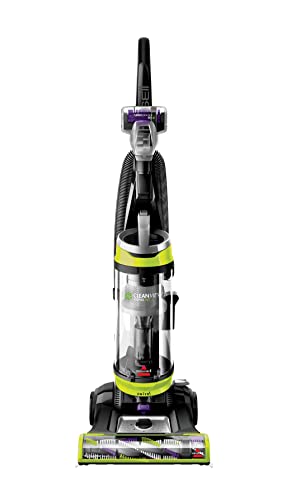
Bissell CleanView Swivel Pet 2252 upright vacuum with triple action brush roll and scatter-free technology. Designed for pet homes. Buy now!
Best HEPA Pick: Shark Navigator Lift-Away Deluxe NV360
View the Shark Navigator Lift-Away NV360
Rating: 4.4 stars | 52,000+ reviews
The Shark Navigator NV360 earns its place on this list primarily because of its Anti-Allergen Complete Seal Technology paired with a genuine HEPA filter. In beach environments, the fine particulate that travels alongside visible sand — salt aerosol, pulverized shell fragments, dried seaweed dust, and microscopic organic matter — is what ends up back in the room if your vacuum’s filtration is not sealed. A HEPA filter in an unsealed machine allows this fine material to bypass the filter through gaps in the housing. The NV360’s sealed system means what goes in stays in.
The brush roll shutoff is the other critical feature for sandy homes. On hardwood and tile, disabling the brush roll converts the NV360 into a suction-only hard floor vacuum that glides without flinging sand across the room. On carpet, re-engaging the brush roll provides the aggressive agitation needed to dislodge embedded sand from the pile. This surface transition flexibility — managed with a single switch — is essential in beach homes where the layout typically includes a mix of tile entryways, hardwood living areas, and carpeted bedrooms.
Key features:
- Anti-Allergen Complete Seal with true HEPA filtration captures fine beach particulate
- Brushroll on/off switch for carpet deep-clean vs. hard floor suction-only mode
- Lift-Away detachable pod for cleaning stairs, under furniture, and upholstered surfaces
- 0.9-quart dust cup with one-touch empty
- Swivel steering for navigating around beach gear and open-plan layouts
The Lift-Away feature has specific utility in coastal homes with upholstered furniture. Sand that people carry in on clothing ends up on sofas and cushions. Detaching the canister pod and using the hose with the upholstery tool handles this without pulling out a separate handheld. At 16 lbs, it is heavier than the Bissell, but the sealed HEPA system and the brush roll shutoff functionality make it the better choice for households where air quality and floor protection are priorities.
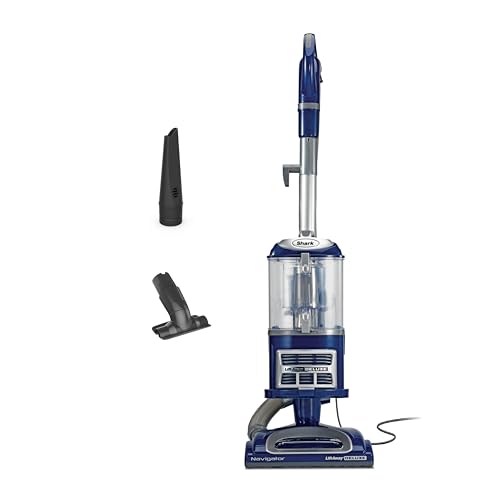
Shark Navigator Lift-Away NV360 delivers powerful suction with HEPA filtration and swivel steering. Perfect for pet hair and allergens. See full expert review.
Best for Convenience and Daily Spot Cleaning: BLACK+DECKER Dustbuster CHV1410L
View the BLACK+DECKER Dustbuster CHV1410L
Rating: 4.3 stars | 108,000+ reviews
The most-reviewed product on this list, and the one that answers a specific beach house question: what do you use to clean up the sand that falls off beach bags, towels, and chair cushions before a full vacuum session is warranted? The Dustbuster CHV1410L is stored near the door, grabbed for a 60-second pass, and returned to its charger without drama.
The 16V MAX lithium-ion platform delivers consistent suction without the power fade that characterized older handheld designs. The cyclonic action system — the same technology used in full-size Dyson machines, applied here in a compact handheld — maintains airflow velocity even as the dirt bowl fills, which matters when you are picking up dense, heavy sand. At 2.6 lbs and cordless, it is genuinely a one-handed tool.
Key features:
- 16V MAX lithium-ion battery with no power fade through the cleaning cycle
- Cyclonic action maintains suction as the dirt bowl fills with heavy sand
- Rotating 180-degree slim nozzle for reaching into corners and along baseboards
- Built-in crevice tool and flip-up brush — no loose accessories to lose
- Washable filter and dirt bowl — zero ongoing filter replacement cost
The rotating slim nozzle is particularly useful for beach homes with sliding door tracks, which accumulate sand in the channel with every open-and-close cycle. Standard vacuum attachments cannot reach into narrow door tracks; the slim nozzle of the Dustbuster fits directly into these channels and clears them in seconds. The built-in crevice tool handles baseboards, gaps between tile and wall, and the edges of entryway rugs where sand congregates.
This is not a replacement for a full-size upright. It is a complement — the fast-access tool that prevents sand from spreading further between full cleaning sessions. In a beach house, a two-vacuum system (full-size upright plus a Dustbuster near the entry) is more practical than relying on a single machine for all scenarios.
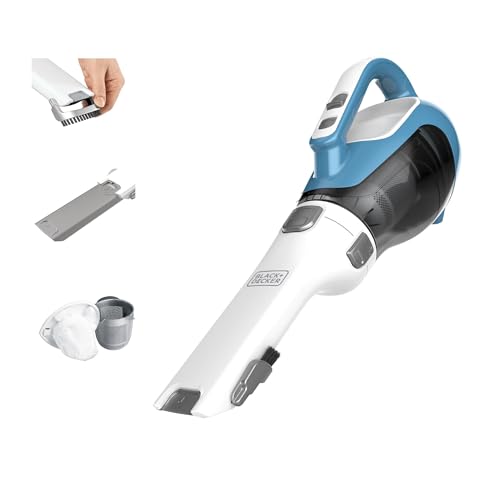
BLACK+DECKER Dustbuster AdvancedClean cordless handheld vacuum with cyclonic suction and 16V battery. Great for home and car. Read our expert review now.
Best High-Performance Upright: Shark Rotator NV752 Powered Lift-Away
Rating: 4.4 stars | 44,000+ reviews
The Shark Rotator NV752 is the most capable machine on this list for deep sand extraction from heavy-traffic carpet in a beach house or vacation rental context. The defining feature — Powered Lift-Away — means that when you detach the canister pod to reach under furniture or up stairs, the brush roll continues to spin. Standard Lift-Away designs on competing models depower the brush roll the moment you detach, making the detached mode useful only for suction-based cleaning. On sand-laden carpet, maintaining brush roll agitation in Lift-Away mode makes a meaningful difference.
The sealed HEPA filtration system pairs with the Anti-Allergen Complete Seal Technology that Shark carries across its line, ensuring fine beach particulate stays captured rather than exhausted. At 15.4 lbs, it is comparable in weight to the NV360, but the additional power of the motorized brush roll in detached mode, the LED headlights on both the nozzle and handheld unit (useful for spotting sand deposits in dim entryways and closets), and the included Pet Power Brush — which doubles as an aggressive upholstery attachment for sand-embedded cushions — push its functional value above the NV360 for households where thorough carpet extraction is the primary concern.
Key features:
- Powered Lift-Away maintains brush roll agitation in detached mode for deep carpet extraction
- Sealed HEPA Anti-Allergen filtration captures fine beach particulate
- Advanced swivel steering for navigating beach-house open floor plans
- LED headlights on nozzle and handheld unit for spotting hidden sand deposits
- Included Pet Power Brush doubles as deep-agitation upholstery tool for sand-embedded furniture
The 0.88-quart dustbin is slightly smaller than the NV360’s, which means more frequent emptying in heavy sand environments — a minor trade-off given the performance advantages. The corded design provides consistent suction regardless of how much sand already occupies the bin.

Shark Rotator NV752 Powered Lift-Away TruePet upright vacuum with HEPA filter, swivel steering, LED headlights, and pet power brush for deep cleaning.
Best Handheld for Beach Gear: BLACK+DECKER Dustbuster HHVI315JO42
View the BLACK+DECKER Dustbuster HHVI315JO42
Rating: 4.4 stars | 53,000+ reviews
There is a specific cleaning task in beach households that full-size vacuums cannot address efficiently: cleaning the sand out of beach gear itself. Bags, chair webbing, cooler compartments, car interiors, umbrellas bases, and sports equipment all accumulate sand in ways that require a handheld tool rather than a floor vacuum. The HHVI315JO42 Dustbuster — lighter than the CHV1410L at 2.1 lbs (957g) — is optimized for this extended-reach task.
The lithium-ion battery delivers consistent suction with no power fade, which matters when working through a car’s entire interior or a full set of beach bags. The wide-mouth design scoops up larger sand aggregates — the kind you find at the bottom of a beach bag — quickly and without the clogging risk that narrow nozzles present. The translucent dust bowl lets you track fill level without stopping, and the washable bowl and filters eliminate ongoing maintenance costs.
Key features:
- Lithium-ion battery with no power fade during extended gear-cleaning sessions
- Wide-mouth intake handles large sand aggregates from beach bags and car interiors
- 2.1-lb lightweight design minimizes arm fatigue during above-floor cleaning
- Wall-mount charging base keeps it accessible and always charged by the door
- Washable bowl and filters — zero ongoing replacement cost
The included crevice tool handles car door channels, seat track rails, and the narrow gaps in umbrella frames and folding chair joints where sand packs in and resists simple shaking. The wall-mount charging base design is deliberately useful in beach house entryways — the vacuum hangs charged and ready at the point where sandy gear enters the house, not in a closet somewhere that requires a separate trip to retrieve it.
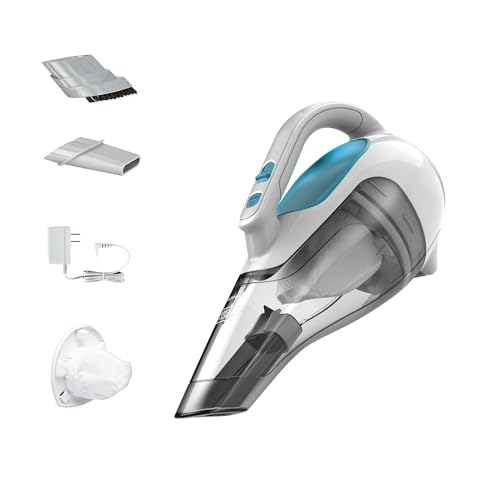
Expert review of the BLACK+DECKER Dustbuster HHVI315JO42 cordless handheld vacuum. Lithium-powered suction, wide mouth, and wall-mount base.
Frequently Asked Questions
Can a robot vacuum handle sandy floors?
Yes, with meaningful limitations. Robot vacuums are well-suited for daily maintenance — picking up loose sand from hard floors and low-pile carpet before foot traffic embeds it. They are not effective for deep extraction of sand already embedded in medium or high-pile carpet. For beach house use, schedule the robot for a nightly pass and plan on a full upright session for carpet areas two to three times per week. Empty the robot’s dustbin daily during peak season, and clean its filter twice as often as the manual suggests.
How do I protect my vacuum from sand damage?
Three practices extend vacuum life significantly in sandy environments: First, empty the dustbin after every session with heavy sand loads — a full bin of dense sand reduces airflow and forces the motor to work harder, generating additional heat and wear. Second, clean or rinse the filter after every two to three uses rather than waiting for the suction to drop noticeably. Third, check the brush roll and its end caps after each cleaning session for sand-packed bearing points. Sand that packs into the brush roll bearings accelerates wear faster than any other single failure mode in sandy-environment vacuums.
Is a handheld vacuum good for cleaning beach gear?
Yes, and it is often better than a full-size machine for this task. Full-size uprights are awkward for cleaning the inside of bags, car interiors, and sports equipment. A lightweight cordless handheld with a wide-mouth intake and a crevice tool handles these tasks with far more precision and less physical effort. The BLACK+DECKER Dustbuster models recommended in this guide are the practical standard for this role — widely available, reliable, and specifically suited to the extended-reach, light-debris scenarios that beach gear cleaning represents.
What is the best vacuum type for beach houses with mostly tile and hardwood?
A canister vacuum or an upright with a reliable brush roll shutoff. On tile and hardwood, you need the floor head to glide without the brush roll spinning — spinning bristles fling sand sideways rather than capturing it, and hard bristle contact with a hard floor drags abrasive sand particles across the surface. An upright with a brush roll shutoff (like the Shark NV360 or NV752 reviewed above) converts to a suction-only hard floor mode that captures sand rather than redistributing it. A canister vacuum with a dedicated hard floor head is also effective, as most canister hard floor heads are designed for suction-only operation.
How often should I vacuum a beach house during summer?
High-use beach houses benefit from hard floor vacuuming daily during peak season and deep carpet cleaning at least twice per week. The daily hard floor pass is where a robot vacuum or a Dustbuster near the entry door earns its place — capturing the fresh daily sand before it migrates further into the home. The twice-weekly carpet session handles the embedded accumulation that daily foot traffic drives deeper into the pile. Between occupancy periods in a vacation rental context, a full top-to-bottom vacuum before the next guests arrive is standard.
Can sand scratch my hardwood floors during vacuuming?
Yes, if you use the wrong technique. Dragging a hard-edged floor head across hardwood with sand between the head and the floor creates the same effect as dragging sandpaper. To avoid this: use suction-only mode with the brush roll disabled, choose a floor head with a soft felt or rubber gasket on the soleplate rather than hard plastic, and make forward-only passes rather than dragging the vacuum head backward across the floor. Backward dragging presses the floor head down harder than forward motion and increases abrasive contact.
Will vacuuming sand dull my tile’s surface?
Standard glazed ceramic and porcelain tile is resistant to the abrasion that sand causes on softer surfaces like hardwood. The grout between tiles is more vulnerable, particularly in older installations where the grout has softened or cracked. Avoid using stiff-bristled brush attachments directly on damaged grout, as the combination of abrasive sand and brush agitation can widen cracks. For grout in good condition, vacuuming with a crevice tool or narrow attachment is safe and effective for clearing sand from the channels.
Final Verdict
Sand is persistent, heavy, and mechanically hard on vacuums. The right machine for a sandy home is one built with washable filtration, a brush roll shutoff for hard floor protection, strong sustained suction, and enough dustbin capacity to handle dense material without stopping constantly.
For most beach houses and desert homes, the Bissell CleanView Swivel Pet 2252 is the primary workhorse recommendation — high review count, scatter-free hard floor performance, and Triple Action brush roll agitation for carpet, at a price point that makes sense for a machine that will work harder than it would in a typical household. If sealed HEPA filtration is a priority, the Shark Navigator NV360 adds that layer without a significant price increase. For deep carpet extraction in high-traffic vacation rental properties, the Shark Rotator NV752’s Powered Lift-Away and LED headlights justify the additional investment.
Keep a BLACK+DECKER Dustbuster — the CHV1410L or HHVI315JO42 — near the entry door and in the garage for beach gear cleanup. These two roles (entry maintenance and gear cleaning) are where the gap between a handheld and a full-size machine is most clearly felt, and a wall-mounted Dustbuster in those locations solves both problems without adding a daily chore.
Sand will keep coming in. The right tools, used consistently, keep it from winning.
Ready to Find Your Perfect Vacuum?
Browse our expertly reviewed vacuum cleaners and make an informed decision
Browse All Vacuums