Best Vacuum for Travertine Floors: Protect Your Stone Without Sacrificing Clean
Travertine floors scratch easily and trap debris in their pores. These are the best vacuums for travertine that clean thoroughly without damaging the surface.
Table of Contents
Travertine is one of the most visually striking natural stones you can put on a floor. Its warm tones, natural pitting, and subtle variation make it a popular choice for entryways, kitchens, and bathrooms in upscale homes. It also happens to be one of the most demanding floor types to clean properly — and one of the easiest to damage if you use the wrong vacuum.
The problem is that travertine is a porous, relatively soft natural stone. It sits at roughly 3 on the Mohs hardness scale, which means it scratches more easily than ceramic tile and significantly more easily than granite. A vacuum with stiff nylon bristles on its floor head, exposed hard plastic wheels, or a rotating brushroll that was not designed for hard floors can leave fine scratches on travertine that accumulate over time into visible surface dulling. On polished or honed travertine, this damage is irreversible without professional refinishing.
At the same time, travertine’s natural pores and the grout lines between tiles trap dirt, grit, and debris in ways that smooth surfaces do not. You actually need more thorough cleaning, not less, to keep travertine looking its best. The goal is a vacuum that cleans deeply without any abrasive contact — soft bristles, gentle wheels, no spinning brushroll on the main floor head, and strong suction to extract debris from the stone’s surface texture.
This guide covers what to look for, what to avoid, and the specific vacuum models that do the job correctly.
Why Travertine Is Different from Other Hard Floors
Most hard floor vacuuming guides treat all hard surfaces as roughly equivalent. For most floors — luxury vinyl plank, ceramic tile, hardwood — this is approximately true. Travertine is a genuine exception, for three reasons.
Softness. Natural travertine’s hardness rating means it can be scratched by materials that would not touch ceramic tile or porcelain. Gravel particles tracked in from outside, if dragged under a hard vacuum wheel or swept by a stiff bristle rotating at high speed, become scratch agents. Even the small wheels on canister vacuums can leave fine marks on polished travertine if they are made of rigid plastic rather than soft rubber.
Porosity. Travertine is formed from limestone deposits and retains a naturally porous structure even after filling and sealing. The surface voids trap fine dust and grit that lies beneath the plane of the surface, invisible until the right light angle reveals it. Standard vacuum suction without adequate airflow over the floor surface does not extract debris that has settled into these micro-depressions. You need a combination of air turbulence at the floor level and strong suction — which is exactly what a purpose-built hard floor floorhead provides.
Sensitivity to moisture. Many travertine owners mop after vacuuming, but the vacuuming step must remove as much dry particulate as possible first. Wet mopping over travertine that still has grit on the surface causes the mop to drag abrasive particles across the stone, exactly the damage mechanism you are trying to prevent. A thorough dry vacuum pass before any wet cleaning is not optional for travertine — it is the protective step that makes mopping safe.
What to Look for in a Vacuum for Travertine
Soft bristle floor head. The floorhead that contacts your travertine must have soft, non-abrasive bristles along its contact edge. Miele’s Parquet Twister family uses ultra-soft natural horsehair bristles. Dyson’s Soft Roller Fluffy cleaner head uses a woven fabric roller rather than nylon bristles. Either approach works. Hard nylon bristle brushrolls designed for carpet do not.
No spinning brushroll on hard floor mode. A motorized brushroll running at carpet-cleaning speed will throw debris into the air, scratch the surface with its bristle tips, and create enough turbulence to miss fine grit sitting in the travertine’s surface pores. The floorhead must either have no brushroll at all, or have one that disengages completely when in hard floor mode.
Soft rubber wheels on the vacuum body. Canister vacuums that follow you across the floor make contact with the surface through their body wheels. Hard plastic wheels can mark travertine. Look for canisters with soft rubber-coated wheels — Miele’s canisters use this design consistently across their range.
Strong suction for debris extraction. Because travertine traps debris in its surface, you need above-average suction rather than the minimum needed for smooth floor cleaning. A vacuum rated for 200+ Air Watts, or one specifically noted for strong hard floor performance, provides the airflow needed to pull debris out of the stone’s surface texture.
Adjustable suction. Area rugs on travertine floors are common, and transitioning to lower suction when vacuuming a delicate rug placed on the stone is useful. Variable suction via an onboard dial or foot pedal is a worthwhile feature in this context.
What to Avoid
Any vacuum with a brushroll that cannot be disabled. If the vacuum defaults to a spinning brushroll on hard floors and has no override switch, it is not suitable for travertine.
Hard plastic floor nozzles. Bare-floor accessories with exposed hard plastic contact edges can score the stone surface.
Cheap canister wheels. This matters more than most buyers realize. The wheels on budget canister vacuums are often hard ABS plastic with no soft coating.
Upright vacuums without a bare-floor setting. Many uprights are primarily engineered for carpet and tolerate hard floors rather than cleaning them optimally. The brushroll speed, bristle stiffness, and floor seal geometry of a carpet-focused upright can damage travertine even with the brushroll theoretically turned off.
The 5 Best Vacuums for Travertine Floors
1. Miele Complete C3 Brilliant — Best Overall for Travertine
Best for: Polished or honed travertine in living spaces, entryways, and kitchens
The Miele Complete C3 Brilliant is the benchmark for hard floor cleaning on sensitive surfaces, and travertine is specifically the type of floor this vacuum was engineered to protect. The included Parquet Twister XL floorhead features ultra-soft natural fiber bristles arranged in a 180-degree swivel head that reaches under furniture without pulling or scraping. Every contact point between the floorhead and the stone surface is designed to clean without abrading.
The canister body rides on soft rubber wheels that will not mark polished travertine even with repeated passes over the same area. Six suction levels via the onboard dial allow you to dial back power for delicate area rugs and open up full suction for the travertine field. The AirClean filtration system captures fine travertine dust and grit before it can cycle through the vacuum and back into the room.
The 1200-watt German-engineered motor provides enough suction to pull debris from travertine’s surface pores — the kind of deep cleaning that a weaker vacuum leaves behind. The 36-foot operating radius covers a large open-plan floor plan from a single outlet, which matters when you are cleaning large stone floor areas.
Pros:
- Parquet Twister XL designed specifically for sensitive stone and hard floors
- Soft rubber canister wheels will not mark the surface
- Six suction levels for precise control
- Exceptional filtration captures fine stone dust
- 36-foot operating radius
Cons:
- Premium price point
- Bag replacement ongoing cost
- Heavier than stick vacuums at 19 lbs
2. Dyson V15 Detect with Fluffy Cleaner Head — Best Cordless for Travertine
Best for: Convenience-focused cleaning, smaller spaces, daily maintenance passes
The Dyson V15 Detect is the most capable cordless vacuum for travertine floors, primarily because of its Fluffy Soft Roller cleaner head. Where most vacuum floorheads use bristles to sweep debris toward the suction inlet, the Fluffy head uses a woven fabric roller that picks up debris through direct soft contact. The roller’s surface is gentle enough for polished stone while being tacky enough to capture fine grit that standard suction alone would miss.
The V15’s built-in laser illumination at floor level reveals fine dust particles on hard floors that are invisible under normal lighting — on travertine with its varied surface texture, this makes a meaningful difference in cleaning thoroughness. You can see exactly what debris is still on the surface and confirm you have cleared it.
The piezo sensor and real-time suction reporting on the LCD display are genuinely useful for travertine cleaning: you can watch the particle count drop in real time as you make cleaning passes, giving you objective confirmation that the floor is clean rather than guessing based on visual inspection of the stone’s variable surface.
Pros:
- Fluffy Soft Roller is ideal for sensitive stone surfaces
- Laser illumination reveals fine dust on hard floors
- Cordless convenience for quick daily passes
- Strong suction for a cordless design
- Real-time cleaning performance display
Cons:
- 60-minute battery runtime on lowest power (shorter on high)
- Fluffy head not ideal for area rugs — requires swapping to a different head
- Higher price than many cordless competitors
3. Miele Guard M1 Cat and Dog Parquet — Best for Homes with Pets on Travertine
Best for: Pet hair on travertine, homes where odor control is needed alongside scratch protection
Miele Guard M1 Cat and Dog Parquet
The Guard M1 Cat and Dog variant of Miele’s hard floor canister line adds Active AirClean filtration — a charcoal-impregnated exhaust filter that neutralizes pet odors at the molecular level, not just the particle level — without any compromise to the hard floor cleaning performance. The Parquet Twister floorhead is identical to the non-pet version, meaning you get the same ultra-soft bristle protection for travertine alongside enhanced odor management.
For homes where travertine floors coexist with dogs or cats, this is the correct specification. Pet hair on travertine is particularly visible against the stone’s surface and tends to collect in the grout lines and surface pores. The Guard M1’s suction power and the Parquet Twister’s design pull pet hair from these areas without the kind of abrasive contact that a brushroll-driven pet vacuum would produce.
Pros:
- Active AirClean charcoal filter neutralizes pet odors
- Full Parquet Twister protection for travertine surfaces
- Strong suction extracts pet hair from surface pores
- Miele build quality and long-term reliability
Cons:
- Cat and Dog model carries a price premium over base Guard M1
- Proprietary filter adds ongoing cost
4. Shark IZ862H Stratos Cordless — Best Mid-Range Cordless for Travertine
Best for: Budget-conscious buyers who want hard floor protection without paying Miele or Dyson prices
The Shark Stratos IZ862H is the strongest mid-range option for travertine, primarily because of its Clean Sense IQ technology that automatically adjusts suction when it detects debris — preventing unnecessary oversuction that creates turbulence and vibration on the floor surface. The DuoClean PowerFins + Soft Roller combo floorhead pairs a soft front roller with rear fins that work together on hard floors.
The brushroll disengages from the soft roller mode for delicate hard floor use, and Shark’s anti-wrap technology prevents hair from tangling in the mechanism. For travertine specifically, the key benefit is the soft front roller’s gentle contact and the automatic suction modulation that keeps cleaning pass turbulence controlled.
Pros:
- DuoClean head with soft roller appropriate for travertine
- Automatic suction adjustment via Clean Sense IQ
- More accessible price than Miele or Dyson premium models
- Flexible wand reach for grout lines and surface variation
Cons:
- Less suction power than corded alternatives
- Build quality not in the same tier as Miele
- Soft roller requires periodic cleaning to maintain performance
5. Bissell CrossWave X7 Plus — Best for Vacuuming and Washing Travertine in One Pass
Best for: Sealed travertine that benefits from simultaneous vacuum and light wet cleaning
The Bissell CrossWave X7 Plus occupies a different category from the other recommendations: it simultaneously vacuums and washes hard floors in a single pass, using a multi-surface cleaning brush roll and clean water dispensing system. For sealed travertine where you want to combine your vacuum and light mopping step, this can reduce total cleaning time significantly.
The soft brush roll on the CrossWave is gentle enough for travertine, and the suction-while-washing function removes debris before the cleaning solution contacts the surface — addressing the key concern about wet-mopping over unvacuumed stone. The clean and dirty water are kept completely separate, so you are always cleaning with fresh solution.
Important caveat: the CrossWave is only appropriate for sealed travertine. Unsealed or partially sealed travertine can absorb cleaning solution into the stone, which causes long-term damage. Verify your travertine’s seal status before using any wet-cleaning vacuum.
Pros:
- Vacuums and washes simultaneously for sealed travertine
- Soft brush roll appropriate for stone surfaces
- Separate clean and dirty water tanks
- Reduces total cleaning time
Cons:
- Only suitable for properly sealed travertine
- Requires regular brush roll cleaning and tank maintenance
- Not as powerful for dry debris extraction as dedicated vacuum
How to Vacuum Travertine Without Causing Damage: Practical Tips
Vacuum before mopping, every time. This is not optional. Dragging a wet mop over travertine that still has grit on it is the primary cause of surface dulling on polished stone. Make the vacuum pass complete before any wet cleaning begins.
Use the lowest effective suction setting. Maximum suction creates more turbulence at the floor surface, which can disturb fine particles into the air rather than capturing them. Start at a moderate setting and increase only if needed for debris in grout lines or surface pores.
Check your floorhead for embedded grit before each session. Flip the floorhead over and check for debris caught in the bristles or around the edges before you begin. Running a dirty floorhead over travertine is a scratch risk even if the floorhead design itself is surface-safe.
Vacuum grout lines with the crevice tool occasionally. The main floorhead’s suction geometry is optimized for the floor field, not deep linear gaps. Running the narrow crevice tool along grout lines every few weeks extracts debris that the regular floorhead leaves behind.
Rinse soft roller heads after use. Vacuums with fabric or soft roller floorheads accumulate fine stone dust in the roller material. Leaving this in place means you are running an abrasive debris-laden roller across your travertine on the next use. Rinse and dry the roller between sessions.
Frequently Asked Questions
Can I use a regular upright vacuum on travertine?
Most upright vacuums are not ideal for travertine. The primary issue is the spinning brushroll, which almost all uprights use as their default mode. Even on the lowest height setting, a spinning nylon brushroll on travertine creates unnecessary abrasion risk. If you use an upright, confirm it has a brushroll off switch, verify the floorhead contact edges are soft rather than hard plastic, and test on a less visible area first.
Do I need a special vacuum for travertine specifically, or is any hard floor vacuum fine?
You need a vacuum with soft contact surfaces — soft bristle floorhead, no spinning brushroll in hard floor mode, and soft rubber canister wheels if using a canister design. Many vacuums marketed as “hard floor vacuums” technically meet this requirement, but the specific models in this guide are verified to be surface-safe.
How often should I vacuum travertine floors?
High-traffic travertine areas — entryways, kitchens — benefit from vacuuming every two to three days. The reason is that fine grit tracked in from outside acts as an abrasive every time foot traffic drags it across the stone surface. Vacuuming frequently removes the grit before it causes damage. Lower-traffic living spaces can be vacuumed weekly.
Will vacuuming damage the grout between travertine tiles?
Standard vacuuming does not damage grout. The suction passes over grout lines without mechanical contact. The crevice tool’s gentle plastic tip is not hard enough to chip or crack properly installed grout. However, grout that is already cracked, crumbling, or partially missing can have loose material extracted by strong suction — this reveals pre-existing damage rather than causing new damage.
My travertine has a matte or tumbled finish rather than polished. Does that change anything?
Tumbled or brushed travertine is slightly more forgiving than polished travertine because the surface already has a textured appearance, so fine scratches are less visible. However, the same basic rules apply: no stiff spinning brushrolls, soft contact floorhead, and no hard plastic wheels on the canister body. The cleaning challenge with tumbled travertine is that its deeper surface texture traps even more debris, making strong suction more important.
Final Verdict
For travertine floors, the Miele Complete C3 Brilliant with the Parquet Twister XL floorhead is the correct choice if you want the most thorough clean with absolute surface protection. The Parquet Twister’s ultra-soft bristles, the canister’s rubber wheels, and the strong suction for debris extraction from the stone’s surface pores represent exactly the right combination of properties.
For cordless convenience without sacrificing surface safety, the Dyson V15 Detect with the Fluffy Soft Roller head is the closest alternative. Its laser illumination feature is particularly useful on travertine’s varied surface, revealing fine grit that would otherwise be invisible.
The underlying principle for vacuuming travertine is consistent: every contact point between vacuum and stone must be soft, the brushroll must not spin on hard floor mode, and suction must be strong enough to extract debris from the stone’s natural surface texture. Any vacuum that meets these three criteria will protect and clean your travertine effectively for years.
Top Picks

Eureka NEN186BL bagless canister vacuum with 1000W motor, 16KPa suction, washable HEPA filter, and 2L dustbin. Lightweight and ideal for carpets and floors.
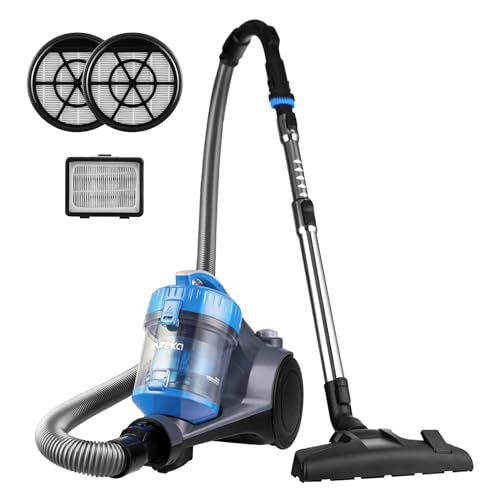
Eureka Whirlwind NEN110B bagless canister vacuum with swivel steering, auto cord rewind, and multi-surface cleaning. Lightweight at 8.15 lbs. Full review!

Eureka WhirlWind NEN110A bagless canister vacuum with 2.5L dust cup, swivel steering, and multi-surface cleaning. Lightweight and easy to use.
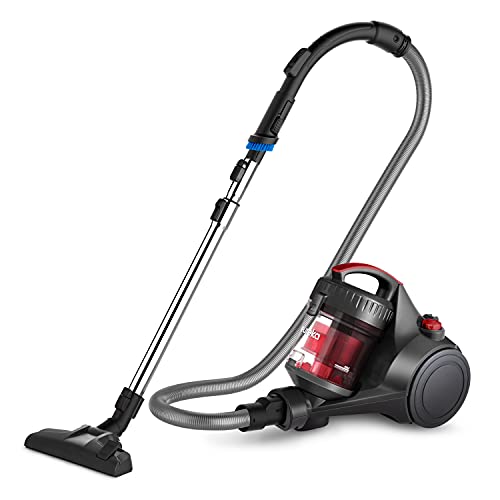
Eureka Whirlwind NEN110D bagless canister vacuum with multi-surface airflow control, auto cord rewind, and swivel steering. See our full expert review!

Eureka NEN180 lightweight bagless canister vacuum with 16 kPa suction, HEPA filtration, and 2L dust cup. Ideal for carpets and hard floors. Full expert review.
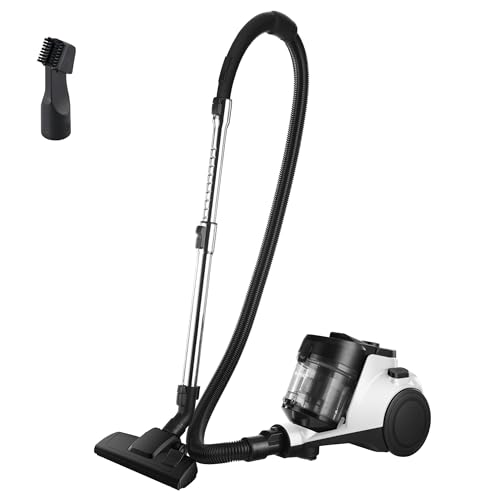
Eureka WhirlWind NEN121WH bagless canister vacuum with 1100W motor, HEPA filter, and swivel steering. Lightweight multi-surface cleaning. Expert review!
Ready to Find Your Perfect Vacuum?
Browse our expertly reviewed vacuum cleaners and make an informed decision
Browse All Vacuums