Best Vacuum for Vinyl Plank Floors: Safe Picks That Won't Scratch LVP
Vinyl plank floors (LVP/LVT) can scratch and dull over time. Find the best vacuums with soft attachments and adjustable suction safe for luxury vinyl in 2025.

Table of Contents
- Best Vacuum for Vinyl Plank Floors: Safe Picks That Won’t Scratch LVP
- What Are LVP and LVT, and Why Do They Still Scratch?
- What to Look for in a Vacuum for LVP Floors
- What to AVOID on Vinyl Plank Floors
- Our Top Picks: Best Vacuums for Vinyl Plank Floors
- LVP Floor Care Guide: Beyond Vacuuming
- Frequently Asked Questions
- Final Thoughts
Best Vacuum for Vinyl Plank Floors: Safe Picks That Won’t Scratch LVP
Luxury vinyl plank (LVP) and luxury vinyl tile (LVT) have become two of the most popular flooring choices for exactly the right reasons: they look like real hardwood, they handle moisture that would destroy real wood, and they hold up under heavy foot traffic. Homeowners love them. Designers love them. Contractors install them in bathrooms, kitchens, basements, and living rooms where hardwood never could have gone.
But here is the part the flooring salespeople gloss over — LVP and LVT still scratch. They still dull. And a vacuum with the wrong design can cause that damage faster than years of normal wear. This guide explains what makes vinyl plank floors vulnerable, what features to look for in a vacuum, what to avoid entirely, and our top picks for keeping your LVP floors looking new.
What Are LVP and LVT, and Why Do They Still Scratch?
Luxury vinyl plank (LVP) and luxury vinyl tile (LVT) are multi-layer synthetic flooring products. A typical plank consists of a rigid or semi-rigid core, a printed design layer that mimics wood or stone, and a clear wear layer on top. That wear layer — measured in mils (thousandths of an inch) — is the only thing standing between the printed surface and the world.
Residential LVP typically carries a wear layer between 6 and 20 mils. Thicker wear layers, like 20 mil, are marketed as “commercial grade” and hold up substantially better under heavy use. A 6-mil wear layer, by contrast, is quite thin and susceptible to visible scratching.
What Actually Causes Scratching on LVP
The most common sources of LVP damage are:
- Grit and sand trapped under vacuum wheels or hard plastic bases. Fine particles tracked in from outside are harder than the vinyl wear layer. When a vacuum’s hard plastic wheel rolls over a grain of sand, it grinds that grain directly into the surface.
- Stiff rotating beater bars set too low. Carpet vacuums use spinning brush rolls (beater bars) to agitate carpet fibers. On LVP, those stiff bristles act like a rotary sander — they swirl fine debris across the surface and can permanently scuff the wear layer in a single pass.
- Heavy upright vacuums with rigid plastic soles. The sheer weight of a heavy vacuum pressing a hard plastic base down onto grit trapped underneath creates concentrated abrasive pressure with every stroke.
LVP is significantly more durable than hardwood or marble, but it is not indestructible — and the wear layer, once scratched through, cannot be sanded or refinished the way real wood can. Prevention is the only path.
What to Look for in a Vacuum for LVP Floors
Soft Roller Head or Brush Roll That Turns Off
The single most important feature. A soft roller head — made from microfiber, felt, or soft foam — lifts debris by sweeping it gently into the suction path rather than beating it against the floor. Many modern hard floor vacuums and stick vacuums include a dedicated soft roller as standard.
If the vacuum uses a traditional stiff nylon brush roll, it must have a switch, slider, or mode setting that fully disengages the brush roll for hard floors. “Brush off” mode must mean the brush stops spinning completely — not just slows down.
Rubber or Soft Rubberized Wheels
Check the vacuum’s wheels before purchasing. Hard plastic wheels on a heavy machine create point-load pressure that grinds trapped grit into the floor. Rubber or rubberized wheels have enough give to deform slightly around particles rather than crushing them into the vinyl surface. This is especially important on uprights, where the motor, bag, and dust cup all add significant weight.
Adjustable or Reduced Suction Mode
High suction on a lightweight vacuum can cause the cleaning head to seal against the smooth LVP surface and drag rather than glide. This increases the friction on whatever particles are trapped between the head and the floor. An adjustable suction dial or a dedicated hard floor mode with lower suction keeps the head moving smoothly and reduces the risk of gouging.
Lightweight Construction
Less machine weight translates directly to less pressure on the floor surface. A 3-pound stick vacuum pressing a hard plastic component into a grain of sand causes far less damage than a 17-pound upright doing the same thing. For LVP specifically, lighter is safer when all other features are equal.
Low-Profile Cleaning Head
A cleaning head that sits close to the ground and glides smoothly — without plastic ridges, raised edge guards, or exposed metal — reduces the risk of scratching the floor surface as the vacuum moves. Look for a smooth, soft-edged underside.
What to AVOID on Vinyl Plank Floors
Rotating Beater Bars That Cannot Be Disabled
This is the most common way vacuums damage LVP. If a vacuum only has one mode — carpet mode — with the brush roll always spinning, it should not be used on vinyl plank floors. The bristles can swirl fine debris in a pattern that scratches the wear layer visibly over time.
Heavy Upright Vacuums with Hard Plastic Bases
Traditional full-size upright vacuums designed primarily for carpet can weigh 15–20 lbs. When that weight presses a rigid plastic cleaning head base down onto your LVP, there is enormous potential for damage if any grit gets between the base and the floor. If you use an upright on LVP, it must have rubber wheels, a soft base, and a fully disengageable brush roll.
Steam Mops and Steam Vacuum Combos
Steam is the enemy of vinyl plank floors. The heat and moisture from steam can warp the core of LVP planks, cause the edges to curl and separate, and weaken the adhesive bond between layers. Steam voids most LVP manufacturer warranties. No matter how convenient a steam-vacuum combo sounds, never use steam on LVP or LVT.
Vacuum-Mop Combos That Use Harsh Chemicals
LVP floors require only pH-neutral cleaning solutions diluted in water. Many crossover vacuum-mop units come with or are marketed with multi-purpose cleaning sprays that are too alkaline or acidic for vinyl. Harsh chemicals can cloud the wear layer and cause permanent dullness. If you use a wet-dry vacuum or combo unit, verify that any solution used is explicitly approved for LVP.
Stiff Side Brushes on Robot Vacuums
Many budget robot vacuums include stiff plastic side brushes that spin to push debris into the suction path. On LVP, these side brushes can fling grit across the floor surface and cause fine swirl scratches over repeated passes. Look for robot vacuums with soft or rubber-tipped side brushes.
Our Top Picks: Best Vacuums for Vinyl Plank Floors
Each of these vacuums earns its spot based on LVP-safe design, verified customer satisfaction at scale, and price-to-performance value. We have included models across different form factors so you can find the right fit for your home.
1. Shark Navigator Lift-Away Deluxe NV360 — Best Upright for LVP
Rating: 4.4 stars | 52,000+ reviews
View the Shark Navigator NV360
The Shark NV360 is the rare full-size upright that works genuinely well on hard floors, and the reason is its Bare Floor Mode. Flipping the switch completely disengages the brush roll — no spinning, no agitating, no risk of swirling debris across your LVP. All cleaning action comes from suction alone, which is exactly what vinyl plank floors need.
The lift-away design is a significant bonus. You can detach the canister pod from the floor head and use the hose with soft brush attachments to reach corners, baseboards, and edges without dragging the full upright across your floor. This eliminates one of the biggest scratch risks of upright vacuums: the awkward pivot turns at the end of each row.
What makes it LVP-safe:
- Brush roll fully disengages in Bare Floor Mode
- Lift-away feature reduces full-machine floor contact during detailed cleaning
- Wide cleaning path covers large open-plan floors efficiently
- Soft attachment options for edges and transitions
Keep in mind it is still an upright with meaningful weight. Use a measured pace and do not drag it sideways across the floor during turns.
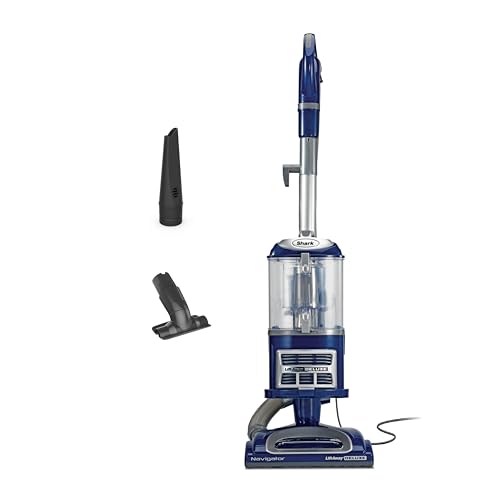
Shark Navigator Lift-Away NV360 delivers powerful suction with HEPA filtration and swivel steering. Perfect for pet hair and allergens. See full expert review.
2. Eureka WhirlWind Bagless Canister NEN110A — Best Canister for LVP
Rating: 4.2 stars | 43,000+ reviews
View the Eureka WhirlWind Canister NEN110A
Canister vacuums have an inherent structural advantage on hard floors. The heavy part — motor, filters, dustbin — sits on rolling wheels behind you. What you are actually gliding across the LVP is a lightweight wand and floor tool. Less weight on the cleaning head means dramatically less risk of grinding grit into the vinyl surface.
The NEN110A has accumulated over 43,000 reviews because it nails the basics: reliable suction, easy maneuverability, and a straightforward floor tool that works well on bare floors without aggressive brush action. The gentle, consistent suction does not cause the cleaning head to drag and skip across smooth LVP.
Why it works on LVP:
- Canister design keeps machine weight off the cleaning head
- Smooth floor tool with no spinning brush roll
- Easy to guide in slow, deliberate strokes around furniture
- Large dustbin with easy empty — no mess back onto clean floors
Use the hard floor attachment and move with deliberate, forward-sweeping strokes. Let the suction do the lifting before the canister rolls forward over the same area.

Eureka WhirlWind NEN110A bagless canister vacuum with 2.5L dust cup, swivel steering, and multi-surface cleaning. Lightweight and easy to use.
3. Bissell Featherweight 2033M Stick — Best Lightweight Daily Driver
Rating: 4.2 stars | 116,000+ reviews
View the Bissell Featherweight 2033M Stick
With over 116,000 reviews, the Bissell Featherweight is one of the most widely used vacuums in American households — and it earns that popularity on hard floors. At roughly 3 lbs, it is one of the lightest vacuums available. That featherweight construction is a genuine LVP safety feature: there is simply very little mass to press any hard component into your vinyl surface.
The 2033M is built specifically for bare floors and low-pile carpet, which means it is not engineered around an aggressive carpet beater bar the way full-size uprights are. The cleaning head sits low and smooth, gliding easily across the textured surface of LVP planks without snagging on grooves or transitions.
Why it stands out for LVP:
- Extremely lightweight — minimal downward pressure on the floor
- Designed for bare floors as its primary use case
- 116,000+ reviews confirm real-world reliability at scale
- Quick to grab and go for daily debris pickup
- Compact storage footprint
This is the ideal grab-and-go vacuum for LVP in kitchens and entryways, where you want to quickly handle crumbs, dust, and pet hair without setting up a full cleaning session.

Bissell Featherweight 2033M is an ultra-lightweight 3-in-1 bagless stick vacuum for hard floors, carpet, and stairs. Converts to hand vac with crevice tool.
4. eufy Omni C20 Robot Vacuum — Best Robot Vacuum for LVP
Rating: 4.2 stars | 80,000+ reviews
View the eufy Omni C20 Robot Vacuum
Robot vacuums are a natural fit for LVP floors — the flat, uniform surface is exactly the environment they navigate best. The eufy Omni C20 stands out because it is designed as a whole-home system with an all-in-one base station that handles self-emptying, water refilling, and mop pad cleaning. That means cleaner operations and less debris handling that could recontaminate the floor.
For LVP specifically, the C20 uses rubber-dominant main brush design that is gentler on hard floors than stiff nylon bristle rolls. The suction is adjustable via the app, so you can reduce power for lightweight daily passes on vinyl plank without creating the dragging-and-skipping that damages the surface. With 80,000+ reviews, it has a substantial real-world performance track record.
Why it is LVP-appropriate:
- Rubber-dominant brush design is gentler than stiff nylon on vinyl wear layers
- Adjustable suction via app for hard floor modes
- Self-emptying base keeps debris contained rather than redistributed
- Scheduled daily runs prevent grit buildup — the primary cause of LVP scratching
- Mop function uses controlled water dispensing, not steam
Set the robot to run daily on a low suction setting. Consistent, gentle cleaning that removes grit before it accumulates is the single most effective way to protect LVP from wear.

eufy Omni C20 robot vacuum and mop combo with auto emptying, washing, and drying station. 7000Pa suction and 3.35-inch low profile. See the full review!
5. Eureka Blaze 3-in-1 Stick — Best Budget Stick Vacuum for LVP
Rating: 4.1 stars | 78,000+ reviews
View the Eureka Blaze 3-in-1 Stick
The Eureka Blaze earns its spot as the best budget option for vinyl plank floors. Its 3-in-1 design converts from a stick vacuum to a handheld, which makes it versatile enough to handle LVP floors, upholstery, car interiors, and stairs without a separate machine. At its price point, it is one of the most accessible floor-safe vacuums available.
The Blaze is designed with hard floors as its primary audience — the marketing calls it out explicitly, and the cleaning head reflects that. It is lightweight, low-profile, and without the aggressive brush roll systems found on carpet-first vacuums. For LVP in a rental, a spare room, or a smaller apartment, it delivers protection and performance without a large investment.
What makes it LVP-safe:
- Hard floor-focused design with no aggressive beater bar
- Lightweight construction reduces downward pressure on vinyl surface
- 3-in-1 versatility eliminates need for multiple machines
- 78,000+ reviews confirm broad household satisfaction
- Budget price point without compromising on floor-safe basics
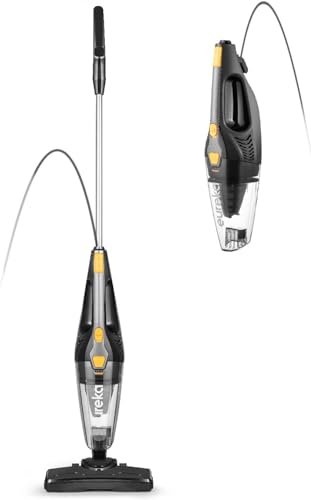
Eureka Blaze lightweight 3-in-1 stick vacuum with swivel steering and powerful suction for hard floors. Only 4 lbs with washable filter. Shop now!
LVP Floor Care Guide: Beyond Vacuuming
Choosing the right vacuum is step one. A complete LVP care routine protects your floor’s wear layer and keeps it looking new for decades.
How Often to Vacuum LVP Floors
- High-traffic areas (entryways, kitchens, hallways): Vacuum or dry-sweep every 1–2 days. Grit tracked in on shoes accumulates fastest in these zones and does the most damage when walked on or vacuumed over.
- Living rooms and bedrooms: 2–3 times per week is sufficient.
- All areas: Always vacuum before wet mopping. Mopping over loose grit turns it into a fine abrasive under the mop pad, accelerating wear layer damage.
Damp Mopping After Vacuuming
LVP can handle light moisture — it is one of its primary advantages over hardwood. A damp mop with clean water removes the fine dust and residue that vacuuming lifts but does not always capture. Use a flat microfiber mop, wrung out until barely damp. Do not let water pool on the floor or seep into seams between planks.
What Cleaners Are Safe for LVP
Use a pH-neutral floor cleaner specifically labeled safe for vinyl plank or LVP. Dilute per label instructions. Avoid:
- Vinegar — commonly recommended in DIY guides but slightly acidic; repeated use can dull the wear layer
- Steam mops — heat and moisture warp LVP cores and void most manufacturer warranties
- Wax-based polishes or oil soaps — these leave a residue that clouds the finish and attracts more grit
- Ammonia or bleach-based cleaners — can degrade the wear layer over time
- Abrasive scrubbers — the wear layer is thin; abrasive pads cut directly into it
Protect the Wear Layer Between Cleanings
- Place felt pads under all furniture legs. Metal or hard plastic furniture feet are among the most common sources of LVP scratches.
- Use walk-off mats at all exterior doors to capture grit before it reaches the LVP surface.
- Keep pet nails trimmed. Dog and cat nails at full length can mark the wear layer on lower-mil LVP.
- Avoid rolling heavy appliances directly across LVP without a protective plywood sheet underneath.
Frequently Asked Questions
Can I use a regular carpet vacuum on vinyl plank floors?
Only if it has a hard floor mode that fully disengages the brush roll. Carpet vacuums with always-on rotating beater bars should not be used on LVP. The spinning bristles scatter grit across the vinyl surface and can visibly scratch the wear layer over time.
Is it safe to use a robot vacuum on LVP floors?
Yes, with the right model. Look for robot vacuums with rubber or soft main brushes (not stiff nylon), rubber-tipped side brushes, and adjustable suction. Budget robot vacuums with hard plastic side brushes and no suction control can leave swirl marks on LVP after repeated daily passes.
Can I use a steam mop on LVP floors?
No. Steam is one of the worst things you can expose LVP to. The heat warps the core, the moisture seeps into seams and lifts edges, and the thermal stress causes planks to curl and separate. Steam also voids most LVP manufacturer warranties. Use a damp — not wet, not steam — microfiber mop instead.
What is the difference between LVP and LVT for vacuuming purposes?
LVP (luxury vinyl plank) mimics wood planks and typically comes in long rectangular pieces. LVT (luxury vinyl tile) mimics stone or tile and usually comes in square or rectangular formats. From a vacuuming standpoint they are essentially identical — both have a vinyl wear layer that responds to the same risks and requires the same care.
My LVP floors are already scratched. Can I fix them?
Shallow surface scratches on LVP can sometimes be disguised with a manufacturer-approved LVP repair kit — a tinted wax or composite filler that fills and colors the scratch. However, unlike hardwood, LVP cannot be sanded or refinished. Deep scratches that go through the wear layer and into the print layer are permanent; the affected planks must be replaced. Prevention — starting with the right vacuum — is the only reliable strategy.
Why does vinyl plank floor scratch if it is more durable than hardwood?
LVP is more durable than hardwood in terms of moisture resistance and dent resistance, but its wear layer is still a thin synthetic coating that abrasives can cut through. Hardwood can be sanded and refinished multiple times as it shows wear; LVP cannot. The durability comparison is real, but it refers to different types of stress. Grit abrasion remains a genuine risk for LVP, especially on lower-mil wear layers.
Do I need a special vacuum attachment for LVP?
A soft brush attachment or a dedicated hard floor tool (a flat, brush-free suction tool) is ideal for LVP. Avoid using crevice tools or turbo brush attachments directly on the floor surface. For baseboards and edges, a soft dusting brush keeps the cleaning gentle and scratch-free.
Final Thoughts
Vinyl plank floors are an excellent investment — moisture-resistant, visually convincing, and durable under the right conditions. Protecting that investment comes down to consistency: daily or near-daily removal of the grit and debris that accumulate on the surface before they get ground in by foot traffic or the wrong vacuum.
The Shark Navigator NV360 is our top all-around pick for LVP, combining true bare floor mode with lift-away versatility. The Eureka WhirlWind NEN110A gives you canister convenience with 43,000+ reviews behind it. The Bissell Featherweight 2033M is the lightest and simplest daily driver in the group. The eufy Omni C20 automates daily grit removal so you never have to think about it. And the Eureka Blaze 3-in-1 proves you do not have to spend a lot to get a vacuum designed with hard floors in mind.
Pair the right vacuum with a pH-neutral cleaner, felt furniture pads, and door mats — and your LVP floors will look as good years from now as they do on install day.
Shark Navigator Lift-Away NV360 delivers powerful suction with HEPA filtration and swivel steering. Perfect for pet hair and allergens. See full expert review.
Ready to Find Your Perfect Vacuum?
Browse our expertly reviewed vacuum cleaners and make an informed decision
Browse All Vacuums