Can You Vacuum Dirt Off Carpet? The Right Way to Do It (and When Not To)
Vacuuming dirt off carpet is not as straightforward as it seems. Wet dirt, dry dirt, and tracked-in mud each require different approaches. Here is what actually works.
Table of Contents
The short answer is yes — you can vacuum dirt off carpet. The longer answer is that whether vacuuming works, and how completely it works, depends heavily on the type of dirt, how long it has been on the carpet, and which vacuum you use.
Dirt is not a single substance. What we call “dirt” on carpet is typically a combination of soil particles, organic matter, mineral grit, and sometimes moisture. Dry mineral soil vacuums easily with a decent upright. Mud — soil mixed with water — is a completely different problem that cannot and should not be vacuumed while wet. Fine clay-based soil settles deep into carpet pile and requires motorized agitation to extract effectively. Sand and coarse grit are heavy enough to resist weak suction.
This guide addresses each dirt type, the correct approach for each, and which vacuums provide the most complete dirt extraction from carpet. If you have tracked in mud specifically, the article on mud on carpet covers that scenario in more detail — this guide focuses on the broader question of vacuuming dirt from carpet effectively.
Dry Dirt vs. Wet Dirt: The Rule That Changes Everything
The single most important rule for vacuuming dirt from carpet:
Do not vacuum wet dirt or mud.
When soil is wet, its particles bind together and to carpet fibers through the action of clay minerals and organic matter. Vacuuming wet soil does not extract it — it smears it deeper into the pile, distributes it across a larger area of carpet, and forces the clay particles into the fiber structure where they are much harder to remove once dry. The suction force does not separate wet clay particles from carpet fibers; it pushes them further in.
Wet dirt must be allowed to dry completely before vacuuming. For a small amount of tracked-in mud, this typically takes two to four hours at room temperature with good airflow. For a larger wet debris field, a fan pointed at the area accelerates drying. Once the dirt is completely dry — no visible moisture, the surface is dry to the touch, and the dirt has a matte rather than wet appearance — vacuuming is effective.
Dry dirt vacuums very effectively when the right vacuum is used. Mineral soil, sand, and dried clay particles are held in the carpet pile only by gravity and static charge — a strong motorized vacuum extracts them efficiently with minimal passes. The challenge with dry dirt is extracting it from deep in the pile rather than just collecting the surface layer.
Why Some Vacuums Leave Dirt Behind in Carpet
Many vacuum owners have experienced the frustration of multiple passes over a dirt area with diminishing returns — the vacuum picks up the obvious surface layer but seems unable to reach deeper debris. This is not necessarily a suction problem. It is often a brush agitation problem.
Dirt particles that have penetrated to the carpet backing level are held in place by the surrounding fiber structure. Suction applied vertically from above (the direction a vacuum works) must physically pull these particles upward through the fiber matrix. At the base of carpet pile, the fiber density is highest and the resistance to vertical extraction is greatest.
The effective solution is not simply more suction — it is mechanical agitation. A motorized brushroll that rotates within the carpet pile physically loosens dirt particles from the fibers and the backing, bringing them up from deep pile levels where suction alone can then extract them. This is why motorized brushrolls are not optional for deep dirt extraction from carpet. A vacuum with suction-only hard floor nozzle on carpet will collect surface dirt but leave deep-pile dirt largely untouched.
The complementary factor is brushroll speed relative to pile height. A brushroll running too fast on high pile carpet can compact dirt deeper into the pile rather than loosening it. The correct approach is medium brushroll speed at the appropriate height for the pile depth.
Dry Dirt: Step-by-Step Technique for Complete Extraction
Wait for complete dryness. If there is any question about moisture content, wait longer. A visually dry surface can still have moisture-bonded clay particles in the lower fiber layers.
Shake or beat the rug before vacuuming (if possible). Area rugs that can be removed should be taken outside and beaten against a railing or hung over a clothesline and struck with a broom handle. This brings deep-pile dirt to the surface where vacuuming is most effective. It also removes the volume of loose dry dirt that would otherwise go directly into your vacuum and load the filter and bin.
Set the brushroll height correctly. The brushroll should contact the pile tips without pressing down into the pile. If the carpet compresses visibly under the vacuum head, the height is set too low.
Vacuum slowly. The single most common reason a vacuum leaves dry dirt behind is speed. Moving the vacuum quickly across a dirty carpet collects the surface layer only. Moving at half speed — approximately the pace of a slow walk — allows the brushroll agitation to reach deeper into the pile and the suction to extract loosened debris.
Make multiple passes in different directions. A first pass in one direction is followed by a second pass perpendicular to it. The second pass agitates fibers that the first pass flattened, exposing dirt at the base of those fibers. For heavily soiled carpet, three to four passes in alternating directions provide progressively more complete extraction.
Focus on the borders. Dirt accumulates at the edges of rugs and at wall-to-floor intersections where foot traffic compacts it. Use the crevice tool or edge cleaning setting along carpet borders for debris the main brushroll misses.
The 5 Best Vacuums for Dirt on Carpet
1. Dyson Ball Animal 3 Extra — Best Overall for Dry Dirt Extraction
Best for: Deeply embedded dry soil, pet homes with tracked-in dirt, high-pile carpet
For deeply embedded dry dirt in carpet, the Dyson Ball Animal 3 Extra is the strongest performer. The direct-drive cleaner head drives the brushroll into carpet pile with more mechanical force than fan-driven brush systems, generating the agitation needed to dislodge soil particles from the pile base. At 270 Air Watts, the suction level is well above the threshold needed to extract loosened debris efficiently.
The self-adjusting cleaner head automatically adjusts height as it moves between areas of different pile density — critically useful when you are vacuuming a dirty carpet with varying pile height or transitioning between carpet types. The radial root cyclone system maintains consistent suction as the bin fills, which matters for a full dirt extraction session where significant debris is being collected.
The Carbon Fiber Anti-Static Brushroll reduces the electrostatic attraction that causes fine soil particles to cling to synthetic carpet fibers — a subtle but real performance improvement for mineral soil on polyester or nylon carpet.
Pros:
- Direct-drive brushroll for maximum agitation force on embedded dirt
- 270 Air Watts of sustained suction
- Self-adjusting head for varied pile conditions
- Carbon fiber anti-static brushroll
- Radial root cyclone maintains suction through full bin
Cons:
- Premium price point
- Heavy for some users at 17.6 lbs
- Ball steering takes adjustment if coming from a straight-neck upright
2. Shark Navigator Lift-Away ADV — Best Mid-Range for Carpet Dirt
Best for: Mixed-pile carpet homes, budget-conscious buyers, regular tracked-in dirt maintenance
The Shark Navigator Lift-Away ADV is the strongest mid-range recommendation for dirt on carpet. The DuoClean PowerFins brushroll combines a spiral fin element that penetrates carpet pile for deep agitation with a front soft roller that captures surface debris thrown forward during brushroll rotation. This combination extracts embedded dirt more effectively than a single-element brushroll at this price point.
The Anti-Allergen Complete Seal with HEPA filtration contains fine soil dust within the vacuum system — relevant for dirt extraction sessions where significant fine mineral particles are being collected. The sealed system prevents fine soil from re-entering the room through the exhaust.
The Lift-Away feature allows the canister to detach for stair and above-floor cleaning with the powered brushroll tool — useful when dirt has been tracked up stairs as well as across the main floor.
Pros:
- DuoClean PowerFins for deep carpet dirt agitation
- HEPA with Anti-Allergen Complete Seal
- Lift-Away for versatile stair and above-floor dirt collection
- Self-cleaning brushroll reduces hair-and-debris tangle
- More accessible price than Dyson premium range
Cons:
- Less suction power than Dyson Animal range
- Canister tends to tip on thick rugs during Lift-Away mode
- Dust bin capacity moderate — requires emptying during heavy dirt sessions
3. Hoover WindTunnel Max Carpet Washer — Best for Wet Dirt Residue That Dry Vacuuming Cannot Fully Remove
Best for: Carpet with dried mud residue, stained carpet after soil cleanup, deep restorative cleaning
Hoover WindTunnel Max Carpet Washer
The Hoover WindTunnel Max is the recommendation for situations where dry vacuuming has not fully solved the problem — specifically, carpet where mud or soil has left staining or residue that remains even after thorough dry extraction. In these cases, the problem is not remaining dry debris but soil particles chemically bonded to carpet fibers through clay mineral adhesion. Dry vacuuming cannot break these bonds.
The WindTunnel Max’s carpet washing mode applies cleaning solution to the pile and simultaneously agitates with a motorized brushroll, breaking the clay-fiber bond and suspending the soil in solution. The suction extracts the dirty solution along with the loosened soil, leaving the carpet significantly cleaner than dry vacuuming alone can achieve.
Important protocol: vacuum the carpet thoroughly with a dry vacuum first, removing all loose dry soil. Then use the WindTunnel Max in wash mode on the stained or residue area. Using the washer without the initial dry vacuum pass first results in significantly less effective results — the loose soil should not be washed in, it should be vacuumed out first.
Pros:
- Addresses soil staining that dry vacuuming cannot resolve
- Washing mode breaks clay-fiber bonds
- Combined vacuum and wash in one machine
- Motorized brushroll agitates through full pile depth
Cons:
- Carpet must dry after washing — plan for several hours
- More complex maintenance than dry-only vacuums
- Not appropriate for wet dirt — dry vacuum first, always
- Bulkier and heavier than standard upright vacuums
4. Bissell PowerEdge Pet — Best for Fine Dirt Along Carpet Edges and Baseboards
Best for: Dirt accumulation at carpet borders, wall edges, transition strips
Bissell PowerEdge Pet Hardwood Floor Vacuum
Dirt accumulates at the edges of carpets and along baseboards at a rate disproportionate to the carpet field. Foot traffic compacts soil at carpet edges as people walk close to walls. The main brushroll of standard vacuums typically misses the last half-inch to inch of carpet along walls, leaving a line of compacted soil that accumulates session after session.
The Bissell PowerEdge Pet’s V-shaped suction path is designed specifically for edge debris collection on hard floors, but its hard-edged configuration also reaches carpet border zones that standard round or rectangular floorheads miss. Used as a supplementary tool along carpet borders after the main vacuum session, the PowerEdge picks up the accumulated edge dirt that standard vacuums leave behind consistently.
This is not a primary carpet vacuum — it is a specialist tool for the specific problem of dirt accumulation at carpet edges. Combined with any of the primary recommendations above, it addresses the complete carpet surface including the border zones.
Pros:
- V-shaped suction path reaches carpet edge zones
- Lightweight and easy to maneuver along baseboard
- Affordable complementary tool
- Picks up debris the main vacuum consistently misses
Cons:
- Not a primary carpet vacuum
- Limited to edge cleaning application
- No motorized brushroll for deep-pile dirt agitation
5. Roborock S8 Pro Ultra — Best Robot Vacuum for Ongoing Dirt Maintenance
Best for: Daily maintenance to prevent dirt buildup, homes with consistent tracked-in dirt patterns
For ongoing management of tracked-in dirt on carpet — preventing the buildup that turns a light daily soil deposit into a heavily embedded cleaning challenge — the Roborock S8 Pro Ultra is the strongest robot vacuum recommendation. Its dual rubber brushroll system provides more aggressive carpet agitation than most robot vacuums, and its 6000Pa suction is the highest in the robot vacuum category.
The S8 Pro Ultra’s carpet detection automatically boosts suction when transitioning from hard floor to carpet, ensuring that the brief encounter with carpet in a mixed-floor home gets the additional power needed for soil extraction rather than just surface collection.
For all-carpet homes, the S8 Pro Ultra handles daily light soil maintenance effectively, reducing the frequency and intensity of manual vacuuming needed. It does not replace a full manual session with a high-power upright — embedded deep-pile dirt requires the mechanical agitation force of a direct-drive brushroll that no current robot vacuum provides. But it prevents the accumulation that makes those manual sessions necessary so often.
Pros:
- 6000Pa suction — highest in robot vacuum category
- Dual rubber brushroll for carpet agitation
- Automatic carpet boost mode
- Daily automation prevents dirt accumulation
- Self-empty and auto-refill base reduces maintenance
Cons:
- Very high price point
- Cannot handle wet dirt
- Not a replacement for periodic deep-cleaning with upright
- Limited effectiveness on high-pile carpet
Common Mistakes When Vacuuming Dirt from Carpet
Vacuuming dirt when it is still wet. The most damaging mistake. Wet soil smeared into carpet fibers by vacuum suction is significantly harder to clean than either wet soil left to dry or dry soil vacuumed correctly. Always wait for complete dryness.
Moving the vacuum too fast. Speed is the enemy of deep carpet dirt extraction. The brushroll needs time in contact with each section of pile to agitate effectively. Fast passes collect surface dirt while leaving the embedded layer.
Using the wrong brushroll height. Too low compacts the brushroll against the pile and forces dirt in rather than lifting it out. Too high and the brushroll does not contact the pile deeply enough to agitate embedded debris. The correct height has the brushroll just contacting the pile tips with light resistance.
Skipping the pre-treatment for old set-in dirt. Dirt that has been in carpet for weeks or months has had time to compact and bond to fibers. Pre-treatment with a dry carpet powder or a light mist of carpet cleaning solution (followed by drying) loosens these bonds before vacuuming. Vacuuming without pre-treatment on old set-in dirt leaves much more behind.
Not checking and emptying the bin or bag frequently enough. A half-full bin or bag reduces suction noticeably. For a heavy dirt extraction session on significantly soiled carpet, check the collection container after each room and empty if it is more than two-thirds full.
Frequently Asked Questions
How long does dirt need to dry before I can vacuum it?
Visible mud or wet soil needs to dry until there is no visible moisture and the surface is completely dry to the touch. In typical home conditions (65-75°F, moderate humidity), this takes two to four hours for a small tracked-in area. A fan pointed at the area can accelerate this to one to two hours. For a larger wet area, plan for four to six hours or overnight.
Why does my carpet look dirty again after I vacuum it?
Several causes are possible. If dirt reappears within a day or two, the carpet may have deep-pile soil that the vacuum partially extracted but did not fully remove — subsequent foot traffic brings the residual soil back to the surface. If the carpet looked clean immediately after vacuuming but was dirty again the next morning, wicking is occurring — moisture in the backing caused lower-level soil to migrate upward through the pile as it dried. This wicking is common when carpets have been cleaned with excess water.
Does regular vacuuming actually extend carpet life?
Yes, significantly. Fine abrasive particles — mineral soil, sand, fine grit — act as sandpaper on carpet fibers every time foot traffic passes over them. Regular vacuuming removes these abrasives before they can wear the fiber structure. Carpet industry research consistently shows that carpets maintained with regular vacuuming (two to three times per week in high-traffic areas) outlast neglected carpets by substantial margins.
Can I use a steam cleaner instead of vacuuming for dirt?
A steam cleaner is not a vacuum. It applies moisture and heat to lift and kill surface contamination, but it does not physically extract debris. Using a steam cleaner on dirt without vacuuming first will wet and smear the dirt exactly as manual wet cleaning does. Always vacuum thoroughly before any wet cleaning method.
My vacuum leaves marks on my light carpet after vacuuming a dirty area. What is happening?
The brushroll is redistributing fine soil from the heavily soiled area across the cleaner areas it passes through. This is common when the brushroll is moving through a concentrated soil deposit at cleaning speed. The solution is to vacuum the heaviest soil area first, empty the bin, replace the filter if heavily loaded, then vacuum the surrounding area. Alternatively, use a slow first pass at reduced suction to collect the bulk of the soil deposit before the full-power cleaning pass.
Final Verdict
Yes, you can vacuum dirt off carpet effectively — with the right vacuum, the right technique, and the fundamental rule about moisture: never vacuum wet dirt.
For dry dirt extraction from carpet, the Dyson Ball Animal 3 Extra is the strongest performer. Its combination of direct-drive brushroll agitation and sustained suction handles embedded soil more completely than alternatives in its class.
For ongoing prevention of dirt accumulation, the Roborock S8 Pro Ultra handles daily maintenance automation that prevents light tracked-in soil from becoming a deep-pile cleaning problem.
And for the set-in soil residue that vacuum alone cannot fully address, the Hoover WindTunnel Max Carpet Washer breaks the dirt-fiber bond that only a wet cleaning approach can solve.
The technique you use matters as much as the equipment. Vacuum slowly, in multiple directions, at the correct brushroll height, and always after complete dryness. Those four factors together determine how much dirt actually comes out of the carpet.
Top Picks

Bissell CleanView XR cordless vacuum: 200W motor, 35-min runtime, tangle-free brush roll & 3-in-1 design. Top-rated stick vacuum for home. Shop now.

Bissell Featherweight stick vacuum weighs only 3 lbs and converts into 3 machines. Bagless design with crevice tool for carpet, hard floors, and furniture.

Bissell CleanView XR Pet 300W cordless stick vacuum with 40-min runtime, deep cleaning FurBrush, and removable battery. Expert review with full specs.

Bissell Featherweight 2033M is an ultra-lightweight 3-in-1 bagless stick vacuum for hard floors, carpet, and stairs. Converts to hand vac with crevice tool.
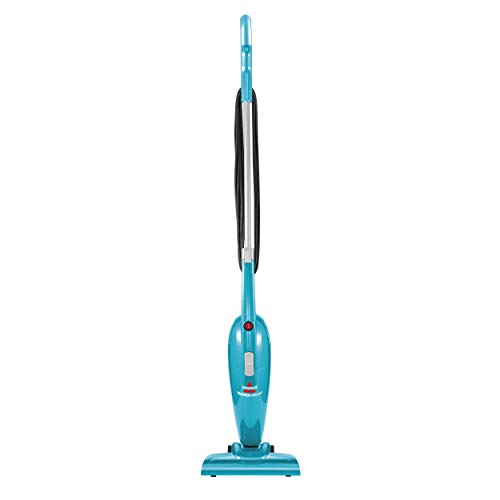
Bissell Featherweight 2033 lightweight stick vacuum converts to handheld. Bagless, corded, with crevice tool for carpets, hard floors, and stairs.
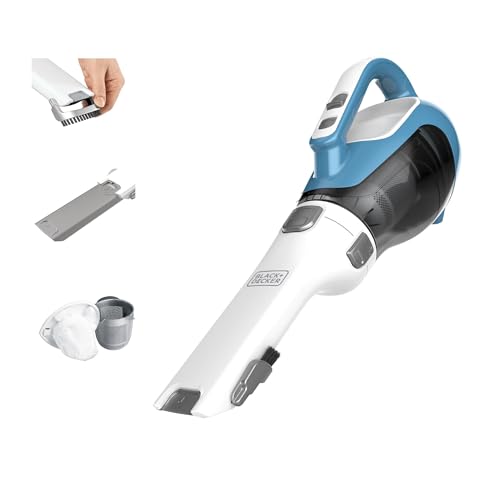
BLACK+DECKER Dustbuster AdvancedClean cordless handheld vacuum with cyclonic suction and 16V battery. Great for home and car. Read our expert review now.
Ready to Find Your Perfect Vacuum?
Browse our expertly reviewed vacuum cleaners and make an informed decision
Browse All Vacuums