Do You Still Need to Vacuum if You Have a Robot Vacuum?
Do you still need a regular vacuum with a robot? Honest answer from vacuum experts — what robots handle perfectly and where you still need to vacuum manually.
Table of Contents
Do You Still Need to Vacuum if You Have a Robot Vacuum?
It is the question every robot vacuum owner asks within the first week of ownership. You set up the schedule, the robot dutifully maps your floors, runs every morning while you drink coffee, and comes home to its dock like a good appliance. The floors look noticeably cleaner. You start wondering: do I even need to get the old vacuum out anymore?
It is an honest and reasonable question. You just spent $300 to $800 on a machine that cleans your floors automatically. The promise, implicit in every robot vacuum advertisement, is that you are buying back your time. So why would you also need to keep a full-size vacuum around?
The honest answer is this: most households still benefit from traditional vacuuming — but far less frequently than before. The robot vacuum does not eliminate the need for a manual vacuum. It changes the job description entirely. Your upright or canister vacuum stops being the thing you drag out every two days to maintain your floors, and becomes the deep-cleaning tool you use once every week or two. That is a real and meaningful shift. But the traditional vacuum does not go away.
Here is the full picture: what robots handle brilliantly, where they fall short, and how to build a cleaning strategy that gets the best from both.
What Robot Vacuums Actually Replace
Before getting into the limitations, it is worth being clear about what a robot vacuum genuinely eliminates from your cleaning routine.
Daily and Every-Other-Day Maintenance Vacuuming
The single biggest burden of traditional vacuuming is not the deep cleaning sessions — it is the constant maintenance passes. In most homes, especially homes with pets, children, or heavy foot traffic, surface debris accumulates quickly. Crumbs, dust, hair, and tracked-in dirt build up within 24 to 48 hours of your last vacuum session. Staying on top of that requires running the vacuum every day or every other day just to keep floors looking clean.
A robot vacuum on a daily schedule absorbs this entire workload. You no longer pull out the upright to maintain surface cleanliness. The robot handles it automatically, every day, without your involvement. For a two-pet household where floors were previously vacuumed every evening, this can eliminate 50 or more manual vacuuming sessions per month.
Pet Hair and Dust Accumulation Between Deep Cleans
Pet hair accumulates fast — faster than most owners realize until they let it build for a day or two. A shedding dog or cat can leave a visible film of fur on hardwood floors within hours during peak shedding season. A robot vacuum running daily attacks this accumulation before it becomes a visible or embedded problem.
The eufy Omni C20 Robot Vacuum and Mop (4.2 stars, 80,000+ reviews) captures this use case well. With 7,000Pa of suction, a self-washing mop pad, and an all-in-one station that empties the bin, washes the mop, and dries it automatically, it runs daily on hard floors and low-pile carpets with nearly zero owner input. Pet hair simply never gets a chance to accumulate.
Under-Furniture Dust Buildup
This is a category where robot vacuums outperform traditional vacuums entirely. Most upright vacuums cannot fit under sofas, low-clearance beds, or entertainment centers. Robot vacuums, typically 3 to 4 inches tall, clean these spaces on every cycle. Dust bunnies and pet hair that used to accumulate under furniture for weeks at a time simply do not build up in homes with a robot running regular cycles.

eufy Omni C20 robot vacuum and mop combo with auto emptying, washing, and drying station. 7000Pa suction and 3.35-inch low profile. See the full review!
Where You Still Need a Traditional Vacuum
Now for the honest part. Here are the cleaning scenarios where a robot vacuum cannot substitute for a traditional machine — and why.
Stairs
This is the most clear-cut limitation in the entire category. No consumer robot vacuum can clean stairs. The same anti-drop sensors that prevent robots from falling down staircases physically prevent them from accessing stair treads, risers, or the edges between steps. For a two-story home, every staircase in the building is entirely outside the robot’s operational area.
Stairs collect a surprising amount of dirt, pet hair, and debris — and they are one of the surfaces that benefits most from the agitation of a powered brush roll. If your home has stairs, you need a traditional vacuum with a hose and upholstery attachment, or a lightweight cordless stick, to clean them. There is no robotic workaround for this.
Above-Floor Surfaces: Upholstery, Drapes, and Furniture
Robot vacuums are floor tools. They operate exclusively on ground-level surfaces. Sofas, armchairs, curtains, drapes, mattresses, car interiors, and shelving are entirely outside their scope.
Upholstery collects significant amounts of pet hair, dander, crumbs, and dust. If you have a dog or cat that uses the furniture, upholstery cleaning is not an optional task. Drapes accumulate dust and allergens that need periodic vacuuming with an upholstery attachment. A traditional vacuum with above-floor tools handles all of this; a robot handles none of it.
The Shark Navigator Lift-Away NV360 (4.4 stars, 52,000+ reviews) is purpose-built for exactly this scenario. Its Lift-Away feature lets you detach the motorized canister pod for stair cleaning and above-floor work, while the included upholstery and crevice tools tackle sofas, drapes, and tight gaps that a robot cannot access. This is the kind of versatility that keeps a traditional vacuum relevant even in a robot vacuum household.
True Corners and Tight Edges
Most robot vacuums include side brushes designed to sweep debris from wall edges and corners into the suction path. Better models — particularly those with D-shaped designs or extended side brushes — do a reasonable job at edge cleaning. But the physics of a round or D-shaped robot mean that true 90-degree corner cleaning is inherently limited. The brush can reach into the corner, but the geometry prevents the robot from pressing into it with suction the way a traditional vacuum nozzle can.
In homes with a lot of right-angle corners and baseboards — which is to say, most homes — a periodic manual pass along the edges with a crevice tool or a stick vacuum makes a visible difference. This is not a task the robot needs to do daily. But it is a task that shows up if skipped for two or three weeks.
Deep Cleaning Thick and High-Pile Carpet
Robot vacuums perform well on hard floors and low-to-medium pile carpets. On thick, high-pile, or shag carpet, most robots begin to struggle. The brush geometry and suction angle are optimized for efficiency across large surface areas quickly — not for the slow, high-pressure, multi-pass agitation required to extract dirt that has worked its way deep into long carpet fibers.
If your home has thick carpet, periodic deep cleaning with a full-size upright remains necessary. The robot can maintain surface cleanliness on a daily basis — preventing new debris from embedding deeply — but it will not extract the compacted dirt already sitting at the base of the fibers. That requires a traditional machine with strong agitation and suction.
The Bissell CleanView Swivel Pet Upright Vacuum (4.4 stars, 105,000+ reviews) is a strong illustration of what a dedicated upright brings to thick carpet. Its triple-action brush roll loosens, lifts, and removes deeply embedded pet hair and dirt through active agitation — the kind of mechanical action no robot can replicate. Scatter-free technology keeps debris from spreading on hard floors during the pass, and swivel steering makes navigating furniture-heavy rooms efficient.
Areas Too Cluttered for the Robot to Navigate
Robot vacuums require a reasonably clear floor to operate effectively. Cables, socks, small toys, shoe piles, backpacks on the floor, charging cords — all of these are potential obstacles that can stop a robot mid-cycle, wrap around the brush roll, or cause the robot to detour around entire sections of the room.
In practice, most households find that keeping floors robot-ready requires a pre-run tidy. For households with children or simply unpredictable floor situations, this prep either has to happen consistently or sections of the floor go uncleaned. When a room is too cluttered for a robot to handle effectively, a quick pass with a stick vacuum is faster, simpler, and more reliable.
Immediate Big Messes
Spilled cereal. A knocked-over litter box. A tracked-in muddy paw print. A bag of rice that went wrong. These are not scenarios where you reschedule your robot vacuum. These are grab-a-vacuum-and-deal-with-it-now moments.
Robot vacuums run on schedules. They are not grab-and-go tools. A corded upright, cordless stick, or handheld vacuum handles immediate reactive cleaning in a way that a robot fundamentally cannot. This is true regardless of how capable or expensive the robot is — it is a structural limitation of the autonomous cleaning model.
For reactive spot cleaning, the iRobot Roomba 694 (4.2 stars, 25,000+ reviews) illustrates the contrast clearly. It excels at scheduled maintenance and learns your cleaning preferences over time via the iRobot OS — but you cannot grab it to deal with a spill the way you grab a stick vacuum. The two tools serve genuinely different purposes.
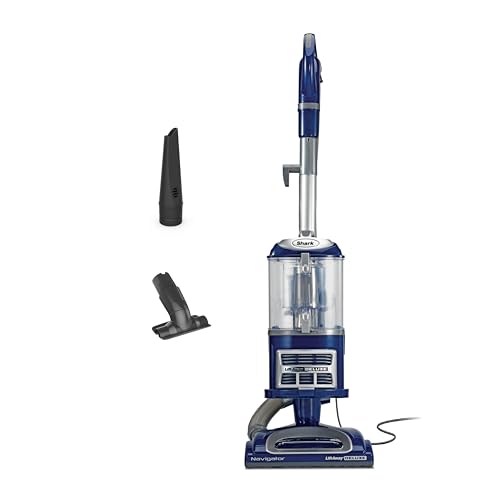
Shark Navigator Lift-Away NV360 delivers powerful suction with HEPA filtration and swivel steering. Perfect for pet hair and allergens. See full expert review.
The Optimal Two-Vacuum Strategy
The most effective cleaning setup for most households is not a robot vacuum instead of a traditional vacuum — it is a robot vacuum and a traditional vacuum, each used for the job it is best suited for.
Here is what that looks like in practice:
Robot vacuum: daily or every-other-day maintenance Run your robot on a schedule that matches your household’s debris generation. Single adult in an apartment with no pets: every two to three days is fine. Family with two dogs on hardwood floors: daily, without question. The robot handles surface accumulation so it never builds into a visible problem. You do not need to think about it. It just runs.
Traditional vacuum: weekly or biweekly deep cleaning With the robot handling daily maintenance, your full-size upright or canister vacuum is no longer needed for surface maintenance passes. Use it once a week or once every two weeks for the jobs the robot cannot do: stairs, upholstery, drapes, corners, thick carpet deep cleaning, and any areas the robot missed or could not access. A cleaning session that previously took 45 minutes every two days now takes 30 minutes once a week — and covers the territory the robot cannot reach.
This division of labor is where the genuine time savings of robot vacuum ownership actually materialize. The robot is not a replacement for the traditional vacuum — it is a partner that takes on the most time-consuming, repetitive part of the cleaning workload, freeing the traditional vacuum for the periodic deep work it was built for.
Recommended Products for This Strategy
For the Robot Role: Daily Maintenance
eufy Omni C20 Robot Vacuum and Mop — 4.2 stars, 80,000+ reviews. The all-in-one station empties the bin, washes and dries the mop pad, and manages itself between runs. Ideal for daily autonomous operation with minimal owner involvement. 7,000Pa suction handles hard floors and low-pile carpets confidently.
iRobot Roomba Vac Q0120 — 4.0 stars, 51,000+ reviews. Methodical row-by-row navigation with 120 minutes of runtime and auto-recharge handles large floor plans systematically. The 3-Stage Cleaning System adapts between carpet and hard floors without manual input.
Shark IQ RV1001AE Self-Empty Robot Vacuum — 4.2 stars, 27,000+ reviews. Home mapping with room-by-room navigation lets you schedule specific rooms for specific days. The 45-day bagless self-emptying base means you can run it for weeks without touching it.
iRobot Roomba 694 — 4.2 stars, 25,000+ reviews. The entry-level choice for daily maintenance on hard floors. Learns cleaning habits over time, integrates with Alexa, and handles pet hair reliably without the premium price of a self-emptying model.
For the Traditional Vacuum Role: Deep Cleaning
Bissell CleanView Swivel Pet Upright Vacuum — 4.4 stars, 105,000+ reviews. The most-reviewed upright vacuum in this dataset for good reason. Triple-action brush roll for embedded pet hair, scatter-free hard floor technology, and swivel steering for furniture-heavy rooms. Excellent weekly deep-cleaning machine at a price that leaves room in the budget for a capable robot.
Shark Navigator Lift-Away NV360 — 4.4 stars, 52,000+ reviews. The Lift-Away detachable pod is exactly what robot vacuum owners need: a way to clean stairs, under furniture, and above-floor surfaces without buying a separate tool. HEPA filtration captures 99.9% of allergens — essential for households where the robot stirs up fine particles daily.
Shark Rotator NV752 Powered Lift-Away TruePet — 4.4 stars, 44,000+ reviews. The powered version of the Lift-Away design means the brush roll stays active even when the canister is detached, giving you full suction and agitation for stair cleaning and upholstery work. HEPA-sealed filtration and a TruePet motorized brush head make it the stronger choice for high-pet-traffic homes.
eufy Omni C20 robot vacuum and mop combo with auto emptying, washing, and drying station. 7000Pa suction and 3.35-inch low profile. See the full review!
How Often Should You Still Vacuum Manually?
The honest answer varies by household, but here is a practical framework:
Hard floors, no pets, 1-2 people: Robot vacuum every 2-3 days. Manual vacuum once every 2 weeks for edges, upholstery, and above-floor surfaces.
Mixed floors, 1-2 pets: Robot vacuum daily. Manual vacuum once a week — stairs, thick rugs, upholstery, and a detail pass along walls and corners.
Thick carpet throughout: Robot vacuum daily to prevent surface buildup. Manual vacuum twice weekly with a high-agitation upright to maintain deep carpet cleanliness. The robot alone is not sufficient for thick carpet.
Family with children, cluttered floors: Robot vacuum on a schedule when floors are prepped. Manual vacuum on demand for immediate messes and the areas the robot consistently misses. Weekly planned deep clean for stairs and above-floor.
The common thread: the robot handles frequency, the traditional vacuum handles depth and reach. Neither replaces the other.
Frequently Asked Questions
Can I completely stop using a traditional vacuum if I have a robot?
For most households, no. Stairs, above-floor cleaning, thick carpet deep cleaning, and immediate messes all require a traditional vacuum. The only households that could plausibly go robot-only are those with all hard floors, no stairs, no upholstered furniture that needs regular cleaning, and pets or occupants who do not generate large or immediate messes. That describes a small minority of homes.
How much less frequently will I need to vacuum manually with a robot?
Most robot vacuum owners report reducing manual vacuuming frequency by 60 to 80 percent. Sessions that previously happened every 1-2 days for maintenance shift to once a week or less, and the sessions themselves are shorter because surface debris has already been handled.
Do robot vacuums work on carpet?
Most robot vacuums work on low-to-medium pile carpet reasonably well for surface maintenance. On high-pile, shag, or thick carpet, performance degrades significantly. Robot vacuums are generally not effective at deep cleaning any type of carpet — that requires the agitation of a full-size upright.
Should I run the robot vacuum before or after manually vacuuming?
For routine maintenance, run the robot on its regular schedule. When you do a manual deep clean, run the robot first to clear surface debris, then follow up with the upright for deep agitation on carpets and a full above-floor pass. This maximizes efficiency.
What about robot vacuums that also mop? Does that change anything?
Combination robot vacuum and mop units handle a slightly broader surface maintenance role — particularly useful on hard floors where mopping after sweeping is part of the routine. However, they do not change the fundamental limitations: no stairs, no above-floor cleaning, no deep carpet agitation. A robot mop is still a maintenance tool.
My robot vacuum seems to miss the same spots every time. Is that normal?
Yes. Robots with older random-bounce navigation miss corners and edges regularly. Robots with laser or camera-based systematic navigation miss these areas less often, but no robot eliminates the issue entirely. A periodic edge and corner pass with a crevice tool addresses what the robot consistently leaves behind.
Which is better: an expensive robot vacuum or an expensive traditional vacuum?
It depends on your primary pain point. If the burden in your household is the constant frequency of maintenance vacuuming — floor debris building up every day — then the robot vacuum addresses the more significant problem. If you have thick carpet requiring regular deep cleaning, or a multi-story home with significant stair area, investing in a capable traditional vacuum first makes more sense. Many experienced owners would argue: buy a capable mid-range version of each rather than a premium version of only one.
The Bottom Line
A robot vacuum is not a traditional vacuum replacement. It is a maintenance appliance that absorbs the most repetitive part of floor cleaning — the daily and every-other-day passes to stay ahead of surface accumulation. That is genuinely valuable, and for many households it translates into a dramatic reduction in how often the traditional vacuum needs to come out.
But stairs, above-floor surfaces, thick carpet deep cleaning, corners and edges, cluttered areas, and immediate messes all remain in the traditional vacuum’s domain. A home with only a robot vacuum is a home with dirty stairs, dusty upholstery, and no plan for spilled cereal.
The smart strategy is to let each tool do what it does best. Schedule the robot for daily maintenance. Reserve the traditional vacuum for the weekly or biweekly deep clean and the jobs the robot structurally cannot do. Between the two, you get cleaner floors with significantly less total effort than relying on either one alone.
Ready to Find Your Perfect Vacuum?
Browse our expertly reviewed vacuum cleaners and make an informed decision
Browse All Vacuums