Dreame X60 Ultra Review 2026: Flagship Robot Vacuum Tested
Dreame X60 Ultra review — in-depth analysis of Dreame's flagship robot vacuum covering suction, AI obstacle avoidance, and hot water mopping performance.
Table of Contents
- Dreame X60 Ultra Review 2026: The Robot Vacuum That Wants to Do Everything Itself
- Specifications at a Glance
- The Ultra-Thin Profile: Why 3.13 Inches Matters More Than You Think
- Suction Performance: 35,000Pa Explained
- AI Navigation and Obstacle Avoidance: 280+ Object Types
- Mopping System: Dual Omni-Scrub with Hot Water
- The 10-in-1 Base Station: The Core of the Autonomous Experience
- Dreame X60 Max Ultra vs Roborock S8 MaxV Ultra: The Real Competition
- Real-World Performance by Home Type
- Who Should Buy the Dreame X60 Max Ultra
- Value Assessment
- Frequently Asked Questions
Dreame X60 Ultra Review 2026: The Robot Vacuum That Wants to Do Everything Itself
There is a version of robot vacuum ownership that most people know: you press a button, the machine bumbles around for an hour, it gets stuck under the couch, you fish it out, and then you manually mop the kitchen because the robot’s damp cloth barely qualifies as “wet.” The Dreame X60 Max Ultra is a direct rejection of that experience.
Dreame’s current flagship robot vacuum pushes the boundaries of what an autonomous floor cleaner can achieve. It combines an ultra-slim 3.13-inch profile with 35,000Pa of suction, a dual AI camera obstacle avoidance system that recognizes over 280 distinct object types, a dual spinning mop that applies 15N of downward pressure with 40°C warm water, and a 10-in-1 base station that washes the mops in 100°C boiling water, hot-air dries them, auto-empties the dustbin for up to 100 days, and manages both clean water and cleaning solution autonomously.
That is not a feature list. That is a comprehensive cleaning system that happens to live in your hallway cupboard.
This review covers every meaningful specification, explains what those numbers mean in practice, compares the X60 Max Ultra against its principal competitor at the Roborock flagship tier, identifies who this robot genuinely suits, and addresses the legitimate reasons you might look elsewhere.
Specifications at a Glance
| Feature | Dreame X60 Max Ultra |
|---|---|
| Model | RLX87DE |
| Suction Power | 35,000Pa |
| Robot Height | 3.13 inches (7.95cm) |
| Robot Footprint | 45.7 x 45.7 cm |
| Navigation | Dual AI cameras + proactive illumination |
| Obstacle Recognition | 280+ object types |
| Mop Pressure | 15N |
| Mop Spin Speed | 230 RPM |
| Mop Water Temperature | 104°F (40°C) |
| Dock Wash Temperature | 212°F (100°C) |
| Dust Disposal Capacity | 100 days |
| Dock Functions | 10-in-1 |
| WiFi | 2.4GHz only |
| Rating | 4.6/5 (49 reviews) |
The Ultra-Thin Profile: Why 3.13 Inches Matters More Than You Think
Before discussing suction or mopping, the physical dimension that affects the X60 Max Ultra’s usefulness in most homes is its height. At 3.13 inches (7.95cm), this is one of the thinnest robot vacuums currently available. That number determines how much of your home the robot can actually access.
Most sofas sit between 3 and 5 inches off the floor. Most beds sit between 4 and 7 inches. Most entertainment units and TV cabinets have lower clearance than their owners realize. Every space the robot cannot enter is a space that accumulates dust, pet hair, and allergens undisturbed — and which you must clean manually.
The X60 Max Ultra’s ultra-slim body means it slides under furniture that would stop competing vacuums cold. In practical terms, this translates to cleaner floors under your sofa, fewer manual spot-cleaning sessions, and meaningfully better indoor air quality over time as the hidden dust reservoirs are regularly cleared rather than left to accumulate.
Dreame achieved this slim profile without sacrificing the motor or sensor hardware found in taller machines. The engineering challenge is significant — fitting a high-torque motor, dual cameras, LiDAR, battery, and dustbin into a 3.13-inch chassis requires genuinely precise component placement. The result is a machine that cleans more of your home than its competitors, not because of its specs sheet but because of its geometry.
Suction Performance: 35,000Pa Explained
The headline suction figure of 35,000Pa places the Dreame X60 Max Ultra at the upper end of what any consumer robot vacuum currently delivers. To contextualise this number: a typical mid-range robot vacuum operates at 2,000–4,000Pa. Premium models from two years ago topped out around 10,000–12,000Pa. The current Roborock flagship, the S8 MaxV Ultra, delivers approximately 10,000Pa. The X60 Max Ultra triples that.
What does this mean in practice? Suction power determines how effectively a vacuum lifts debris from carpet pile, reaches into floor texture, and captures fine particulates like pet dander and construction dust that lighter machines merely redistribute.
The 35,000Pa figure is achieved through a retractable pressure plate that creates a semi-sealed chamber around the DuoBrush system when the robot is running. This concentrates suction directly at the brush interface rather than allowing it to disperse — the difference between a vacuum that pulls debris up and one that just blows it sideways.
The DuoBrush configuration itself — dual counter-rotating brushes — delivers three times the cleaning contact of a single main brush design. Each brush rotates against the other, creating a mechanical agitation effect that loosens embedded dirt before the suction lifts it. For homes with medium-pile carpet, pet hair that has worked its way into fabric, or high-traffic kitchen floors with ground-in grit, this combination of mechanical agitation and high suction produces noticeably cleaner results than single-brush alternatives.
It is worth noting that in everyday use on hard floors with light debris, you will not perceive the difference between 10,000Pa and 35,000Pa. Both are more than adequate for surface cleaning. The gap becomes meaningful on carpet, on textured tile grout, and when dealing with the kind of debris that accumulates between regular cleaning sessions.
AI Navigation and Obstacle Avoidance: 280+ Object Types
Robot vacuum navigation has two separate problems: building an accurate map of your home, and avoiding the things that should not be cleaned.
The Dreame X60 Max Ultra uses a dual AI camera system with proactive illumination — built-in lighting that ensures the cameras can function in low-light conditions and at night. The onboard AI has been trained to recognize and respond to more than 280 distinct obstacle types, compared to 108 on the competing Roborock S8 MaxV Ultra.
The practical significance of this difference is nuanced. The most important obstacles to recognize are the ones that will damage the vacuum or cause it to become stuck: charging cables, thin rugs, power strips, pet waste, socks, and small toys. Beyond these high-priority categories, additional recognition granularity means the robot makes smarter routing decisions — stopping farther from fragile objects, using different avoidance trajectories around different obstacle types, and recovering from unexpected situations more reliably.
The proactive illumination is more important than it might appear. Competing camera-based obstacle systems often fail at dusk or in rooms where the lighting is inconsistent. Because the X60 Max Ultra illuminates its path independently, it performs equally well at 2am as it does at noon — relevant for users who schedule overnight cleaning runs.
Fall detection is rated up to 3.15 inches, meaning the robot correctly identifies ledges, steps, and level changes of that magnitude and stops rather than tumbling. This handles the vast majority of residential transitions including split-level flooring and raised room dividers.
The MopExtend RoboSwing feature deserves specific mention as a navigation innovation. Round robot vacuums have a geometric limitation: they cannot reach right-angle corners. The MopExtend system physically extends the mop pad outward during edge-cleaning passes, reaching into corners that the robot’s circular body cannot access. Complementing this is the SideReach side brush extension, which brings the vacuum’s cleaning path right to the baseboard on wall-following passes. These two features collectively eliminate the strip of uncleaned floor that most robot vacuums leave behind along every wall and in every corner.
Mopping System: Dual Omni-Scrub with Hot Water
Most robot vacuum mopping systems apply a thin film of water through a passive damp cloth. They are adequate for removing surface dust on sealed hardwood but insufficient for lifting dried spills, removing grease from kitchen tile, or cleaning textured surfaces. The Dreame X60 Max Ultra takes a substantially different approach.
Its dual omni-directional scrub mops spin at 230 RPM while applying 15N of downward pressure — the mechanical equivalent of a person scrubbing a floor with moderate effort rather than passively wiping. The spin direction is omnidirectional, meaning the mop pads rotate and flex to conform to uneven surfaces including tile grout, textured stone, and embossed wood plank flooring.
The water delivery system heats the cleaning water to 104°F (40°C). Hot water is measurably more effective than cold water at dissolving grease, lifting dried food residue, and removing the sticky film that builds up on kitchen and bathroom floors. This is not a marginal improvement — the combination of thermal energy and mechanical agitation produces cleaning results that genuinely rival manual mopping on most hard floor surfaces.
Critically, the robot automatically lifts its mop pads when it detects carpet. This prevents the wet mops from dampening carpet fibers while vacuuming — a genuine problem on hybrid-floor homes where the robot transitions from tile to area rug within the same cleaning run.
The 10-in-1 Base Station: The Core of the Autonomous Experience
The base station is where the Dreame X60 Max Ultra’s “hands-free” claim is substantiated or exposed. It has to do ten things reliably for the premium price to be justified.
Self-emptying is the baseline expectation for any premium robot vacuum today. The X60 Max Ultra empties its dustbin into a sealed bag that holds 100 days’ worth of debris — approximately three months before you need to replace it. The bag seal is important: it prevents the collected dust from re-entering the air during disposal, which matters particularly for allergy and asthma sufferers.
Mop washing with 212°F (100°C) water is the specification that separates this dock from virtually every competitor. The Roborock S8 MaxV Ultra washes mops with water heated to approximately 80°C (176°F). The X60 Max Ultra uses fully boiling water at 100°C, which kills a broader range of bacteria and removes more stubborn debris from the mop pad fibers. After a mopping session on a kitchen floor, the pads collect grease, food particles, and bacteria. Washing them in boiling water ensures the robot starts every subsequent mopping session with genuinely clean pads rather than redistributing yesterday’s grime.
Hot-air drying follows the wash cycle. Wet mop pads left in a dock develop mildew within 24–48 hours in most home environments — producing an unpleasant odor that the robot then carries throughout your home during its next run. The hot-air dryer eliminates this by fully drying the pads before storage. In practice, this means the dock never develops that sour smell that plagues competitors without drying capability.
Dual solution management allows the station to use both plain water and a dedicated cleaning solution in separate compartments, applying each selectively based on the cleaning zone or mode selected in the app.
Auto-refill replenishes the robot’s onboard water tank from the station’s reservoir, meaning multi-room mopping runs can be completed without the robot returning to the dock manually to refill.
The physical footprint of the 10-in-1 dock is larger than a standard charging station — approximately 66cm in height and requiring a wall-adjacent floor space of roughly 35x40cm plus clearance for the robot to dock and undock. This is worth planning for before purchase.
Dreame X60 Max Ultra vs Roborock S8 MaxV Ultra: The Real Competition
At the $1,000–$1,400 price tier, the Roborock S8 MaxV Ultra is the X60 Max Ultra’s primary competitor. This comparison matters because they are close enough in price to be direct substitutes, yet differ meaningfully in their engineering priorities.
Where the Dreame X60 Max Ultra wins:
- Higher suction: 35,000Pa vs approximately 10,000Pa on the Roborock
- Wider obstacle recognition: 280+ types vs 108 types
- Slimmer profile: 3.13 inches vs approximately 3.5–3.8 inches for the Roborock
- Hotter mop wash: 100°C vs 80°C in the dock
- MopExtend RoboSwing for genuine corner coverage
- Dual camera system with active illumination for low-light performance
Where Roborock holds advantages:
- More mature LiDAR-based navigation with a longer reliability track record
- More polished app ecosystem with SmartPlan 2.0 adaptive scheduling
- Broader third-party smart home integration
- Longer brand history provides more community support and firmware longevity
- AdaptiLift chassis provides height-adjustable clearance on some models
The honest summary: On specification paper, the Dreame X60 Max Ultra outclasses the Roborock at nearly every cleaning metric. In long-term software reliability, app polish, and ecosystem maturity, Roborock maintains an edge. If your priority is cleaning performance and you are comfortable with a newer brand’s app, the Dreame wins on merit. If you value platform stability and smart home depth, Roborock’s maturity is worth paying for.
Real-World Performance by Home Type
Large homes (2,000+ sq ft, multi-level): The X60 Max Ultra’s navigation system builds persistent multi-room maps and handles room transitions well. The auto-refill dock means mopping large surface areas in a single session is feasible without manual intervention. Battery management on large-area runs may require the robot to return to dock for mid-session recharging, which the system handles automatically. For genuinely large homes, this robot is among the most capable options available.
Open-plan apartments with mixed flooring: The automatic carpet-lift feature and hardwood-to-tile transitions are handled smoothly. The slim profile allows cleaning under low furniture in living areas and bedrooms in a single pass. This is probably the ideal home type for the X60 Max Ultra’s capabilities.
Homes with pets: The DuoBrush system’s counter-rotating design significantly reduces hair tangling, which is the primary maintenance complaint among pet owners with single-brush robots. The 35,000Pa suction lifts embedded pet hair from both carpet and the seams in hardwood flooring. The 280+ obstacle recognition includes pet waste detection — a critical feature for dog owners that prevents the robot from spreading accidents across the floor. The 100-day dust bag capacity means the dock does not need emptying after every pet-heavy session.
Homes with young children: Obstacle recognition for small toys, Lego, clothing, and other floor-level clutter means fewer stuck incidents and less potential damage to both robot and belongings. The no-go zone mapping in the app allows you to exclude areas with persistent clutter (a playroom during active hours, for instance) from scheduled cleaning runs.
Homes with textured tile or grouted floors: The 230 RPM spinning mops with 15N downward pressure and 40°C water are specifically effective in these environments. Flat-mop robots that simply drag a wet cloth produce minimal results on grouted surfaces; the mechanical scrubbing action of the omni-scrub pads reaches into grout channels.
Who Should Buy the Dreame X60 Max Ultra
This robot is a strong match if you:
- Have 1,500+ sq ft of mixed hard floors and low-to-medium carpet
- Own pets that shed, particularly dogs with heavy coats
- Have low-clearance furniture throughout the home
- Want mopping performance that genuinely replaces manual mopping rather than just complementing it
- Value minimal maintenance — the 100-day dust bag and autonomous mop washing minimize weekly interaction
- Are comfortable spending $1,000+ for genuine hands-free floor cleaning
Consider alternatives if you:
- Have a predominantly carpeted home with minimal hard floors (the mopping premium is wasted)
- Have only 5GHz WiFi and are unwilling to adjust your router settings
- Have very limited floor space near outlets for the large base station
- Prioritize long-term app ecosystem stability over cutting-edge hardware specs
- Are budget-constrained — the Dreame X50 Ultra or X30 Ultra deliver strong performance at lower price points
Value Assessment
The Dreame X60 Max Ultra is not inexpensive. It sits at the top tier of the consumer robot vacuum market, and the price reflects the engineering complexity of both the robot and the autonomous dock. The question is not whether it is expensive — it is — but whether the premium is justified.
Against comparable premium alternatives, the hardware specifications favor the Dreame at a price that is generally competitive with the Roborock flagships. The 35,000Pa suction, 100°C mop washing, and 280+ obstacle recognition are not marketing numbers with no real-world relevance: they translate into visibly cleaner floors, less maintenance time, and fewer manual interventions compared to mid-range alternatives.
If your alternative is spending $400–600 on a mid-range robot vacuum plus continuing to manually mop your floors, the math on the X60 Max Ultra over a 3–5 year ownership period is more defensible than the purchase price initially suggests. The genuine test is whether autonomous mopping replaces manual mopping in your home — and for hard-floor-dominant households, the evidence strongly suggests it can.
View the Dreame X60 Max Ultra product details and current pricing
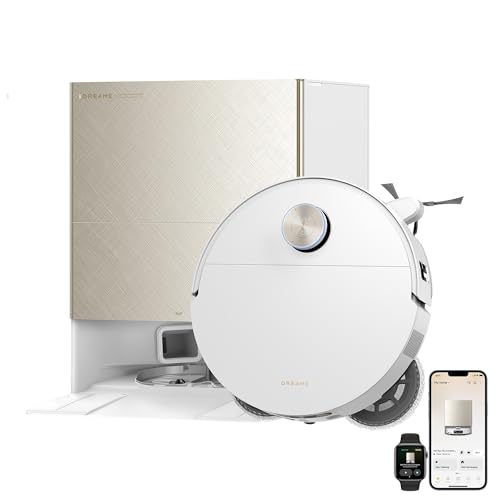
Dreame X60 Max Ultra robot vacuum & mop with 35,000Pa suction, ultra-thin 3.13in body, 280+ obstacle avoidance, 10-in-1 dock & hot-water mop self-cleaning.
Frequently Asked Questions
What is the Dreame X60 Max Ultra’s suction power? The Dreame X60 Max Ultra delivers 35,000Pa of suction — currently among the highest in any consumer robot vacuum. This is achieved through a sealed chamber pressure plate system combined with the dual counter-rotating DuoBrush configuration.
How does the base station clean the mop pads? The 10-in-1 base station washes the mop pads with 212°F (100°C) boiling water after every cleaning session. Following the wash, a hot-air drying cycle fully dries the pads before storage, preventing mildew and odor buildup.
How long before I need to empty the dust bag? The base station’s dust bag holds approximately 100 days of debris at average usage levels. For most households, this means changing the bag four times per year.
Can the Dreame X60 Max Ultra handle pet hair without tangling? Yes. The dual counter-rotating DuoBrush system is specifically designed to minimize hair tangling. Long pet hair and human hair are significantly less likely to wrap around dual counter-rotating brushes than around a single main brush.
Does the robot automatically avoid carpet when mopping? Yes. The X60 Max Ultra uses its sensors to detect carpet and automatically lifts the mop pads when transitioning from hard floor to carpet. This prevents carpet dampening during combined vacuum-and-mop sessions.
What WiFi frequency does the Dreame X60 Max Ultra require? The robot requires a 2.4GHz WiFi connection. It does not support 5GHz networks. Most modern routers broadcast both frequencies — you will need to connect the robot to the 2.4GHz band specifically during setup.
How does the Dreame X60 Max Ultra compare to the Roborock S8 MaxV Ultra? The Dreame X60 Max Ultra leads on raw cleaning metrics: higher suction (35,000Pa vs approximately 10,000Pa), wider obstacle recognition (280+ vs 108 types), slimmer profile, and hotter mop washing (100°C vs 80°C). The Roborock maintains advantages in app ecosystem maturity, LiDAR navigation reliability track record, and smart home integration depth.
Is the Dreame X60 Max Ultra worth buying in 2026? For large homes with significant hard-floor area, pet owners, and buyers who want genuinely autonomous floor cleaning with minimal weekly maintenance, the X60 Max Ultra is among the best robot vacuums available at any price. For primarily carpeted homes or buyers who prioritize app ecosystem stability, the value proposition is less compelling.
What is included in the box? The package includes the robot vacuum, base station, 2 main brushes, 2 side brushes, 3 dust box filters, 8 mop pads, 4 dust bags, 2 pet odor solution bottles, and 1 cleaning solution bottle.
How large is the base station? The base station stands approximately 66cm tall and requires a floor footprint of roughly 35x40cm plus clearance for the robot to dock and undock freely. It needs a nearby wall outlet and should be placed on a flat, hard surface.
Ready to Find Your Perfect Vacuum?
Browse our expertly reviewed vacuum cleaners and make an informed decision
Browse All Vacuums