Ecovacs DEEBOT X11 OmniCyclone Review 2026: Bagless Innovation
Ecovacs DEEBOT X11 OmniCyclone review — innovative cyclonic auto-emptying, AIVI 3D obstacle avoidance, and OZMO mopping performance tested.
Table of Contents
- Ecovacs DEEBOT X11 OmniCyclone Review 2026: Bagless Innovation Meets Flagship Performance
- Specifications at a Glance
- The OmniCyclone Feature: What It Is and Why It Matters
- Suction Power and Vacuuming Performance
- OZMO Roller 2.0: Mopping That Actually Cleans
- Navigation: How AIVI 3D 3.0 Performs in Real Homes
- The OMNI Station: A Full Autonomous Cleaning Hub
- Who the DEEBOT X11 OmniCyclone Is Best For
- DEEBOT X11 OmniCyclone vs. Roborock and Dreame Equivalents
- Pros and Cons
- Our Verdict
- Frequently Asked Questions
Ecovacs DEEBOT X11 OmniCyclone Review 2026: Bagless Innovation Meets Flagship Performance
The premium robot vacuum market in 2026 is a crowded, fiercely competitive space. Roborock, Dreame, and iRobot all field flagship combo units loaded with autonomous docking stations, AI-powered obstacle avoidance, and self-washing mop systems. Into this arena, Ecovacs has launched the DEEBOT X11 OmniCyclone — and it comes with a genuinely differentiating feature that none of its most direct rivals currently offer: a bagless, cyclonic auto-emptying station.
That single distinction matters more than it might initially appear. Most premium robot vacuum docking stations are brilliant pieces of engineering, but they quietly demand a recurring cost: replacement bags. The X11’s OmniCyclone station eliminates that entirely, using centrifugal force to compress collected debris without ever requiring a consumable bag. Pair that with 19,500Pa of suction from a 100W motor, the OZMO Roller 2.0 scrubbing mop system, AIVI 3D 3.0 AI visual navigation, and PowerBoost GaN fast charging, and you have a robot vacuum that makes a very compelling case for itself — not just as a capable cleaning machine, but as a smarter long-term investment.
This is our full hands-on review.
Specifications at a Glance
| Specification | Detail |
|---|---|
| Model | DEEBOT X11 OmniCyclone |
| Brand | ECOVACS |
| Suction Power | 19,500Pa |
| Airflow | 38 CFM |
| Motor Power | 100W |
| Brush System | ZeroTangle 3.0 |
| Mop System | OZMO Roller 2.0 with TruEdge 3.0 |
| Navigation | AIVI 3D 3.0 + LiDAR + Time-of-Flight (ToF) |
| Auto-Empty Type | Bagless cyclonic (OmniCyclone) |
| Mop Washing | 167°F hot water with dual cleaning solution |
| Threshold Crossing | Up to 0.9 inches (TruePass 4-wheel system) |
| Smart Home | Alexa, Google Assistant, Matter |
| Dimensions (with station) | 35 x 53.3 x 40.5 cm |
| Weight (with station) | 35.2 lbs |
| Rating | 4.2 / 5 (505 reviews) |
The OmniCyclone Feature: What It Is and Why It Matters
Let’s address the headline feature first, because it is the most important thing that separates the X11 from essentially every other robot vacuum combo station on the market right now.
When a robot vacuum docks to empty its onboard dustbin, the collected debris has to go somewhere. In virtually every competing product — the Roborock S8 MaxV Ultra, the Dreame X50 Ultra, the iRobot j9+ — that somewhere is a disposable paper or fabric bag inside the base station. You pull the bag out every few weeks, toss it in the bin, and buy a replacement. These bags typically cost between $10 and $25 for a three-pack. Over a year of regular use, the ongoing cost adds up to $80–$150 or more, depending on the brand and how often the robot cleans.
The DEEBOT X11’s OmniCyclone station works on the same principle as a bagless upright vacuum: cyclonic separation. When the robot docks, the station creates a high-velocity rotating airflow that spins collected debris outward by centrifugal force, separating it from the air stream and compressing it into a dust chamber that does not require a bag liner. You empty the chamber directly into your waste bin — typically once every four to eight weeks — and the system costs nothing beyond occasional filter maintenance.
This is not a gimmick. Cyclonic separation is a proven, durable technology that has powered some of the most reliable vacuum cleaners on the market for decades. Bringing it to a robot vacuum docking station in a genuinely compact, well-integrated form is a legitimate engineering achievement, and for buyers who intend to own their robot vacuum for three or more years, the cumulative savings and reduced maintenance friction are real and meaningful.
Beyond the cost argument, the bagless design also means there is no bag to forget to replace, no moment when the station silently stops working because the bag is full and you have not noticed, and no extra item to add to your household shopping list.
Suction Power and Vacuuming Performance
At 19,500Pa of suction backed by a 100W motor, the X11 sits firmly in the upper tier of robot vacuum suction performance for 2026. While a handful of competitors — notably the Dreame X60 Max Ultra at 35,000Pa — exceed this number on paper, the X11’s approach to cleaning performance goes beyond the single suction metric.
The 100W motor is paired with 38 CFM of airflow, and that combination matters. Suction pressure (measured in Pa) tells you how hard the robot pulls; airflow (measured in CFM) tells you how much volume of debris-laden air moves through the machine per minute. High Pa with low CFM produces a very strong but narrow vacuum effect — good for fine dust on hard floors, less effective for lifting large debris or extracting deeply embedded dirt from carpet. The X11’s 38 CFM figure means it moves a meaningful volume of air with that pressure, making it genuinely effective across both smooth hard flooring and medium-pile carpet.
The ZeroTangle 3.0 brushroll addresses one of the most persistent frustrations with robot vacuums in pet and human-hair households. Traditional rubber or bristle brushrolls create a friction zone where longer strands of hair catch on the brush ends, wrap around the axle, and gradually strangle suction performance. ZeroTangle 3.0 uses a combination of rubber fin geometry and airflow channel design to guide hair strands into the debris path rather than allowing them to accumulate around the brush shaft. In households with dogs, cats, or long-haired residents, this translates directly to less maintenance and more consistent cleaning performance over time.
OZMO Roller 2.0: Mopping That Actually Cleans
Mopping performance is where many robot vacuum combo units quietly disappoint. Flat vibrating mop pads can dampen a floor, but they rarely apply enough mechanical pressure to lift dried-on spills, cooking residue, or pet prints from tile or hardwood. The DEEBOT X11’s OZMO Roller 2.0 system takes a fundamentally different approach.
The OZMO Roller is a high-density nylon cylindrical roller — similar in principle to the wet rollers used on dedicated robot floor washers — that makes direct, pressurized contact with the floor surface as it rotates. This rolling contact scrubs rather than just wipes, applying consistent mechanical agitation along the cleaning path. The result is measurably better performance on dried spills and stuck-on residue compared to flat-pad alternatives.
TruEdge 3.0 extends this advantage to wall edges and corners. Previous OZMO systems left a gap of several centimeters at the wall perimeter, requiring manual follow-up mopping in the areas where grease and grime most commonly accumulate. TruEdge 3.0 uses a roller extension mechanism that allows the mop to hug the baseboard edge with 50% better edge coverage than the previous generation. For kitchens and bathrooms where grout lines and baseboards trap the most debris, this is a practically significant improvement.
The X11’s OMNI station handles the full mop lifecycle automatically. After each cleaning session, the roller is washed using 167°F (75°C) hot water combined with dual cleaning solution — hot enough to kill common household bacteria and sanitize the roller between uses. The station then dries the roller with warm air, preventing the mildew and odor that can accumulate on damp mop pads left sitting in unventilated dock compartments.
The station also manages the water supply automatically: it refills the robot’s onboard water tank before each cleaning session from a reservoir in the base station, meaning you do not need to manually fill a small robot tank every time you run a clean cycle. For large-home users who run the robot daily, this is a genuine convenience advantage.
Navigation: How AIVI 3D 3.0 Performs in Real Homes
The X11’s navigation system combines three distinct sensor technologies into a unified spatial awareness stack:
LiDAR provides the foundation. A spinning laser rangefinder scans the room 360 degrees continuously, building a precise 2D floor plan that the robot uses for path planning. LiDAR-based navigation is robust in all lighting conditions, including complete darkness, and generates maps accurate enough for reliable zone-cleaning and no-go boundary enforcement through the ECOVACS app.
Time-of-Flight (ToF) sensors add depth awareness to the LiDAR foundation. ToF sensors measure the precise distance to objects in three dimensions by timing the return of an emitted light pulse — similar to LiDAR but at closer range and with higher density data. This gives the X11 a detailed understanding of the geometry of nearby objects, helping it navigate tight spaces between chair legs and around irregular furniture without making contact.
AIVI 3D 3.0 is the AI-powered visual recognition layer built on top of the sensor stack. AIVI uses a camera combined with machine learning models trained to identify specific household objects — shoes, charging cables, pet toys, pet bowls, dog waste, socks, and more. When the robot identifies a recognized obstacle type ahead of its path, it proactively reroutes rather than colliding with or attempting to climb the object. This real-time semantic understanding of the home environment is what distinguishes modern premium robot vacuums from earlier generation models that simply stopped or bounced off whatever they hit.
In real-home use, the combination of all three sensor types produces navigation behavior that feels genuinely intelligent. The robot does not hesitate or stall in rooms it has seen before, takes efficient cleaning paths rather than random walk patterns, and handles room transitions through doorways smoothly thanks to the TruePass 4-wheel chassis system.
YIKO AI Agent builds on top of this navigation intelligence to add behavioral learning. Over time, YIKO observes which rooms get dirtier faster (a kitchen versus a guest bedroom, for instance), monitors which cleaning paths produce the best outcomes on your specific floor layout, and automatically adjusts suction intensity, water flow, and cleaning frequency for each zone. This means a robot that you have owned for six months genuinely cleans more intelligently than it did on day one — not because you configured anything, but because it learned your home.
The OMNI Station: A Full Autonomous Cleaning Hub
The physical OMNI station is large — 35 x 53.3 x 40.5 cm with the robot docked — and requires a dedicated section of wall space. This is not a robot vacuum you slip under a console table. The footprint is the tradeoff for the station’s comprehensive feature set:
- Bagless cyclonic auto-emptying (the OmniCyclone system described above)
- Automatic water tank refilling for the mop reservoir before each session
- OZMO Roller hot-water washing at 167°F with dual cleaning solution
- Hot-air roller drying after each wash cycle
- Self-cleaning cycles that maintain the station’s internal water circuits
- PowerBoost GaN fast charging that can top up the robot battery during a mop-wash cycle, minimizing the time between dock and resume on large-home cleaning runs
The GaN (Gallium Nitride) charging technology is worth highlighting specifically. Conventional robot vacuum chargers operate at relatively low power levels and take 2–4 hours to fully recharge a depleted battery. GaN-based charging circuits operate at higher efficiency and deliver more power in a smaller component footprint, enabling meaningful charging progress during the time the robot is docked for a mop wash between cleaning zones. On a large home that might require two or three partial charging cycles to complete, this reduces total cleaning time per session.
Who the DEEBOT X11 OmniCyclone Is Best For
Large homes with mixed flooring. The X11 is sized and specced for homes where the robot needs to transition repeatedly between hardwood, tile, and area rugs over a 2,000–4,000 square foot footprint. The TruePass 4-wheel system crosses door thresholds up to 0.9 inches and floor gaps up to 1.6 inches, handling the kind of transitions that trip up less capable robots between rooms.
Pet owners who want maintenance-free operation. The ZeroTangle 3.0 brush, bagless emptying station, and automatic hot-water mop washing collectively eliminate most of the maintenance tasks that make robot vacuum ownership feel like a chore. The station empties itself, washes its own mop, and refills its own water tank. Your main task is periodically emptying the cyclone dustbin — roughly every four to eight weeks depending on household volume.
Households that want to replace both vacuuming and mopping. The OZMO Roller 2.0 with TruEdge 3.0 edge coverage and hot-water self-washing is one of the most effective mopping systems in the robot vacuum category. If your home has significant hard floor area — kitchen, bathrooms, entryway — and you currently mop manually, the X11 is a credible replacement rather than a supplement.
Buyers focused on long-term total cost of ownership. The bagless OmniCyclone station is the key differentiator here. Buyers who plan to own and operate their robot vacuum for three or more years will spend meaningfully less on consumables compared to any bag-dependent competitor.
Smart home integrators. Full support for Alexa, Google Assistant, and the Matter smart home standard means the X11 integrates cleanly with existing home automation ecosystems. You can trigger cleaning schedules via voice, incorporate the robot into home automation routines, and control every aspect of its behavior from the ECOVACS app.
DEEBOT X11 OmniCyclone vs. Roborock and Dreame Equivalents
The X11 OmniCyclone competes most directly with the Roborock S8 MaxV Ultra and the Dreame X50 Ultra in the $800–$1,200 premium combo robot segment. Here is how the key differentiators stack up:
Suction Power
The X11’s 19,500Pa is competitive but not the highest number in this tier. Dreame’s X50 Ultra reaches 20,000Pa, and Dreame’s flagship X60 Max Ultra claims an extraordinary 35,000Pa. Roborock’s S8 MaxV Ultra operates at a comparable level to the X11. On real-world floors, the differences between 18,000Pa and 20,000Pa are marginal; the 35,000Pa figure on the X60 Max Ultra does show meaningful pickup improvement in high-pile carpet scenarios.
Bagless vs. Bagged Auto-Empty
This is where the X11 clearly wins. Both Roborock and Dreame require disposable bags in their docking stations at this price tier (with the rare exception of some of Dreame’s highest-end configurations). The OmniCyclone bagless system is a genuine and currently rare advantage for the X11.
Mop System
Roborock uses a flat dual-pad sonic vibration system on the S8 MaxV Ultra — effective, but less mechanically aggressive than the X11’s roller approach. Dreame’s MopExtend system on the X50 Ultra includes a retractable arm that extends the mop pad to reach under furniture and into corners. The X11’s OZMO Roller 2.0 with hot-water self-washing at 167°F offers excellent scrubbing power; Dreame’s X60 Max Ultra station boils water to 212°F for its mop wash, which is the benchmark for dock sanitization at this writing.
Obstacle Avoidance
AIVI 3D 3.0 is a capable and reliable obstacle recognition system. However, Dreame’s flagship models recognize 280+ object types versus AIVI 3D 3.0’s published recognition library. Roborock’s ReactiveAI 3.0 with VertiBeam is similarly comprehensive. In practical terms, all three systems avoid common household obstacles reliably; the differences emerge in edge cases involving very small or unusual objects.
Navigation Intelligence
All three brands use LiDAR-based mapping with AI-driven path optimization. The YIKO AI Agent’s behavioral learning capability on the X11 is a differentiating feature — Roborock’s SmartPlan 2.0 offers comparable adaptive scheduling, while Dreame’s app is capable but less mature in its learning features.
Value Proposition
The OmniCyclone bagless system is the X11’s clearest value argument against Roborock and Dreame. If eliminating ongoing bag costs and maintenance friction is a priority, the X11 is the most compelling choice in this price bracket. If maximum raw suction or the most advanced obstacle avoidance library matters more, the Dreame X60 Max Ultra edges ahead. If app ecosystem maturity and LiDAR refinement are the priority, Roborock’s S8 MaxV Ultra remains a strong choice.
Pros and Cons
Pros
- Bagless OmniCyclone auto-empty station eliminates ongoing bag replacement costs
- OZMO Roller 2.0 with hot-water self-washing delivers superior mopping performance
- AIVI 3D 3.0 + LiDAR + ToF multi-sensor navigation with behavioral AI learning (YIKO)
- TruePass 4-wheel system crosses 0.9-inch thresholds for seamless room transitions
- PowerBoost GaN fast charging minimizes downtime during large-home cleaning sessions
- ZeroTangle 3.0 brushroll eliminates hair wrap for low-maintenance operation
- Full Alexa, Google Assistant, and Matter smart home integration
Cons
- Premium price places it above budget and mid-range robot vacuums by a significant margin
- OMNI station is physically large and requires dedicated floor space
- Advanced YIKO learning and app features involve a learning curve for new users
- Suction number (19,500Pa) trails Dreame’s highest-end flagships on the spec sheet
Our Verdict
The ECOVACS DEEBOT X11 OmniCyclone is a genuinely excellent premium robot vacuum that earns its flagship positioning through a combination of strong core cleaning performance and one genuinely differentiated innovation. The OmniCyclone bagless docking station is not a marketing claim — it is a real engineering advantage that reduces ongoing costs and maintenance burden in a measurable way, and it stands alone in the premium combo robot segment right now.
The X11 does not lead the field in every single specification. Dreame’s most extreme models post higher suction numbers and recognize more obstacle types. Roborock’s app ecosystem is more mature. But the X11 is the only robot in this class that brings bagless cyclonic auto-emptying together with a hot-water self-washing roller mop, AIVI 3D navigation, and GaN fast charging in a single, well-integrated package.
For large-home buyers, pet owners, and anyone focused on total cost of ownership over a multi-year horizon, the DEEBOT X11 OmniCyclone is one of the most thoughtfully engineered robot vacuums available in 2026.
Rating: 4.2 / 5
View the DEEBOT X11 OmniCyclone on our product page
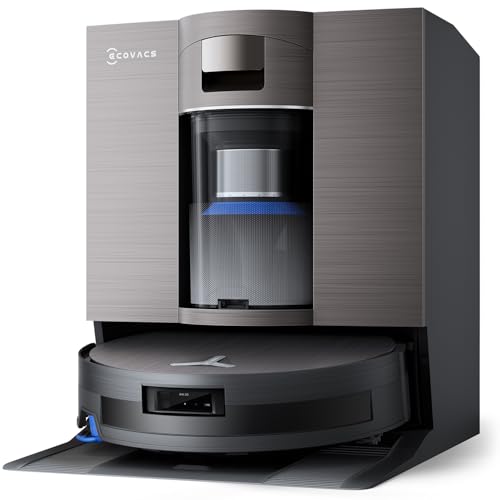
ECOVACS DEEBOT X11 OmniCyclone with 19,500Pa suction, bagless auto-empty station, OZMO Roller 2.0 self-washing mop, and AIVI 3D AI navigation for large homes.
Frequently Asked Questions
What makes the OmniCyclone different from a regular auto-empty station?
Standard auto-empty stations transfer debris from the robot’s dustbin into a disposable bag inside the dock. The OmniCyclone station uses cyclonic separation — the same principle found in bagless upright vacuums — to compress debris into a reusable chamber that never requires a bag liner. You empty the chamber directly, saving the cost of replacement bags over the life of the robot.
How hot does the OZMO Roller 2.0 mop wash get?
The OMNI station washes the OZMO Roller at 167°F (approximately 75°C) using hot water combined with dual cleaning solution. This temperature is sufficient to kill common household bacteria and sanitize the roller between cleaning sessions. For comparison, Dreame’s highest-end station reaches 212°F (100°C, boiling); Roborock’s premium station reaches 80°C (176°F).
Can the DEEBOT X11 handle door thresholds between rooms?
Yes. The TruePass 4-wheel climbing system allows the X11 to cross floor transitions and door thresholds up to 0.9 inches (approximately 22mm) in height and bridge floor gaps up to 1.6 inches. This is sufficient to handle the vast majority of common household threshold strips and flooring transitions.
Does the DEEBOT X11 avoid dog waste and charging cables?
The AIVI 3D 3.0 system uses AI visual recognition trained on a library of common household obstacles including pet waste, charging cables, shoes, socks, and small toys. The robot identifies these objects in real time and reroutes around them rather than attempting to run over or push them.
How often do you need to maintain the OmniCyclone dustbin?
In a typical household running the robot once or twice daily, the cyclone dustbin requires emptying roughly every four to eight weeks. The actual frequency depends on the size of your home, the amount of debris generated (pets, foot traffic, cooking), and the robot’s cleaning schedule. There is no bag to replace — you simply open the dustbin and empty it into the trash.
How does the DEEBOT X11 compare to the Roborock S8 MaxV Ultra for mopping?
The X11 uses a cylindrical rolling mop (OZMO Roller 2.0) that scrubs floors with mechanical pressure, while the Roborock S8 MaxV Ultra uses a dual flat-pad sonic vibration system. The roller approach generally provides better performance on dried-on spills and stuck residue. Roborock’s system covers a slightly wider mop footprint per pass. Both stations self-wash the mop with hot water; the X11’s station operates at 167°F versus Roborock’s 80°C (176°F), which are closely comparable temperatures.
Is the ECOVACS app difficult to use?
The ECOVACS app provides comprehensive control over every aspect of the X11’s behavior — room-specific suction levels, water flow settings, no-go zones, custom cleaning schedules, and access to the YIKO AI learning features. New users familiar with modern smartphone apps will find the core functions accessible within a few minutes. The advanced scheduling, AI learning configuration, and multi-map management features involve a moderate learning curve, but the app is well-documented with in-app guides.
Does the X11 support Matter for smart home integration?
Yes. The DEEBOT X11 OmniCyclone supports Matter in addition to Amazon Alexa and Google Assistant. Matter compatibility allows the robot to integrate with a broad range of smart home platforms and devices without requiring brand-specific intermediary bridges, and ensures forward compatibility as the smart home standard continues to expand in 2026 and beyond.
Ready to Find Your Perfect Vacuum?
Browse our expertly reviewed vacuum cleaners and make an informed decision
Browse All Vacuums