Ecovacs vs iRobot Roomba 2026: DEEBOT vs Roomba Compared
Ecovacs DEEBOT vs iRobot Roomba — navigation, mopping, obstacle avoidance, and price compared to find the best robot vacuum brand for your home.
Table of Contents
- A Tale of Two Robotics Philosophies
- Navigation: TrueMapping and AIVI 3D vs ClearView Pro LiDAR
- Obstacle Avoidance: AI Vision vs Pattern Recognition
- Mopping: OZMO Roller vs PowerSpin Roller and Flat Pads
- Self-Emptying and Base Station Capabilities
- Price Comparison
- Model Spotlight: Head-to-Head Comparisons
- Ecovacs’ Mopping Focus vs Roomba’s Cleaning Thoroughness
- Which Brand Is Right for Which Buyer?
- Frequently Asked Questions
- The Bottom Line
Two brands have done more to define consumer robot vacuuming than any other: Ecovacs and iRobot. One pioneered the category, and the other reinvented what it could mean to mop a floor autonomously. If you are shopping for a robot vacuum in 2026 and trying to decide between the Ecovacs DEEBOT lineup and the iRobot Roomba family, you are facing one of the most genuinely competitive decisions in the entire home appliance market.
Both brands make excellent robots. Both have multi-year track records, large user bases, and real engineering pedigrees behind their flagship products. But they approach the problem of automated floor cleaning from fundamentally different angles — and understanding those differences is the key to choosing the right robot for your specific home.
This guide breaks down the Ecovacs DEEBOT vs iRobot Roomba debate head-to-head across every major dimension: navigation technology, obstacle avoidance, mopping systems, self-emptying capabilities, price tiers, and the specific real-world use cases where each brand pulls ahead. We will also look at concrete model comparisons so you can see exactly how the engineering translates into practice.
A Tale of Two Robotics Philosophies
iRobot was founded in 1990 by MIT roboticists and launched the original Roomba in 2002. The company essentially created the consumer robot vacuum category from scratch. For years, “Roomba” was synonymous with robot vacuum the way “Kleenex” is synonymous with tissue. iRobot’s deep roots in navigation research, obstacle detection, and multi-surface vacuuming give its products a distinctive character: methodical, reliable, and built around decades of iterative engineering refinement. Roomba robots tend to be exceptional vacuums first, with mopping capabilities added thoughtfully but always secondary to cleaning thoroughness.
Ecovacs was founded in 1998 in Suzhou, China, and entered the robot vacuum market in the mid-2000s with a different philosophy. The company invested heavily in mopping technology from early on, building out its proprietary OZMO mopping platform alongside its vacuuming systems rather than treating wet cleaning as an afterthought. By 2020, Ecovacs had established itself as the global leader in robot vacuum-mop combination units, and its DEEBOT lineup has consistently pushed mopping innovation further than any competitor. Today, the brand is known for making robots that are genuinely exceptional at hard floor cleaning — not just robots that damp-wipe floors on the way past.
These different corporate DNA strands explain almost everything about the product comparison that follows.
Navigation: TrueMapping and AIVI 3D vs ClearView Pro LiDAR
Navigation is where both brands invest heavily and where the differences are subtle but meaningful.
iRobot’s approach centers on ClearView Pro LiDAR combined with PrecisionVision AI object recognition. LiDAR fires a laser that bounces off walls and furniture to build a precise 2D map of each floor. ClearView Pro processes these returns quickly to produce accurate room-by-room floor plans that display clearly in the Roomba Home App. What distinguishes iRobot’s system is how deeply it integrates mapping with cleaning intelligence: the robot learns which rooms accumulate dirt fastest, auto-prioritizes those areas, adjusts suction levels per zone, and builds a practical model of your household cleaning needs over time. The Roomba Max 705 and Plus 505 both use 3D LiDAR mapping, which adds vertical dimension data for better obstacle detection near furniture legs and thresholds.
Ecovacs’ approach is called AIVI 3D (Artificial Intelligence and Visual Intelligence, 3-Dimensional) and is paired with its own LiDAR system under the brand name TrueMapping. The combination works in two complementary ways: LiDAR handles the structural mapping of rooms and corridors with millimeter-level precision, while the AIVI 3D visual system uses cameras and deep-learning algorithms to identify and respond to specific objects in real time. In the DEEBOT T80S Omni and X9 Pro Omni, AIVI 3D 3.0 recognizes over 100 distinct object categories — shoes, charging cables, pet bowls, toys, furniture legs — and navigates around them with contextual awareness rather than just proximity-based avoidance.
Verdict on Navigation: Both systems deliver excellent real-world coverage. iRobot’s navigation has the edge in adaptive cleaning intelligence — the system genuinely learns your home over time and improves its scheduling decisions. Ecovacs’ AIVI 3D has the edge in real-time obstacle recognition — the broader object classification library means fewer stuck situations in cluttered homes. For clean, open-plan spaces, either system excels. For homes with lots of floor-level obstacles, Ecovacs’ AIVI 3D 3.0 is meaningfully better at avoiding tangles and getting-stuck situations without requiring you to tidy up before every run.
Obstacle Avoidance: AI Vision vs Pattern Recognition
Obstacle avoidance deserves its own examination because it directly affects whether you can run your robot unattended without pre-cleaning the floor.
iRobot’s PrecisionVision AI uses an onboard camera system that has been trained to recognize common household objects. In the Roomba Max 705 Combo and Roomba Plus 505 Combo, the system correctly identifies and avoids power cords, socks, shoes, toys, and — critically for pet owners — pet waste. The pet waste avoidance feature is one of iRobot’s most-praised capabilities: it prevents the genuinely disastrous scenario of a robot spreading an accident across your entire floor.
Ecovacs’ AIVI 3D 3.0 in the DEEBOT T80S Omni and DEEBOT X9 Pro Omni also uses camera-based AI recognition, classifying over 100 object types. The system is particularly strong at recognizing low-profile obstacles like charging cables and small socks that LiDAR alone would miss. Ecovacs has also recently added pet waste avoidance to its top-tier DEEBOT models, narrowing what was once a clear iRobot advantage.
Verdict on Obstacle Avoidance: This is now genuinely close at the flagship tier. iRobot’s PrecisionVision AI remains slightly more refined in real-world cluttered-home performance based on broader user feedback, but Ecovacs’ AIVI 3D 3.0 has closed the gap significantly. At mid-range price points, iRobot still leads; at flagship prices, both brands handle household obstacles with comparable confidence.
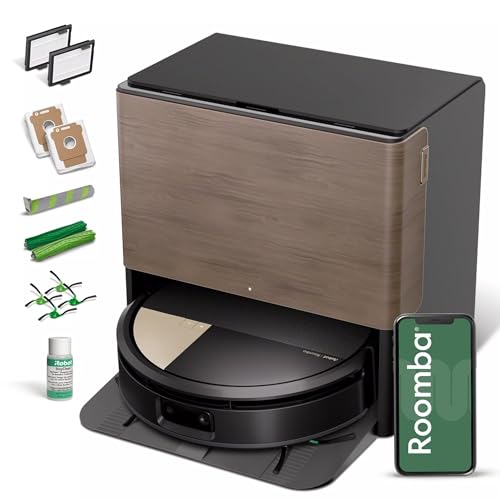
iRobot Roomba Max 705 Combo robot vacuum & mop with AutoWash Dock, LiDAR mapping, PowerSpin Roller Mop & 75-day auto-empty. Shop now for clean floors!
Mopping: OZMO Roller vs PowerSpin Roller and Flat Pads
This is the category where Ecovacs separates itself most decisively and where the brand’s different corporate philosophy becomes most visible.
Ecovacs OZMO Roller Technology
Ecovacs does not use flat mopping pads. Its flagship robots use a cylindrical roller mop — the OZMO Roller — that spins against the floor surface at high RPM while simultaneously self-washing during operation. This is a fundamental engineering difference from virtually every competitor.
Here is why it matters: conventional flat-pad robot mops dampen a pad and drag it across the floor. As the session progresses, the pad accumulates dirty water and redistributes it across surfaces. By the time a flat-pad mop finishes a room, it is spreading a mixture of clean water and collected grime back onto the floors it has just “cleaned.”
The OZMO Roller eliminates this problem entirely. In the DEEBOT T80 Omni, the roller mop spins at 220 RPM while applying 16 times the downward pressure of a flat pad — and it continuously rinses itself so that every inch of floor receives a genuinely clean mop pass. The DEEBOT X9 Pro Omni uses the same principle with continuous self-washing throughout the mopping session, with dirty water collected in a dedicated waste tank that is never recirculated onto your floors.
The TruEdge feature on the T80 Omni and T80S Omni physically extends the roller mop to reach walls and baseboards — eliminating the dirty perimeter lines that flat-pad mops and most robot mop systems leave behind.
iRobot’s PowerSpin Roller Mop
To iRobot’s credit, its top-tier combo units — particularly the Roomba Max 705 Combo — have moved significantly beyond flat pads. The PowerSpin Roller Mop spins at 200 RPM and uses heated mopping to tackle dried-on stains, delivering what iRobot claims is 10 times better stain removal than traditional flat-pad systems. The roller also features a retractable protective cover that automatically deploys when the robot detects carpet, keeping soft surfaces completely dry.
The AutoWash Dock for the Max 705 Combo holds eight weeks of water for heated mopping and dock-side roller washing — the dock itself scrubs the PowerSpin Roller with hot water after every session, ensuring the robot returns to the floor with a clean mop every time.
Mid-Range Mopping Comparison
Below flagship tier, the gap widens. The Roomba 105 Combo and Roomba Plus 505 Combo use DualClean spinning mop pads with SmartScrub technology for 2x deeper scrubbing on high-traffic areas. These are spinning flat pads, not roller mops — a meaningful distinction for hard floor cleaning quality. They perform well for maintenance mopping but cannot match the OZMO Roller’s continuous self-cleaning during operation.
Ecovacs mid-range models like the DEEBOT T50 Pro Omni also use roller mop systems, giving Ecovacs a mopping advantage that extends well down its product lineup.
Verdict on Mopping: Ecovacs wins this category clearly and consistently. The OZMO Roller technology represents a genuine engineering advance over flat-pad mopping, and Ecovacs has deployed it across its lineup while continuously refining it. If hard floor cleaning quality is your primary concern, DEEBOT robots clean floors more thoroughly than Roomba robots at every equivalent price point.

ECOVACS DEEBOT T80 Omni robot vacuum and mop with self-cleaning OZMO roller, 18,000Pa suction, and ZeroTangle 3.0. AI navigation for pets. Full review!
Self-Emptying and Base Station Capabilities
Both brands now offer self-emptying base stations across their premium lineups, but there are meaningful differences in what the base stations actually do.
iRobot’s AutoWash Dock (Roomba Max 705 Combo, Plus 505 Combo) is one of the most comprehensive base stations in the category. It auto-empties debris for 75 days into a sealed allergen bag (0.7-micron filtration), washes and heat-dries the PowerSpin Roller Mop, runs a self-cleaning cycle on the dock interior, and automatically dispenses iRobot’s StayClean mopping concentrate mixed with clean water. The sealed bag system is ideal for allergy sufferers because it contains dust during disposal.
Ecovacs’ OMNI Station on flagship DEEBOT models (T80S Omni, X9 Pro Omni, T80 Omni) handles auto-emptying into a dust bag, hot-water OZMO Roller washing (at 167°F / 75°C on the T80 Omni), 145°F hot-air drying of the roller mop, automatic clean water refilling, and automatic dirty water emptying. The T80S and X9 Pro OMNI Stations support up to 150 days of near-zero maintenance between user interventions. Having the station automatically refill the robot’s clean water tank and drain dirty water is a practical advantage over systems where users must manage water tanks manually.
Verdict on Base Stations: Both are excellent. iRobot’s sealed bag system is better for allergy sufferers and prevents dust clouds when you change the bag. Ecovacs’ automatic water management (refill and drain) reduces user intervention more comprehensively, and the 150-day maintenance interval is longer. This is a close call; the right choice depends on whether you prioritize allergen containment (iRobot) or true water management automation (Ecovacs).
Price Comparison
Both brands span wide price ranges, from accessible entry-level robots to flagship all-in-one systems.
| Model | Brand | Price Tier | Key Feature |
|---|---|---|---|
| DEEBOT T80 Omni | Ecovacs | Mid-Premium | 18,000Pa, OZMO Roller, 10-in-1 station |
| DEEBOT X9 Pro Omni | Ecovacs | Flagship | 16,600Pa BLAST, continuous OZMO Roller, 150-day station |
| DEEBOT T80S Omni | Ecovacs | Flagship | 24,800Pa, instant self-cleaning roller mop, Triple Lift |
| Roomba 105 Combo | iRobot | Mid-Range | 70x suction, ClearView LiDAR, SmartScrub, 75-day dock |
| Roomba Plus 505 Combo | iRobot | Premium | 70x suction, PrecisionVision AI, AutoWash Dock |
| Roomba Max 705 Combo | iRobot | Flagship | 175x suction, PowerSpin Roller, AutoWash Dock |
At equivalent price points, Ecovacs typically offers more mopping hardware capability per dollar. iRobot’s pricing reflects the brand premium of being the category pioneer as well as the sophistication of its AI learning systems. For buyers on a strict budget, Ecovacs delivers more cleaning technology per dollar spent. For buyers who prioritize brand ecosystem maturity, software polish, and iRobot’s long-established app and support infrastructure, Roomba’s premium can be justified.
ECOVACS DEEBOT T80 Omni robot vacuum and mop with self-cleaning OZMO roller, 18,000Pa suction, and ZeroTangle 3.0. AI navigation for pets. Full review!
Model Spotlight: Head-to-Head Comparisons
DEEBOT T80S Omni vs Roomba Max 705 Combo — Flagship Face-Off
The DEEBOT T80S Omni leads on raw suction power with 24,800Pa — among the highest in any consumer robot vacuum — compared to the Roomba Max 705 Combo’s spec of 175x Roomba 600 suction. The T80S’s OZMO Roller Mop self-cleans in real time during operation and uses TruEdge to mop along baseboards, while the Roomba Max 705’s PowerSpin Roller Mop spins at 200 RPM with heated mopping and a retractable cover for carpet protection. The ZeroTangle 3.0 brush system on the T80S is purpose-built for pet hair with a V-shaped roller design, while the Max 705 uses iRobot’s proven dual rubber anti-tangle extractors.
For households where mopping quality is the primary concern, the T80S Omni is the stronger choice. For households where carpet vacuuming performance and AI learning capabilities carry more weight, the Roomba Max 705 Combo is competitive — and its retractable mop cover is one of the most elegant engineering solutions for mixed-floor homes.
DEEBOT X9 Pro Omni vs Roomba Plus 505 Combo — Premium Mop Showdown
The DEEBOT X9 Pro Omni and Roomba Plus 505 Combo occupy similar price territory and represent each brand’s strongest showing at the sub-flagship level.
The X9 Pro Omni’s BLAST technology (16,600Pa with 38% more airflow volume than standard high-Pa designs) is a meaningful innovation: it does not just measure suction pressure but optimizes airflow volume to actually pull debris up from carpet fibers rather than just pressurizing it toward the dustbin. Its Triple Lift System independently lifts the roller mop, side brush, and main brush for precise surface transition management — eliminating cross-contamination between wet and dry cleaning entirely.
The Plus 505 Combo counters with SmartScrub scrubbing technology, DualClean Mop Pads with PerfectEdge for 18% better wall-edge coverage, and the AutoWash Dock’s heated pad drying. PrecisionVision AI in the Plus 505 is among iRobot’s most capable obstacle avoidance implementations and handles cluttered homes with impressive confidence.
On balance: the X9 Pro Omni mops more thoroughly; the Plus 505 Combo navigates cluttered environments slightly more reliably and has stronger app-based learning intelligence.
DEEBOT T80 Omni vs Roomba 105 Combo — Mid-Range Value Comparison
Both the DEEBOT T80 Omni and Roomba 105 Combo represent excellent mid-tier options. The T80 Omni brings 18,000Pa suction, the OZMO Roller at 220 RPM with 16x pressure, and the 10-in-1 OMNI Station with hot-water mop washing and auto dry — a remarkably complete package. The Roomba 105 Combo offers 70x suction over the Roomba 600 series, ClearView LiDAR navigation, intelligent carpet detection for the mop, SmartScrub, and the 75-day AutoEmpty dock.
The T80 Omni delivers meaningfully better mopping hardware. The Roomba 105 Combo offers a slightly smoother app experience and the established iRobot support ecosystem. For buyers who mop regularly, the T80 Omni provides better floor cleaning outcomes. For buyers whose primary goal is hands-free vacuuming with decent mopping, the Roomba 105 Combo is a dependable and well-rounded choice.
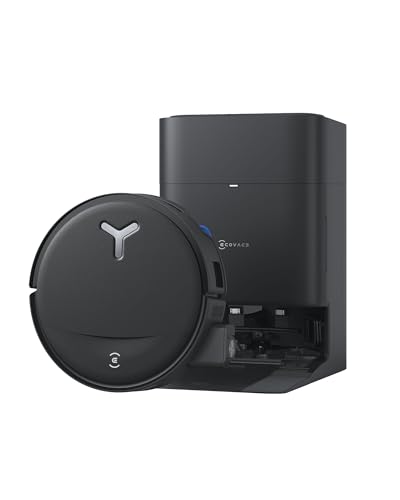
ECOVACS DEEBOT T80S Omni: 24,800Pa suction, instant self-cleaning roller mop, ZeroTangle 3.0, AI obstacle avoidance & 150-day OMNI dock. Shop now.
Ecovacs’ Mopping Focus vs Roomba’s Cleaning Thoroughness
The central tension in this comparison can be distilled into one core distinction:
Ecovacs DEEBOT robots are designed by a company that believes mopping is as important as vacuuming. Every flagship DEEBOT since the T series has featured a roller mop system with self-cleaning capability, base station water management, and engineering investment in mopping hardware that rivals what most companies put into their vacuuming systems. The OZMO Roller is not a bolt-on feature — it is a core design principle.
iRobot Roomba robots are designed by a company that believes vacuuming is the foundation. Roombas excel at multi-pass carpet extraction, embedded dirt removal, efficient room coverage, and AI-based cleaning prioritization. When iRobot added mopping, it did so thoughtfully — the SmartScrub, PowerSpin Roller Mop, and AutoWash Dock are serious engineering — but the company’s primary DNA is still about picking things up off floors, not spreading water onto them.
This is not a criticism of either philosophy. It is simply a useful lens for making a purchasing decision:
- If you have predominantly hard floors — tile, hardwood, vinyl, concrete — and care deeply about mopping quality, Ecovacs DEEBOT is the stronger choice without question.
- If you have predominantly carpeted floors and primarily need a robot to vacuum deeply and intelligently, iRobot Roomba is the stronger choice.
- If you have mixed floors and want excellent performance on both, the answer depends on which floor type dominates your daily cleaning needs.
Which Brand Is Right for Which Buyer?
Choose Ecovacs DEEBOT if:
- You have tile, hardwood, or vinyl floors that you mop regularly. The OZMO Roller system will genuinely impress you with its cleaning results.
- Streak-free mopping matters to you. The continuous self-washing roller means every pass is a clean pass.
- You want maximum suction power — the DEEBOT T80S Omni’s 24,800Pa leads the market.
- You want the longest hands-free interval — up to 150 days on flagship OMNI Station models.
- You want automatic water management — the OMNI Station refills clean water and drains dirty water without your involvement.
- You have pets and long hair — ZeroTangle 3.0 is one of the best hair-tangle prevention systems available.
- You want more hardware for your money — Ecovacs delivers comparable or better mopping hardware at most price points.
Choose iRobot Roomba if:
- You have mostly carpet and need a robot that learns your home and optimizes for deep fiber extraction.
- Your home is cluttered with cables, socks, and small objects on the floor and you want the most refined obstacle avoidance.
- Pet waste is a concern — iRobot’s PrecisionVision AI for pet waste avoidance has the most established track record.
- Allergy management is critical — the sealed 0.7-micron allergen bags in iRobot’s AutoEmpty docks are excellent for allergy sufferers.
- You prefer a mature app ecosystem with room learning, adaptive scheduling, and a longer software support track record.
- Brand reliability and US-based support are important to your purchasing decision.
- You already own other iRobot products or are invested in the Roomba Home app ecosystem.
Frequently Asked Questions
Is Ecovacs DEEBOT better than iRobot Roomba? Neither brand is universally better. Ecovacs DEEBOT leads in mopping quality and suction power per dollar at most price points. iRobot Roomba leads in vacuuming intelligence, AI learning over time, and long-term software support. The better choice depends on your floor types and cleaning priorities.
Does Ecovacs have better mopping than Roomba? Yes, consistently. Ecovacs’ OZMO Roller technology continuously self-washes during operation, preventing dirty water from being redistributed across your floors. iRobot’s SmartScrub and PowerSpin Roller Mop are capable — especially in flagship models — but Ecovacs has invested more deeply in mopping hardware across its entire lineup.
Which robot vacuum is better for pet hair, Ecovacs or Roomba? Both brands handle pet hair well at their respective flagship tiers. The iRobot Roomba Max 705’s dual rubber anti-tangle extractors have a longer track record, and its PrecisionVision AI pet waste avoidance is highly reliable. Ecovacs’ ZeroTangle 3.0 in the T80S Omni is excellent for preventing hair wrap. For carpet-heavy pet households, iRobot has a slight edge; for hard floor pet households, Ecovacs is the better choice.
Are Ecovacs robots reliable long-term? Ecovacs has significantly improved product quality and reliability in its recent-generation DEEBOT lineup. The T series and X series robots have large, active user bases with strong satisfaction ratings. iRobot has a longer reliability track record given its 20+ year history, but Ecovacs’ current flagship models are considered reliable by most users and reviewers.
Does the Roomba Max 705 Combo have a roller mop like Ecovacs? Yes. The Roomba Max 705 Combo uses a PowerSpin Roller Mop that spins at 200 RPM with heated mopping capability — a significant upgrade from flat-pad mopping. However, the OZMO Roller in the equivalent DEEBOT T80S Omni or X9 Pro Omni still self-cleans continuously during the mopping session, while the Roomba’s roller is cleaned by the AutoWash Dock after the session.
Which brand has a better self-emptying station? Both brands offer excellent self-emptying stations at their flagship tiers. iRobot’s AutoWash Dock is better for allergy sufferers thanks to its sealed 0.7-micron bag filtration. Ecovacs’ OMNI Station is better for water management automation — it refills clean water and drains dirty water without user involvement. The Ecovacs station also supports a longer 150-day maintenance interval vs 75 days for iRobot.
Is Ecovacs DEEBOT worth it over Roomba? If your home has significant hard floor area that you want regularly mopped to a high standard, yes — the DEEBOT lineup’s mopping capability justifies the price and often delivers more cleaning hardware per dollar than equivalent Roombas. If your home is mostly carpet and mopping is secondary, the Roomba’s AI learning and long-established performance profile is equally compelling.
How does Ecovacs TrueMapping compare to iRobot’s LiDAR navigation? Both systems use LiDAR as the core mapping technology and produce accurate room-by-room floor plans. iRobot’s navigation integrates more deeply with adaptive cleaning intelligence — the robot learns your home over time and adjusts its behavior accordingly. Ecovacs pairs its LiDAR mapping with AIVI 3D visual obstacle recognition, which classifies over 100 object types for more granular real-time avoidance. For mapping accuracy, both are excellent; for obstacle avoidance breadth, AIVI 3D has a slight edge.
The Bottom Line
The Ecovacs DEEBOT vs iRobot Roomba comparison in 2026 is closer than it has ever been, with both brands investing heavily in navigation, obstacle avoidance, mopping, and base station automation. But the core distinction remains clear: Ecovacs DEEBOT is the superior choice for hard floors and mopping, while iRobot Roomba is the superior choice for carpet vacuuming and AI-driven cleaning intelligence.
For a hard floor home, the DEEBOT X9 Pro Omni or DEEBOT T80S Omni will clean your floors more thoroughly than any Roomba at an equivalent price. For a carpet-heavy home, the Roomba Max 705 Combo or Roomba Plus 505 Combo offers the most capable and intelligent deep-cleaning experience available. For a mixed-floor home, the best answer depends on which surface dominates your day-to-day cleaning needs — and either the DEEBOT T80 Omni or Roomba 105 Combo represents outstanding mid-tier value worth considering.
Whatever you choose, either brand’s current flagship offering is genuinely capable of transforming your floor maintenance from a weekly chore into a background task you barely think about.

ECOVACS DEEBOT X9 PRO Omni: 16600Pa BLAST suction, continuous OZMO Roller mop washing & 150-day hands-free station. Top robot vacuum mop for 2025.
Ready to Find Your Perfect Vacuum?
Browse our expertly reviewed vacuum cleaners and make an informed decision
Browse All Vacuums