How Long Do Vacuums Last? Lifespan Guide by Brand and Type
How long do vacuums last? Expert lifespan guide for all vacuum types — from budget uprights (2-4 years) to Miele (20 years) — and tips to extend life.
Table of Contents
How Long Do Vacuums Last? Lifespan Guide by Brand and Type
The average vacuum lasts around eight years. That is the number you will find cited most often by repair technicians, appliance researchers, and consumer organizations — and it is a reasonable baseline. But it is also a number that can mislead you badly if you take it at face value.
The truth is that vacuum lifespan varies wildly. A poorly maintained budget vacuum might give up after 18 months. A Miele canister bought in the early 2000s might still be pulling strong suction today. Two identical models, used in different homes with different maintenance habits, can diverge by a decade in useful life. The type of vacuum, the brand that built it, how you clean it, and how hard you push it all play enormous roles in how long it actually lasts.
This guide breaks down vacuum lifespan across every major category — by type, by brand, by the warning signs that signal the end is near, and by the maintenance habits that separate the owners who replace their vacuums every two years from the ones who pass them down to their children.
Vacuum Lifespan by Type
Not all vacuums are built with the same engineering priorities. A cordless stick vacuum is designed around portability and battery integration, which introduces a specific failure mode — battery degradation — that a traditional corded upright will never face. Understanding what limits each type helps you calibrate your expectations before you buy.
Premium Bagged Vacuums (Miele and Equivalents): 15–20 Years
Premium bagged vacuums represent the longest-lived category in the residential market, and Miele is the defining example. These machines are engineered for longevity in a way that most vacuums simply are not. Miele uses brushless motors rated for 1,000 hours of operation, builds enclosures from ABS plastic reinforced at stress points, and designs every service component — belts, filters, bags, brush rolls — to be user-replaceable without specialized tools.
Owners regularly report 15 to 20 years of reliable use from Miele canisters and uprights. Service technicians who have worked in the industry for decades consistently describe these machines as outliers — units that come in for a belt swap or filter replacement after a decade of daily use with no deeper issues. The sealed bagged filtration system also plays a role: because debris is contained in a bag rather than an open bin, less particulate matter contacts the motor over time, reducing wear.
At this tier, maintenance matters enormously. A Miele that is never serviced will not reach 20 years. One that receives regular bag changes, filter replacements, and brush roll cleaning routinely does.
Mid-Range Upright Vacuums: 5–8 Years
This is the most common category sold in the United States — corded uprights in the $100 to $300 range from brands like Shark, Hoover, and Bissell. They are workhorse machines built for accessibility and cleaning performance at a reasonable price, and they deliver solid lifespans when maintained properly.
The five-to-eight-year range reflects the quality of motors, belts, and housings used at this price point. Brushed motors are more common here than brushless alternatives, and they accumulate wear more quickly under heavy use. Belts typically need replacement every 12 to 24 months regardless of brand. Housing tolerances are looser than premium machines, meaning joints, latches, and attachments begin to loosen and fail in the later years.
Heavy use households — large homes, multiple pets, high-traffic carpeted areas — should expect results toward the lower end of this range. Light-use apartments may exceed it comfortably.
Cordless Stick Vacuums: 3–7 Years
Cordless stick vacuums introduce a failure mode that no other vacuum category faces: battery degradation. Lithium-ion battery packs lose capacity with every charge cycle. A cordless vacuum that delivered 45 minutes of runtime when new may deliver only 20 to 25 minutes after two or three years of regular use. For some households, that reduction makes the vacuum functionally unusable even if the motor is in perfect condition.
The machine itself — the motor, filter system, and cyclone if present — is often capable of lasting well beyond the battery pack. Some manufacturers sell replacement batteries, which can extend the useful life significantly. Dyson, for example, sells replacement battery packs for most of its V-series models. Other brands do not support battery replacement at all, meaning the vacuum becomes disposable once the pack degrades.
Factor this into your purchase decision. A cordless stick vacuum from a brand that supports battery replacement and sells spare parts will realistically last 6 to 7 years. One with no replacement battery availability should be budgeted as a 3-to-4-year purchase.
Robot Vacuums: 4–7 Years
Robot vacuums have more failure points than any other category. They contain a motor, brushes, sensors, navigation hardware, battery packs, and often water pump systems for mopping — all in a compact chassis that takes regular impacts against furniture and baseboards. Each of those components carries its own wear timeline.
Battery degradation is the most common reason robot vacuums stop working well. A Roomba or Roborock that once ran a full cleaning cycle on a single charge may eventually manage only 30 or 40 minutes before returning to dock, leaving sections of the home uncleaned. Battery replacement is available for most major robot vacuum brands and often costs $30 to $80 — a reasonable repair if the rest of the machine is functioning.
Navigation sensors and cliff sensors also degrade over time and with exposure to debris. Software support is another consideration unique to robot vacuums: manufacturers typically support their devices with firmware updates for three to five years after release, after which connectivity features may stop working even if the physical hardware is fine.
Expect 4 to 5 years from mid-range robot vacuums with normal use. Premium models from Roborock, iRobot, or Ecovacs may reach 6 to 7 years with battery replacement and diligent maintenance.
Budget Vacuums: 2–4 Years
Vacuums priced under $80 are engineered to a cost target, and that cost target has real consequences for durability. Budget motors generate more heat, wear faster, and are rarely designed with user-serviceable components in mind. Filters may be non-washable and difficult to replace. Brush rolls use cheaper bristles that wear unevenly. Plastic housings crack at joints under normal stress.
This does not mean budget vacuums are worthless — they are appropriate for light use, small living spaces, and situations where the purchase needs to be temporary. But entering the purchase expecting five or more years of reliable service will likely lead to disappointment. Two to four years is a realistic lifespan for a budget vacuum used as a primary cleaning tool, and the lower end of that range is more common than the higher end.
Vacuum Lifespan by Brand
Understanding how specific brands approach build quality helps explain why some machines outlast others in the same price tier.
Miele consistently earns the top position in longevity discussions among repair professionals and long-term owners. The German manufacturer’s engineering standards, motor quality, and parts availability give their machines a realistic 15-to-20-year ceiling. Their vacuum bags are genuine filtration components — not just dust containers — and replacing them regularly is part of what protects the motor over a long service life.
Dyson produces machines with excellent suction performance and strong brand recognition, but their longevity record is more mixed than Miele’s. Dyson’s digital motors are genuinely impressive technology, and the brand does sell replacement parts and batteries for most models. However, Dyson machines are frequently cited by repair technicians as more difficult to service than older canister designs, and some cordless models have experienced battery and motor board failures before the five-year mark. Expect 5 to 8 years for a corded Dyson and 4 to 6 years for a cordless model with battery replacement.
Shark occupies a strong position in the mid-range category. Their corded uprights and lift-away canisters generally deliver consistent 5-to-7-year lifespans, and the brand has improved its parts availability and warranty support significantly over the past decade. Shark machines tend to be straightforward to service, with easily accessible brush rolls and replaceable filters. Their cordless line follows the same battery-dependent lifespan curve as other cordless categories.
Bissell offers a wide range of price points with correspondingly wide variation in lifespan. Their mid-range and premium models — particularly their canister and CrossWave wet-dry units — are solidly built and can reach 5 to 8 years with proper care. Entry-level Bissell uprights lean toward the budget tier in construction, so expectations should be set accordingly. Bissell is also notable for its strong parts and filter supply chain, which makes long-term ownership more practical.
Hoover has a long history in the vacuum market, though their modern lineup occupies mostly the mid-to-budget tier. Hoover machines at the $100 to $200 range deliver reasonable performance and 4-to-6-year lifespans. The brand has solid parts availability for its popular models. Their commercial-grade WindTunnel line trends toward the higher end of durability within the mid-range category.
Signs Your Vacuum Is Dying
Knowing when a vacuum is truly at the end of its life — versus simply needing maintenance — can save you money and prevent premature replacement.
Loss of suction that cannot be fixed is the most definitive sign. If you have cleaned or replaced the filter, emptied the bin or replaced the bag, cleared every blockage in the hose and brush housing, and suction is still noticeably weaker than it once was, the motor is likely failing. Motor wear reduces the pressure differential the vacuum can generate, and that loss is not reversible through cleaning.
A burning smell during use indicates that something inside is overheating. The most common cause is hair and debris wrapped around the motor shaft or a belt that is slipping and generating friction heat. In some cases, cleaning the brush roll resolves it. In others, the motor insulation is deteriorating — a sign the machine is approaching the end of its service life, and a fire risk that should not be ignored.
Loud grinding or rattling sounds that appear suddenly often indicate a foreign object inside the motor housing or a bearing that has failed. Objects can sometimes be removed and bearings can sometimes be replaced, but this repair typically requires partial disassembly of the motor housing and is rarely cost-effective on older machines.
The brush roll has stopped spinning despite the motor running normally. This usually means a worn or broken belt on belt-driven models — a $5 to $15 repair that is worth doing. If the brush roll uses a direct motor drive and has stopped spinning, the drive motor has failed, and replacement cost often exceeds the machine’s value.
Frequent shutoffs due to overheating suggest that the motor is working harder than it should — either because of a partial blockage, a failing motor that runs hot, or a thermal protection switch that has become sensitive with age. Occasional thermal shutoff is normal safety behavior. Frequent shutoff during normal use is a warning sign.
How to Extend Your Vacuum’s Life
The difference between a vacuum that lasts four years and one that lasts ten is often maintenance, not build quality. These habits have the most impact.
Clean or replace filters on schedule. A clogged filter forces the motor to work harder to pull air through the machine, generating excess heat and accelerating wear. Most manufacturers recommend filter cleaning every one to three months and replacement every six to twelve months depending on use intensity. Ignoring filters is the single most common cause of premature motor failure.
Empty the dust bin before it reaches maximum capacity. Running a bagless vacuum with a full bin restricts airflow the same way a clogged filter does. For bagged vacuums, replace bags when they are two-thirds to three-quarters full — not when they are completely packed. A full bag dramatically reduces filtration efficiency and suction.
Maintain the brush roll regularly. Hair, string, and fibers wrap around brush roll bristles and bearings, creating resistance that strains the belt and motor. Cut and remove accumulated hair every few uses, particularly in households with long-haired occupants or pets. Many manufacturers design brush rolls to be removable without tools for exactly this reason.
Clear blockages promptly. If suction drops suddenly, check the hose, the brush housing inlet, and any transition points between attachments before continuing to run the machine. Operating with a blockage forces the motor to run against restricted airflow, which generates heat rapidly.
Store the vacuum properly. Coil the cord loosely rather than wrapping it tightly around the machine, which stresses the cord at the entry point and can cause internal wire breaks over time. Store upright or hanging rather than laying the machine on its side, which can deform brush roll bristles and stress housing joints.
Replace wear parts proactively. Belts, brush rolls, and filters are consumables designed to be replaced. Replacing a $7 belt before it snaps prevents the brush roll from scoring the machine’s internal housing. Replacing a brush roll when bristles wear flat restores cleaning performance and reduces the motor load.
Repair vs. Replacement: How to Decide
The general rule used by appliance repair professionals is the 50% threshold: if the repair cost exceeds 50% of the machine’s current replacement value, replacement is usually the better financial decision. A repair that costs $40 on a $200 vacuum is sensible. A repair that costs $120 on a $150 vacuum is not.
Age matters alongside cost. A motor replacement on a two-year-old Miele costing $80 makes excellent sense — the machine has 15 or more years of potential life remaining. The same repair on a seven-year-old budget upright worth $60 does not.
Common repairs worth doing at almost any age include belt replacement ($5–$15), filter replacement ($10–$30), brush roll replacement ($15–$40), and battery replacement on cordless models ($30–$80). These are consumable components, not structural repairs, and they restore function without addressing underlying motor wear.
Repairs that typically signal replacement is more prudent include motor replacement ($80–$200+), circuit board failure on robot vacuums ($60–$150+), and structural housing cracks that compromise suction integrity.
Frequently Asked Questions
How long does the average vacuum last? The industry average is approximately 8 years, though this varies significantly by type, brand, and maintenance habits. Premium machines like Miele regularly exceed 15 years. Budget vacuums may last only 2 to 4 years under regular use.
Do Dyson vacuums last as long as Miele? Generally no. Miele machines consistently outlast Dyson in longevity comparisons, with Miele averaging 15 to 20 years and Dyson typically reaching 5 to 8 years for corded models. Both are premium brands, but Miele’s engineering philosophy prioritizes longevity in a way Dyson’s does not.
How long does a Shark vacuum last? Most Shark uprights and lift-away models last 5 to 7 years with regular maintenance. Their mid-range cordless models follow the standard 3-to-6-year cordless timeline depending on battery support.
Why did my vacuum suddenly lose suction? Sudden suction loss is almost always caused by a blockage, a full dust bin or bag, or a clogged filter. Check all three before assuming motor failure. Gradual suction loss over months is more likely to indicate motor wear or persistent filter clogging.
Is it worth repairing a vacuum? It depends on the repair cost relative to the machine’s replacement value and age. Belt and filter replacements are almost always worth doing. Motor replacements are worth it on premium machines that are less than five years old. On budget vacuums or any machine over eight years old, replacement usually makes more financial sense.
Can I extend the life of a robot vacuum? Yes. Replacing the battery when runtime degrades significantly, cleaning sensors regularly with a dry cloth, clearing brush roll tangles after every few uses, and keeping the charging contacts clean are the most impactful habits for extending robot vacuum life.
How often should I replace my vacuum? Replace when repair costs approach or exceed the machine’s replacement value, when the motor has failed and the machine is over five years old, or when performance has degraded to the point that cleaning takes significantly longer or produces noticeably worse results than it once did. There is no fixed replacement schedule — maintenance and honest assessment of performance are better guides than calendar dates.
Top Picks

Eureka NEN186BL bagless canister vacuum with 1000W motor, 16KPa suction, washable HEPA filter, and 2L dustbin. Lightweight and ideal for carpets and floors.
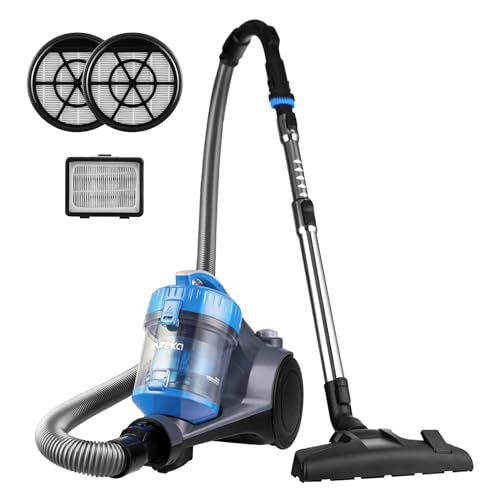
Eureka Whirlwind NEN110B bagless canister vacuum with swivel steering, auto cord rewind, and multi-surface cleaning. Lightweight at 8.15 lbs. Full review!

Eureka WhirlWind NEN110A bagless canister vacuum with 2.5L dust cup, swivel steering, and multi-surface cleaning. Lightweight and easy to use.
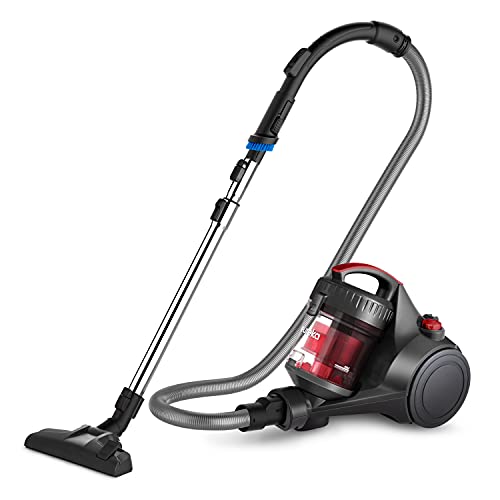
Eureka Whirlwind NEN110D bagless canister vacuum with multi-surface airflow control, auto cord rewind, and swivel steering. See our full expert review!

Eureka NEN180 lightweight bagless canister vacuum with 16 kPa suction, HEPA filtration, and 2L dust cup. Ideal for carpets and hard floors. Full expert review.
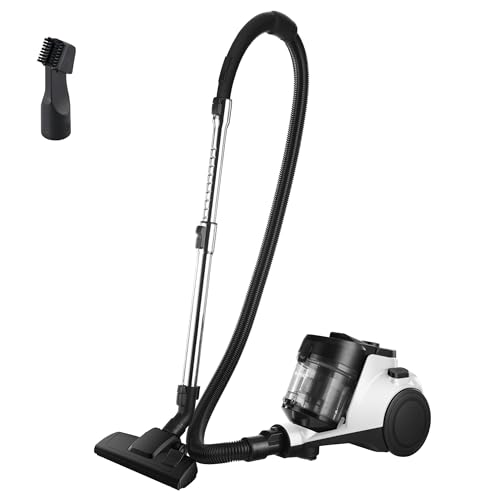
Eureka WhirlWind NEN121WH bagless canister vacuum with 1100W motor, HEPA filter, and swivel steering. Lightweight multi-surface cleaning. Expert review!
Ready to Find Your Perfect Vacuum?
Browse our expertly reviewed vacuum cleaners and make an informed decision
Browse All Vacuums