How to Clean a HEPA Filter on Your Vacuum: Step-by-Step Guide
A dirty HEPA filter kills your vacuum's suction. Learn exactly how to clean washable HEPA filters, when to replace them, and how to avoid common mistakes.

Table of Contents
- How to Clean a HEPA Filter on Your Vacuum: Step-by-Step Guide
- Why Your HEPA Filter Gets Clogged — and Why It Matters
- Two Types of HEPA Filters: Washable vs. Non-Washable
- How to Clean a Washable HEPA Filter: Step-by-Step
- Common Mistakes That Damage HEPA Filters
- When to Replace Your HEPA Filter Instead of Cleaning It
- Recommended Vacuums With Washable HEPA Filters
- Frequently Asked Questions
- Quick Reference: HEPA Filter Cleaning Checklist
How to Clean a HEPA Filter on Your Vacuum: Step-by-Step Guide
If your vacuum has been losing suction lately, the culprit is almost always the same: a clogged HEPA filter. Most people never think about cleaning it — and that neglect has real consequences. A filter packed with dust, pet dander, and debris can reduce your vacuum’s suction power by 40 to 60 percent. That means your vacuum is working twice as hard to pick up half as much dirt.
The good news is that cleaning a washable HEPA filter takes less than five minutes of hands-on work. The bad news is that doing it wrong — washing a non-washable filter, skipping the dry time, or using soap — can permanently damage the filter or your vacuum’s motor. This guide covers exactly what to do, what not to do, and when it’s time to stop cleaning and simply replace.
Why Your HEPA Filter Gets Clogged — and Why It Matters
HEPA stands for High-Efficiency Particulate Air. A true HEPA filter captures 99.97% of particles 0.3 microns or larger, including dust mite debris, pollen, mold spores, pet dander, and fine construction dust. To accomplish this, the filter uses densely packed glass fiber strands arranged in a random mat. Particles collide with those fibers and become trapped.
That dense structure is also exactly what makes HEPA filters vulnerable to clogging. Every vacuuming session deposits another layer of particles into those fibers. Over time, the pores between fibers shrink. Airflow through the filter decreases. Your vacuum’s motor has to work harder to draw air through, and despite the extra effort, suction at the floor drops noticeably.
A visibly gray or brown filter is almost certainly reducing your cleaning effectiveness. In households with pets or high-traffic carpet, a neglected filter can reach that state within a few weeks of use.
Two Types of HEPA Filters: Washable vs. Non-Washable
Before you run any water near your vacuum filter, you need to know which type you have. This distinction is critical — cleaning the wrong type can destroy it.
Washable HEPA Filters
Washable (or “rinseable”) HEPA filters are designed to withstand gentle rinsing with cool water. The filter media and frame are constructed to handle moisture without structural breakdown. After washing and a full drying period, the filter can be reinstalled and continue to perform at spec.
Many popular models — including the Shark Navigator line — ship with washable HEPA filters, which is a meaningful long-term cost advantage.
Non-Washable HEPA Filters
Non-washable HEPA filters are made from materials that degrade on contact with water. Rinsing one will cause the filter media to break down, creating holes and gaps that allow fine particles to pass straight through. The filter will look intact but will no longer meet HEPA standards. Worse, if you reinstall a damp non-washable filter, you risk mold growth inside the vacuum and moisture damage to the motor.
If water touches a non-washable HEPA filter, the filter must be replaced immediately — no exceptions.
How to Tell Which Type You Have
- Check the filter itself. Most manufacturers print “Washable” or “Rinse to Clean” directly on the filter frame. If you see that label, you’re cleared to wash it.
- Check your owner’s manual. If you no longer have the physical manual, search the vacuum’s model number plus “owner’s manual PDF” — manufacturers almost always host them on their websites.
- When in doubt, don’t wash it. If you cannot confirm the filter is washable, treat it as non-washable. Replace it on schedule instead.
How to Clean a Washable HEPA Filter: Step-by-Step
These steps apply to any washable HEPA filter regardless of vacuum brand. The process is straightforward but the timing — especially the drying step — must not be rushed.
What You’ll Need
- A trash can or outdoor space
- Cool running water (not hot)
- A clean, dry towel
- 24–48 hours of drying time
Step 1: Turn Off and Unplug the Vacuum
Never handle the filter while the vacuum is running or plugged in. This protects both you and the motor. Unplug the vacuum from the wall before doing anything else.
Step 2: Remove the Filter
Locate the filter compartment — typically near the top of upright models, or on the rear of canister units. Twist, press, or slide the cover open per your model’s design and carefully remove the filter. Handle it gently to avoid releasing a cloud of trapped dust.
Step 3: Tap the Filter Over a Trash Can
Hold the filter over a trash can (or take it outside) and gently tap the frame against the palm of your hand or the rim of the bin. This dislodges loose surface debris before you introduce water. You’ll likely see a significant amount of dust fall out at this stage.
Do not bang the filter aggressively — you want to shake loose surface debris, not compress particles deeper into the fiber mat or crack the frame.
Step 4: Rinse Under Cool Running Water
Hold the filter under a cool tap and let the water run through it from the clean side (the side that faces inward toward the motor) outward. This pushes trapped debris back the way it came in, rather than forcing it deeper.
Use cool water only. Hot water can warp the filter frame and damage the glass fiber media, permanently reducing filtration efficiency. No temperature that would be uncomfortable on your hand should touch this filter.
Rinse until the water runs clear. For a heavily loaded filter, this can take a minute or two of rinsing.
Step 5: Gently Squeeze — Never Rub
To remove excess water, gently squeeze the filter media with your hands. Use light, even pressure. Do not rub, twist, or scrub — the glass fibers that make HEPA filtration work are fragile, and mechanical abrasion will break them, creating gaps that defeat the filter’s purpose.
If the filter has a solid plastic frame with a replaceable media pad, gently press the pad between two clean towels to wick moisture away.
Step 6: Air Dry for 24–48 Hours Completely
This is the step most people skip or rush — and it’s the step that causes the most damage. Set the filter in a well-ventilated area away from direct sunlight and let it air dry completely. Depending on your local humidity and the filter’s thickness, full drying takes 24 to 48 hours.
Do not use a hair dryer, microwave, or oven to speed up the process. Heat damages HEPA filter media. Do not reinstall the filter after a few hours because it feels dry to the touch — the interior of the filter mat retains moisture long after the surface dries.
A wet HEPA filter reinstalled in a vacuum is a mold incubator. Mold spores will establish themselves in the damp, warm filter media and then be blown through your home every time you vacuum. It can also cause moisture to enter the motor housing, leading to corrosion and electrical failure.
Step 7: Reinstall Only When Bone Dry
After the full drying period, squeeze the filter gently one more time. If you feel any cold or damp sensation, it is not ready. If it feels uniformly dry and room temperature throughout, reinstall it per your model’s instructions, making sure the seating is secure and airtight.
Common Mistakes That Damage HEPA Filters
Using Dish Soap or Detergent
Soap leaves a residue in the filter media that attracts and traps additional particles more quickly than a clean filter would. It can also create a sudsy film that impairs airflow. Always rinse with plain cool water — nothing else.
Using Compressed Air
Blowing compressed air through a HEPA filter seems logical but is counterproductive. The high-pressure blast forces fine particles that are already embedded in the fiber mat even deeper, and can rupture individual filter fibers. This creates microscopic holes that allow allergens to pass straight through — the opposite of what you want.
Reinstalling the Filter While Still Damp
Covered above, but worth repeating: a damp filter causes mold, damages the motor, and releases allergens back into your air. There is no shortcut for the drying period.
Washing a Non-Washable Filter
Once you wash a non-washable HEPA filter, it cannot be salvaged. The filtration integrity is gone. Continuing to use it means your vacuum is exhausting fine dust particles directly into your breathing space.
When to Replace Your HEPA Filter Instead of Cleaning It
Cleaning extends filter life, but it does not extend it forever. Replace your HEPA filter when:
- The filter looks permanently discolored. A gray or brown tint that does not rinse out after cleaning indicates particles have been forced deep into the fiber structure and cannot be removed.
- Suction remains low after cleaning and drying. If performance does not improve after a thorough clean, the filter media has degraded and needs to be swapped out.
- You use the vacuum heavily. For households with multiple pets, allergy sufferers, or frequent vacuuming schedules, plan on replacing the HEPA filter once a year. Light-use households may extend this to 18 months, but two years without replacement is pushing it.
- The filter has any visible damage. Tears, holes, bent frames, or crushed media mean the filter can no longer seal properly. Replace immediately.
Recommended Vacuums With Washable HEPA Filters
If you’re shopping for a vacuum and want to minimize long-term filter costs, look for models that include washable HEPA filters. Here are three well-reviewed options at different price points:
Shark Navigator Lift-Away Deluxe NV360 — 4.4 stars
The NV360 is one of the most popular mid-range uprights on the market, and it ships with a washable HEPA filter. It uses a lift-away canister design that makes filter access straightforward, and the anti-allergen complete seal construction keeps captured particles locked in. A solid pick for allergy households on a budget.
Eureka NEN186BL Bagless Canister Vacuum — 4.2 stars
This compact canister is HEPA-equipped and well-suited for smaller spaces or as a secondary vacuum for hard floors. Its lightweight build makes it easy to maneuver, and the HEPA filtration means it handles fine dust and allergens effectively. Check the manual on this model before washing the filter, as canister filter designs vary.
Shark PowerPro Flex Reveal Plus IZ382H — 4.1 stars
The IZ382H is a cordless stick vacuum with HEPA filtration and FloorDetect technology that adjusts suction automatically. For cordless vacuums, filter maintenance is especially important — a partially clogged filter in a battery-powered unit eats through the charge faster and reduces runtime noticeably. The washable HEPA filter is an advantage on a cordless platform.
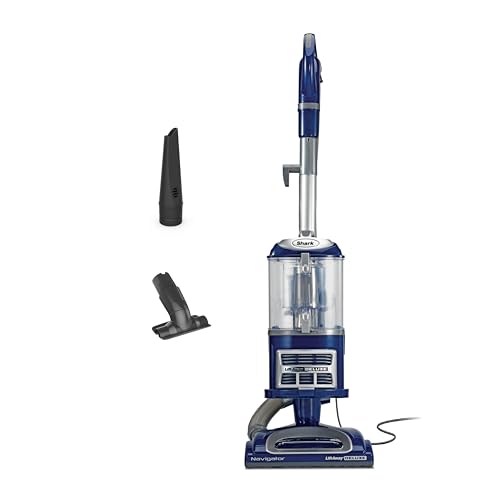
Shark Navigator Lift-Away NV360 delivers powerful suction with HEPA filtration and swivel steering. Perfect for pet hair and allergens. See full expert review.
Frequently Asked Questions
Can you wash a HEPA filter?
It depends entirely on the filter type. Washable HEPA filters — labeled as such on the filter frame or in the manual — can be rinsed under cool water and air dried. Non-washable HEPA filters must never be rinsed with water. Doing so destroys the filter media. When in doubt, check the manufacturer’s documentation for your specific model before introducing any moisture.
How long does a HEPA filter take to dry?
Plan for 24 to 48 hours of air drying in a well-ventilated space. Thicker filters and humid environments push toward the longer end of that range. There is no safe way to accelerate drying with heat — hair dryers, ovens, and direct sunlight all risk warping the filter frame or degrading the filter media. The drying period is non-negotiable: reinstalling a damp filter leads to mold growth and motor damage.
How often should you clean a HEPA filter?
For most households, cleaning a washable HEPA filter once a month is a good baseline. Adjust that frequency based on use: households with pets or heavy foot traffic may need to clean every 2–3 weeks, while a light-use vacuum in a pet-free home might go 6–8 weeks between cleanings. Regardless of cleaning frequency, plan to replace the filter entirely once a year for heavy use, or every 12–18 months otherwise.
What happens if you don’t clean your HEPA filter?
Suction power drops progressively — often by 40 to 60 percent before most people notice anything wrong. The motor works harder to compensate for restricted airflow, generating more heat and accelerating wear. In sealed-system vacuums, a fully clogged filter can cause the motor to overheat. In addition to the mechanical impact, a packed filter loses filtration effectiveness — fine particles that should be trapped may bypass an overwhelmed filter and re-enter your air.
Can I use a vacuum to clean the HEPA filter?
Using a second vacuum to clean the HEPA filter of your primary vacuum is only marginally helpful and carries the same risks as compressed air — you may push particles deeper into the media rather than extracting them. The best pre-rinse step is gentle tapping over a trash can, not vacuuming.
Quick Reference: HEPA Filter Cleaning Checklist
- Vacuum is off and unplugged before touching the filter
- Filter confirmed washable (label or manual)
- Tap over trash to remove loose debris first
- Rinse with cool water only — no hot water, no soap
- Squeeze gently to remove excess water — no rubbing
- Air dry in a ventilated area for a full 24–48 hours
- Verify completely dry before reinstalling
- Schedule replacement once annually for heavy use
A clean HEPA filter is the single highest-impact maintenance task you can do for your vacuum. It costs nothing, takes minutes of active effort, and restores the suction and air quality performance you paid for when you bought the machine. Build it into your monthly cleaning routine and your vacuum — and your lungs — will thank you.
Ready to Find Your Perfect Vacuum?
Browse our expertly reviewed vacuum cleaners and make an informed decision
Browse All Vacuums