LiDAR vs Camera Robot Vacuum Navigation: Which is Better in 2026?
LiDAR vs camera navigation for robot vacuums explained. We compare precision, obstacle avoidance, dark-room performance, price, and which technology wins for your home in 2026.
Table of Contents
When shopping for a robot vacuum in 2026, you will encounter navigation technology as one of the primary differentiators between models. The two dominant approaches are LiDAR (Light Detection and Ranging) and camera-based navigation, often called vSLAM (Visual Simultaneous Localization and Mapping). Both technologies allow a robot vacuum to map your home and navigate systematically, but they work in fundamentally different ways with different real-world implications.
This article explains how each technology works, where each excels and falls short, and which you should choose based on your specific home situation.
How LiDAR Navigation Works
LiDAR stands for Light Detection and Ranging. In robot vacuums, a LiDAR sensor is typically mounted on a rotating turret on top of the robot. This turret spins continuously while the robot operates, emitting hundreds or thousands of laser pulses per second in a 360-degree horizontal sweep.
Each laser pulse travels outward until it hits a surface, then returns to the sensor. By measuring the time each pulse takes to return, the robot calculates the distance to every surface in its environment with millimeter-level precision. This data creates a 2D point cloud of the robot’s surroundings that is updated dozens of times per second.
The robot uses this continuously refreshed point cloud to build and maintain a floor plan map of your home. It knows exactly where walls, furniture, and obstacles are at all times, allowing it to plan efficient cleaning paths and navigate around objects with precision.
Key characteristics of LiDAR navigation:
- Works in complete darkness (uses laser light, not visible light)
- Highly accurate distance measurement
- Fast map building, typically completing a full-home map in one or two cleaning sessions
- The turret adds height to the robot, sometimes limiting passage under low furniture
- Less sensitive to surface pattern complexity
- Does not require visual textures to localize
How Camera Navigation Works
Camera-based navigation uses one or more cameras combined with AI image processing to understand the robot’s surroundings. There are two primary configurations.
Downward-facing cameras photograph the floor beneath the robot. By recognizing floor textures and patterns as the robot moves, the system tracks position through a technique similar to optical mouse tracking. This is often used in combination with other sensors.
Upward or forward-facing cameras photograph the ceiling, walls, or forward environment. Ceiling cameras track the unique pattern of ceiling features (light fixtures, shadows, painted areas) to localize the robot within a room. Forward cameras are increasingly used for obstacle recognition and avoidance.
AI-based obstacle recognition cameras use machine learning models trained on thousands of images of common household objects to identify and classify obstacles in the robot’s path. Modern systems can distinguish between a shoe, a dog toy, a charging cable, and a pile of laundry, responding appropriately to each.
Key characteristics of camera navigation:
- Requires some ambient light (though many systems operate in low light)
- Can identify what obstacles are, not just that they exist
- Typically does not add height to the robot profile (thinner robots possible)
- More sensitive to very dark or featureless environments
- Higher processing requirements
- Can be used for home monitoring features (some models stream video)
Head-to-Head Comparison
Mapping Accuracy and Consistency
Advantage: LiDAR
LiDAR navigation produces more consistent maps with less variability across sessions. Because it does not depend on visual features, map quality does not change based on lighting conditions, time of day, or whether furniture has been rearranged.
Camera-based systems can experience localization uncertainty in rooms with minimal distinctive ceiling features, in complete darkness, or after significant furniture rearrangement. The robot may need to re-explore to update its mental model.
However, advanced camera systems in 2026, particularly those from Dreame and iRobot, have improved dramatically. The gap between LiDAR and camera mapping accuracy has narrowed significantly compared to two or three years ago.
Obstacle Avoidance Quality
Advantage: Camera (with AI)
This is the clearest area where camera-based navigation outperforms LiDAR. LiDAR creates a precise distance map but cannot identify what an obstacle is. A robot vacuum with LiDAR navigation knows there is something 20 centimeters in front of it but does not know if it is a charging cable, a toy, or a pair of shoes. It simply stops, circumnavigates, and continues.
Camera-based obstacle detection with AI classification can determine that it sees a cable on the floor and choose to carefully route around rather than over it. It can identify a dog bowl and leave a specific gap. It can recognize pet waste and avoid it entirely (a key differentiator that LiDAR cannot match).
The practical result is that camera-equipped robots tend to get stuck less often and leave fewer obstacles untouched.
Dark Room Performance
Advantage: LiDAR
LiDAR operates completely independently of light. It works identically in a pitch-black room as in a brightly lit one. Camera-based systems require at least some ambient light. Many modern camera-equipped robots handle low light well due to improved sensors and AI processing, but true complete darkness remains a challenge for pure camera navigation.
If you regularly run your robot vacuum at night with all lights off, LiDAR provides reliable performance that camera systems may struggle to match.
Robot Profile Height
Advantage: Camera
The LiDAR turret on most robot vacuums adds 2 to 4 centimeters to the robot’s height. This can prevent LiDAR robots from passing under certain sofas, beds, and furniture with lower clearance heights.
Camera-equipped robots without top-mounted turrets can be significantly flatter. Some models achieve profiles under 8.5 centimeters, allowing access to low furniture that LiDAR robots cannot reach. This is a meaningful practical advantage in homes with low-clearance furniture.
Map Building Speed
Advantage: LiDAR
LiDAR systems typically build an accurate map in one to two cleaning sessions. The precise distance data allows rapid, reliable room delineation and wall following.
Camera systems, particularly those relying on ceiling features, can take three to five sessions to refine an accurate map, and maps may shift when furniture is moved.
Privacy Considerations
Advantage: LiDAR
Some users are uncomfortable with camera-equipped robots photographing their home environment. While most manufacturers do not store or transmit this imagery, the presence of a camera is a psychological and privacy consideration that some users prefer to avoid.
LiDAR navigation involves no imagery, only distance measurements.
Price
Advantage: Camera
Quality LiDAR modules are more expensive to manufacture than camera sensors. Entry-level LiDAR robot vacuums typically start around $200 to $300. Good camera-based systems are available from $150.
However, the most sophisticated robots use both technologies simultaneously, and these tend to command premium pricing across the board.
Which Navigation Technology Do Top Models Use?
LiDAR-primary systems:
- Roborock S8 MaxV Ultra
- Dreame X40 Ultra Complete
- Ecovacs Deebot X8 series
- Eufy Clean X10 Pro Omni
Camera-primary systems:
- iRobot Roomba j-series (overhead camera)
- Roomba s-series (vSLAM with downward camera)
Hybrid LiDAR + Camera:
- Roborock S8 MaxV Ultra (LiDAR + front camera for obstacle ID)
- Dreame X40 Ultra (LiDAR + front AI camera)
- Ecovacs Deebot X8 Pro Omni (LiDAR + forward camera)
The industry trend is clearly toward hybrid systems that use LiDAR for precision mapping and camera systems for obstacle identification - taking the best of both technologies.
Which Should You Choose?
Choose LiDAR if:
- You run your robot vacuum at night or in rooms without light
- You have a complex multi-room floor plan that benefits from precise mapping
- You prioritize privacy and prefer no cameras in your home
- Your furniture has normal clearance heights (LiDAR robots typically need 9+ cm)
- You want the fastest, most reliable initial mapping
Choose Camera Navigation if:
- You have low furniture where thin robot profiles matter
- You have lots of obstacle challenges (cables, toys, pet areas)
- You are budget-conscious and comparing entry-level options
- Obstacle identification and avoidance is a top priority
Choose a Hybrid System if:
- You want best-in-class performance across all metrics
- Budget is not the primary constraint
- You have both mapping complexity and obstacle avoidance needs
The Top Performers in 2026
Best LiDAR Robot Vacuum: Roborock S8 MaxV Ultra
The S8 MaxV Ultra combines Roborock’s PreciSense LiDAR navigation system with a front-mounted RGB camera and AI obstacle recognition. It produces highly accurate multi-floor maps, handles complex room configurations with ease, and uses the camera feed to identify 72 categories of obstacles. This is the hybrid approach done right.
Best Camera Navigation Robot Vacuum: iRobot Roomba j9 Plus
The Roomba j9 Plus uses iRobot’s PrecisionVision navigation with a ceiling-facing camera plus a suite of floor and object sensors. Its Dirt Detect technology and Genius 4.0 home intelligence learn your cleaning preferences over time. The camera-based approach allows a relatively low 8.9 cm profile and excellent obstacle avoidance.
Best Budget Option: Dreame D10 Plus
The Dreame D10 Plus brings LiDAR navigation to an accessible price point around $230. Mapping accuracy is excellent, dark-room operation is reliable, and the self-emptying base keeps maintenance minimal. It is the best argument that LiDAR navigation does not require a premium price.
Frequently Asked Questions
Is LiDAR better than camera for robot vacuums?
LiDAR is better for map accuracy, dark-room operation, and initial mapping speed. Camera systems are better for obstacle identification and enabling thinner robot profiles. Hybrid systems that combine both technologies offer the best overall performance, and they now represent the majority of premium robot vacuum releases.
Can LiDAR robot vacuums work in the dark?
Yes. LiDAR uses laser pulses, not visible light, so it works identically in complete darkness. This is one of LiDAR’s clearest advantages over pure camera navigation systems.
Do camera robot vacuums record and store footage?
Most camera-equipped robot vacuums use their camera only for navigation and obstacle detection, not for recording. The images are processed locally and discarded. However, some models with live view features do transmit imagery to the manufacturer’s cloud during remote viewing sessions. Check the manufacturer’s privacy policy for your specific model.
Which is more accurate for home mapping?
LiDAR produces more geometrically accurate maps with greater consistency across sessions. Camera-based maps can be influenced by changes in lighting, furniture rearrangement, or featureless spaces. However, modern AI-enhanced camera systems have closed much of this gap.
Are hybrid navigation robot vacuums worth the extra cost?
For most households, yes. The combination of precise LiDAR mapping with camera-based obstacle avoidance produces meaningfully better real-world performance than either technology alone. If budget allows, a hybrid model is generally the right choice.
Why does my LiDAR robot vacuum get confused near mirrors and glass?
Glass and mirrors can reflect or absorb LiDAR laser pulses in unpredictable ways, creating ghost readings or blind spots in the map. This is a known limitation of LiDAR navigation. Most modern LiDAR robots use additional sensors (cliff sensors, proximity sensors) to compensate, but glass walls and large mirrors can still create navigation challenges.
Final Verdict
In 2026, the navigation technology debate has largely resolved in favor of hybrid systems for premium buyers. Pure LiDAR excels in mapping and dark-room operation. Pure camera excels in obstacle identification and thin profiles. Combined, they produce a robot vacuum that handles the full spectrum of real-world challenges.
For most buyers, a LiDAR-equipped robot like the Roborock S8 MaxV Ultra or Dreame D10 Plus will outperform a camera-only system for overall reliability and mapping accuracy. But if obstacle avoidance in a cluttered home is your primary concern, the iRobot Roomba j9 Plus demonstrates what mature camera-based AI navigation can achieve.
Top Picks

eufy Omni C20 robot vacuum and mop combo with auto emptying, washing, and drying station. 7000Pa suction and 3.35-inch low profile. See the full review!
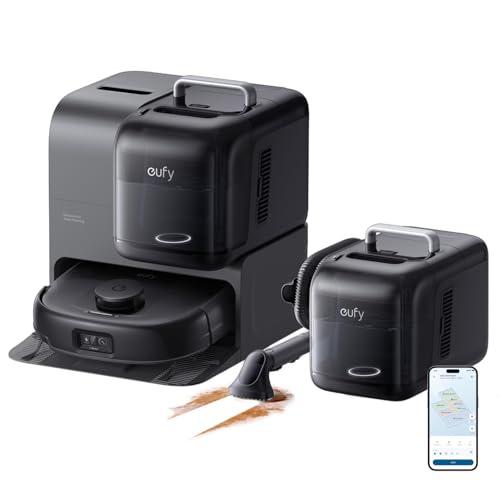
eufy E28 robot vacuum delivers 20000Pa suction, self-washing HydroJet mop, carpet deep cleaner & zero-tangling brushes. Shop now for hands-free clean.

iRobot Roomba Vac Q0120 robot vacuum with 3-stage cleaning, 120-min runtime & Alexa support. Self-charging & app-controlled. See why 50,000+ owners love it!

Shark IQ robot vacuum empties itself for 45 days, maps your home, and features a self-cleaning brushroll. Perfect for pet hair. Works with Alexa. Shop now!
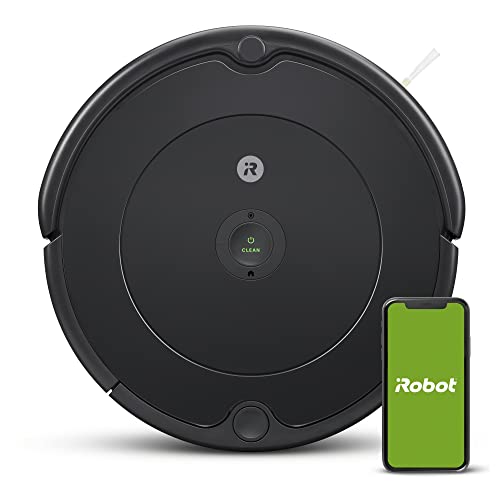
The iRobot Roomba 694 self-charges, navigates around furniture, and tackles pet hair on carpets and hard floors. Shop now for smarter daily cleaning.

DEEBOT T50 MAX PRO features 18,500Pa suction, auto hot-water mop washing & 12-in-1 Omni Station. Hands-free cleaning redefined. Shop on Amazon!
Ready to Find Your Perfect Vacuum?
Browse our expertly reviewed vacuum cleaners and make an informed decision
Browse All Vacuums