Most Reliable Vacuum Brand 2026: Which Brand Builds Vacuums That Last?
Which vacuum brand is most reliable in 2026? Expert analysis of Miele, Dyson, Shark, and Bissell for build quality, warranty, and longevity.
Table of Contents
- Most Reliable Vacuum Brand 2026: Which Brand Builds Vacuums That Last?
- Why Reliability Matters More Than Any Other Specification
- Brand-by-Brand Reliability Breakdown
- What Actually Makes a Vacuum Reliable: The Technical Factors
- Top Picks for Reliability: 6 Vacuums That Last
- How to Extend the Life of Any Vacuum
- Frequently Asked Questions
- The Bottom Line: Which Brand Should You Buy?
Most Reliable Vacuum Brand 2026: Which Brand Builds Vacuums That Last?
Most vacuum buyers ask the wrong question. They compare suction numbers, count attachments, and weigh LED features against battery runtime. But for anyone who has bought a vacuum that needed replacing after 18 months, the real question becomes obvious: which brand actually builds machines that last?
Reliability is the feature that every manufacturer promises but few consistently deliver. A vacuum that fails in year two costs you more over time than a premium machine that runs for a decade. It also costs you in something harder to quantify: the frustration of diminishing suction, broken brush rolls, dying batteries, and a machine that just stops performing the way it did when you first unboxed it.
This guide takes a brand-by-brand look at vacuum reliability in 2026 — what separates genuinely durable machines from ones that merely look the part, which warranties actually back up their promises, and which specific models earn your trust over the long haul.
Why Reliability Matters More Than Any Other Specification
The vacuum industry is full of impressive numbers. Suction is measured in air watts and kilopascals. Filtration is quantified to the micron. Runtime is advertised in optimistic mode conditions. None of these figures tell you whether the machine will still perform at year three or year five.
Reliability comes down to a smaller set of factors that rarely appear on spec sheets:
Motor quality and thermal management. The motor is the heart of a vacuum cleaner. Budget motors run hotter, generate more vibration, and are built to tighter cost tolerances. Over time, heat cycles degrade bearings and windings. Premium motors — especially brushless digital motors and Miele’s precision-wound induction motors — are engineered to higher specifications and tested for far longer operating cycles. A motor rated for 1,000 hours of use is fundamentally different from one built to pass a 90-day reliability threshold.
Component tolerances and build materials. The way parts fit together determines how a vacuum ages. Loose fittings develop suction leaks. Thin plastic housings crack under regular use. Hose connections that feel flimsy new become failure points within a year. Brands that use reinforced polycarbonate, metal internal components, and precision-fitted joints build machines that stay tight and leak-free for years. This is immediately noticeable when you pick up a Miele versus a budget store brand — the difference in material quality is tactile before you ever turn it on.
Brushroll and airpath design. The mechanical path debris travels through a vacuum is subject to constant wear. Brush rolls that tangle with hair jam bearings and stress motors. Airpaths with sharp bends create friction and restrict flow over time. Brands that invest in self-cleaning brush rolls, smooth airpath geometry, and easily replaceable wear parts protect both performance and longevity.
Warranty terms and service infrastructure. A warranty is a manufacturer’s confidence statement. Brands that offer multi-year warranties on motors and parts are telling you something meaningful about expected lifespan. More importantly, warranty value depends on service network accessibility — a brand with authorized repair centers and available replacement parts extends the useful life of its products far beyond what disposable-minded brands can offer.
Brand-by-Brand Reliability Breakdown
Miele: The Gold Standard for Vacuum Longevity
Miele occupies a unique position in the vacuum market. While other brands iterate rapidly through product generations, Miele builds machines around a simple philosophy: manufacture it once, correctly, and it will last 20 years. That is not marketing language — it is an engineering specification. Miele’s motors are tested and rated for 20 years of average use before product release.
The engineering decisions that make this possible are visible throughout a Miele vacuum. The motors are German-engineered induction designs with thermally managed housings. The AirClean filtration system uses genuine Miele bags that function as a primary filtration stage, protecting the motor from fine particles that shorten motor life in bagless competitors. The build tolerances are tight enough that Miele machines feel substantially different in the hand — heavier in meaningful places, precisely fitted at every joint, with controls that actuate cleanly rather than feeling loose or vague.
Miele’s warranties reflect this confidence. Their vacuums come with a 7-year warranty on the motor and casing — the longest standard coverage in the consumer vacuum market by a significant margin. For a category where many brands offer 1–2 year coverage, 7 years is an extraordinary statement of expected product life.
The trade-off is cost. Miele vacuums sit at the premium end of the market, and their bagged design means ongoing filter bag purchases. But when you amortize a Miele’s purchase price over its 15–20 year expected service life, the cost per year of use often compares favorably with budget vacuums replaced every 2–3 years.
Reliability verdict: Industry-leading. Miele is the most reliable vacuum brand for homeowners who want a machine they buy once and keep for a generation.
Dyson: Innovative Engineering with Variable Quality Control
Dyson transformed the vacuum industry with bagless cyclone technology and has continued to lead in cordless innovation. The V-series stick vacuums redefined what a cordless vacuum could do, and Dyson’s digital motors are genuine engineering achievements — spinning at up to 125,000 RPM with precise electronic speed control.
However, Dyson’s reliability story is more nuanced than Miele’s. The brand’s rapid product iteration — releasing new V-series models frequently — means quality control has not always scaled as smoothly as the engineering has advanced. Early batches of some models showed higher-than-expected failure rates in battery management and motor controller components. User feedback across high-volume reviews shows a wider variance in long-term satisfaction than Miele or Shark typically exhibit.
That said, Dyson has significantly improved its quality processes in recent generations. The V11 and newer models have demonstrated much better durability records than earlier V-series products. Dyson backs its products with a 5-year warranty on machines and 2-year coverage on cordless models (with registration), and offers lifetime support through its service network. The availability of genuine replacement parts — batteries, filters, brush heads — extends useful product life meaningfully.
For corded Dyson uprights like the Ball Animal series, long-term reliability is generally strong. The sealed HEPA filtration, self-adjusting cleaner heads, and Radial Root Cyclone technology represent durable engineering choices rather than trend-chasing features.
Reliability verdict: Good to very good, with some product-line variation. Best on corded uprights and current-generation cordless models. Warrants attention to user reviews for specific models before purchasing.
Shark: Best Value for Reliable Performance
Shark has built one of the most trusted mainstream vacuum brands in the market through a combination of practical innovation and consistent reliability at accessible price points. The brand does not aim for Miele’s 20-year durability standard, but it reliably delivers machines that perform well for 5–8 years of regular use — which represents strong value at the $150–$350 price range it occupies.
Several Shark design features contribute directly to reliability. The Lift-Away pod separation system — a defining Shark innovation — uses a simple, mechanically robust mechanism with few failure points. The DuoClean PowerFins head design, with its dual-brush configuration, handles surface transitions without the wear stress that single-brush heads accumulate. The HairPro self-cleaning brushroll technology significantly reduces the most common cause of vacuum degradation: hair-tangled brush rolls jamming and stressing motors.
Shark’s 5-year limited warranty on select models matches Dyson and covers the core mechanical components that matter most. The brand also maintains wide parts availability, meaning repairs rather than replacements are often possible when components do wear.
The caveat for Shark is that, like most mainstream brands, quality can vary across product lines. Their lower-priced models use less robust materials than their flagship Rotator and Stratos series. Paying attention to the specific product line matters more with Shark than with Miele, where the entire range reflects a consistent quality floor.
Reliability verdict: Very good at mid-range and flagship levels. One of the strongest value propositions for reliable cleaning performance without Miele-level investment.
Bissell: Honest Mid-Range Reliability
Bissell has been manufacturing vacuums since 1876, making it one of the longest-standing names in home cleaning. That heritage reflects genuine manufacturing knowledge, and Bissell’s mid-range products deliver reliable performance for most households.
Where Bissell earns its reliability reputation is in the CleanView and CrossWave product lines — practical, unpretentious machines that do their jobs consistently without sophisticated electronics that can fail. The OnePass Technology, scatter-free hard floor design, and washable filter systems are all features that reduce failure points rather than adding them.
Bissell’s warranties are typically 2 years for most products, which is industry-standard at their price point. The brand also supports the Bissell Pet Foundation with every purchase, adding a values dimension to the buying decision that resonates with the pet-owning households that represent a significant portion of their customer base.
The honest limitation is ceiling. Bissell does not make the most durable vacuum in any category. Its motors and materials are built to mid-range cost targets, and with heavy daily use, a Bissell vacuum may show wear in the 4–6 year range where a Shark or Dyson might still be running strong. For households with moderate cleaning needs — not shedding pets on every carpet, not daily whole-home sessions — Bissell’s reliability is entirely adequate.
Reliability verdict: Good for moderate use households. Strong value at its price point. Not the longest-lasting choice for high-demand environments.
Hoover: Heritage Brand with Solid Upright Reliability
Hoover invented the modern vacuum cleaner and has been building them since 1908. The brand’s WindTunnel technology remains a genuinely effective approach to suction performance, and Hoover uprights are known for a durable, no-nonsense build quality that has characterized the brand for decades.
In the corded upright category, Hoover delivers reliable performance. The WindTunnel Cord Rewind Pro’s multi-cyclonic filtration maintains suction consistency over time in a way that single-filter bagless designs cannot. Automatic cord rewind mechanisms are tested for thousands of rewind cycles. Build quality on Hoover uprights is solid plastic construction — not premium, but assembled well enough to last years with normal use.
Hoover’s warranties are typically 2 years, and parts availability is generally good for the brand’s core product lines. Where Hoover loses ground is in innovation — the brand has not kept pace with Shark and Dyson in cordless technology or smart features, and its product line is narrower than most major competitors.
Reliability verdict: Good for traditional corded uprights. A reliable choice for households that prefer straightforward, proven cleaning technology over connected features.
iRobot (Roomba): Robot Vacuum Reliability Leader
iRobot invented the Roomba in 2002 and has more accumulated robot vacuum reliability data than any other brand in the category. The brand’s longevity in a category defined by complex mechanical and electronic systems is itself a reliability signal — iRobot has solved the failure modes that plagued earlier robot vacuums through years of engineering iteration.
Roomba’s multi-surface rubber brush system is a reliability-conscious design choice. Rubber brushes do not tangle with hair the way bristle brushes do, reducing the most common cause of robot vacuum motor stress. iRobot’s navigation systems — whether camera-based Genius intelligence or LiDAR on newer models — have matured to the point where cliff detection, obstacle avoidance, and dock return work reliably across diverse home environments.
iRobot warrants its products for 1 year as standard, with extended coverage available through registration. The brand’s service network and spare parts availability are among the best in the robot category, which meaningfully extends usable product life beyond the warranty period.
Reliability verdict: Category leader for robot vacuums. iRobot’s engineering maturity gives it a reliability edge over newer entrants to the robot vacuum market.
What Actually Makes a Vacuum Reliable: The Technical Factors
Beyond brand reputation, specific technical characteristics predict vacuum longevity more accurately than marketing claims.
Warranty length as a confidence indicator. This is the simplest signal. Brands that offer long warranties absorb more financial risk on failures — which means they only offer long warranties on products they are confident will not fail frequently. Use this as a quick filter:
- Miele: 7-year motor and casing warranty
- Dyson: 5-year (corded models), 2-year (cordless)
- Shark: 5-year (select models), 1-year (entry-level)
- Bissell: 2-year standard
- Hoover: 2-year standard
- iRobot: 1-year standard (extended with registration)
Motor type and thermal design. Brushless digital motors (used by Dyson) and precision induction motors (used by Miele) outlast brushed motors found in budget models. Motors with thermal protection circuits that throttle power before overheating also significantly extend service life.
Filtration system and motor protection. Vacuums with inadequate filtration allow fine dust to reach the motor — the leading cause of motor failure in budget bagless vacuums. Bagged systems (Miele) provide excellent motor protection. Sealed bagless systems with multi-stage cyclone separation (Dyson’s Radial Root Cyclone, Shark’s Anti-Allergen Complete Seal) also protect motors effectively. Open-path bagless designs with basic foam filters are the highest-risk configuration for long-term motor health.
Brushroll design. Self-cleaning brushrolls (Shark HairPro, Dyson Motorbar) reduce mechanical stress by preventing hair accumulation. This single feature has a measurable impact on both motor longevity and brush-bearing lifespan in households with pets or long hair.
Parts and service availability. A vacuum is only as durable as its ability to be repaired. Check whether replacement bags, filters, batteries, and brush rolls are readily available for the model you are considering. Miele, Dyson, and Shark all maintain robust replacement parts ecosystems. Some smaller brands use proprietary components that become unavailable within years of product discontinuation.
Top Picks for Reliability: 6 Vacuums That Last
1. Miele Classic C1 Pure Suction — Best for Long-Term Investment
The Miele Classic C1 Pure Suction is the entry point into Miele’s legendary lineup, and it brings the full Miele reliability package at the brand’s most accessible price point. The German-engineered motor is tested to last 20 years, the AirClean three-stage filtration system protects that motor from fine particulate damage, and the precision-fitted construction maintains suction integrity for the life of the machine.
With a 4.4-star rating across 7,313 verified reviews, the Classic C1 earns consistent praise for its build quality, filtration performance, and durability. Six variable suction settings give you surface-specific control, while the SBD 365-3 combination floorhead handles both hard floors and carpets without requiring a head swap. The sealed bag disposal system is a hygiene advantage that bagless competitors cannot match.
This is the vacuum you buy when you are done buying vacuums every few years. Covered by Miele’s 7-year warranty, it is the most credentialed reliability pick in the market.
Rating: 4.4 stars | 7,313 reviews | Category: Canister
2. Shark Rotator NV752 Powered Lift-Away TruePet — Best Reliable Upright
The Shark Rotator NV752 has earned one of the most impressive review records in the upright vacuum category: 4.4 stars from over 44,000 verified buyers. That volume of consistent positive feedback is one of the strongest reliability signals a product can carry — it means the machine’s performance holds across tens of thousands of real-world households, not just controlled lab conditions.
The Powered Lift-Away technology is mechanically simple and robustly built, with a pod separation mechanism that Shark has refined across multiple product generations. The sealed Anti-Allergen HEPA filtration system protects both the motor and your indoor air quality. The advanced swivel steering has demonstrated longevity across years of user ownership, maintaining its responsiveness without developing the looseness that cheaper steering mechanisms exhibit over time.
For pet owners specifically, the self-cleaning Pet Power Brush reduces the brushroll stress that shortens the life of conventional vacuum motors. At its price point, the NV752 represents one of the best combinations of reliability, versatility, and value in the market.
Rating: 4.4 stars | 44,242 reviews | Category: Upright

Shark Rotator NV752 Powered Lift-Away TruePet upright vacuum with HEPA filter, swivel steering, LED headlights, and pet power brush for deep cleaning.
3. Miele Classic C1 Turbo Team — Best Dual-Surface Reliability
The Miele Classic C1 Turbo Team adds a dedicated TurboTeQ floorhead and Parquet brush to the classic Miele formula, making it the right reliability choice for homes with both carpet and hard floors. At 4.4 stars across 3,284 reviews, it carries Miele’s full 20-year motor engineering standard and AirClean three-tiered filtration in a practical dual-floorhead configuration.
The air-driven TurboTeQ brush handles low-to-medium pile carpet without requiring a separate electric connection, reducing the number of electrical components that can fail. The natural-bristle Parquet floorhead is as simple as a floor cleaning tool gets — with no moving parts to wear out, it will outlast almost any carpet brush roll on the market. For homeowners who prioritize reliability in every component, this mechanical simplicity is a meaningful advantage.
The 6-setting suction dial, 29.5-foot operating radius, and telescoping stainless steel wand round out a machine built to deliver decades of dependable performance.
Rating: 4.4 stars | 3,284 reviews | Category: Canister
4. Bissell CleanView 3536 — Best Budget-Reliable Upright
The Bissell CleanView 3536 earns its place on a reliability list by delivering consistent, honest performance that has satisfied over 4,859 buyers at a 4.4-star average. It does not compete with Miele on longevity or Shark on features, but it builds to a quality level that reliably serves moderate-use households for the 4–6 year range most buyers expect from a vacuum in this category.
The OnePass Technology reduces the mechanical work the vacuum has to do per session, which reduces cumulative wear. Washable multi-level filters eliminate the filter clogging that degrades suction and stresses motors in many budget designs. The XL 2-liter bagless dirt container and Active Extension Wand round out a feature set that covers the full spectrum of household cleaning without unnecessary complexity.
For budget-conscious buyers who want reliable everyday cleaning without long-term investment, the Bissell CleanView 3536 is the honest answer.
Rating: 4.4 stars | 4,859 reviews | Category: Upright
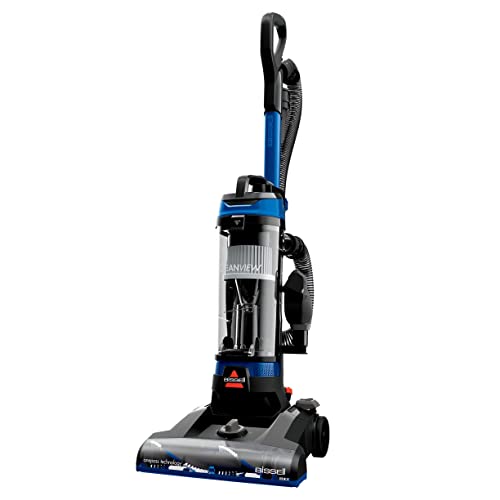
Bissell CleanView 3536 upright bagless vacuum features OnePass Technology, a 10-foot active wand, scatter-free hard floor cleaning, and an XL dirt container.
5. Miele Complete C3 Limited Edition — Best Premium Reliability for Hard Floors
The Miele Complete C3 Limited Edition represents the full expression of Miele’s reliability philosophy in a canister optimized for hard floor-dominant homes. At 4.5 stars across 128 reviews, it is newer to market but carries the Complete C3’s established reputation as Miele’s mid-tier flagship.
The Complete C3’s three-stage AirClean filtration achieves 99.9% capture of fine dust particles — including allergens — while the one-touch automatic cord rewind, 36-foot operating radius, and ComfortHandle ergonomics reduce the wear that accumulates from repeated use. Six suction levels controlled via convenient foot controls protect delicate hard floors while delivering the power needed for embedded dirt on area rugs.
The Parquet Twister floorbrush, with its 180-degree rotation and soft bristle arrangement, is one of the most mechanically durable floor tools in the vacuum market. With no electric connections and no moving parts beyond the rotation mechanism, it will reliably clean delicate hard floors for as long as the vacuum itself runs. Miele’s 7-year warranty covers the Complete C3 fully.
Rating: 4.5 stars | 128 reviews | Category: Canister
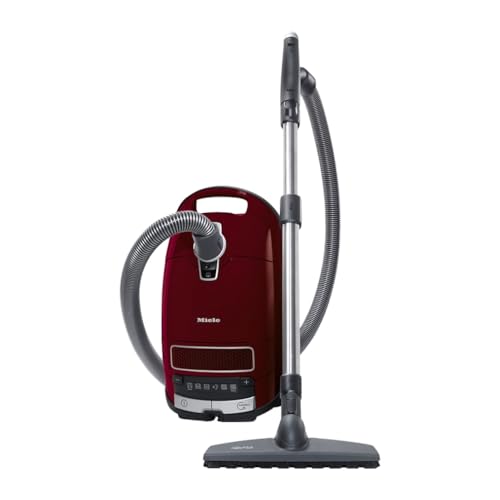
The Miele Complete C3 Limited Edition offers German-engineered AirClean filtration, 6-level suction & Parquet Twister for hard floors. Discover it today.
6. Hoover WindTunnel Cord Rewind Pro — Best Traditional Upright for Reliability
The Hoover WindTunnel Cord Rewind Pro earns its reliability pick for homeowners who want a traditional corded upright from a brand with over a century of manufacturing history. At 4.3 stars from 1,216 buyers, it delivers Hoover’s proven WindTunnel suction technology with multi-cyclonic filtration that maintains consistent suction over time — a meaningful reliability advantage over single-filter bagless designs.
The automatic cord rewind mechanism is a durability-conscious feature: Hoover’s rewind systems are tested for thousands of cycles and represent one of the few moving convenience mechanisms in the vacuum world that has a strong long-term track record. The built-in 10-foot extension wand, 25-foot cord, and 5-level height adjustment provide a complete cleaning system without electronic components that can fail.
For households that prefer the simplicity and proven performance of a corded upright, the Hoover WindTunnel Cord Rewind Pro represents a reliable, traditionally-built choice backed by one of the oldest names in the category.
Rating: 4.3 stars | 1,216 reviews | Category: Upright

Hoover WindTunnel Cord Rewind Pro bagless upright vacuum with automatic cord rewind, multi-cyclonic filtration, and 25-ft cord. Expert review inside!
How to Extend the Life of Any Vacuum
Even the most durable vacuum will underperform and fail prematurely without proper maintenance. These practices apply across all brands and significantly extend vacuum service life.
Filter maintenance is the single most important thing you can do. Clogged filters restrict airflow, which forces motors to work harder against back pressure. This increases operating temperature and accelerates motor wear. Check your vacuum’s filter condition monthly if you have pets, quarterly otherwise. Washable filters should be rinsed, fully dried, and reinstalled. Foam and felt filters should be replaced at manufacturer-recommended intervals. A clean filter running at proper airflow puts far less stress on the motor than any other single maintenance action.
Clean the brush roll after every 3–4 sessions. Hair and string accumulate around brush roll bearings regardless of self-cleaning claims. When the brush roll becomes too laden with hair to spin freely, motor load increases. Cutting and removing hair from the brush roll with scissors takes two minutes and prevents the most common cause of vacuum motor burnout in pet-owning households.
Check and clear the airpath regularly. Partial blockages in hoses, wand connections, and inlet ports create suction restrictions that force motors to overcompensate. Any time you notice a sudden drop in suction performance, check the full airpath from floor head to dustbin before assuming motor failure. A foam ball that a child accidentally vacuumed up can be blocking 80% of your airflow.
Store the vacuum properly. Leaving a cordless vacuum stored with a depleted battery damages lithium-ion cells through deep discharge. Always store cordless vacuums with at least a partial charge. For corded models, do not wrap the cord tightly around a sharp corner repeatedly — this fatigues the wire internally and eventually leads to shorts or connection failures near the cord exit.
Use genuine replacement bags and filters. Third-party bags and filters are often made to looser tolerances than OEM parts. A Miele bag equivalent that fits but does not seal properly allows fine dust past the filtration stage and directly into the motor. The cost of genuine parts is modest compared to the motor protection they provide. For Miele especially, using genuine AirClean bags is a meaningful part of the machine’s designed reliability system.
Address small mechanical issues before they become large ones. If a connection feels loose, a brush roll sounds rough, or suction starts declining, investigate rather than ignoring. Vacuum brands like Miele, Dyson, and Shark maintain extensive parts ecosystems — replacing a worn gasket or brush roll bearing is a fraction of the cost of a motor replacement or a new vacuum.
Frequently Asked Questions
Which vacuum brand is most reliable overall?
Miele is the most reliable vacuum brand overall, with motor longevity rated to 20 years of average use and a 7-year warranty that reflects genuine manufacturing confidence. For most households not seeking Miele’s premium price point, Shark is the most reliable mainstream brand with the best combination of build quality, warranty coverage (5 years on select models), and high-volume verified user satisfaction.
How long should a good vacuum last?
A budget vacuum ($50–$150) realistically delivers 2–4 years of reliable performance. A mid-range vacuum from Shark, Hoover, or Bissell ($150–$350) should last 5–8 years with proper maintenance. A premium vacuum from Miele ($400–$900+) is built to last 15–20 years and regularly achieves that in practice. Dyson models in the $300–$700 range typically deliver 7–10 years when maintained properly.
Is Miele really worth the extra money?
For households with hard floors, allergy concerns, and a preference for buying once rather than replacing repeatedly, Miele is worth every dollar when amortized over its 15–20 year service life. A $600 Miele lasting 20 years costs $30 per year. A $200 vacuum replaced every 4 years costs $50 per year — and the Miele cleans better and filters air more effectively throughout. For households with simple cleaning needs on a tight budget, the math is different, and a Shark or Bissell is the right answer.
Does Dyson have reliability problems?
Dyson has had variable quality control across product generations, with some earlier V-series models showing higher-than-expected failure rates. Current-generation Dyson products (V11 onward) have significantly improved. The brand’s 5-year warranty on corded models and 2-year warranty on cordless (with registration) provides reasonable coverage. If reliability is your primary concern, read recent reviews of the specific model you are considering rather than relying on Dyson’s overall brand reputation.
What is the longest warranty on a vacuum cleaner?
Miele offers the longest standard warranty in the consumer vacuum market: 7 years on the motor and casing across their vacuum line. This compares to 5 years for Dyson (corded) and Shark (select models), and 1–2 years for most other mainstream brands. The Miele 7-year warranty is industry-leading and reflects the brand’s genuine confidence in long-term product durability.
Is it better to buy a bagged or bagless vacuum for reliability?
From a pure motor-protection and long-term reliability standpoint, bagged vacuums — particularly Miele’s sealed AirClean bag system — provide better motor protection against fine dust ingestion. However, modern sealed bagless systems like Dyson’s Radial Root Cyclone and Shark’s Anti-Allergen Complete Seal are effective enough that motor failure from dust ingestion is rare. The reliability gap between bagged and bagless has narrowed significantly at the premium tier. At entry-level and mid-range price points, bagged designs still provide a meaningful motor protection advantage.
Can you repair a vacuum rather than replace it?
Yes, and you should — especially for premium brands. Miele, Dyson, Shark, and Hoover all maintain extensive parts ecosystems with replacement bags, filters, brush rolls, hoses, and even motor assemblies available through authorized dealers and online retailers. For vacuums from these brands, repair is usually cost-effective for anything short of a catastrophic motor failure, and often extends service life by years. For budget brand vacuums, parts availability is typically poor and repair usually costs more than replacement.
The Bottom Line: Which Brand Should You Buy?
If budget is not the primary constraint and you want a vacuum you will never replace: Miele. No other brand comes close on long-term durability, motor quality, filtration performance, or warranty confidence. Buy a Classic C1 or Complete C3 and maintain it properly — it will likely outlast every other appliance in your home.
If you want the best reliable performance at a mainstream price point: Shark. The Rotator and Navigator series deliver consistent, well-reviewed reliability at $150–$300, backed by a 5-year warranty and a robust parts ecosystem. For most households, Shark is the optimal intersection of cost and longevity.
If you are on a budget and need a reliable everyday cleaner: Bissell. The CleanView line delivers honest, consistent performance for moderate-use households without premium cost. Manage your expectations on lifespan — 4–6 years is realistic — and it will serve you well within that horizon.
For cord-free homes where a powerful cordless is the priority: Dyson’s current generation. The V11 and newer models deliver reliability that earlier generations did not, and the 5-year cordless warranty (with registration) provides meaningful coverage. Just buy from current-generation product lines rather than older clearance stock.
Whichever brand you choose, the brands that make this list earn their reliability reputations through engineering decisions — not marketing budgets. Buy the quality level your household genuinely needs, maintain it properly, and a reliable vacuum will reward you for years.
Ready to Find Your Perfect Vacuum?
Browse our expertly reviewed vacuum cleaners and make an informed decision
Browse All Vacuums