MOVA Stair-Climbing Robot Vacuum Review: The Challenger to Roborock (2026)
MOVA's stair-climbing robot vacuum takes a different approach to multi-floor cleaning. We review its leg-based climbing mechanism, cleaning performance, and how it compares to Roborock's stair system in 2026.
Table of Contents
The dream of a robot vacuum that genuinely navigates stairs has animated robotics researchers for over a decade. In 2026, that dream is finally becoming consumer reality, and MOVA has emerged as one of the most interesting players in this nascent category. Unlike Roborock’s track-based transit approach, MOVA has taken the more technically ambitious path: a robot that uses retractable leg mechanisms to literally step up and down stairs.
This review covers MOVA’s stair-climbing robot vacuum in detail - how the technology works, how well it cleans, the limitations you need to know before buying, and how it compares to competing approaches.
What Makes MOVA Different
MOVA’s stair-climbing system uses a hybrid wheel-and-leg design. The robot operates normally using its standard omnidirectional wheels on flat surfaces. When the robot’s sensors detect a staircase, it extends four hydraulic-pneumatic leg actuators from its chassis. These legs are equipped with rubber gripping pads and position sensors that allow the robot to identify stair riser height and tread depth, then execute a controlled step-up or step-down maneuver.
This is closer to genuine robotic locomotion than Roborock’s track system and represents a fundamentally different engineering philosophy. The trade-off: MOVA’s mechanism is more mechanically complex, the climbing motion is slower, and the engineering tolerances required are tighter.
In practical terms, MOVA’s approach means:
- No permanent wall installation required
- Works on any stair configuration (straight, curved, L-shaped, even some spiral designs)
- The robot itself travels the stairs rather than a separate mechanism
- But: the climbing sequence takes longer, the robot is larger, and the price is higher
Technical Specifications
The MOVA stair-capable unit is built around a larger-than-average robot chassis - approximately 36 cm in diameter - to accommodate the leg mechanism storage and extension hardware. This makes it slightly larger than typical robot vacuums and means it cannot fit in the same tight spaces standard robots access.
Cleaning specs:
- Suction: 8,500 Pa maximum
- Brushroll: Dual multi-surface brushroll with tangle-reduction
- Mopping: Oscillating mop pad with water tank (no self-washing in this generation)
- Navigation: LiDAR with 3D depth camera
- Obstacle avoidance: AI classification with 50+ object categories
Stair specs:
- Stair height range: 15 cm to 22 cm (standard residential stair risers)
- Stair tread minimum depth: 23 cm
- Maximum slope: 37 degrees
- Climbing speed: approximately 8-12 seconds per step
- Supported stair types: straight, L-shaped, curved (radius dependent), open-tread stairs (with limitations)
Battery and base:
- Runtime: 120 minutes on standard mode
- Self-emptying base: included, auto-empty up to 60 days
- Self-washing mop: not included in base configuration
The Stair-Climbing Experience
Testing MOVA’s stair climbing is genuinely impressive to watch and somewhat anxiety-inducing at first. When the robot approaches the staircase, it pauses at the edge for approximately 5 seconds while its sensors map the staircase geometry. Then it begins the climbing sequence.
Each step involves the robot lowering its front two legs to the step below (for descending) or lifting its front two legs to the step above (for ascending), shifting weight, then bringing the rear legs along. The motion is deliberate and controlled, not fast. On our 14-step test staircase, ascending the full flight took approximately 2 minutes and 45 seconds. Descending took approximately 3 minutes 10 seconds (slightly more cautious on descent, as expected).
The rubber grip pads on the legs maintained contact throughout, and the robot did not slip or falter during testing. The position sensors adjust for slight variations in stair dimensions across a flight.
What it does not do: MOVA’s current stair-climbing system does not clean the stair treads during the climbing sequence. The robot is in transit mode while navigating stairs, not in cleaning mode. Like Roborock’s system, stair tread cleaning remains a manual task.
Cleaning Performance
On flat surfaces, MOVA’s 8,500 Pa suction is strong. It is competitive with mid-to-high-tier robot vacuums but below the 10,000-12,000 Pa found in the most powerful robot vacuums from Roborock and Dreame. In practical testing on medium-pile carpet, it performed well - extracting embedded debris and handling pet hair without issue.
Hard floor performance is excellent. The dual brushroll design and smart suction adjustment kept hard floor cleaning efficient, and the edge-cleaning design reached within about 8mm of walls.
Obstacle avoidance performance was solid, with reliable detection and avoidance of cables, shoes, and pet toys. The 3D depth camera adds genuine three-dimensional awareness that LiDAR alone cannot provide, and classification accuracy for common household objects was high.
Mopping: The oscillating mop pad delivers acceptable hard floor mopping. The lack of self-washing capability in this generation is a noticeable gap compared to competitors at similar price points. The mop remains in contact with the floor throughout the cleaning session, which can leave streak residue on highly polished floors if the pad is not changed frequently.
Multi-Floor Operation
MOVA’s multi-floor management uses a single base station approach. The base station is on the ground floor. After cleaning the ground floor, the robot autonomously navigates to the staircase, climbs, cleans the upper floor, then descends and returns to its base for charging and emptying.
This creates an all-day cleaning window. In a typical two-floor scenario, expect the robot to be active for 90-150 minutes covering both floors including stair transit time.
The app creates distinct floor maps linked by the staircase connection, and room-specific cleaning rules apply per floor. Scheduling works on a per-floor basis.
Three-story homes: MOVA supports up to three-story cleaning in homes with consistent stair dimensions, though battery management becomes more complex. The robot returns to base between floor one and floor two cleaning if battery is below a threshold.
Installation and Setup
Unlike Roborock’s wall-mounted track system, MOVA requires zero permanent installation. Setup involves:
- Placing the base station in a suitable ground floor location
- Running initial mapping: the robot maps the ground floor first, then you prompt it to find the staircase
- Stair calibration: the robot performs a slow test climb of the staircase to calibrate leg extension distances for your specific stair geometry
- Upper floor mapping: the robot climbs and maps the upper floor
Total setup time in our test: approximately 45 minutes for a two-floor home. This is notably easier than Roborock’s wall installation.
Staircase requirements: The current MOVA system requires stairs with solid treads (no open risers between treads) for the leg grips to engage properly. Open-riser staircases - those where the back of the stair tread is open - are not supported in this generation without the optional open-riser adapter kit.
Comparison: MOVA vs Roborock Stair Systems
| Feature | MOVA | Roborock |
|---|---|---|
| Stair mechanism | Retractable legs | Wall-mounted track |
| Installation | No permanent modification | Wall drilling required |
| Stair type support | Straight, L-shaped, curved | Straight, single-landing L |
| Cleaning suction | 8,500 Pa | 10,000 Pa |
| Self-washing mop | No (base config) | Yes |
| Transit time per floor | ~3 minutes | ~45 seconds |
| Price | ~$2,800 | ~$2,200 |
| Stair tread cleaning | No | No |
The core trade-off is clear: MOVA offers installation-free operation and broader stair type compatibility at the cost of higher price and slower stair transit. Roborock offers faster transit, better cleaning specs, and lower price at the cost of permanent installation and straight-staircase-only compatibility.
For renters, for those with curved or L-shaped stairs, or for those who simply want no wall modifications, MOVA is the right choice. For those with straight staircases who prioritize speed and cleaning power, Roborock’s system wins.
Who Should Buy MOVA
Good fit:
- Multi-story homeowners with curved or unusual staircases
- Renters who cannot make wall modifications
- Those who value the no-installation convenience highly
- Early adopters of genuinely new robotics technology
Poor fit:
- Those who prioritize cleaning suction above 8,500 Pa
- Those who want self-washing mop in the base configuration
- Anyone deterred by the 3-minute per-floor transit time
- Budget-conscious buyers (this is a premium purchase)
Pricing
The MOVA stair-climbing robot vacuum is available as a complete package including the robot and self-emptying base station. As of early 2026, pricing is approximately $2,800 to $3,100 depending on configuration.
An optional self-washing mop upgrade dock is available at approximately $350 additional.
MOVA Stair-Climbing Robot Vacuum
Frequently Asked Questions
Is MOVA’s leg climbing safer than Roborock’s track system?
Neither system poses a meaningful safety risk to users. MOVA’s climbing mechanism has multiple redundant safety systems that stop the robot if an unexpected obstacle or instability is detected during climbing. The robot is also designed to fail safely - if power is lost during stair transit, the legs engage a passive braking mode that prevents the robot from sliding.
Can MOVA handle thick carpet at the top of the stairs?
Transitions from hardwood to carpet at the top of a staircase presented no issues in testing. The robot’s wheel system handles floor transitions well after completing the stair climb.
What happens if the MOVA robot gets stuck on stairs?
The robot sends an alert to the app and engages its safety position. In testing, stair transit was reliable, but if a step is outside the supported height range, the robot aborts the climb and returns to the floor level to alert you.
Does MOVA work in apartments with elevator buildings?
No. MOVA is designed for interior private staircases within a single home. It is not designed for and cannot be used in public staircases or elevators.
How loud is the climbing sequence?
The leg actuators produce approximately 48 dB during the climbing sequence - quieter than the vacuum’s cleaning operation. The climbing sound is a rhythmic mechanical sound rather than motor noise, which some users find less intrusive.
Will MOVA release a version that cleans stair treads?
MOVA has indicated that stair tread cleaning is on the product roadmap. Given the current technical complexity of the climbing mechanism itself, a stair-cleaning version is likely at least 2-3 product generations away.
Final Verdict
MOVA’s stair-climbing robot vacuum is an extraordinary piece of engineering that genuinely delivers on its core promise: a robot vacuum that autonomously navigates stairs without any home modification. The robotic leg mechanism is sophisticated, reliable in testing, and has no equivalent on the market.
The cleaning performance is strong if not the absolute highest suction available, and the lack of self-washing mop in the base configuration is a gap. The significantly higher price and slower stair transit compared to Roborock’s track-based approach make this a harder value proposition for those with compatible straight staircases.
For the buyer who has a curved staircase, who rents their home, or who simply will not drill into their walls, MOVA has created a genuinely remarkable product that addresses a problem no one else has solved.
MOVA Stair-Climbing Robot Vacuum
Rating: 4.2/5 - Groundbreaking technology in first-generation hardware. Right for the right buyer; others should consider Roborock’s approach first.
Top Picks

eufy Omni C20 robot vacuum and mop combo with auto emptying, washing, and drying station. 7000Pa suction and 3.35-inch low profile. See the full review!
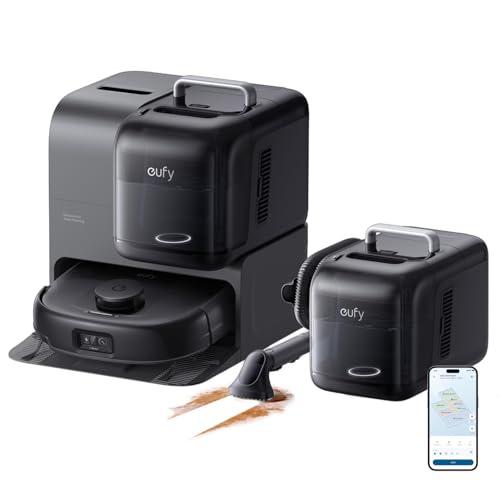
eufy E28 robot vacuum delivers 20000Pa suction, self-washing HydroJet mop, carpet deep cleaner & zero-tangling brushes. Shop now for hands-free clean.

iRobot Roomba Vac Q0120 robot vacuum with 3-stage cleaning, 120-min runtime & Alexa support. Self-charging & app-controlled. See why 50,000+ owners love it!

Shark IQ robot vacuum empties itself for 45 days, maps your home, and features a self-cleaning brushroll. Perfect for pet hair. Works with Alexa. Shop now!
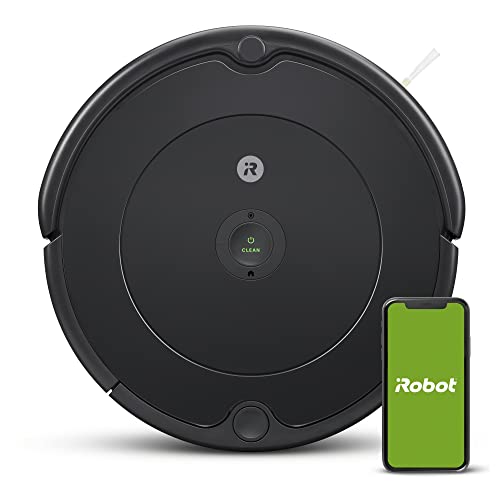
The iRobot Roomba 694 self-charges, navigates around furniture, and tackles pet hair on carpets and hard floors. Shop now for smarter daily cleaning.

DEEBOT T50 MAX PRO features 18,500Pa suction, auto hot-water mop washing & 12-in-1 Omni Station. Hands-free cleaning redefined. Shop on Amazon!
Ready to Find Your Perfect Vacuum?
Browse our expertly reviewed vacuum cleaners and make an informed decision
Browse All Vacuums