Roborock vs Dreame 2026: Two Robot Vacuum Giants Compared
Roborock vs Dreame robot vacuum — which Chinese tech brand wins? Compare navigation, suction, mopping, and value for 2026.
Table of Contents
Roborock vs Dreame 2026: Two Robot Vacuum Giants Compared
Two Chinese tech companies now produce the most advanced robot vacuums on the planet. Roborock and Dreame both launch products with jaw-dropping specifications — 20,000Pa-plus suction, self-washing mop docks, AI obstacle avoidance that identifies hundreds of object types, and base stations that handle virtually every maintenance task autonomously. They sit in roughly the same premium price bracket. They both ship globally. And they both update their lineups aggressively, sometimes twice a year.
So if you are spending $500, $800, or even $1,200+ on a robot vacuum in 2026, which brand deserves your money?
The honest answer is: it depends on what you value most. Roborock has spent more than a decade perfecting LiDAR-based navigation and building a mature, deeply integrated app ecosystem. Dreame has come out swinging with bolder innovations — retractable robot legs, industry-leading suction numbers, and a faster hardware refresh cadence that keeps its flagships at the bleeding edge of the spec sheet. Neither brand is clearly better in every category. But one of them is probably a better fit for your specific home and priorities.
This guide breaks down every meaningful category head-to-head, compares specific models from each brand at multiple price points, and gives you a clear recommendation based on what you actually need.
Brand Overview
Roborock: The Navigation and Ecosystem Pioneer
Roborock launched in 2014 as part of the Xiaomi ecosystem and quickly became the benchmark for intelligent robot vacuum navigation. The brand built its reputation on LiDAR-first mapping — a technology that produces precise, room-accurate floor plans even in complete darkness — and has never stopped refining it. Today, Roborock’s StarSight Autonomous System 2.0 layers 3D structured sensing, AI obstacle recognition, and the VertiBeam lateral avoidance system on top of that LiDAR foundation, creating one of the most spatially aware robot vacuums available.
Beyond the sensor stack, Roborock has invested heavily in platform continuity. The Roborock app is one of the most polished in the category — SmartPlan 2.0 learns your cleaning habits and adapts schedules intelligently, multi-floor mapping is seamless, and zone-level control allows you to assign different settings to every room in your home. The brand also introduced the industry-first AdaptiLift chassis, which allows the robot’s body to raise or lower independently to navigate obstacles and carpet transitions. Most recently, the Saros Z70 debuted the world’s first robotic arm integrated into a consumer robot vacuum — a genuinely unprecedented feature.
Roborock’s core strengths:
- Mature LiDAR + 3D obstacle avoidance with 108+ recognized object types
- Industry-first AdaptiLift chassis for threshold climbing and under-furniture access
- Best-in-class app with SmartPlan 2.0 adaptive scheduling
- Hot water mop washing with 80°C dock capability
- Proprietary innovations like OmniGrip robotic arm on flagship models
Dreame: The Innovation Challenger with Aggressive Specs
Dreame Technology was founded in 2015 and rose to prominence in the cordless vacuum segment before applying the same engineering ambition to robot vacuums. Where Roborock refined and polished, Dreame has disrupted — pushing suction numbers to extremes (35,000Pa on the X60 Max Ultra), introducing retractable robotic legs that physically lift the vacuum over obstacles, and consistently undercutting Roborock on price at equivalent feature tiers.
Dreame’s 2026 lineup is the strongest the brand has ever produced. The VersaLift navigation system on the X50 Ultra, the MopExtend RoboSwing corner-cleaning arm, and the 212°F (100°C) boiling-water mop wash on the X60 Max Ultra base station all represent genuine engineering firsts or improvements over the competition. Dreame also recognizes more obstacle types than Roborock on its flagship models — 280+ on the X60 Max Ultra versus Roborock’s 108 on its premium units.
Dreame’s core strengths:
- Higher raw suction numbers across the lineup (up to 35,000Pa)
- Retractable robotic legs for true threshold and obstacle clearance (X50 Ultra)
- 280+ obstacle recognition on flagship models
- 212°F boiling-water mop wash for deep dock sanitization
- Aggressive pricing relative to feature count
- Fast hardware refresh cycle with frequent new launches
Head-to-Head: Category by Category
Navigation Technology
Both brands use LiDAR as the foundation of their navigation systems, but they build on it differently.
Roborock has developed its LiDAR platform into what it calls the StarSight Autonomous System 2.0. This integrates a 360-degree LiDAR scan with 3D structured light sensing and an RGB camera, allowing the robot to build accurate room maps and identify objects in three dimensions. The RetractSense system on models like the Roborock Qrevo CurvX adds an upward range finder that measures overhead clearance and retracts the LiDAR sensor under low furniture — a clever solution to the height problem posed by traditional LiDAR towers. In open areas, the LiDAR rises for full panoramic scanning. Under low furniture, it shifts to a rear-facing 100-degree field of view. The result is consistent, reliable mapping in complex environments.
Dreame takes a dual-camera AI approach on its flagship X-series models, augmented by proactive LED illumination for consistent performance in low-light and dark conditions. The Dreame X50 Ultra uses its AI camera with LED guidance as part of the VersaLift navigation system, which lowers the robot’s profile to navigate under furniture while maintaining accurate obstacle detection. The Dreame X60 Max Ultra adds a step-detection system that prevents falls from ledges up to 3.15 inches.
Winner: Roborock has a slight edge in mapping maturity and multi-floor reliability, but Dreame’s 280+ obstacle recognition on flagships surpasses Roborock’s 108. For complex floor plans, Roborock; for obstacle-dense rooms, Dreame.
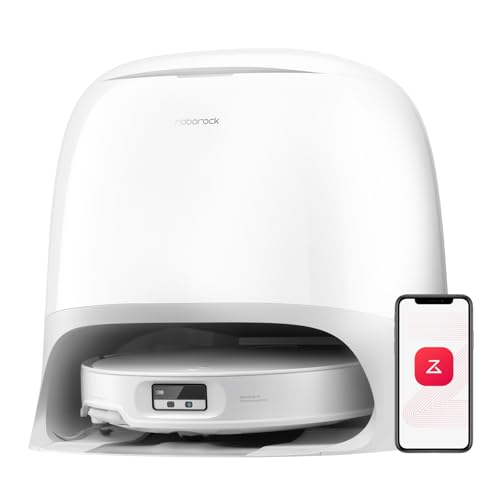
Roborock Qrevo CurvX robot vacuum and mop with 22,000Pa suction, ultra-slim 3.14" design, AdaptiLift chassis, and hot water mop washing. Full expert review.
Obstacle Avoidance and 3D Sensing
This is one of the most hotly contested areas between the two brands, and the gap has narrowed significantly in 2026.
Roborock’s structured light and RGB camera combination on models using the StarSight 2.0 system recognizes 108 obstacle types, with an additional option to define 50 custom object types through the app — useful for households with specific recurring items the robot needs to learn. The VertiBeam Lateral Obstacle Avoidance system detects obstacles at floor level from the side, catching furniture legs and cables that front-facing cameras sometimes miss.
Dreame has pushed harder on raw obstacle recognition count. The Dreame X60 Max Ultra’s dual AI cameras with proactive illumination recognize more than 280 distinct obstacle types — nearly three times Roborock’s number. In real-world cluttered environments — shoes, cables, pet toys, charging bricks, clothing — this translates to fewer stuck incidents and more complete cleaning runs. The Dreame L40 Ultra Gen 2 uses 3DAdapt obstacle detection, a structured light system that provides reliable 3D depth sensing comparable in quality to Roborock’s implementation.
Winner: Dreame, on obstacle count and recognition breadth. Roborock’s custom object training feature is a useful differentiator, but 280+ vs. 108 recognized types matters in cluttered, real-world homes.
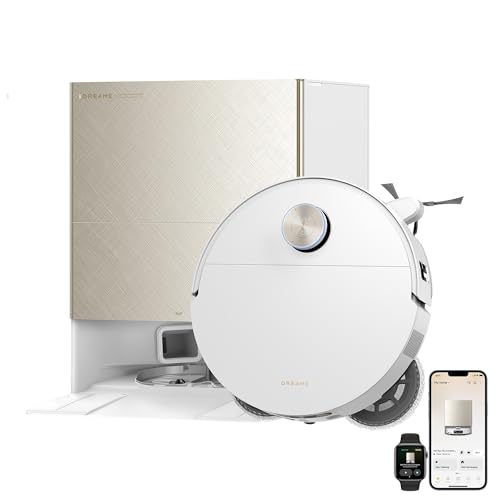
Dreame X60 Max Ultra robot vacuum & mop with 35,000Pa suction, ultra-thin 3.13in body, 280+ obstacle avoidance, 10-in-1 dock & hot-water mop self-cleaning.
Suction Power (Pa Rating)
Suction power is where Dreame’s spec sheet advantage is most dramatic.
| Model | Suction |
|---|---|
| Roborock Saros Z70 | 22,000Pa |
| Roborock Saros 10R | 22,000Pa |
| Roborock Qrevo CurvX | 22,000Pa |
| Roborock Qrevo Edge S5A | 18,500Pa |
| Dreame X60 Max Ultra | 35,000Pa |
| Dreame L40 Ultra Gen 2 | 25,000Pa |
| Dreame X50 Ultra | 20,000Pa |
| Dreame X40 Ultra | 12,000Pa |
Dreame’s X60 Max Ultra at 35,000Pa is the highest-suction consumer robot vacuum available in 2026. The L40 Ultra Gen 2 at 25,000Pa exceeds any Roborock model by a meaningful margin. Even the Dreame X50 Ultra at 20,000Pa is in the same neighborhood as Roborock’s flagships.
It is worth noting that Pa ratings are measured under standardized laboratory conditions and real-world differences at the floor surface depend on brush design, air path efficiency, and surface type. Roborock’s AdaptiLift chassis and DuoDivide brush system ensure suction reaches the floor with high consistency. Dreame’s retractable pressure plate on the X60 creates a semi-sealed chamber around its DuoBrush system that concentrates airflow at the cleaning head. Both approaches deliver excellent real-world results, but on paper and in independent tests, Dreame’s numbers are higher.
Winner: Dreame, by a clear margin on raw suction figures across the lineup.
Mopping Systems
Mopping is a critical differentiator in the premium robot vacuum segment, and both brands have invested heavily here.
Roborock introduced the FlexiArm system — a mechanical side brush and mop arm that extends when edges and corners are detected — on models including the Roborock Saros 10R and Roborock Qrevo Edge S5A. Dual spinning mop pads operate at 200 RPM and the dock on the Roborock Qrevo CurvX washes them with water heated to 80°C (176°F) — hot enough to break down grease and kill most bacteria. The Saros Z70’s dock goes further with hot water mop washing at 176°F and 131°F warm air drying. Mop lift on carpet — up to 22mm on the Saros Z70 — ensures rugs stay completely dry.
Dreame matches this feature for feature and raises in a few areas. The MopExtend RoboSwing on the Dreame X60 Max Ultra physically extends the mop pad outward to reach corners and edges with 15N of downward pressure at 230 RPM — slightly higher spin speed than Roborock’s 200 RPM. The dock wash temperature on the X60 Max Ultra reaches 212°F (100°C) — boiling point — compared to Roborock’s 176°F peak, offering more thorough mop pad sanitization. The Dreame X40 Ultra introduced a removable and auto-liftable mop that keeps carpets dry with 10.5mm of lift. The Dreame L40 Ultra Gen 2’s extendable side brush and mop system reaches beyond the robot’s circular footprint to clean along baseboards — an approach similar to Roborock’s FlexiArm.
Winner: Effectively a tie at the flagship level. Dreame edges ahead on dock wash temperature (212°F vs 176°F) and mop pressure. Roborock edges ahead on mop lift height on carpet. Both deliver genuinely excellent mopping results at the premium tier.

Roborock Saros 10R ultra-slim robot vacuum and mop with 22,000Pa suction, FlexiArm corner cleaning, and self-emptying dock. Ideal for pet owners.
Auto-Empty Docks and Base Stations
Both brands have converged on comprehensive multi-function base stations. The key differences are in dock feature count and autonomous operation duration.
Roborock offers a 10-in-1 Multifunctional Dock 4.0 on the Saros Z70 that handles: hot water mop washing, hot water dock self-cleaning, automatic mop removal and reattachment, auto detergent dispensing, smart re-wash and re-mop cycles, warm air drying, and auto dust emptying for up to 7 weeks. The Saros 10R’s 10-in-1 dock includes hot water wash, hot air dry, self-empty, auto refill, and detergent dispensing with up to 60 days of hands-free dust collection. The Qrevo Edge S5A’s Multifunctional Dock 3.0 provides a 2.7-liter dust bag for over 60 days of debris handling.
Dreame’s 10-in-1 base station on the X60 Max Ultra matches Roborock on feature count and adds boiling-water (212°F) mop pad washing and a generous 100-day dust disposal capacity — the longest in the category — using a 4-bag storage system. The dock also manages dual-solution compartments for clean water and cleaning solution separately. The Dreame X50 Ultra’s auto-empty base handles dust disposal after each session with an efficient two-bag system.
Winner: Dreame on autonomous operation duration (100 days vs. 7 weeks) and dock wash temperature. Roborock’s dock is more refined in its detergent dispensing and mop reattachment automation on the Saros Z70.
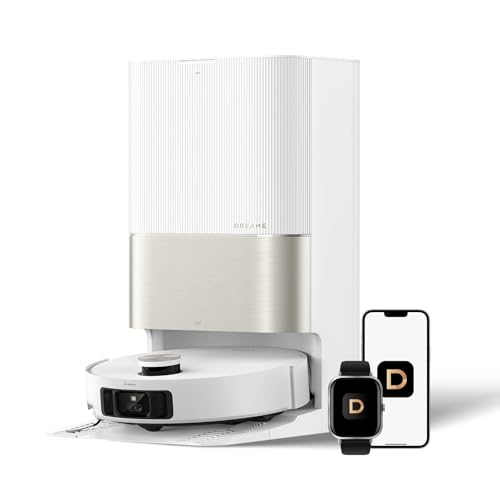
Dreame X50 Ultra robot vacuum & mop features 20,000Pa suction, VersaLift navigation, DuoBrush anti-tangle & auto-empty. The ultimate hands-free clean.
App and Smart Home Integration
The app experience is where Roborock has historically had the clearest advantage — and continues to hold it in 2026.
The Roborock app with SmartPlan 2.0 is the most mature robot vacuum software available. It learns your cleaning habits, adapts schedules based on room usage patterns, and allows per-room configuration of suction level, mopping intensity, and water flow. Multi-floor mapping is seamlessly handled. Zone cleaning, polygon no-go areas, and virtual wall placement are all available with intuitive controls. The Hello Rocky built-in voice assistant works without a Wi-Fi connection for basic commands — a genuinely useful offline fallback. Smart home integration covers Amazon Alexa, Google Home, and Matter protocol support (via OTA on flagship models).
The DreameHome app is capable and has improved significantly with each generation. It supports zone cleaning, no-go areas, scheduling, and real-time map monitoring. Voice control via Alexa, Siri, and Google Home is available across the lineup. A privacy protection mode disables cameras on demand, which is a thoughtful addition for privacy-conscious users. The app interface is clean and accessible, though it does not yet match the depth of customization offered by Roborock’s SmartPlan 2.0 adaptive scheduling system.
Winner: Roborock, for app maturity, depth of customization, and the SmartPlan 2.0 adaptive learning system. DreameHome is genuinely good but trails in ecosystem sophistication.
Model-by-Model Comparison
Flagship Tier: Roborock Saros Z70 vs Dreame X60 Max Ultra
At the absolute top end, Roborock and Dreame have each released a product that could be described as the most advanced consumer robot vacuum ever made.
Roborock Saros Z70 is the world’s first robot vacuum with a robotic arm. Its five-axis OmniGrip arm detects, grasps, and moves household obstacles up to 300 grams — socks, toys, tissues — before the cleaning run begins, then returns to clean the previously blocked area. The result is what Roborock calls 100% floor coverage: the robot genuinely cleans the areas it previously had to route around. With 22,000Pa suction, StarSight 2.0 navigation recognizing 108 obstacle types (plus 50 user-defined custom types), hot water mopping at 200 RPM with 30 water flow levels, and a 10-in-1 Dock 4.0 with 7-week hands-free operation, the Saros Z70 is the most feature-complete robot vacuum available.
Dreame X60 Max Ultra counters with pure performance metrics that exceed Roborock in several areas: 35,000Pa suction (the highest available), 280+ obstacle types recognized (nearly triple Roborock’s count), dual omni-scrub mops applying 15N of pressure at 230 RPM, and a dock that washes mop pads with boiling 212°F water for 100 days of autonomous dust disposal. The MopExtend RoboSwing physically extends to corners for comprehensive edge cleaning. Its 3.13-inch ultra-slim profile slots under virtually all furniture.
The verdict at the flagship tier: The Saros Z70’s robotic arm is unmatched in concept and execution — nothing else in the market pre-clears the floor before cleaning. If robotic autonomy is your priority and you can justify the premium, the Saros Z70 is in a category of one. The X60 Max Ultra wins on raw cleaning metrics: higher suction, more obstacle types, better mop sanitization. For a buyer focused on cleaning performance above all, the X60 edges ahead. For a buyer who wants the most autonomous, future-forward product, the Saros Z70 is it.
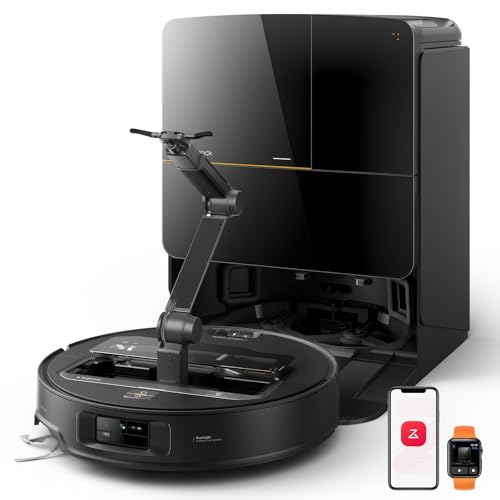
Roborock Saros Z70 features a robotic OmniGrip arm, 22,000Pa suction, hot water mopping & 10-in-1 dock. The most advanced robot vacuum available.
Upper Mid-Range: Roborock Saros 10R vs Dreame L40 Ultra Gen 2
This is the tier where most premium buyers will land — exceptional performance without the robotics-arm price premium.
Roborock Saros 10R delivers 22,000Pa suction in an ultra-slim 3.14-inch profile with the StarSight Autonomous System 2.0, FlexiArm Riser for corner extension, zero-tangling DuoDivide main brush, and a 10-in-1 dock with hot water mop washing at 176°F and up to 60 days of hands-free dust collection. The built-in Hello Rocky voice assistant, pet monitoring camera with two-way video, and AdaptiLift chassis (4cm threshold climbing) round out a remarkably complete package at its price point.
Dreame L40 Ultra Gen 2 brings 25,000Pa suction — exceeding the Saros 10R — with a 5,200mAh battery for 231 minutes of runtime (one of the longest in the category), Smart Pathfinder with 3DAdapt obstacle avoidance, extendable side brush and mop for corner coverage, four carpet care modes, and an all-in-one self-cleaning dock. The 30% faster charging compared to its predecessor reduces downtime between sessions.
The verdict at upper mid-range: If battery life and suction power are your top priorities, the Dreame L40 Ultra Gen 2 wins outright — 25,000Pa and 231 minutes of runtime are category-leading figures. If you prioritize under-furniture access, app sophistication, and the FlexiArm corner cleaning system integrated with the Roborock ecosystem, the Saros 10R is a compelling alternative. The Dreame also holds a meaningful price-per-Pa advantage.
Roborock Saros 10R ultra-slim robot vacuum and mop with 22,000Pa suction, FlexiArm corner cleaning, and self-emptying dock. Ideal for pet owners.
Mid-Range: Roborock Qrevo Edge S5A vs Dreame X40 Ultra
For buyers who want premium performance without flagship pricing, this tier is exceptionally competitive.
Roborock Qrevo Edge S5A offers 18,500Pa suction with PreciSense LiDAR navigation, Reactive Tech obstacle avoidance, the zero-tangling DuoDivide main brush, FlexiArm Arc Side Brush for edge cleaning, dual spinning mops at 200 RPM with 30 water flow levels, and the Multifunctional Dock 3.0 with 167°F hot water mop washing and a 2.7-liter dust bag for 60+ days of hands-free operation. Rated 4.4 stars across nearly 400 verified user reviews, the S5A has earned strong real-world endorsement.
Dreame X40 Ultra counters with 12,000Pa suction, 3D structured light navigation with AI camera and LED illumination, a removable and auto-liftable mop (10.5mm carpet lift), SideReach extendable brush, 158°F hot water self-cleaning dock, and a massive 6,400mAh battery with auto-resume. The OmniDirt detection system triggers MopExtend RoboSwing when particularly stubborn messes are identified, automatically deploying the mop to scrub harder.
The verdict at mid-range: The Qrevo Edge S5A wins on suction power (18,500Pa vs 12,000Pa) and hot water wash temperature (167°F vs 158°F). The X40 Ultra counters with longer battery life, the removable mop system, and superior obstacle avoidance through 3D structured light plus AI camera. For pet hair and deep carpet cleaning, the S5A’s suction advantage is meaningful. For mixed-floor homes with rugs and hard floors, the X40 Ultra’s auto-liftable mop system is a genuine differentiator.
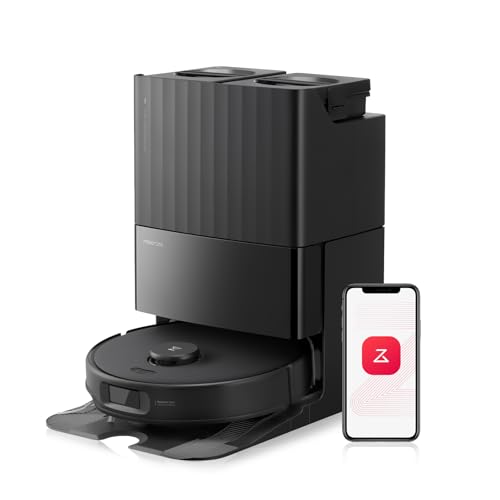
Roborock Qrevo Edge S5A robot vacuum and mop with 18,500Pa suction, zero-tangling DuoDivide brush, hot water mop washing, and self-emptying dock.
Roborock’s Strengths: Where It Pulls Ahead
Mapping and navigation maturity. Roborock’s LiDAR foundation has been refined over more model generations than any other brand. Multi-floor mapping, SmartPlan 2.0 adaptive scheduling, and the sheer depth of app controls put Roborock ahead for homeowners who want granular control over how their robot behaves in every corner of every room.
FlexiArm edge and corner cleaning. The physical brush and mop extension arm on Roborock’s current lineup reaches into wall edges and corners more consistently than any alternative. It is a mechanical solution to a geometric problem that software-only approaches cannot fully solve.
Ecosystem depth and software continuity. Roborock products receive long-term firmware support, OTA feature updates (including Matter protocol support on flagship models), and integration with the broadest set of smart home platforms. If you are building a connected home, Roborock’s ecosystem is more mature.
OmniGrip robotic arm. There is simply nothing like the Saros Z70’s floor-clearing capability anywhere else. For households with children, pets, or habitually cluttered floors, the ability to autonomously move obstacles before cleaning is a genuinely transformative feature.
Obstacle customization. The ability to define 50 custom obstacle types through the Roborock app lets the robot learn the specific recurring objects in your home — a meaningful advantage over a fixed recognition database.
Dreame’s Strengths: Where It Pulls Ahead
Raw suction numbers. Dreame consistently leads the category in Pa ratings. 35,000Pa on the X60 Max Ultra, 25,000Pa on the L40 Ultra Gen 2 — these are performance figures that matter on carpet and in homes with persistent deep-dirt challenges.
Boiling-water dock sanitization. The X60 Max Ultra’s 212°F dock wash temperature is the most effective mop pad cleaning available. At boiling point, bacteria, mold spores, and odor-causing organic matter are eliminated thoroughly — a meaningful hygiene advantage for households with pets or young children.
Retractable legs for threshold crossing. The X50 Ultra’s retractable robotic legs cross obstacles up to 2.36 inches — significantly higher than the 4cm (~1.57 inch) threshold climbing of Roborock’s AdaptiLift chassis. For homes with thick rugs, multiple flooring transitions, or raised doorway thresholds, this is a practical advantage.
Obstacle recognition count. 280+ recognized obstacle types versus Roborock’s 108 is a significant gap that matters in real cluttered households. Fewer stuck incidents, more complete cleaning runs, less intervention required.
Aggressive pricing. Dreame consistently delivers more Pa, more obstacle types, and longer battery life at the same price as equivalent Roborock models. For specification-driven buyers, the value math tends to favor Dreame.
100-day dust disposal. The X60 Max Ultra’s dock manages 100 days of autonomous dust collection — roughly double the Saros Z70’s 7-week (49-day) figure.
Which Should You Buy?
Choose Roborock if:
- You use the app deeply. SmartPlan 2.0, per-room configurations, polygon no-go zones, and custom obstacle training make the Roborock app the best in class. If you want to micro-manage your robot’s behavior, Roborock is your brand.
- You have a complex, multi-floor home. Roborock’s mapping maturity and multi-floor continuity is unmatched for homes where the robot needs to navigate multiple levels with consistent accuracy.
- The robotic arm matters to you. If you have kids, pets, or a floor that regularly has small items scattered around, the Saros Z70’s OmniGrip arm is the single most impactful robot vacuum innovation of the decade. No Dreame product can do what it does.
- You are invested in a smart home ecosystem. Roborock’s Matter support, broader platform integrations, and long-term firmware update track record make it the safer long-term bet.
- Edge cleaning is critical. The FlexiArm Riser is one of the best physical edge-cleaning solutions available.
Choose Dreame if:
- Maximum suction is your top priority. Dreame’s Pa numbers are simply higher across the lineup. For embedded dirt in medium-to-high pile carpet, this matters.
- You have significant threshold or obstacle challenges. The X50 Ultra’s retractable legs cross taller obstacles than any Roborock model. If your floors have raised transitions, thick area rugs, or uneven surfaces, Dreame has an engineering solution Roborock does not.
- You want the most hygienic mop dock. 212°F boiling-water mop washing on the X60 Max Ultra is the most effective dock sanitization available. For homes with pets or allergy sufferers, this is a meaningful health advantage.
- Long-run autonomy matters. 100 days of dust disposal on the X60 Max Ultra significantly reduces how often you interact with the base station.
- You want flagship specs at a lower price. Dreame consistently undercuts Roborock on price-per-Pa and price-per-feature, especially at the upper mid-range and mid-range tiers.
- Your home is cluttered. 280+ obstacle recognition is a genuine advantage when you have shoes, bags, cables, and pet toys regularly scattered across your floors.
Budget-based guidance:
| Budget | Best Roborock Pick | Best Dreame Pick |
|---|---|---|
| $400–$600 | Qrevo Edge S5A | Dreame X40 Ultra |
| $700–$900 | Roborock Saros 10R | Dreame L40 Ultra Gen 2 |
| $1,000+ | Roborock Saros Z70 | Dreame X60 Max Ultra |
Frequently Asked Questions
Is Roborock or Dreame better overall?
Neither brand is definitively better — each leads in different areas. Roborock leads in app sophistication, mapping maturity, and unique innovations like the OmniGrip robotic arm. Dreame leads in raw suction power, obstacle recognition count, threshold clearance, and mop dock sanitization temperature. The right choice depends on which of these factors matters most in your specific home.
Are Roborock and Dreame reliable brands?
Both are established, well-resourced Chinese technology companies with global distribution, active warranty programs, and strong customer support infrastructure. Roborock has a longer track record in the robot vacuum segment and a larger installed user base. Dreame has grown rapidly and maintains high product ratings across its lineup. Both brands receive regular firmware updates and have active communities.
Do Roborock and Dreame use LiDAR navigation?
Roborock uses LiDAR as the primary navigation sensor on all current flagship and mid-range models, augmented by cameras and structured light for obstacle avoidance. Dreame uses a combination of structured light, AI cameras, and LED illumination on its premium models. Dreame’s X-series flagship approach is dual-camera AI with proactive lighting rather than traditional LiDAR turrets, which enables the ultra-slim profiles on models like the X60 Max Ultra.
Which brand has better mopping — Roborock or Dreame?
Both brands offer excellent mopping at the premium tier. Dreame edges ahead on dock wash temperature (212°F vs 176°F) and mop pad pressure. Roborock leads on mop lift height on carpet (22mm vs 10.5mm) and FlexiArm edge coverage. For homes where floor hygiene is the top priority, Dreame’s boiling-water dock is the most thorough. For homes with rugs mixed in with hard floors, Roborock’s superior mop lift provides better carpet protection.
Are Dreame robot vacuums worth the money vs Roborock?
Yes — Dreame typically delivers more Pa, more obstacle types recognized, and longer battery life per dollar than comparable Roborock models. If you are making a value-based decision purely on specifications, Dreame almost always wins at the same price point. However, Roborock’s app quality, ecosystem integration, and unique features like the OmniGrip arm represent intangible value that can justify the price premium for the right buyer.
What Wi-Fi does Roborock and Dreame use?
Both brands currently support only 2.4GHz Wi-Fi for app connectivity. Neither brand supports 5GHz networks on their 2026 robot vacuum lineup. If your router uses 5GHz only, you will need to enable a 2.4GHz band or use a dual-band router with both frequencies active.
Which robot vacuum is better for pet owners — Roborock or Dreame?
Both brands design explicitly for pet hair with anti-tangle brush systems and powerful suction. Roborock’s DuoDivide and FreeFlow brushes are market leaders in hair-tangle prevention. Dreame’s DuoBrush system handles hair up to 11.8 inches long. For pet monitoring, the Roborock Saros Z70 and Saros 10R include cameras with two-way video and the unique Pet Snaps feature. For pure suction-based hair pickup, Dreame’s higher Pa numbers provide an edge on carpet.
Does Dreame or Roborock have a better self-emptying dock?
The Dreame X60 Max Ultra’s dock leads on autonomous operation duration (100 days) and mop wash temperature (212°F). Roborock’s Dock 4.0 on the Saros Z70 leads on integrated features like automatic mop removal and reattachment, auto detergent dispensing, and the overall polish of the base station’s physical design. Both are excellent — the choice depends on whether you prioritize duration between interactions (Dreame) or feature completeness (Roborock).
Ready to Find Your Perfect Vacuum?
Browse our expertly reviewed vacuum cleaners and make an informed decision
Browse All Vacuums