Sealed System Vacuum vs Regular: Why It Matters for Allergy Sufferers
Sealed system vacuum vs regular vacuum — why a HEPA filter alone isn't enough, and why sealed systems capture more allergens for cleaner indoor air.
Table of Contents
- What Is a Sealed System Vacuum?
- The Problem With Non-Sealed HEPA Vacuums
- The Science: Why Even Small Leaks Matter
- Why It Matters Most For Specific Groups
- Brands Known for Sealed Systems
- Product Examples: Sealed System Vacuums Worth Considering
- How to Check If Your Vacuum Has a Sealed System
- Sealed System vs Regular Vacuum: Quick Comparison
- Frequently Asked Questions
- The Bottom Line
You bought a HEPA vacuum. You feel good about it. Every time you vacuum, you tell yourself the air in your home is getting cleaner. But here is a fact that most vacuum marketing never mentions: a HEPA filter inside a vacuum that is not fully sealed can still expel fine dust, pet dander, and microscopic allergens back into your home air.
The label says “HEPA.” The filter itself may genuinely meet the standard. Yet if the vacuum housing has even a small gap — around the dustbin lid, along a seam in the plastic body, through a worn gasket — dirty air can bypass the filter entirely and blow straight out into the room you just “cleaned.”
This is the sealed system problem. It affects a significant portion of vacuums sold today, including some marketed specifically to allergy sufferers. Understanding the difference between a sealed system vacuum and a regular vacuum is one of the most important things you can do for your indoor air quality — especially if you or anyone in your household deals with allergies, asthma, or COPD.
What Is a Sealed System Vacuum?
A sealed system vacuum is one where every potential air path through the machine has been engineered, gasketted, and tested to ensure that all air must pass through the HEPA filter before it exits the vacuum. There is no alternate route. No shortcut. No gap in the housing where pressurized air inside the machine can sneak out.
Think of it like a sealed container versus a loosely capped bottle. Pour water into both and the sealed container holds every drop. The loosely capped bottle may look closed, but pressure finds its way through the imperfect seal and moisture escapes.
In a sealed vacuum system, manufacturers:
- Use precision-molded housing joints with compression gaskets
- Engineer the dustbin lid and filter housing to form airtight connections
- Test the complete assembled machine for air leakage, not just the filter in isolation
- Design the exhaust pathways so the only exit for air is through the certified HEPA filter
The result is a vacuum where the filtration rating of the filter — 99.97% or 99.99% of particles 0.3 microns or larger — is actually delivered to you at the exhaust. The filter’s rated performance and the machine’s real-world performance match.
The Problem With Non-Sealed HEPA Vacuums
Here is what most consumers do not realize: vacuum manufacturers are not required to test or certify the complete machine for filtration performance. A vacuum can legally advertise “HEPA filtration” if it contains a filter that, when tested in isolation on a lab bench, meets the HEPA standard. Whether that filter is then installed in a vacuum housing that leaks air like a sieve is not part of the regulatory requirement.
This distinction matters enormously.
In a non-sealed HEPA vacuum, there are multiple points where uncleaned air can escape:
Dustbin connections: In bagless vacuums particularly, the interface between the dust cup and the main body often relies on a simple press-fit or basic rubber ring. As the vacuum ages, these seals degrade. Even when new, the tolerances may not be tight enough to prevent air leakage under suction pressure.
Filter housing gaps: The HEPA filter sits in a housing that must seal tightly on all sides. If the molding is imprecise or the gasket material compresses over time, air under pressure will flow around the sides of the filter rather than through it.
Worn or dried seals: Every rubber gasket and O-ring in a vacuum degrades with heat, age, and cleaning chemicals. A vacuum that was reasonably well-sealed when new may develop significant leakage after two or three years of use.
Seam gaps in the housing: Many vacuums are assembled from multiple plastic pieces. The joins between these pieces are potential leak points, particularly around the motor housing where suction pressure is highest.
The dustbin emptying mechanism: Bagless vacuums with trapdoor or bottom-release emptying mechanisms have a hinge and latch at the base of the dust cup. These mechanical components are inherently imperfect seals, and fine dust can exit through them during operation.
The end result is a vacuum that has a HEPA filter installed but does not deliver HEPA-level filtration in use. Some of the air — and some of the fine particles it carries — takes the path of least resistance around the filter and back into your home.
The Science: Why Even Small Leaks Matter
The particles that cause the most harm to allergy and asthma sufferers are the smallest ones: particles in the 0.1 to 1.0 micron range that penetrate deep into the respiratory tract. These are the particles that HEPA filtration is specifically designed to capture.
These particles are also the ones most easily carried by air leaking around imperfect seals. They are so light that they follow airflow patterns with almost no inertia. A gap that a larger particle of dust might get stuck in will allow particles of pet dander, dust mite allergen, and mold spores to pass through freely.
Research on vacuum filtration performance consistently shows a gap between the filtration efficiency of HEPA filters tested in isolation and the filtration efficiency of complete vacuum systems tested as assembled products. Studies have measured significant particle concentrations in the exhaust air of vacuums that nominally contain HEPA filters, particularly for older machines, machines with worn seals, or machines where the filter housing design did not prioritize airtight construction.
For someone with seasonal allergies, the practical effect of vacuuming with a non-sealed HEPA machine may be minimal — the levels of allergen dispersal may not be high enough to trigger symptoms. But for someone with asthma, COPD, or severe dust mite or pet dander allergies, vacuuming with a leaking machine can actively worsen symptoms. The act of vacuuming stirs up settled allergens, and if the vacuum re-disperses fine particles through leaking seals, the net effect on air quality may be negative.
A sealed system vacuum eliminates this risk. The filtration performance you paid for is the filtration performance you get.
Why It Matters Most For Specific Groups
Allergy Sufferers
For people with dust mite, pet dander, or pollen allergies, the primary benefit of a HEPA vacuum is reducing the concentration of these allergens in home air. If the vacuum leaks fine particles back into the air during use, the allergen reduction is far less than expected. A sealed system delivers the full filtration benefit and ensures vacuuming genuinely reduces allergen load rather than redistributing it.
Asthma
People with asthma are particularly vulnerable to fine particle exposure. Particles in the PM2.5 range — 2.5 microns or smaller — penetrate the lower airways and can trigger bronchospasm in sensitized individuals. A sealed system vacuum ensures these particles are captured and contained, not recirculated through leaking seals.
COPD
Chronic obstructive pulmonary disease involves irreversible damage to lung tissue that reduces tolerance for airborne particles. For COPD patients, reducing particulate exposure during everyday activities like vacuuming is medically significant. A sealed system vacuum is not optional for these households — it is a meaningful health tool.
Homes With Pets
Pet dander is one of the most potent and persistent allergens in residential environments. It is extremely fine, sticky, and easily airborne. Pet-owning households with allergy or asthma sufferers face continuous allergen exposure, and a sealed system vacuum is one of the most effective tools for managing it.
Dusty Environments
Homes near construction sites, in areas with high outdoor dust loads, or with significant renovation activity generate elevated levels of fine particulate. A sealed system vacuum with certified HEPA filtration is the appropriate tool for these environments, where particle concentrations may be high enough to stress even a well-sealed machine.
Brands Known for Sealed Systems
Not all vacuum brands treat sealed system engineering with the same rigor. Three brands in particular have built their filtration claims around properly sealed whole-machine designs.
Miele — AirClean Sealed System
Miele is widely regarded as the gold standard for sealed vacuum filtration. Their AirClean system is an end-to-end sealed architecture: the AirClean dustbag features a self-sealing collar that closes automatically when removed (preventing dust escape during bag changes), the motor protection filter and exhaust filter are precisely fitted in sealed housings, and the complete canister body is engineered to eliminate air leakage. Miele tests complete machines rather than just individual filters, and their sealed system is one of the reasons the brand is consistently recommended by allergists and pulmonologists.
Shark — Anti-Allergen Complete Seal
Shark developed their Anti-Allergen Complete Seal technology specifically to address the sealed system gap in the bagless vacuum market. The system uses precision-engineered gaskets and seals throughout the vacuum body, with the HEPA filter housed in a fully sealed compartment. Shark’s Anti-Allergen Complete Seal vacuums are tested to the ASTM F1977 standard for whole-machine filtration efficiency, meaning the 99.9% allergen capture claim reflects the performance of the complete assembled product.
Dyson — Whole-Machine Filtration
Dyson’s whole-machine HEPA filtration approach seals the entire airpath from intake to exhaust. Rather than relying on a single filter at the end of the process, Dyson designs the vacuum housing to be airtight throughout, with cyclonic pre-separation reducing filter load and the HEPA filter at the exhaust capturing any remaining fine particles. Dyson certifies their whole-machine filtration by testing the assembled product, and their claim of 99.99% particle capture at 0.3 microns reflects the performance of the machine as a whole.
Product Examples: Sealed System Vacuums Worth Considering
1. Shark Navigator Lift-Away Deluxe NV360
The Shark Navigator Lift-Away Deluxe NV360 is an approachable entry point into sealed system vacuuming. It pairs a genuine HEPA filter with Anti-Allergen Complete Seal technology to capture and lock in 99.9% of dust and allergens. The sealed design ensures that what goes in stays in — no fine particles escape back through the housing. At its price point, it is one of the best value sealed system vacuums available, with a Lift-Away detachable pod for stair and above-floor cleaning. Rated 4.4 stars from over 52,000 reviews.
Filtration: HEPA Anti-Allergen Complete Seal Type: Corded Upright
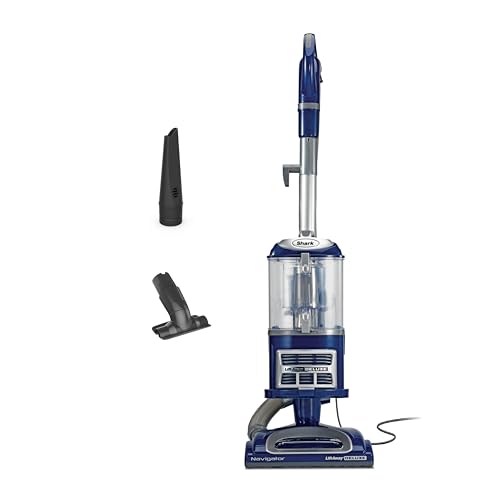
Shark Navigator Lift-Away NV360 delivers powerful suction with HEPA filtration and swivel steering. Perfect for pet hair and allergens. See full expert review.
2. Shark Navigator Lift-Away Professional NV356E
The Shark Navigator Lift-Away Professional NV356E steps up with an extra-large 0.87-liter dust cup and an included Pet Power Brush for motorized upholstery cleaning. Like the NV360, it uses Anti-Allergen Complete Seal with HEPA filtration, tested per ASTM F1977 to capture 99.9% of particles 0.3 microns and larger. For pet owners with allergy concerns, the combination of sealed filtration and the motorized pet attachment makes this a comprehensive solution. Rated 4.3 stars from over 41,000 reviews.
Filtration: HEPA Anti-Allergen Complete Seal Type: Corded Upright
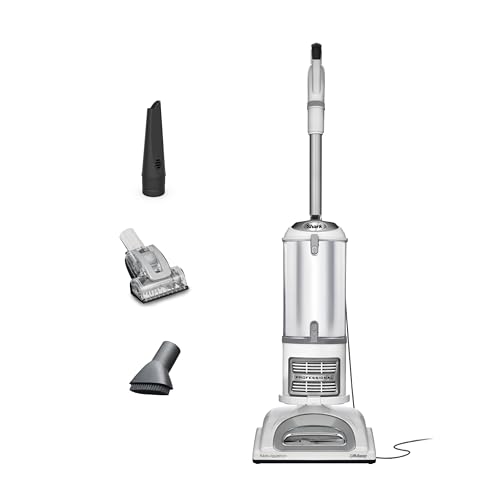
Shop the Shark Navigator Lift-Away NV356E with HEPA filtration, swivel steering & lift-away pod for versatile pet hair cleaning. Traps 99.9% of allergens!
3. Dyson Ball Animal 3 Upright Vacuum
The Dyson Ball Animal 3 brings Dyson’s whole-machine HEPA filtration to a powerful corded upright format with 290 air watts of suction. The sealed design ensures all air exits through the HEPA filter, and the Radial Root Cyclone technology reduces filter load by centrifugally separating larger particles before they reach the filter. The de-tangling Motorbar cleaner head automatically removes wrapped hair during operation. For households with heavy pet hair and allergy concerns, this is a serious high-performance option. Rated 4.2 stars.
Filtration: Whole-machine HEPA filtration Type: Corded Upright

Dyson Ball Animal 3 upright vacuum delivers 290AW suction with de-tangling Motorbar head, Ball technology steering, 3 suction modes, and HEPA filtration.
4. Dyson V8 Plus Cordless Vacuum
The Dyson V8 Plus extends Dyson’s whole-machine filtration approach to the cordless format, capturing 99.99% of particles as small as 0.3 microns through a fully sealed airpath from intake to exhaust. With up to 40 minutes of fade-free runtime and a Motorbar cleaner head that de-tangles hair automatically, it is a compelling choice for allergy sufferers who want cordless convenience without sacrificing filtration quality. The Hair screw tool adds exceptional pet hair pickup on upholstery. Rated 4.0 stars from over 4,700 reviews.
Filtration: Whole-machine HEPA (99.99% at 0.3 microns) Type: Cordless Stick

Dyson V8 Plus cordless vacuum with Motorbar cleaner head, 40-min runtime, whole-machine HEPA filtration, and Hair screw tool for pet hair removal.
5. Miele Complete C3 Calima Bagged Canister Vacuum
The Miele Complete C3 Calima represents the premium tier of sealed system vacuuming. Miele’s AirClean sealed system pairs with a HEPA Lifetime Filter that captures 99.999% of fine particles — the highest filtration efficiency of any product in this list. The AirClean dustbag’s self-sealing collar prevents allergen escape during bag changes, and the sealed canister design has been engineered and tested to Miele’s exacting German manufacturing standards. Built to last up to 20 years, this is the correct long-term investment for households where indoor air quality is a serious health concern. Rated 4.3 stars.
Filtration: HEPA Lifetime Filter with AirClean Sealed System Type: Bagged Canister

Miele Complete C3 Calima canister vacuum with HEPA filter, Turbobrush & Parquet head. Perfect for carpet & hard floors. Discover German-engineered cleaning.
How to Check If Your Vacuum Has a Sealed System
Not every vacuum marketed with “HEPA” actually has a sealed system. Here is how to evaluate what you have or what you are considering buying.
Look for explicit sealed system language. Manufacturer product descriptions that specifically say “sealed system,” “whole-machine HEPA,” “Anti-Allergen Complete Seal,” or “AirClean Sealed System” are making a claim about the complete machine, not just the filter. Generic “HEPA filter included” language makes no claim about the housing.
Check for ASTM F1977 testing. This standard tests the complete vacuum for filtration efficiency, not just the filter in isolation. If a manufacturer references this test, the sealed system performance has been independently verified.
Inspect the dustbin seal. On bagless vacuums, examine the connection between the dust cup and the main body. It should feel firm and airtight, with a visible rubber gasket that makes positive contact all the way around. If it feels loose or pops on without compression, it is not a well-sealed interface.
Check the filter housing. The HEPA filter should sit in a housing with a compression gasket on all sides. It should require some force to seat and feel firmly locked when installed. A filter that drops loosely into a compartment and rattles slightly is not in an airtight housing.
Look up the model on manufacturer sites. Reputable brands that engineer sealed systems are proud of it and list it prominently in specifications. If you cannot find any mention of a sealed system or whole-machine filtration on the official product page, the vacuum likely does not have one.
Consider the age of your vacuum. Even a vacuum that originally had good seals may have degraded gaskets after several years. If you have an older HEPA vacuum and suffer from allergies, it is worth inspecting the seals or replacing the machine with a current sealed system model.
Sealed System vs Regular Vacuum: Quick Comparison
| Feature | Regular HEPA Vacuum | Sealed System Vacuum |
|---|---|---|
| Filter certification | Yes (filter tested alone) | Yes (whole machine tested) |
| Housing air leakage | Possible | Engineered out |
| Real-world filtration | Lower than rated | Matches rated performance |
| Allergen containment | Partial | Complete |
| Best for allergy/asthma | No | Yes |
| Examples | Most budget vacuums | Miele, Shark (Seal), Dyson |
Frequently Asked Questions
Is HEPA filtration enough without a sealed system?
No. A HEPA filter inside a non-sealed vacuum can capture the particles that pass through it, but air that bypasses the filter through gaps in the housing carries unfiltered particles directly into the room. The filter’s rated efficiency only applies to air that actually passes through it. In a non-sealed machine, some portion of the air — and the fine particles it carries — takes an alternate path.
How can I tell if my current vacuum has a sealed system?
Check the manufacturer’s product description for language like “sealed system,” “whole-machine HEPA,” or “Anti-Allergen Complete Seal.” If the product page only mentions that a HEPA filter is included without any claim about the housing being sealed, it likely is not a sealed system. You can also physically inspect the dustbin seal and filter housing for compression gaskets and tight-fitting connections.
Are sealed system vacuums more expensive?
They used to be, but the price gap has closed significantly. Shark’s Anti-Allergen Complete Seal is available in vacuums under $150. Dyson whole-machine filtration starts in their entry-level models. Miele’s sealed system is available at multiple price tiers. The sealed system is no longer a premium-only feature.
Do sealed system vacuums capture more allergens?
Yes, in practical terms. The filter itself captures the same particles in both a sealed and non-sealed vacuum. But in a sealed system, all the air passes through the filter. In a non-sealed vacuum, some fraction of the air bypasses the filter. The sealed system delivers its rated filtration to 100% of the exhaust air; the non-sealed system delivers its rated filtration to only a portion of it.
Should I replace my non-sealed HEPA vacuum if I have allergies?
If you have significant allergy or asthma symptoms and currently use a non-sealed HEPA vacuum, upgrading to a sealed system vacuum is one of the most impactful changes you can make to your indoor air quality routine. The cost of a mid-range sealed system vacuum is modest compared to the cumulative effect of reduced allergen exposure over time.
Can a sealed system vacuum lose its seal over time?
Yes. Rubber gaskets and seals degrade with age, heat, and use. Most sealed system vacuums maintain their sealing integrity for several years under normal use, but an older sealed system vacuum should be inspected periodically. Replace worn gaskets if available, or consider replacing the machine if the seals have significantly degraded.
Is a bagged vacuum better for allergies than a bagless sealed system?
Bagged vacuums offer an additional advantage: the bag itself acts as a primary filtration layer, and self-sealing bags (like Miele’s AirClean bags) contain captured allergens during disposal. Bagless sealed system vacuums with well-designed dust cups can come close to this performance, but the hygiene advantage of self-sealing bags is genuine. For severe allergy sufferers, a bagged canister like the Miele Complete C3 with its sealed AirClean system represents the gold standard.
The Bottom Line
The difference between a sealed system vacuum and a regular vacuum is not a marketing distinction — it is a functional engineering difference with real consequences for your indoor air quality. A HEPA filter that all the air must pass through delivers its rated performance. A HEPA filter that some of the air bypasses is not doing the job you paid for.
If allergies, asthma, or COPD are a concern in your household, a sealed system vacuum is not a luxury upgrade. It is the baseline requirement for a vacuum that genuinely improves the air you breathe. Brands like Miele with their AirClean Sealed System, Shark with Anti-Allergen Complete Seal, and Dyson with whole-machine filtration have all invested significantly in engineering this correctly — and the products they have built reflect that investment.
The next time you see a HEPA label on a vacuum, ask the more important question: is the whole machine sealed?
Ready to Find Your Perfect Vacuum?
Browse our expertly reviewed vacuum cleaners and make an informed decision
Browse All Vacuums