Types of Vacuum Cleaners Explained: Which Is Right for Your Home?
All types of vacuum cleaners explained — upright, canister, stick, robot, handheld, and wet-dry. Find the right type for your home and lifestyle.
Table of Contents
- 1. Upright Vacuums: The Whole-Home Workhorse
- 2. Canister Vacuums: Flexibility and Quiet Performance
- 3. Stick and Cordless Vacuums: Lightweight Daily Convenience
- 4. Robot Vacuums: Autonomous Daily Maintenance
- 5. Handheld Vacuums: Portable Spot Cleaning
- 6. Wet/Dry Vacuums: Garage, Workshop, and Liquid Spills
- 7. Carpet Cleaners: Deep Extraction Beyond What Vacuuming Can Do
- Which Type of Vacuum Is Right for Your Home?
- Frequently Asked Questions
- The Bottom Line
Walk into any appliance store or scroll through any online retailer and you will find dozens of vacuums staring back at you — uprights, canisters, robot vacuums, cordless sticks, handhelds, wet-dry shop vacs, and carpet extractors. They all clean, but they do not all clean the same things, and choosing the wrong type for your home is one of the most common vacuum-buying mistakes people make.
The truth is that vacuum manufacturers have spent decades engineering highly specialized machines for highly specific cleaning scenarios. A robot vacuum excels at daily floor maintenance but cannot reach your upholstery. An upright is a powerhouse on wall-to-wall carpet but struggles on stairs. A handheld is perfect for your car’s cup holders but was never designed to deep-clean a living room. Understanding what each type was built to do — and what it was not — is the single most important step you can take before spending your money.
This guide breaks down every major type of vacuum cleaner, explains the strengths and limitations of each, and helps you match the right type (or combination of types) to your home, your lifestyle, and your budget.
1. Upright Vacuums: The Whole-Home Workhorse
Upright vacuums are the most recognizable vacuum design in North America, and for decades they have been the default choice for homeowners. The motor, dust container, and cleaning head are all integrated into a single upright unit that you push across the floor with an extended handle.
What Makes Upright Vacuums Special
The defining strength of an upright vacuum is raw cleaning power on carpet. Because the motor and brushroll work in close proximity, upright vacuums generate impressive suction and agitation that digs into carpet fibers, loosens embedded dirt, and pulls it into the dust cup. If your home has wall-to-wall carpeting, an upright is almost certainly the most effective tool for the job.
Modern upright vacuums have come a long way from the clunky machines of the past. Today’s best uprights feature swivel steering for easy maneuvering, HEPA filtration for allergen control, brushroll shutoff switches for transitioning to hard floors, and Lift-Away designs that let you detach the canister pod for above-floor cleaning on stairs and upholstery.
Upright Vacuum Trade-offs
Weight is the biggest downside. Most upright vacuums weigh between 14 and 20 pounds, which is manageable on flat floors but can be tiring when you are carrying them up stairs or holding them overhead to vacuum ceiling fans and curtains. The corded design also means you will be switching outlets as you move through your home.
For homes with mostly hard floors, an upright can still work well — but only if it has a brushroll shutoff, since a spinning brushroll on bare floors can scatter debris rather than capture it.
Recommended Upright Vacuum
One of the most popular uprights on the market is the Bissell CleanView Swivel Pet Upright Vacuum, which has earned over 105,000 ratings from verified buyers. It delivers powerful suction with scatter-free hard floor technology and a tangle-free brush roll that handles pet hair without the dreaded wrap-around problem. For households with carpet and pets, it represents one of the best values in its price range.
If you want premium performance with HEPA filtration and the flexibility of a detachable canister, the Shark Navigator Lift-Away Deluxe NV360 is another highly reviewed option with over 52,000 ratings. Its Anti-Allergen Complete Seal technology captures 99.9% of dust and allergens, making it an excellent choice for allergy sufferers.
Best For
- Homes with wall-to-wall carpet
- Households with pets that shed heavily
- Allergy and asthma sufferers who need sealed HEPA filtration
- Anyone who wants a single machine capable of deep-cleaning entire floors
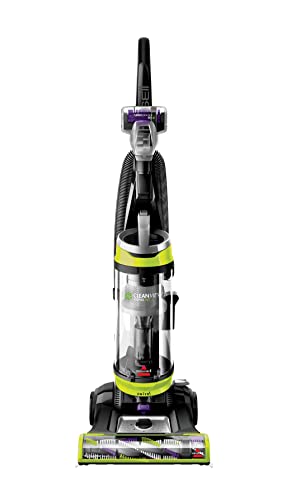
Bissell CleanView Swivel Pet 2252 upright vacuum with triple action brush roll and scatter-free technology. Designed for pet homes. Buy now!
2. Canister Vacuums: Flexibility and Quiet Performance
Canister vacuums separate the motor and dust container (the “canister”) from the cleaning head, connecting them with a long, flexible hose. You pull the canister along behind you on wheels while guiding a lightweight wand and floor tool across your surfaces.
What Makes Canister Vacuums Special
Canister vacuums are the dominant design in Europe and Asia, and with good reason: they are extraordinarily versatile. Because the cleaning wand is lightweight and disconnected from the heavy power unit, you can effortlessly guide it under furniture, along baseboards, up staircases, across drapes, and into corners that upright vacuums cannot reach.
This design also makes canisters significantly quieter than uprights. The motor is sealed inside a tank on the floor rather than sitting directly in the cleaning head near your ears, which dramatically reduces the operational noise level. For households with sleeping babies, noise-sensitive pets, or home office environments, this is a meaningful advantage.
Canister vacuums tend to excel on hard floors and bare surfaces, and many models come with specialized floor heads — a motorized brushroll for carpet, a bare floor brush for hardwood and tile — that you can swap depending on what you are cleaning.
Canister Vacuum Trade-offs
The canister design requires you to physically drag a second unit across the floor, which can be awkward in tight spaces or on thick rugs where the canister gets stuck. You also need to manage both the canister and the wand while cleaning, which takes more coordination than the single-body upright design.
Storage requires more floor space or a dedicated closet area, since the hose, wand, and canister need to be stored together or reassembled each time.
Recommended Canister Vacuum
The Eureka WhirlWind Bagless Canister Vacuum NEN110A is one of the most reviewed canister vacuums available, with over 43,000 ratings. It is lightweight, bagless, and includes multiple attachments for versatile cleaning across both carpet and hard floors. Its spinning dust cup technology helps maintain suction as you clean, and the included crevice tool and dusting brush make it easy to tackle above-floor surfaces, furniture, and tight corners without switching machines.
Best For
- Homes with a mix of hard floors and area rugs
- Multi-story homes where stair cleaning is a priority
- Allergy-focused households that want thorough above-floor cleaning
- Anyone who values quiet operation and lightweight maneuverability

Eureka WhirlWind NEN110A bagless canister vacuum with 2.5L dust cup, swivel steering, and multi-surface cleaning. Lightweight and easy to use.
3. Stick and Cordless Vacuums: Lightweight Daily Convenience
Stick vacuums are long, narrow upright-style vacuums with a slim profile. The modern cordless stick vacuum — powered by a rechargeable lithium-ion battery — has become one of the fastest-growing vacuum categories in the world, and for good reason: they are fast, light, and wonderfully convenient.
What Makes Stick Vacuums Special
The cordless stick vacuum’s greatest strength is the speed at which you can get it running. No cord to unwind, no outlet to find, no furniture to move out of the way. You grab it off the wall charger, sweep through your kitchen after breakfast, and put it back in two minutes. This frictionless experience encourages more frequent cleaning, which in turn keeps floors cleaner on a daily basis.
Modern battery technology has dramatically improved runtime. Where early cordless vacuums barely lasted 15 minutes on a charge, today’s best models offer 40 to 60 minutes of runtime on standard settings — enough to clean most apartments or large portions of a multi-room home. Many models also convert from stick to handheld mode by detaching the wand, giving you a 2-in-1 cleaning tool.
Cordless stick vacuums have also become increasingly capable on carpet. While they still lag behind powerful corded uprights in deep-carpet extraction, they handle everyday dirt, dust, and pet hair on low-to-medium pile carpets effectively.
Stick Vacuum Trade-offs
Battery runtime remains a limitation. High-suction modes typically cut runtime significantly — sometimes to 12 or 15 minutes — which can be frustrating during larger cleaning sessions. And even the best cordless sticks cannot fully replace a corded upright for deep carpet cleaning in homes with heavy foot traffic.
Battery degradation over time is also a reality. Most lithium-ion batteries begin to lose capacity after 1 to 3 years of regular use, and replacement batteries can be expensive depending on the brand.
Recommended Stick Vacuum
The LEVOIT LVAC-200 Cordless Stick Vacuum stands out in this category for its tangle-resistant roller design, which prevents human and pet hair from wrapping around the brushroll — one of the most common frustrations with stick vacuums. It offers up to 50 minutes of runtime on standard mode, 5-stage filtration for allergen control, and a one-click dust bin emptying system that keeps maintenance hassle-free.
For households primarily in apartment settings or smaller homes, the Bissell Featherweight Stick Vacuum 2033M is an ultra-affordable option with over 116,000 ratings, proving that a capable stick vacuum does not have to cost a fortune.
Best For
- Apartments and smaller homes where a full-size vacuum feels like overkill
- Daily maintenance cleaning between deeper sessions with an upright or canister
- Homes with mostly hard floors and low-pile area rugs
- Anyone who wants grab-and-go cleaning without cord management

LEVOIT LVAC-200 cordless stick vacuum with tangle-resistant roller, 50-min runtime, and 5-stage filtration. Ideal for pet hair and hard floors. See full review.
4. Robot Vacuums: Autonomous Daily Maintenance
Robot vacuums are flat, disc-shaped autonomous cleaning machines that navigate your floors independently, vacuuming as they go. You set a schedule, and the robot handles the rest — returning to its charging dock when its battery runs low or its job is complete.
What Makes Robot Vacuums Special
The robot vacuum’s core proposition is time savings. On any given day, you are not vacuuming — the robot is. For households with hard floors or low-pile carpets, a well-programmed robot vacuum can realistically maintain floor cleanliness between weekly deeper cleaning sessions, significantly reducing the time and effort required to keep your home tidy.
Modern premium robot vacuums have evolved far beyond their early navigation-challenged predecessors. Laser-guided LiDAR mapping, multi-room scheduling, no-go zone programming, automatic base emptying, and even integrated mopping capabilities are now available in mid-to-premium range models. Mapping technology allows today’s robots to navigate intelligently around furniture, avoid obstacles, and clean in systematic patterns rather than randomly bumping around.
Robot Vacuum Trade-offs
Robot vacuums cannot replace a full-size vacuum for deep cleaning. Their suction power and brush design are optimized for surface maintenance, not embedded dirt removal. Stairs are an absolute barrier — no robot vacuum climbs stairs, so multi-story homes require a robot on each floor or a supplemental vacuum for stair cleaning. Thick rugs and high-pile carpet can also cause navigation issues.
Upfront cost is higher than basic stick vacuums for capable models, and the docking station requires a clear floor area near an outlet.
Recommended Robot Vacuum
The eufy Omni C20 Robot Vacuum and Mop Combo combines robot vacuuming with integrated mopping and an all-in-one station that automatically empties the dustbin and refills/cleans the mop pads — eliminating the most tedious aspects of robot vacuum ownership. With over 80,000 ratings, it is one of the most widely reviewed robot vacuum-mop combos on the market. For hands-free floor maintenance in modern households, it represents a compelling investment.
For a more traditional robot vacuum without the mopping function, the iRobot Roomba Vac Q0120 offers smart navigation with systematic room-by-room cleaning and is one of the most recognizable names in the category.
Best For
- Busy households that want daily floor maintenance without daily effort
- Homes with open floor plans and mostly hard floors or low-pile carpet
- Pet owners who want continuous hair management between deep-clean sessions
- Anyone who wants to build a two-vacuum system (robot for daily maintenance, upright for weekly deep cleaning)

eufy Omni C20 robot vacuum and mop combo with auto emptying, washing, and drying station. 7000Pa suction and 3.35-inch low profile. See the full review!
5. Handheld Vacuums: Portable Spot Cleaning
Handheld vacuums are compact, battery-powered suction tools designed for quick spot cleaning on surfaces, furniture, stairs, and vehicle interiors. They are not floor vacuums in the traditional sense — they are precision cleaning tools designed to be grabbed with one hand and used to tackle targeted messes quickly.
What Makes Handheld Vacuums Special
Nothing beats a handheld vacuum for convenience and portability. They are small enough to live in a kitchen drawer, mount on a wall near the dining table, or store in your car’s trunk. When your child spills cereal at breakfast, when your dog tracks in muddy footprints, or when you want to quickly clean your car’s interior before a trip, a handheld vacuum delivers the fastest response time of any cleaning tool.
The best handheld vacuums feature rotating nozzles that reach into tight spaces, built-in crevice tools and brush attachments, and cyclonic suction technology that maintains consistent power without frequent filter clogging. Lithium-ion batteries provide immediate, fade-free suction and hold their charge well between uses.
Handheld Vacuum Trade-offs
Handheld vacuums are not designed for floor cleaning. Their small dirt cups fill quickly during extended sessions, and they lack the floor head geometry and brushroll agitation needed for effective carpet cleaning. They are supplemental tools, not primary cleaning solutions.
Battery runtime is typically shorter than full-size cordless vacuums — most handhelds are designed for 10-to-20-minute sessions, which is appropriate given their intended use case.
Recommended Handheld Vacuum
The BLACK+DECKER Dustbuster AdvancedClean CHV1410L is one of the best-selling handheld vacuums ever made, with over 108,000 ratings. Its 16V lithium-ion battery delivers consistent suction from start to finish, its 180-degree rotating slim nozzle reaches into car vents, seat rails, and other awkward spaces, and the built-in crevice tool and flip-up brush eliminate loose accessories. At just 2.6 pounds, it is light enough for anyone in the household to use comfortably.
Best For
- Car owners who want quick and thorough vehicle interior cleaning
- Homeowners who want a fast-response tool for spot cleaning on furniture, stairs, and countertops
- Pet owners who need a secondary tool for quick fur removal between full vacuuming sessions
- Apartment dwellers who want a lightweight, space-efficient cleaning solution for small jobs
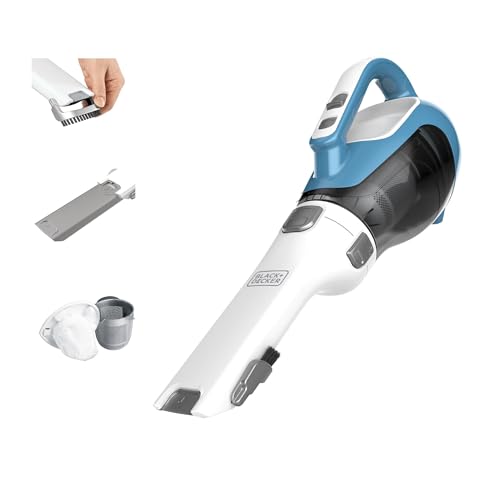
BLACK+DECKER Dustbuster AdvancedClean cordless handheld vacuum with cyclonic suction and 16V battery. Great for home and car. Read our expert review now.
6. Wet/Dry Vacuums: Garage, Workshop, and Liquid Spills
Wet/dry vacuums — commonly called shop vacs — are heavy-duty, large-capacity vacuums built for environments and messes that would destroy a conventional household vacuum. They can vacuum up dry debris like sawdust and construction dust as well as liquid spills, standing water, and slurry.
What Makes Wet/Dry Vacuums Special
Conventional vacuums are dry-only machines. Even a small amount of liquid drawn into a standard vacuum can damage the motor and create mold and mildew inside the machine. A wet/dry vacuum is engineered specifically to handle both liquids and solids, making it indispensable in garages, workshops, basements, and anywhere that liquid spills are a realistic possibility.
Wet/dry vacuums typically feature large-capacity tanks (ranging from 2 gallons to 20+ gallons), powerful motors, and durable hoses and attachments rated for heavy debris, nails, screws, and industrial use. Many models include blower functionality as well, allowing you to redirect airflow for drying surfaces or clearing debris from outdoor areas.
Wet/Dry Vacuum Trade-offs
Wet/dry vacuums are bulky, heavy, and loud. They are not designed for household carpet or delicate surface cleaning and should not be used as replacements for conventional home vacuums. Their large size means they need dedicated storage space, and emptying a tank full of liquid requires careful handling to avoid spills.
They are also overkill for everyday home cleaning — most homeowners use their wet/dry vacuum only occasionally, making it a specialized tool rather than a daily driver.
Best For
- Garages, basements, and workshops where sawdust, construction debris, and liquid spills are common
- Post-renovation cleanup involving drywall dust, wood shavings, and screws
- Flood response and water extraction from carpets or flooring
- Anyone who works on vehicles or home projects and needs a heavy-duty cleanup solution
7. Carpet Cleaners: Deep Extraction Beyond What Vacuuming Can Do
Carpet cleaners — also called carpet extractors or deep cleaners — are not vacuum cleaners in the traditional sense. Where a vacuum removes surface and near-surface dirt through suction, a carpet cleaner injects hot water and cleaning solution deep into carpet fibers, agitates the fibers to loosen embedded soils, and then extracts the dirty solution back out.
What Makes Carpet Cleaners Special
Over time, carpet accumulates dirt, oils, pet dander, bacteria, and stains that routine vacuuming cannot remove. The fibers absorb these contaminants deep below the surface, where suction alone cannot reach them. A carpet cleaner addresses this by using water and detergent to penetrate the carpet pile, loosen the embedded material, and extract it in a single pass.
The result is a level of cleanliness that vacuuming — no matter how powerful — simply cannot replicate. Professionally cleaned carpets typically last longer, look better, and contribute to better indoor air quality than carpets maintained only with regular vacuuming.
Modern carpet cleaners designed for home use are significantly more user-friendly than the industrial extractors used by professional cleaning services. Automatic water-mixing systems, self-cleaning modes, specialized pet formula detergent compartments, and motorized brush heads have made DIY deep carpet cleaning genuinely accessible.
Carpet Cleaner Trade-offs
Carpet cleaners are not substitutes for regular vacuuming — in fact, you should always vacuum before using a carpet cleaner to remove surface debris before the deep-cleaning process begins. They also require drying time after use, typically two to six hours depending on airflow and humidity.
The machines themselves and the cleaning solutions add ongoing cost, and they require more time and effort to operate than standard vacuuming. Most households use carpet cleaners seasonally or for spot treatment rather than on a weekly basis.
Recommended Carpet Cleaner
The Hoover SmartWash Pet XL Carpet Cleaner FH62000 is one of the most reviewed carpet cleaners available, with over 29,000 ratings. Its automatic cleaning technology senses your cleaning direction and automatically dispenses solution on the forward stroke and applies suction on the return stroke, removing much of the manual timing required with older extractors. The XL tank capacity means fewer refill stops, and the pet-formula compatibility handles the odors and staining that come with pet ownership.
Best For
- Periodic deep cleaning of carpeted rooms (recommended two to four times per year)
- Pet owners dealing with embedded odors and staining
- Anyone refreshing carpets after a move, renovation, or high-traffic event
- Households that want professional-level carpet cleaning results without professional-level costs
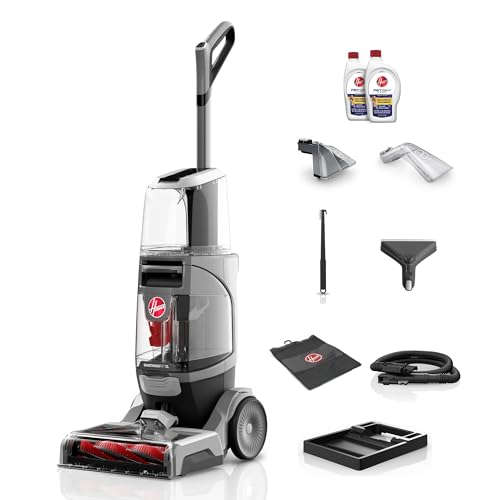
The Hoover SmartWash Pet XL auto-senses wash & dry cycles, features XL 96oz tanks, Spot Boost Mode, and converts to a spot cleaner. Deep clean carpets with ease.
Which Type of Vacuum Is Right for Your Home?
The honest answer is that most homes benefit from more than one type. Here is a practical breakdown by home type and lifestyle:
Apartment or Studio (Hard Floors, Small Space) A cordless stick vacuum covers the majority of your needs. Add a handheld for quick countertop and upholstery jobs and you have a complete solution without taking up much storage space.
Single-Story Home with Mixed Flooring A canister vacuum handles both carpet and hard floors with flexibility, or a high-quality upright with a brushroll shutoff covers the same ground. A handheld supplements for cars and spot cleaning.
Multi-Story Home with Carpet An upright vacuum for the carpeted floors, a robot vacuum to handle daily maintenance on hard-floor levels, and a handheld for stairs and the car is a highly efficient three-tool system that most families find more than adequate.
Pet Owner with Heavy Shedding An upright designed specifically for pet hair — one with a tangle-free brushroll and sealed HEPA filtration — is the foundation. Add a robot vacuum for daily hair management between deeper sessions, and a handheld for furniture and car cleaning.
Household with Allergies or Asthma Prioritize sealed HEPA filtration on whatever primary vacuum you choose. An upright or canister with HEPA is the starting point; a robot for daily dust reduction; and a carpet cleaner for seasonal deep cleaning that removes allergen reservoirs from carpet fibers.
Garage or Workshop Owner A wet/dry vacuum lives in the garage. It handles everything the household vacuums cannot touch. Keep it separate from your indoor machines entirely.
Frequently Asked Questions
Do I really need more than one vacuum?
Not necessarily, but most households find that two vacuums serve them far better than one. The most practical combination for most families is a primary upright or canister vacuum for weekly deep cleaning, plus a lightweight cordless stick or handheld for daily quick cleanups. This combination covers both thoroughness and convenience without requiring a large investment.
Is a robot vacuum a replacement for a regular vacuum?
No. Robot vacuums excel at surface maintenance and daily dust management, but they lack the suction power and brushroll agitation needed for deep carpet cleaning. They work best as a supplement to a traditional vacuum, not a replacement for one.
What is the difference between a carpet cleaner and a vacuum?
A vacuum uses suction to remove surface and near-surface debris from carpet. A carpet cleaner injects water and cleaning solution into the carpet pile and then extracts it, removing deeply embedded dirt, oils, stains, and odors that a vacuum cannot reach. You should vacuum before using a carpet cleaner, never instead of it.
Can I use a stick vacuum as my only vacuum?
In smaller homes and apartments with primarily hard floors, a high-quality cordless stick vacuum can serve as a primary vacuum. In larger homes, homes with thick carpet, or homes with heavy pet hair, a stick vacuum alone will leave your floors under-cleaned. The battery runtime and suction power of even premium stick vacuums do not match a corded upright for whole-home deep cleaning.
Are canister vacuums better than uprights?
Neither is universally better — they are optimized for different strengths. Uprights are stronger on deep carpet cleaning and simpler to store and maneuver as a single unit. Canisters are more versatile for above-floor cleaning, quieter, and better on hard floors and stairs. Your flooring type, home layout, and cleaning priorities determine which is the better fit. Read our full upright vs canister comparison for a detailed side-by-side breakdown.
How often should I use each type of vacuum?
- Upright or canister: Weekly deep cleaning of carpeted and hard floors
- Cordless stick: Daily or every other day for quick maintenance passes
- Robot vacuum: Daily automated runs while you are away or sleeping
- Handheld: As needed for spot cleaning and car interior maintenance
- Carpet cleaner: Every three to six months for deep extraction, or immediately after staining events
The Bottom Line
Choosing the right vacuum starts with understanding what each type was designed to do. Upright vacuums deliver deep carpet cleaning power. Canister vacuums offer unmatched flexibility for multi-surface and above-floor cleaning. Cordless stick vacuums provide fast, convenient daily maintenance. Robot vacuums handle autonomous floor upkeep hands-free. Handheld vacuums tackle portable spot cleaning and car interiors. Wet/dry vacuums manage what no household vacuum should ever touch. And carpet cleaners deliver the kind of deep extraction that transforms the appearance and hygiene of your carpeted spaces.
Most homes do not need all seven types, but almost every home benefits from pairing two: a primary machine for deep cleaning and a secondary machine for daily convenience. Get those two right and your floors will stay cleaner with less time and less effort than you ever thought possible.
For more guidance on specific scenarios, explore our guides on cordless stick vacuums, the best robot vacuums, canister vacuum buying guide, carpet cleaner guide, and handheld vacuums.
Ready to Find Your Perfect Vacuum?
Browse our expertly reviewed vacuum cleaners and make an informed decision
Browse All Vacuums