Vacuum Suction Power Explained: What Pa, AW, and Watts Really Mean
What do vacuum suction specs mean? Pa, AW, CFM, and watts explained — learn how much suction you actually need for carpet, hard floors, and pet hair.
Table of Contents
- Vacuum Suction Power Explained: What Pa, AW, and Watts Really Mean
- What Is Suction Power, Really?
- Pa (Pascals): The Robot Vacuum Standard
- AW (Air Watts): The Meaningful All-Around Metric
- CFM (Cubic Feet per Minute): Airflow for Uprights and Shop Vacs
- Why Suction Specs Do Not Tell the Whole Story
- Real-World Performance vs. Specs
- Minimum Suction Recommendations by Floor Type
- The Bottom Line on Vacuum Suction Specs
- Frequently Asked Questions
- Top Picks
Vacuum Suction Power Explained: What Pa, AW, and Watts Really Mean
Shopping for a vacuum involves running into a wall of confusing numbers. One robot vacuum claims 8,500 Pa. An upright boasts 270 AW. A cordless stick lists 545 watts. A shop vac advertises 150 CFM. And a canister vacuum shows only 1,200 watts with no other suction spec in sight.
None of these numbers are directly comparable. They measure different things, using different units, for different vacuum types. Yet manufacturers often list them interchangeably — or omit the ones that would make their product look less impressive. The result is a spec sheet designed to impress, not to inform.
This guide cuts through all of it. You will learn what each measurement actually means, which metric matters for which type of vacuum, and how to use these numbers to choose a vacuum that will actually clean your floors.
What Is Suction Power, Really?
Before diving into units, it helps to understand what suction actually is from a physics standpoint.
A vacuum cleaner works by creating a pressure difference. The motor spins a fan that pushes air out of the vacuum body, creating a region of lower pressure inside. Because the air pressure outside is higher than inside, air rushes in through the nozzle — carrying dirt and debris along with it.
Suction power, then, is a combination of two things:
- Pressure differential — how much lower is the pressure inside the vacuum compared to the room. This determines the vacuum’s ability to “grip” debris and pull it off a surface.
- Airflow — how much air is actually moving through the machine per unit of time. This determines the vacuum’s ability to carry debris through the hose and into the collection bin.
Both matter. A vacuum with extremely high pressure but almost no airflow would have intense suction at a pinpoint but could not move debris effectively through the system. A vacuum with high airflow but weak pressure would move lots of air but struggle to pull embedded carpet fiber or fine dust. Real-world cleaning performance depends on the balance of these two properties — and different unit systems capture different parts of this picture.
Pa (Pascals): The Robot Vacuum Standard
What Pa Measures
Pascal (Pa) is the SI unit of pressure. Named after the French mathematician and physicist Blaise Pascal, one Pascal equals one Newton of force applied per square meter of area. In the context of vacuums, suction power expressed in Pascals describes the maximum pressure differential the machine can create — how much “harder” it can pull on air compared to atmospheric pressure.
Specifically, robot vacuum manufacturers measure and advertise the sealed suction pressure: the maximum pressure difference the motor achieves when the inlet is completely sealed. This is a useful but incomplete picture of cleaning ability — it tells you the motor’s peak pulling force, not the airflow volume.
Pa has become the standard unit for robot vacuums, particularly Chinese brands like Roborock, Dreame, Ecovacs, and Eufy. It is rarely used for upright or canister vacuums sold by Western manufacturers.
Pa Suction Tiers: What the Numbers Mean in Practice
Under 2,000 Pa: Budget robots and light-use machines
Entry-level robot vacuums typically fall in this range. These machines handle light daily maintenance on hard floors — picking up loose crumbs, surface dust, and light pet hair that has not settled into carpet fibers. They will struggle on anything but the shortest, most tightly-woven carpet and will have trouble with heavier debris like litter, sand, or dense pet fur clumps.
If your home is primarily hard floors and you are looking for a daily dust-sweeping companion rather than a deep cleaner, under 2,000 Pa can be adequate. But expect visible misses on carpet, and do not expect these models to replace a manual vacuum for periodic deep cleaning.
2,000–3,000 Pa: Good for hard floors and low-pile carpet
This is the solid middle tier for most robot vacuums in the $200–$400 range. At 2,000 Pa and above, robots handle hard floors excellently — pulling fine dust, pet hair, and small debris effectively from tile, hardwood, laminate, and vinyl. On low-pile carpet (under 0.5 inches pile height), performance is reasonable: the robot will collect most surface debris and lighter particles embedded in the pile.
Where this tier starts to show limits is on medium-pile carpet with heavy pet hair loads. The suction is sufficient for maintenance cleaning if you run the robot frequently, but a single pass through a week’s worth of pet hair accumulation on medium carpet will likely leave residue behind.
3,000–5,000 Pa: Strong carpet and pet hair performance
At this level, robot vacuums begin to deliver genuinely impressive results on medium-pile carpet and for households with heavy pet hair. The pressure differential is high enough to work against carpet resistance and pull embedded debris from deeper in the pile. Pet hair — which tends to tangle and anchor itself in carpet fibers — is handled with noticeably greater reliability at 3,000 Pa and above.
This range is the sweet spot for most pet-owning households and homes with a mix of hard floors and medium-pile carpet. Robots like the Roborock S8 series and Dreame L10 Prime operate in this tier and consistently receive strong real-world reviews for carpet cleaning performance.
5,000–10,000 Pa: Premium robots, excellent for thick carpet
Crossing the 5,000 Pa threshold puts you in premium robot vacuum territory. At these suction levels, robots can handle thick-pile carpet, high-density rugs, and the heaviest pet hair accumulations. The machines are engineering significantly more powerful, often drawing more battery current and generating more heat, which is why robots in this range tend to have larger batteries and more sophisticated thermal management.
Flagship models from Roborock and Dreame in the $500–$800 range typically achieve 5,000–8,000 Pa. At these levels, the performance gap between a robot vacuum and a dedicated corded upright on carpet narrows meaningfully — though a quality upright still holds an edge in true deep extraction cleaning.
10,000+ Pa: Top-tier machines
The highest-suction robot vacuums currently available push into the 10,000–22,000 Pa range. Models like the Roborock Saros Z70 (22,000 Pa), Dreame X30 Ultra, and similar flagship platforms represent the current ceiling of robot vacuum suction engineering. At these levels, suction is genuinely comparable to many corded uprights for surface and medium-depth carpet cleaning.
It is worth noting that these extreme Pa numbers come with trade-offs: higher battery drain, more noise, and greater wear on brush roll components. Most users in this tier do not run their robots at maximum suction continuously — smart robots in this class use sensors to apply maximum suction selectively on carpet and reduce power on hard floors.
AW (Air Watts): The Meaningful All-Around Metric
What Air Watts Measure
Air Watts (AW) is a composite measurement that captures both suction pressure and airflow simultaneously. The formula is:
Air Watts = (Airflow in CFM × Vacuum Pressure in inches of water lift) / 8.5
Because it incorporates both pressure and volume flow, Air Watts is widely considered the most useful single-number representation of a vacuum’s real-world cleaning capability. It was popularized by Dyson and is commonly used by British and American vacuum manufacturers across cordless, upright, and canister categories.
A vacuum with high Air Watts is strong in both dimensions that matter: it creates meaningful pressure differential to pull debris free from surfaces AND moves enough air to transport that debris through the system efficiently.
AW in Practice: Reading the Numbers
Below 50 AW: Budget handheld vacuums and entry-level cordless sticks. Fine for quick spot-cleaning and loose debris on hard floors. Not sufficient for meaningful carpet cleaning.
50–100 AW: Mid-range cordless stick vacuums. The Dyson V8 operates in this range, as do many Shark and Bissell cordless models. Suitable for mixed-surface homes with light to moderate carpet and regular vacuuming habits.
100–150 AW: Premium cordless and mid-range corded uprights. The Dyson V11 and V15 Detect operate in the 115–160 AW range, as do quality corded models from Shark and Hoover in the $150–$250 price tier. This level handles most home cleaning situations effectively, including medium-pile carpet and moderate pet hair.
150–200 AW: High-performance uprights and strong corded models. At this level, you have sufficient power for heavy carpet, significant pet hair, and challenging debris types. Most full-size Dyson Ball models and premium Shark uprights operate here.
200 AW and above: Commercial-grade uprights, high-end canisters, and the most powerful household uprights. Models like the Dyson Ball Animal and premium Miele canisters reach this territory. Excellent for deep carpet extraction and high-demand home environments.
Why AW Is Better Than Watts for Comparing Vacuums
Input watts — the wattage rating on a vacuum’s motor — measures how much electrical power the vacuum consumes, not how effectively it converts that power into suction. A poorly designed 2,000-watt motor can produce less useful cleaning power than a well-engineered 1,400-watt motor in a machine with better airflow paths and lower internal resistance.
Motor wattage is a European marketing standard and tells you almost nothing about cleaning performance. Always look for Air Watts when comparing corded and cordless vacuums — if a manufacturer only publishes wattage, treat it as a red flag and look for independent test data instead.
CFM (Cubic Feet per Minute): Airflow for Uprights and Shop Vacs
What CFM Measures
CFM measures pure airflow volume: how many cubic feet of air pass through the vacuum per minute. Unlike Pa (which measures pressure alone) or AW (which balances pressure and airflow), CFM focuses exclusively on the volume of air moving through the machine.
This makes CFM most useful for:
- Upright vacuums where the brush roll mechanically agitates carpet fibers and the vacuum’s main job is to carry loosened debris into the collection bin via high airflow
- Wet/dry shop vacuums where moving large volumes of air and liquid is more important than concentrated suction pressure
- Central vacuum systems where air must travel long distances through pipes, making airflow volume the critical engineering parameter
A typical household upright vacuum runs between 60–150 CFM. Commercial uprights and strong shop vacs can exceed 200 CFM. Central vacuum systems are typically rated between 100–200 CFM at the inlet.
CFM vs. Pa: Why You Cannot Compare Them Directly
This is where consumers most often get confused. A robot vacuum rated at 8,000 Pa and an upright vacuum rated at 100 CFM are measuring completely different things. You cannot say one has more or less “suction power” than the other based on those numbers alone.
The robot vacuum’s Pa rating reflects sealed suction pressure — peak pressure differential at zero airflow. The upright’s CFM rating reflects maximum airflow — peak volume at zero resistance. Neither number alone captures real-world cleaning performance, and they are not on the same scale.
The closest to an apples-to-apples comparison across vacuum types is Air Watts — because it incorporates both. When comparing a robot vacuum to an upright, look for independent test data rather than trying to convert Pa to AW or CFM mathematically.
Why Suction Specs Do Not Tell the Whole Story
Here is the uncomfortable truth that vacuum marketing does not want you to think about too hard: suction power is necessary but not sufficient for excellent cleaning performance. Two vacuums with identical suction specs can produce dramatically different cleaning results based on other design factors.
Brush Roll Design
The brush roll — the rotating cylinder of bristles under the vacuum — does more of the actual cleaning work than most people realize. On carpet, the brush roll mechanically agitates carpet fibers, loosening embedded dirt and pet hair so suction can carry it away. A vacuum with modest suction but an excellent brush roll often outperforms a high-suction machine with a poorly designed roll on carpet.
Brush rolls vary enormously in bristle stiffness, rotation speed, brush pattern geometry, and anti-tangle features. A tightly-spaced stiff bristle roll extracts more deeply embedded debris. A rubber fin roll (common on Dyson and Shark pet models) wraps hair and releases it into the bin rather than winding it around the axle. The right brush design for your floor type matters as much as raw suction numbers.
On hard floors, the story reverses: an aggressive brush roll can scatter debris rather than collect it. Vacuums designed for hard floors use softer brushes or felt rolls that sweep debris into the airstream without launching it across the room.
Filtration and Sealed System Design
A vacuum’s filtration system affects suction in a way most people do not consider. Every filter in the airpath creates resistance — the air must work harder to pass through it, which reduces effective airflow at the nozzle. Cheap filters that clog quickly or are poorly maintained degrade suction performance significantly.
More importantly, a vacuum without a sealed system — where air can leak out through seams, joints, or around filter edges — loses meaningful suction before it ever reaches the floor. The Pa or AW number on the spec sheet was measured in a controlled lab condition with no leaks. In a poorly sealed real-world machine, effective suction at the nozzle can be 20–40% lower than the spec suggests.
This is why “sealed system” HEPA vacuums command a premium and deliver more consistent real-world suction: they maintain the pressure differential all the way from the nozzle to the filter, with no energy lost to leakage.
Cleaning Path Width
A 10-inch wide nozzle requires fewer passes to cover a room than a 7-inch nozzle — independent of suction power. Wider cleaning paths mean more floor contact per pass, which matters for practical efficiency. On carpet, wider heads also distribute the motor’s suction across a larger area, which can sometimes result in less effective edge cleaning compared to a narrower, more concentrated head.
Robot vacuums with wider brush paths cover more floor area per unit of time even when suction specs are identical. For hard floors, this matters enormously — wide-path robots finish rooms significantly faster.
Nozzle and Attachment Design
The geometry of the vacuum’s inlet affects how suction force is concentrated or distributed. A narrow crevice tool concentrates full suction power into a small area — excellent for corners and baseboards but slow for open floors. A wide floor head distributes that same suction across a large area — fast for open floors but less effective at edges and corners.
Height-adjustable floor heads that create a closer seal to the floor concentrate suction more effectively on carpet. Auto-adjusting heads (common on premium Dyson and Shark models) optimize this seal automatically as they transition between surface types.
Real-World Performance vs. Specs
The gap between spec-sheet suction numbers and actual cleaning results is wider than manufacturers would like you to know.
Independent testing by organizations like the Vacuum Wars YouTube channel, Consumer Reports, and various German testing labs consistently shows that:
- Vacuums with lower Pa ratings frequently outperform higher-rated models on real carpet, when brush roll design and path seal are superior
- Robot vacuums tested with standardized debris types (sand, pet hair, kitty litter) often rank differently from their Pa spec order — a 5,000 Pa robot with a well-designed brush roll often outperforms an 8,000 Pa machine with a mediocre roll
- Suction retention over time varies dramatically by filter quality and maintenance design — a well-maintained budget vacuum often outperforms a neglected premium one
The most reliable predictor of real-world cleaning performance is independent test results on your specific debris types and floor surfaces. Treat Pa and AW numbers as useful filters for ruling out clearly underpowered machines — not as a precise ranking of cleaning ability.
Minimum Suction Recommendations by Floor Type
Use these as practical starting points when shopping, not hard rules.
Smooth hard floors (hardwood, tile, laminate, vinyl)
Hard floors are the least demanding suction application. Debris sits on the surface and is easily drawn into airflow. For robot vacuums, 1,500–2,500 Pa is genuinely sufficient for hard-floor households. For uprights and cordless sticks, anything above 60 AW handles hard floors reliably. The bigger factor is nozzle design — look for soft brush rolls or hard-floor modes that do not scatter debris.
Low-pile carpet (office carpet, tight weave, under 0.5 inch pile)
Low-pile carpet needs moderate suction to pull debris from shallow fiber. Aim for at least 2,000 Pa in robot vacuums. For uprights, 80–100 AW handles low-pile well. Brush roll engagement is important — ensure the vacuum makes proper contact with the surface.
Medium-pile carpet (most residential carpet, 0.5–0.75 inch pile)
Standard household carpet is the benchmark testing condition for most vacuums. Robot vacuums need at least 2,500–3,000 Pa for reliable performance. Uprights should be at 100 AW or above for thorough extraction. With pets, add 1,000–2,000 Pa to the robot recommendation and look for purpose-built pet tools on uprights.
High-pile and thick carpet (plush, frieze, 0.75 inch and above)
Thick carpet is the most demanding surface. Robot vacuums need 4,000+ Pa, and many budget robots should simply not be run on thick pile — the resistance can trigger motors to overheat or stall. Uprights for thick carpet should target 150 AW and above, with height-adjustable brush rolls that do not bog down in deep pile.
Mixed surface homes
For homes with a combination of hard floors and carpet, prioritize suction high enough for the most demanding surface you have, and look for automatic surface detection or adjustable suction modes. Premium robot vacuums with carpet boost modes are specifically engineered for this use case.
The Bottom Line on Vacuum Suction Specs
Pa is the metric for robot vacuums. AW is the most meaningful single metric for uprights and cordless sticks. CFM matters for uprights and shop vacs where airflow volume is the primary cleaning mechanism. Motor wattage tells you about electricity consumption, not cleaning power.
More suction is generally better, but the returns diminish past a certain point for your specific floor type. A 10,000 Pa robot on hard floors is not meaningfully cleaner than a 3,000 Pa robot — but on thick carpet with heavy pet hair, the difference is real.
Always pair suction specs with what you know about brush design, filtration quality, and cleaning path width before making a buying decision. A moderately-powered vacuum with excellent mechanical design and a proper sealed system will consistently outperform a high-Pa machine built with cost-cutting compromises.
Buy the suction level that matches your most demanding floor surface, and trust real-world reviews and independent tests over spec-sheet numbers.
Frequently Asked Questions
What is a good Pa for a robot vacuum? For hard floors, 2,000 Pa is sufficient. For mixed floors with medium-pile carpet, aim for 2,500–4,000 Pa. For thick carpet or heavy pet hair, 4,000–8,000 Pa is the practical target range. Numbers above 8,000 Pa offer diminishing practical returns for most home environments.
Is higher Pa always better in a robot vacuum? Not always. Higher Pa draws more battery power, increases noise, and creates more motor heat. Robots that intelligently vary suction — applying max Pa only on carpet and reducing it on hard floors — often outperform max-suction machines in real-world battery life and total cleaning coverage per charge. Smart suction management matters as much as peak Pa.
What does 2000 Pa suction mean for cleaning? At 2,000 Pa, a robot vacuum creates a pressure differential of 2,000 Pascals — roughly 0.3 PSI — at the sealed inlet. In practice, this is adequate suction for reliable hard floor cleaning and light carpet maintenance. It will pick up loose crumbs, surface dust, and light pet hair on flat surfaces, but will struggle with debris embedded in medium or thick carpet.
How do you convert Pa to Air Watts? There is no direct conversion formula, because Pa and AW measure different things. Pa measures pressure differential only. AW incorporates both pressure and airflow volume. You cannot meaningfully convert one to the other without knowing both the sealed suction (Pa) and the free airflow (CFM or liters/second) of the specific vacuum.
Is 20,000 Pa suction good for a robot vacuum? 20,000 Pa is genuinely impressive and represents current top-tier robot vacuum engineering. At this suction level, robots can extract debris from thick carpet in ways previously limited to corded uprights. However, for most homes — even those with thick carpet and pets — 5,000–8,000 Pa is sufficient, and a 20,000 Pa robot will spend most of its time in lower-suction modes to preserve battery life.
What suction power do I need for pet hair on carpet? For robot vacuums, target at least 3,000 Pa, and 4,000+ Pa for medium to thick carpet. For uprights and cordless sticks, look for at least 100 AW with a pet-specific brush roll designed to collect rather than tangle hair. The brush roll design matters almost as much as suction at this application — a 150 AW machine with a hair-wrapping brush roll performs worse on pet hair than a 100 AW machine with a rubber fin roll.
Why does my vacuum lose suction over time? Suction loss over time is almost always caused by one of three things: a clogged filter, a full or improperly seated dustbin, or a blocked airpath (hose, brush roll, or inlet nozzle). Filters are the most common culprit — a clogged filter creates resistance that significantly reduces airflow and effective suction. Clean or replace filters on the manufacturer’s recommended schedule to maintain performance close to the original spec.
Does higher wattage mean more suction? No. Motor wattage measures electricity consumption, not suction output. A 2,000-watt vacuum can produce less cleaning power than a 1,200-watt vacuum if the higher-wattage machine has a less efficient motor, more internal airflow resistance, or a poor nozzle design. Always look for Air Watts or Pa ratings rather than input wattage when comparing cleaning power.
Top Picks

Bissell CleanView XR cordless vacuum: 200W motor, 35-min runtime, tangle-free brush roll & 3-in-1 design. Top-rated stick vacuum for home. Shop now.

Bissell Featherweight stick vacuum weighs only 3 lbs and converts into 3 machines. Bagless design with crevice tool for carpet, hard floors, and furniture.

Bissell CleanView XR Pet 300W cordless stick vacuum with 40-min runtime, deep cleaning FurBrush, and removable battery. Expert review with full specs.

Bissell Featherweight 2033M is an ultra-lightweight 3-in-1 bagless stick vacuum for hard floors, carpet, and stairs. Converts to hand vac with crevice tool.
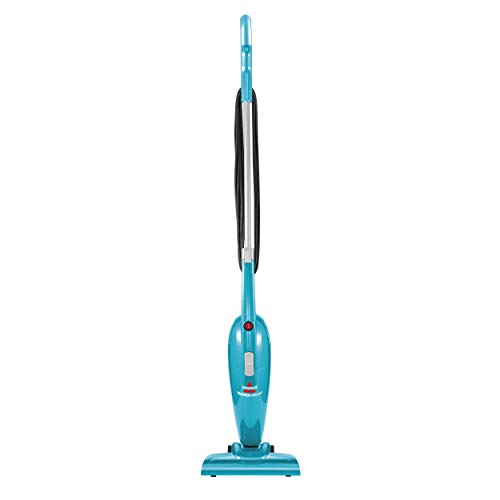
Bissell Featherweight 2033 lightweight stick vacuum converts to handheld. Bagless, corded, with crevice tool for carpets, hard floors, and stairs.

BLACK+DECKER Dustbuster AdvancedClean cordless handheld vacuum with cyclonic suction and 16V battery. Great for home and car. Read our expert review now.
Ready to Find Your Perfect Vacuum?
Browse our expertly reviewed vacuum cleaners and make an informed decision
Browse All Vacuums