What kPa Suction Is Good for a Vacuum? The Technical Guide + Buying Advice (2026)
Confused by kPa, Pa, air watts, and CFM vacuum specs? We explain what kPa suction really means, what numbers to look for, and how to choose the right suction power for your floors and lifestyle.
Table of Contents
- What is kPa in Vacuum Context?
- kPa vs Other Suction Measurements
- What kPa Numbers Mean for Robot Vacuums
- What kPa Is Good? The Practical Guidelines
- What Air Watts Are Good for Full-Size Vacuums?
- How Suction Interacts with Other Vacuum Design Elements
- Real Product Examples with Context
- Frequently Asked Questions
- Final Verdict
- Top Picks
Walk through any vacuum product listing and you will encounter a wall of technical specifications. Watts. Air watts. kPa. Pa. CFM. AW. The numbers vary wildly between products, and manufacturers do not always use the same metrics, making direct comparison frustrating.
kPa - kilopascals - has become one of the most prominently advertised suction specifications, especially in the robot vacuum category. But what does it actually mean? Is 10 kPa good? Is 20 kPa better? And how does kPa relate to the other suction measurements you see?
This guide answers all of those questions and tells you specifically what to look for when buying a vacuum based on suction power specifications.
What is kPa in Vacuum Context?
kPa stands for kilopascal, a unit of pressure. One kilopascal equals 1,000 pascals. In vacuum terms, kPa measures the sealed suction pressure a vacuum can generate - the amount of negative pressure it creates in a completely blocked (sealed) state.
Think of it this way. If you put your palm over the end of a vacuum hose and completely block it, the vacuum builds up maximum sealed suction against your hand. That pressure differential between atmospheric pressure and the sealed state is measured in kPa (or Pa for smaller values).
1 kPa = 1,000 Pa
So a robot vacuum rated at 10,000 Pa is the same as one rated at 10 kPa. Manufacturers sometimes use Pa for larger numbers (10,000 Pa sounds more impressive than 10 kPa) and kPa for smaller or mid-range values.
kPa vs Other Suction Measurements
This is where confusion sets in. There is not one universal standard for measuring vacuum suction, and different manufacturers favor different metrics.
Air Watts (AW)
Air watts measure the actual working power of a vacuum - not sealed suction pressure, but the combination of suction and airflow at a standardized partially-open measurement point. Air watts are calculated as:
AW = (CFM x inches of water lift) / 8.5
Air watts are generally considered the most practical measure of real-world cleaning performance because they capture both suction pressure AND airflow, which is what actually lifts debris from surfaces.
Typical air watt values:
- Budget vacuums: 40-80 AW
- Mid-range vacuums: 80-150 AW
- Premium cordless (Dyson V15): 230+ AW
- Premium corded (Miele, Dyson Ball): 200-270 AW
CFM (Cubic Feet per Minute)
CFM measures airflow volume, not pressure. High airflow is important for picking up lightweight debris from large surfaces. A vacuum can have high CFM but low suction pressure (good for debris collection but poor at lifting embedded dirt from carpet) or high pressure but low CFM.
Sealed Suction / Water Lift
Sealed suction, sometimes expressed in inches of water lift or kPa, measures the maximum pressure differential in a completely sealed state. This is most relevant for specialized tasks requiring high suction force on a specific point - like extracting deeply embedded particles from thick carpet.
kPa (Sealed Pressure)
kPa is essentially the sealed suction measurement. It tells you the maximum pressure the vacuum can generate but does not capture how that translates to moving debris-laden air. In upright and canister vacuums, air watts is the more meaningful specification.
Why is kPa dominant for robot vacuums specifically?
Robot vacuums use a different design philosophy than upright or canister machines. The small turbine motors in robot vacuums are often evaluated by sealed suction because the thin profile and floor-contact design creates a semi-sealed operating condition. High kPa in a robot vacuum translates more directly to lifting ability from carpet fibers than in a full-size vacuum where airflow dynamics are different.
What kPa Numbers Mean for Robot Vacuums
Robot vacuum manufacturers have significantly inflated kPa specifications in recent years. Here is a practical breakdown:
| kPa (Pa equivalent) | Performance Level | Best For |
|---|---|---|
| 1-2 kPa (1,000-2,000 Pa) | Entry level | Hard floors, light debris |
| 2-3 kPa (2,000-3,000 Pa) | Decent | Hard floors, light carpet |
| 3-5 kPa (3,000-5,000 Pa) | Good | Mixed flooring, light pet hair |
| 5-8 kPa (5,000-8,000 Pa) | Strong | Carpet, moderate pet hair |
| 8-12 kPa (8,000-12,000 Pa) | Premium | Thick carpet, heavy pet hair |
| 12+ kPa (12,000+ Pa) | Ultra-premium | Maximum performance claims |
Important Caveat: Marketing Inflation
Suction specifications are not standardized across manufacturers, and testing methodology varies. Some manufacturers measure suction at the motor directly rather than at the brushroll intake, which gives higher numbers but does not reflect real-world performance. A robot vacuum claiming 10,000 Pa from one manufacturer may perform comparably to another claiming 6,000 Pa, depending on how each was measured.
Real-world test results from independent publications often show less correlation between claimed kPa and actual cleaning performance than you might expect. Filter quality, brushroll design, airflow efficiency, and the seal quality between the robot and the floor all contribute to real-world suction effectiveness.
What kPa Is Good? The Practical Guidelines
For Robot Vacuums on Hard Floors Only
2-4 kPa (2,000-4,000 Pa) is perfectly adequate. Hard floor cleaning is primarily about airflow and brushroll effectiveness, not maximum sealed suction pressure. A well-designed robot vacuum at 2,500 Pa will outperform a poorly designed one at 8,000 Pa on hard floors.
Budget pick: Eufy RoboVac 11S (2,000 Pa), Roborock Q5 (2,500 Pa)
For Robot Vacuums on Low to Medium Pile Carpet
4-6 kPa (4,000-6,000 Pa) provides effective carpet cleaning. This range gives enough suction to penetrate low-pile carpet and lift debris from within the pile without requiring the full power of premium models.
Mid-range pick: Roomba j7+ (around 4,000 Pa equivalent), Dreame D10 Plus (4,000 Pa)
For Robot Vacuums on High-Pile Carpet or Heavy Pet Hair
6-10 kPa (6,000-10,000 Pa) is where premium robot vacuums operate. This range provides confident extraction from thick carpet and handles heavy pet hair accumulation without multiple passes.
Premium picks: Roborock S8 MaxV Ultra (10,000 Pa), Dreame X40 Ultra (12,000 Pa)
For Full-Size Vacuums: Stop Looking at kPa
For upright, canister, and stick vacuums, kPa is not commonly reported and is not the most useful metric. Look instead for:
- Air watts if comparing cordless or upright models
- Watt input as a secondary indicator (not a direct cleaning performance measure)
- Water lift for corded canister models
What Air Watts Are Good for Full-Size Vacuums?
| Air Watts | Performance Level | Typical Models |
|---|---|---|
| Under 80 AW | Basic | Budget uprights |
| 80-120 AW | Moderate | Mid-range uprights |
| 120-180 AW | Good | Mid-range cordless, good uprights |
| 180-230 AW | Strong | Dyson V15, premium cordless |
| 230+ AW | Premium | Dyson Gen5, Miele top canisters |
How Suction Interacts with Other Vacuum Design Elements
Suction specification is only one piece of the cleaning performance puzzle. These factors work together with suction to determine real-world results.
Brushroll Design
The brushroll agitates carpet fibers and dislodges debris, making it easier for suction to capture. A high-suction vacuum with a poor brushroll will underperform a moderate-suction vacuum with an excellent brushroll on carpet. For hard floors, a soft-touch roller prevents scatter while suction captures debris.
Airflow Efficiency
The path from the floor tool to the collection bin affects how much suction reaches the cleaning surface. Tight bends, narrow passages, and partial blockages all reduce effective suction at the point of cleaning. This is why a straightened hose of the same total suction machine can perform noticeably better than a kinked one.
Floor Seal
How well the vacuum or robot’s cleaning head seals against the floor surface affects suction efficiency enormously. Robot vacuums with well-designed floating brush heads that maintain contact across uneven surfaces use their suction more effectively than those that lose floor contact on transitions.
Filter Condition
A clogged filter can reduce effective suction by 30 to 50 percent regardless of motor specifications. The rated kPa or AW of a vacuum assumes a clean, unclogged filter. Maintaining your filter is equivalent to maintaining your vacuum’s performance rating.
Real Product Examples with Context
Dyson Gen5detect - 262 Air Watts
Dyson does not prominently advertise kPa because air watts better represents cordless cleaning performance. The Gen5detect’s 262 AW is the highest in any current cordless model. In practical terms, this means confident deep carpet cleaning, powerful fine dust extraction, and the ability to maintain effective suction even with a partially loaded filter.
Roborock S8 MaxV Ultra - 10,000 Pa (10 kPa)
The S8 MaxV Ultra’s 10 kPa is among the highest in the robot vacuum category in 2026 and represents genuine high-performance carpet suction. In independent tests, this level of suction shows meaningful improvement over mid-tier robots on medium and high pile carpet, though the gap on hard floors versus 4-5 kPa machines is minimal.
Dreame X40 Ultra - 12,000 Pa (12 kPa)
Dreame’s X40 Ultra claims 12,000 Pa, the highest widely available at launch in 2026. Real-world testing suggests the improvement over 10,000 Pa machines is incremental on most carpet types, but the headroom is useful for maintaining performance as filters load and for the most demanding high-pile carpet situations.
Miele Complete C3 - approximately 300 AW equivalent
Miele’s corded flagship does not advertise kPa but the combination of 1,200 watts input power, highly efficient sealed system, and quality filtration translates to sustained real-world suction performance that exceeds most robot vacuum and cordless specifications.
Frequently Asked Questions
Is higher kPa always better?
Not necessarily. Above a certain threshold, additional kPa produces diminishing returns on real-world cleaning performance, and very high suction can actually cause problems - sticking to carpet and being harder to push. For robot vacuums, 6,000-10,000 Pa is the practical sweet spot where most users see genuine benefit.
What is the difference between Pa and kPa?
1 kPa = 1,000 Pa. They measure the same thing (pressure) in different units. Robot vacuum manufacturers commonly use Pa (10,000 Pa) because the numbers are larger and sound more impressive. Divide any Pa figure by 1,000 to get kPa.
Why don’t cordless vacuums advertise kPa like robot vacuums do?
The vacuum industry has not standardized on a single metric. Dyson and most upright/canister manufacturers use air watts because it better represents working cleaning performance. Robot vacuum manufacturers adopted Pa/kPa, possibly because sealed suction translates more directly to carpet extraction in the low-profile robot design. Neither metric is inherently superior - they measure different things.
Can I trust the kPa numbers manufacturers advertise?
With caution. Testing methodology varies, and numbers are sometimes measured at the motor rather than the cleaning head. Use kPa as a relative indicator within a brand’s product lineup (higher is better) and as a rough comparison across brands, but do not over-index on precise Pa figures when comparing across manufacturers.
What kPa do I need for thick carpet?
For high-pile and plush carpets, look for robot vacuums with at least 6,000 Pa (6 kPa). The Roborock S8 MaxV Ultra (10,000 Pa) and Dreame X40 Ultra (12,000 Pa) represent the current high end of confirmed carpet performance.
Does suction power affect battery life in cordless vacuums?
Yes. Higher suction draws more battery. Dyson and other premium cordless manufacturers use intelligent power management to balance suction with runtime, offering multiple modes so users can choose. Boost modes give maximum suction at the cost of runtime, while eco modes extend battery at the cost of peak suction.
Final Verdict
For robot vacuums, aim for at least 4,000-5,000 Pa (4-5 kPa) for mixed flooring and 6,000-10,000 Pa (6-10 kPa) for carpeted homes with pets. The Roborock S8 MaxV Ultra at 10,000 Pa and Dreame X40 Ultra Complete at 12,000 Pa are the current performance benchmarks.
For full-size vacuums, focus on air watts rather than kPa. Above 180 AW is strong performance; above 230 AW is premium. The Dyson Gen5detect at 262 AW leads the cordless category, while the Miele Complete C3 Brilliant leads corded performance.
Whatever metric you use, remember that suction specification is only one factor. Brushroll quality, filtration, floor seal, and maintenance practices collectively determine the cleaning performance you actually experience day to day.
Top Picks

Bissell CleanView XR cordless vacuum: 200W motor, 35-min runtime, tangle-free brush roll & 3-in-1 design. Top-rated stick vacuum for home. Shop now.

Bissell Featherweight stick vacuum weighs only 3 lbs and converts into 3 machines. Bagless design with crevice tool for carpet, hard floors, and furniture.

Bissell CleanView XR Pet 300W cordless stick vacuum with 40-min runtime, deep cleaning FurBrush, and removable battery. Expert review with full specs.

Bissell Featherweight 2033M is an ultra-lightweight 3-in-1 bagless stick vacuum for hard floors, carpet, and stairs. Converts to hand vac with crevice tool.
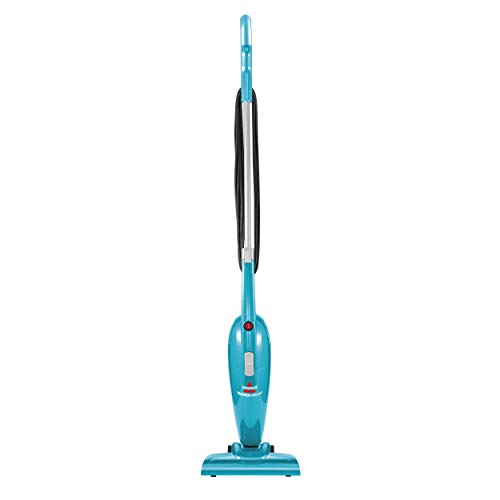
Bissell Featherweight 2033 lightweight stick vacuum converts to handheld. Bagless, corded, with crevice tool for carpets, hard floors, and stairs.

BLACK+DECKER Dustbuster AdvancedClean cordless handheld vacuum with cyclonic suction and 16V battery. Great for home and car. Read our expert review now.
Ready to Find Your Perfect Vacuum?
Browse our expertly reviewed vacuum cleaners and make an informed decision
Browse All Vacuums