Best Robot Vacuum Under $100 in 2026: Budget Auto-Cleaning Picks
Best robot vacuums under $100 in 2026 — affordable picks that handle daily maintenance on hard floors and light carpet without mapping.
Table of Contents
Best Robot Vacuum Under $100 in 2026: Budget Auto-Cleaning Picks
Can you really get a decent robot vacuum for under $100? Yes — but only if you know exactly what to expect.
The short answer is that sub-$100 robot vacuums are real, functional appliances that automate daily floor maintenance. Millions of households use them every day, and they genuinely work for the right situation. But they are not miniature versions of the $500 Roborock or the $800 Roomba. They are simpler machines built for a narrower job — and when you deploy them in the right context, they deliver real value.
The slightly longer answer is that at this price point, you are buying a maintenance-cleaning tool, not a replacement for your regular vacuum. Think of a sub-$100 robot as the floor equivalent of a dishwasher that pre-rinses your plates every day. It keeps things tidy between deeper cleaning sessions. It picks up dust, crumbs, and pet hair on hard floors. It runs on a schedule while you are at work. For a small apartment, a studio, or a hard-floor household with minimal clutter, that is exactly what you need.
This guide gives you honest expectations, identifies five of the best sub-$100 robot vacuums available in 2026, and tells you when this category makes sense — and when you should spend a bit more.
What to Expect from a Robot Vacuum Under $100
Before examining specific models, it is worth setting clear expectations. Sub-$100 robots are more capable than you might think, but they have real limitations compared to mid-range and premium models.
What You Get
Random or Simple Navigation
Nearly every robot vacuum under $100 uses infrared sensor navigation combined with a random bounce pattern. The robot moves in a straight line until it contacts an obstacle or detects a drop-off, then pivots and moves in a new direction. Some models use a zigzag pattern that is somewhat more systematic. Neither approach is as efficient as the row-by-row, room-by-room cleaning that LiDAR-equipped robots produce, but both approaches will eventually cover an open floor area given enough time. For a studio apartment or small one-bedroom with minimal furniture, random navigation works well. For a 2,000 sq ft multi-room home, it is a less reliable approach.
Decent Suction for Hard Floors and Maintenance Cleaning
Modern budget robots commonly deliver 2,000Pa to 5,200Pa of suction — enough to lift fine dust, pet hair, crumbs, and dry debris from hard floors and low-pile carpet effectively. This level of suction is genuinely suitable for daily maintenance cleaning. Do not expect deep carpet agitation or extraction of embedded dirt, but for keeping hard floors consistently clean between weekly manual vacuuming sessions, it performs well.
Scheduled Cleaning
All worthwhile budget robot vacuums support scheduled cleaning — you set a time and the robot runs automatically every day or on selected days. This is the feature that makes robot vacuums genuinely useful. Scheduling is almost universally available via remote control on basic models, or through a companion app on Wi-Fi-enabled models.
Self-Charging Dock Return
Every robot in this guide automatically returns to its charging base when the battery runs low. This is a fundamental feature, not a premium one, and you should not buy any robot vacuum that lacks it.
Ultra-Slim Profiles
Most budget robots measure between 2.85 and 3 inches tall. This is genuinely useful: they clean under sofas, beds, dressers, and entertainment centers that upright vacuums and cordless sticks cannot reach. The dust that accumulates in these hidden zones is substantial, and automated daily cleaning of these areas adds up to meaningful cleanliness over time.
Wi-Fi Connectivity on Many Models
Wi-Fi connectivity, app control, and voice assistant support (Alexa and Google Assistant) are increasingly available even below $100, particularly on ILIFE, Lefant, and iMartine models. Remote scheduling, mode switching, and smartphone control are real features at this price. Some models at the very low end of the budget — like the eufy 11S Max — skip Wi-Fi entirely and use a remote control, which is fine for users who do not want app complexity.
What You Will Not Get
LiDAR Navigation or Smart Mapping
LiDAR (Light Detection and Ranging) creates accurate floor plans of your home, enabling systematic cleaning paths, virtual no-go zones, and room-specific scheduling. You will not find genuine LiDAR navigation under $100. Every robot at this price tier uses infrared sensors, bump detection, and pattern-based navigation instead.
Precise Obstacle Avoidance
Premium robots use cameras, structured light, and AI software to identify and avoid socks, cables, small toys, and pet waste on the floor. Sub-$100 robots use contact bumpers and infrared proximity sensors. They navigate by bumping into things, and they will get tangled in phone chargers, caught on thick rug fringe, or stuck under furniture with very tight clearance. Clearing the floor of loose cables and cords before running a budget robot is important.
Mopping With Real Cleaning Power
A handful of budget robots under $100 include a basic wet mop attachment — essentially a drip-fed water tank and microfiber cloth. These attachments pick up dust film and light grime from hard floors, which adds value for kitchen tiles and bathroom floors. But they are not capable of scrubbing dried-on spills, sanitizing, or replacing a dedicated mop on heavily soiled surfaces. Think of the mopping feature as an enhancement, not a primary function.
Self-Empty Base Station
Automatic dustbin emptying — where the robot returns to a motorized base that vacuums out the bin into a sealed bag — adds $150 to $300 to the cost of a premium robot system. No sub-$100 robot includes this feature. You will need to empty the dustbin manually, typically after every one to three cleaning cycles depending on floor area and debris level.
Deep Carpet Cleaning
Budget robots are optimized for hard floors. On low-pile carpet, they handle surface-level debris and light pet hair adequately. On medium and high-pile carpet, suction drops and the robot may struggle to make real progress. If your home is predominantly carpeted with thick rugs, consider stepping up to a mid-range model.
The 5 Best Robot Vacuums Under $100 in 2026
1. eufy RoboVac 11S Max — Best Overall Budget Robot Vacuum
Rating: 4.1/5 | 16,258 reviews
The eufy RoboVac 11S Max is the gold standard for sub-$100 robot vacuums, and its review count of over 16,000 reflects years of real-world testing in actual households. If you want a budget robot vacuum with a proven, documented track record at scale, this is the benchmark.
At just 2.85 inches tall, it holds the title of one of the thinnest robot vacuums on the market. That slim profile is not a gimmick — it allows the 11S Max to clean under sofas with low clearance, beneath beds, and inside entertainment center recesses that other robots simply cannot access. The areas under furniture are notorious dust traps, and consistent automated cleaning of these zones makes a genuine, visible difference.
The 11S Max uses eufy’s BoostIQ Technology, which automatically increases suction within 1.5 seconds when the robot detects a transition from hard flooring to carpet. This means you do not have to manually adjust modes when the robot crosses from tile to a low-pile area rug — it adapts on its own. The upgraded motor in the Max version produces noticeably stronger suction than the standard 11S, making it more effective on carpet transitions.
With up to 100 minutes of runtime on hard floors, the 11S Max covers a substantial area on a single charge. It returns automatically to its charging base when the battery runs low, so it is always ready for the next scheduled cleaning. Operation is intentionally simple: no Wi-Fi, no app, no account creation. A remote control handles all functions including scheduling, mode selection, and directional control. For users who want automation without smart home complexity, this is a feature rather than a limitation.
The anti-scratch tempered glass top cover is a thoughtful premium touch that protects the surface when the robot slides under furniture.
Best for: Hard floor apartments and homes, users who prefer remote-control simplicity over app connectivity, households that want proven reliability with a large review base.
Read our full eufy RoboVac 11S Max review
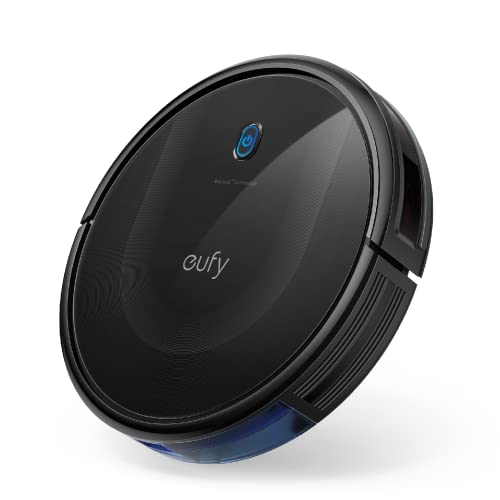
eufy RoboVac 11S Max super-thin robot vacuum with BoostIQ technology, 100-min runtime, and quiet operation. Ideal for hard floors and medium-pile carpets.
2. ILIFE V5s Pro — Best Budget Vacuum and Mop Combo
Rating: 4.0/5 | 13,980 reviews
The ILIFE V5s Pro is the best value 2-in-1 vacuum and mop robot you can buy under $100. ILIFE is one of the most established names in affordable robot vacuums, and the V5s Pro has accumulated nearly 14,000 reviews that consistently confirm its reliability as a daily hard-floor cleaning tool.
The V5s Pro cleans in two modes: a vacuum mode that handles dry debris pickup, and a mop mode that uses an attached water tank and microfiber cloth to damp-mop hard floors. The intelligent water control system regulates moisture output to prevent over-wetting — a meaningful engineering detail that protects hardwood and laminate floors from moisture damage while still delivering effective cleaning. This makes it genuinely useful for kitchen tile and bathroom floors where a daily damp mop adds real value beyond dry vacuuming alone.
The V5s Pro uses a brushless direct suction inlet rather than a spinning roller brush. This design is specifically advantageous for pet owners: hair flows directly into the dustbin without wrapping around a brush roll, eliminating the routine maintenance task of cutting tangled hair from roller bristles after every few sessions. For households with dogs or cats that shed regularly, this feature alone justifies the purchase.
At 7.6 cm tall and 30 cm in diameter, it navigates under most sofas and beds without difficulty. The 110-minute runtime covers most apartments and small homes on a single charge, and auto-recharge dock return ensures it is always ready for the next scheduled cycle. Four cleaning modes — Auto, Spot, Max, and Edge — cover the range of daily cleaning scenarios. The included remote control handles scheduling and mode switching.
Best for: Pet owners on a budget, households with hard floors, anyone who wants automated vacuuming and light mopping in a single robot without spending over $100.
Read our full ILIFE V5s Pro review

ILIFE V5s Pro robot vacuum and mop combo with 110-min runtime, self-charging, and multiple cleaning modes. Great for pet hair and hard floors. Full review.
3. ILIFE V5s Plus — Best Budget Robot Vacuum with Wi-Fi
Rating: 4.0/5 | 14,402 reviews
The ILIFE V5s Plus is the upgraded, Wi-Fi-connected sibling of the V5s Pro, and it represents an exceptional value for anyone who wants app control and voice assistant integration without crossing the $100 threshold. With over 14,000 reviews and a 4.0-star rating, it has earned its place as one of the most popular budget robot vacuums on the market.
The core cleaning hardware is identical to the V5s Pro: brushless suction inlet for tangle-free pet hair pickup, 2-in-1 vacuum and mop functionality with intelligent water control, 110-minute runtime, and a 2.99-inch slim profile. What the V5s Plus adds is a significant connectivity upgrade. It connects to your home Wi-Fi network and is controlled through the ILIFE app, which provides scheduling, mode selection, and cleaning status monitoring from anywhere. It also supports Amazon Alexa and Google Assistant voice commands, letting you start a cleaning cycle simply by asking.
The five cleaning modes — Auto, Spot, Edge, Max, and Scheduling — give you flexibility for different rooms and cleaning scenarios. The scheduling mode is where the robot earns its place in a daily routine: set it to clean every morning while you are at work, and you come home to consistently maintained floors without thinking about it.
The ILIFE V5s Plus is particularly well-suited for first-time robot vacuum buyers who want the smart home experience at a budget price. It delivers Wi-Fi connectivity, app control, and voice assistant support at a price point where these features were unheard of just a few years ago.
Best for: First-time robot vacuum buyers, smart home users who want app scheduling and voice control, pet owners with hard floors who want the V5s Pro’s cleaning capability plus Wi-Fi connectivity.
Read our full ILIFE V5s Plus review

ILIFE V5s Plus robot vacuum and mop combo with Wi-Fi, Alexa, and 110-min runtime. 5 cleaning modes for hard floors and carpet. See our expert review!
4. Lefant M210 — Best Compact Budget Robot Vacuum
Rating: 4.1/5 | 15,764 reviews
The Lefant M210 is the smallest robot vacuum in this guide, and its compact form factor is a genuine functional advantage in certain home layouts. At 11 inches in diameter — compared to the typical 12 to 13 inches of most robot vacuums — the M210 navigates through chair legs, around table bases, and into tight alcoves that larger robots cannot access. Combined with its 2.99-inch height, it reaches cleaning zones that are effectively dead zones for standard-sized robots.
Like the ILIFE models, the M210 uses a brushless suction inlet rather than a roller brush. This means no hair tangling, no roller maintenance, and reliable continuous performance over time. It is particularly effective at capturing pet hair and dust on hard floors without the routine brush-cleaning that roller-based robots require.
The M210 offers six cleaning modes: Zigzag, Random, Spot, Edge, Schedule, and Manual control. The zigzag mode attempts more systematic coverage than a pure random bounce pattern, though it is still less precise than LiDAR-guided cleaning. The random mode works well for maintenance passes in open areas. The six-sensor FreeMove 3.0 anti-collision system provides solid obstacle detection.
Wi-Fi connectivity comes standard: the M210 connects to the Lefant app for scheduling, mode switching, and remote control. It also supports Amazon Alexa and Google Assistant. The 500ml dustbin is generously sized for this price class, reducing how often you need to empty it during longer cleaning sessions. Battery life is rated at up to 120 minutes in low suction mode.
Best for: Homes with lots of furniture, chair legs, and tight spaces where compact dimensions help; pet owners who want tangle-free performance; users who want Wi-Fi and app control at a budget price.
Read our full Lefant M210 review

Lefant M210 robot vacuum with brushless suction, 120-min runtime, and Wi-Fi/Alexa control. Ultra-slim design for pet hair on hard floors. Expert review inside.
5. ILIFE V2 — Best Ultra-Long Runtime Budget Robot
Rating: 4.1/5 | 4,723 reviews
The ILIFE V2 is the best choice in this guide for households with larger floor areas who want maximum runtime per charge above everything else. With up to 120 minutes of continuous cleaning and a 2.99-inch slim profile, the V2 covers more ground per session than most competitors in this price bracket while still fitting under low-clearance furniture.
The V2 uses the same tangle-free suction port design that defines the ILIFE lineup, channeling pet hair and debris directly into the dustbin without brush roll tangling. Cleaning modes include Auto for full-room coverage, Spot for concentrated area cleaning, and Edge for wall and baseboard cleaning. Anti-collision and anti-fall infrared sensors protect the robot from bumping into furniture and tumbling down stairs.
At 12.2 x 12.2 x 2.99 inches and 7.1 pounds, the V2 is straightforward to pick up and move between floors if your home has multiple levels. The control is handled entirely through the included remote — no Wi-Fi, no app, no account setup. While the V2 lacks smart home connectivity, this simplicity is an advantage for users who find Wi-Fi setup and app management more hassle than benefit.
The V2 performs strongest on hard floors including hardwood, tile, laminate, and stone, and handles low-pile carpet adequately. It is not the right tool for deep-pile carpet or thick rugs, but for a hard-floor apartment or home where runtime and simplicity matter most, it delivers reliable, consistent performance.
Best for: Larger apartments and small homes where longer runtime matters, users who prefer remote-control simplicity over app connectivity, households with primarily hard flooring and light pet hair.
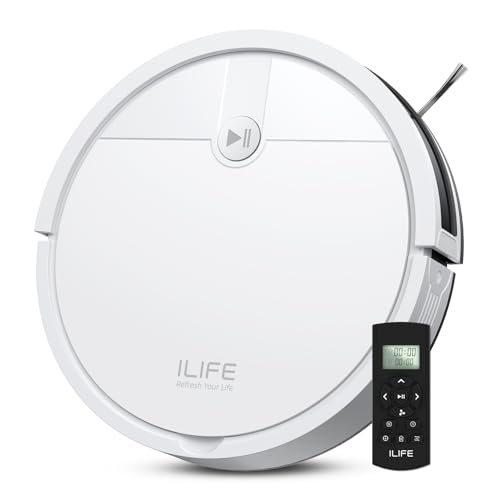
ILIFE V2 robot vacuum with tangle-free suction, 120-min runtime, and ultra-slim design. Ideal for pet hair and hard floors. Read our full expert review.
6. Shark ION Robot AV753 — Best Brand-Name Budget Robot Vacuum
Rating: 4.0/5 | 4,047 reviews
The Shark ION Robot AV753 brings the brand recognition and build quality of one of North America’s most trusted vacuum manufacturers to the budget robot category. For buyers who want the confidence of a major consumer vacuum brand — with established customer support, replacement parts availability, and product accountability — the Shark ION AV753 is the choice.
The AV753 uses Shark’s Tri-Brush System: dual side brushes sweep debris from edges and corners into the central cleaning path, while a multi-surface brushroll handles primary pickup on both hard floors and low-pile carpet. This three-component brush approach is particularly effective at gathering debris from wall edges and baseboard areas that brushless-inlet robots can miss.
Wi-Fi connectivity is standard, with full control through the SharkClean app including scheduling, start/stop, and cleaning history. Amazon Alexa and Google Assistant compatibility means you can trigger cleaning cycles by voice command. The 120-minute runtime matches the ILIFE V2 for top runtime in this guide, and the 9 cm profile fits under most furniture.
Navigation uses Shark’s bounce-style sensor pattern — the robot adjusts direction upon encountering obstacles to gradually cover the floor area. It is not LiDAR-mapped systematic cleaning, but it provides adequate coverage for small and medium living spaces. For buyers who want a recognizable brand, solid build quality, and mainstream app support, the Shark ION AV753 is the strongest option at this price point.
Best for: Buyers who want a major brand name and established customer support, mixed hard floor and low-pile carpet homes, users who want Tri-Brush cleaning performance with Wi-Fi app control.
Read our full Shark ION AV753 review
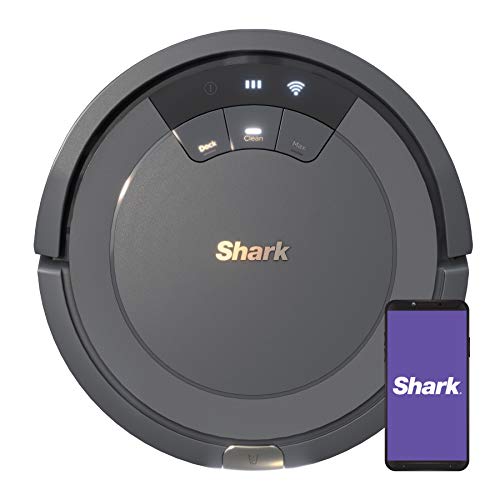
Shark ION AV753 robot vacuum features a Tri-Brush System, 120-minute runtime, Wi-Fi connectivity, and Alexa compatibility for easy multi-surface cleaning.
Best Use Cases for a Sub-$100 Robot Vacuum
Not every household is the right fit for a sub-$100 robot vacuum. These are the scenarios where they deliver the most value:
Small Apartments and Studio Spaces
A 400 to 800 sq ft studio or one-bedroom apartment is essentially the ideal environment for a budget robot vacuum. The floor area is small enough that random navigation covers it reliably in a single session, there are fewer rooms and doorways to complicate coverage, and the daily debris accumulation from one or two people is well within the robot’s suction capacity. Running a budget robot vacuum daily in a small apartment is one of the most cost-effective automation upgrades you can make to your home routine.
Homes with Predominantly Hard Floors
Hard floors are where budget robot vacuums genuinely excel. Dust, crumbs, pet hair, and fine debris on hardwood, tile, laminate, and vinyl are exactly what these robots are engineered to handle. On hard floors, suction efficiency is high, the slim profile accesses under-furniture zones that manual vacuuming misses, and the maintenance cleaning cycle keeps floors consistently presentable between weekly deeper cleans. Budget robots are significantly less effective on medium and high-pile carpet, so hard-floor households extract disproportionate value from this category.
Low-Maintenance Households
If you live alone or with one other person, eat at the table rather than throughout the house, and do not have pets, your daily floor mess is minimal. A budget robot vacuum running on a daily schedule handles that level of debris without difficulty. The lower debris load also means the dustbin fills slowly, reducing how often you need to empty it manually.
Pet Hair Maintenance
Households with shedding pets generate a consistent, daily layer of hair and dander across floors. Manual vacuuming every day is tedious. A budget robot vacuum running on a daily schedule — particularly one with a tangle-free brushless inlet like the ILIFE V5s Pro, ILIFE V5s Plus, or Lefant M210 — keeps this hair under control automatically. The key word is maintenance: the robot handles the daily accumulation, and you do a deeper manual vacuum of carpets and furniture on a weekly or bi-weekly basis.
First-Time Robot Vacuum Buyers
If you have never owned a robot vacuum and are unsure whether automated floor cleaning will actually fit your lifestyle, a sub-$100 model is an excellent way to find out without significant financial commitment. After three to six months of daily use, you will have a clear sense of whether you want to invest in a mid-range or premium model with mapping, obstacle avoidance, and self-emptying capabilities — or whether the budget model does everything you actually need.
When to Spend More
A sub-$100 robot vacuum is not the right choice for every household. Here are clear signals that you should step up to the $150 to $300 range:
Your home is larger than 1,000 to 1,200 sq ft. Random navigation struggles to cover larger floor plans reliably in a single session. At $150 to $200, you can get models with longer runtimes and more systematic navigation patterns that handle larger spaces better.
You have medium or high-pile carpet throughout your home. Budget robots lack the suction power and brush agitation to deep-clean thick carpet effectively. A mid-range robot with a motorized brush roll and 3,000 to 5,000Pa suction is a better investment.
You have many obstacles on your floors. Loose cables, thick rug fringe, irregular furniture arrangements, and pet toys are all potential hazards for budget robots. If your floors are cluttered, either clear them before each run or invest in a robot with better obstacle detection.
You want to completely forget about the robot. Sub-$100 robots require manual dustbin emptying every one to three runs, occasional filter cleaning, and periodic brush maintenance. If you want truly hands-off operation for weeks at a time, step up to a model with a self-emptying base station.
FAQ
Can a robot vacuum under $100 actually keep my floors clean?
Yes — with the right expectations. For daily maintenance on hard floors in a small to medium apartment, a sub-$100 robot vacuum keeps floors meaningfully cleaner than not running one. It will not replace a deep manual vacuum for embedded carpet dirt or heavy debris, but for the daily accumulation of dust, crumbs, and pet hair on hard floors, it does the job.
Do I need Wi-Fi for a budget robot vacuum to work?
No. Several models in this guide — including the eufy RoboVac 11S Max and the ILIFE V2 — operate entirely via included remote control. You can set schedules, start and stop cleaning, and switch modes without Wi-Fi or a smartphone. Wi-Fi connectivity is useful for convenience but is not required for core functionality.
How often should I run a budget robot vacuum?
Daily is ideal for most households, especially those with pets. For smaller, lower-traffic spaces, every other day is typically sufficient. The more frequently the robot runs, the smaller each cleaning task becomes and the more reliably it keeps up with accumulation.
How long do budget robot vacuums last?
With regular maintenance — emptying the bin after every run, cleaning the filter monthly, and replacing side brushes every three to six months — a well-reviewed budget robot vacuum like those in this guide typically lasts two to four years of daily use. The battery is usually the first component to degrade; replacements are available for most popular models for $15 to $30.
Will a budget robot vacuum work on carpet?
Budget robots handle low-pile carpet (under 0.5 inches) adequately for surface-level debris pickup. They are not effective on medium-pile (0.5 to 1 inch) or high-pile (over 1 inch) carpet. If your home has thick rugs as the primary flooring, a robot vacuum with a motorized brush roll and higher suction power is a better fit.
Can budget robot vacuums handle pet hair without tangling?
Models with brushless suction inlets — including the ILIFE V5s Pro, ILIFE V5s Plus, and Lefant M210 — handle pet hair without roller tangling. Models with traditional brush rolls, like the Shark ION AV753, pick up pet hair effectively but may require periodic brush cleaning in heavy-shedding households.
How much floor area can a budget robot vacuum cover in one session?
Most budget robots with 100 to 120-minute runtimes can cover 800 to 1,300 sq ft of open floor in a single session under ideal conditions. In real-world homes with furniture, room transitions, and occasional stuck-and-recovery incidents, effective coverage is typically 600 to 900 sq ft per session.
Do any budget robot vacuums also mop?
Yes. The ILIFE V5s Pro and ILIFE V5s Plus both include 2-in-1 vacuum and mop functionality with a water tank and microfiber cloth attachment. The mopping function handles light dust film and mild grime on hard floors effectively. It is not a substitute for a dedicated mop on heavily soiled floors, but it adds meaningful value for daily hard floor maintenance.
Bottom Line
A sub-$100 robot vacuum is a smart purchase if you live in a small to medium apartment, have predominantly hard floors, and want to automate daily maintenance cleaning without a major financial investment. The five models in this guide — the eufy RoboVac 11S Max, ILIFE V5s Pro, ILIFE V5s Plus, Lefant M210, ILIFE V2, and Shark ION AV753 — represent the best available options at this price point in 2026, each with verified review counts in the thousands and proven real-world performance.
Go in with realistic expectations: these robots are maintenance tools, not deep-cleaning systems. They do not map your home, they do not avoid every obstacle intelligently, and they require manual attention every few runs. But for daily dust control, pet hair management, and automated floor upkeep on hard surfaces, they work — and they work for a price that is hard to argue with.
For households with larger floor plans, thicker carpets, or a desire for fully hands-off cleaning, the best robot vacuums under $200 guide covers models that step up navigation capability and cleaning power without breaking the budget.
Ready to Find Your Perfect Vacuum?
Browse our expertly reviewed vacuum cleaners and make an informed decision
Browse All Vacuums