Best Vacuum That Doesn't Lose Suction: Cyclone Tech & Consistent Power (2026)
Find the best vacuums that maintain consistent suction from start to finish. We explain cyclone technology, how to spot suction loss, and recommend the top models from Dyson, Miele, Shark, and more.
Table of Contents
Few things are more frustrating than starting a vacuuming session with strong suction only to watch performance fade partway through. The floor tool begins skimming over debris instead of picking it up. The suction noise drops from a robust roar to a quiet wheeze. You finish the room and somehow the floor looks worse than when you started.
Suction loss is one of the most complained-about vacuum problems, and it is also one of the most solvable once you understand what causes it and which vacuum technologies genuinely address it versus those that just claim to.
This guide covers the science of suction loss, the technologies that prevent it, and the specific models that maintain performance from the first pass to the last.
Why Vacuums Lose Suction
Understanding suction loss makes it much easier to choose a vacuum that avoids it. There are several distinct mechanisms at work.
Filter Clogging
This is the most common cause of suction loss in bagless vacuums. Filters trap fine particles, but as particles accumulate on the filter media, airflow is restricted. A vacuum with a clogged filter delivers noticeably less suction than one with a clean filter. Most manufacturers recommend cleaning or replacing filters every one to three months, and many users simply do not do this.
High-quality multi-stage filtration systems slow this process by removing larger particles before they reach the fine filter. Washable filters allow restoration without replacement cost, though they must be completely dry before reinstallation or they cause suction loss themselves.
Dust Bin Fullness
In bagless vacuums, the collection bin has a maximum fill level beyond which suction drops significantly. Many users run their vacuums with overfull bins because the visible fill line is easy to ignore. As the bin fills, there is less space for air to circulate freely, and debris can block the airflow path. Most manufacturers recommend emptying the bin when it reaches 50 to 70 percent full rather than waiting for it to overflow.
Hose and Wand Blockages
Physical obstructions in the hose, wand, or floor tool are a frequent cause of sudden complete suction loss. A sock, large debris piece, or accumulated hair clump can create a near-complete blockage. This is less about design quality and more about use and maintenance, but vacuums with wider internal pathways and tangle-free brushrolls experience it less frequently.
Cyclone Chamber Saturation
In cyclone vacuums (bagless designs), the cyclone chamber separates dust from air using centrifugal force. If fine particles are allowed to accumulate in the cyclone cone itself, separation efficiency drops and the filter loads faster, causing progressive suction reduction. Multi-cyclone designs with many small cyclone cones maintain separation efficiency far longer than single-cyclone designs.
Seal Degradation
Over time, gaskets, seals, and connection joints degrade, allowing air to bypass the filter system. This manifests as gradually worsening suction that does not respond to filter cleaning or bin emptying. This is a long-term durability issue, not an immediate concern, but it is why build quality matters.
Technologies That Prevent Suction Loss
Multi-Stage Cyclone Technology
Dyson pioneered multi-stage cyclone technology with their Root Cyclone system. Rather than a single cyclone, Dyson vacuums use multiple smaller cyclone cones arranged in parallel. Small cones generate higher centrifugal forces than large ones, separating finer particles and keeping them out of the filter. The result is a filter that loads more slowly and suction that is better maintained over time.
Dyson’s marketing claim of “no loss of suction” refers specifically to this: their cyclone systems maintain separation efficiency across the life of the dirt collection cycle, so you do not get progressive suction drop as the bin fills, unlike single-cyclone designs.
Other manufacturers have developed their own multi-cyclone systems. Shark’s DuoClean and Mach Z cyclone systems, Hoover’s WindTunnel 3 technology, and Bissell’s Clean Air Flow system all use multi-stage separation to extend consistent performance.
Sealed Filtration Systems
High-quality sealed vacuum systems ensure all air passes through the filter before exiting the machine. Vacuums without proper sealing allow air to bypass the filter through gaps, which reduces the pressure differential that creates suction. Well-sealed machines maintain higher effective suction at the floor level because none of the generated airflow is wasted.
Automatic Suction Adjustment
Some modern vacuums use sensors to detect floor surface type and debris levels, automatically increasing motor power when more suction is needed. This does not prevent the causes of suction loss but does compensate for them to some degree by running the motor harder when needed.
Bagged Designs
Traditional bagged vacuums have an inherent advantage: the bag itself acts as a filter, and as it fills, the densely-packed debris creates a pre-filter layer that actually captures particles before they reach the fine paper bag material. The result is that many bagged vacuums maintain excellent filtration efficiency even as the bag fills. The trade-off is that airflow does reduce as the bag fills - you must balance filter quality against reduced capacity near the end of bag life.
Premium bagged vacuums like Miele use multi-layer bag material specifically designed to minimize airflow restriction while maintaining high filtration efficiency, giving the best of both worlds.
Best Vacuums That Don’t Lose Suction
1. Dyson Gen5detect Absolute
The Gen5detect is Dyson’s current flagship cordless and features their most advanced Hyperdymium motor and multi-stage Radial Root Cyclone technology. The piezo sensor actively monitors suction performance and automatically boosts motor power when debris concentration increases, maintaining consistent performance throughout a cleaning session.
The real-world suction consistency of the Gen5detect is exceptional. Unlike earlier Dyson models where suction would noticeably drop as the bin approached full, the Gen5detect’s advanced cyclone system maintains separation efficiency throughout the bin’s usable range. You do not need to empty the bin mid-cleaning to maintain performance.
The HEPA filtration system captures particles to 0.3 microns, and the sealed system ensures all exhaust passes through filtration. With up to 262 air watts of suction in Boost mode, it has enough power headroom that even some suction loss would leave it more powerful than many competitors at full power.
At around $950, it represents Dyson’s best engineering in the cordless category.
Best for: Those who want the most advanced suction-maintenance technology available.
2. Miele Complete C3 Brilliant
Miele’s Complete C3 Brilliant is the premium flagship of their canister lineup and arguably the gold standard for consistent suction in a corded vacuum. Its nine-stage suction adjustment system and 1,200-watt Miele-made motor deliver precise, consistent suction across all cleaning tasks.
The C3 Brilliant uses Miele’s AirClean 3D Efficiency bag system with HyClean 3D bags. These bags use a multi-layer structure with an internal air cushion that prevents bag compression as it fills, maintaining airflow longer than traditional flat bags. The result is suction that stays genuinely consistent from an empty bag to a nearly full one.
The HEPA AirClean filter on the exhaust side completes a sealed system that exhausts only 0.1% of all dust particles, meaning virtually no recycled dust gets back into the room. Miele builds these machines to 20-year operational lifespans with consistent performance throughout.
For a corded canister vacuum, the C3 Brilliant is the benchmark for consistent, reliable suction over years of use.
Best for: Those who want maximum long-term suction consistency and are prepared to invest in a premium bagged canister.
3. Dyson Ball Animal 3 Extra
For those who prefer an upright form factor, the Dyson Ball Animal 3 Extra brings the proven multi-stage Radial Root Cyclone technology in a traditional design. The 270 air watt suction is among the highest in the upright category, and the multi-cyclone system maintains separation efficiency to minimize filter loading.
The Ball Animal 3 uses a self-adjusting cleaner head that automatically transitions between carpet and hard floors, maintaining optimum contact and suction seal regardless of surface. The whole-machine HEPA filtration captures allergens throughout the system.
One notable feature is Dyson’s tangle-free turbine tool, which processes hair without wrapping it around the brushroll - preventing the blockage-related suction loss that is common in households with long-haired users or pets.
At around $450, it represents a strong mid-range to premium upright option from the brand most associated with consistent suction.
Best for: Traditional upright vacuum users who want Dyson’s suction-maintenance technology.
4. Shark Apex DuoClean Zero-M
Shark Apex DuoClean Zero-M AX952
Shark’s Apex DuoClean with Zero-M anti-hair wrap technology addresses suction loss from a different angle. Rather than focusing purely on cyclone engineering, Shark incorporated Zero-M self-cleaning brushroll technology that actively prevents hair and debris from wrapping around the brushroll, eliminating one of the most common causes of progressive suction reduction in upright vacuums.
The dual-brushroll DuoClean head uses a soft roller for fine debris pickup on hard floors combined with a traditional bristle brush for carpet deep-cleaning. The powerful suction and Shark’s own multi-cyclone technology maintains performance as the dust cup fills.
Anti-Allergen Complete Seal technology ensures the suction generated by the motor is not wasted through system leaks. At around $350, the Apex DuoClean Zero-M offers excellent value for households with pets and long hair, where brushroll clogging is a primary suction loss cause.
Best for: Pet hair and long hair households where brushroll-related suction loss is a recurring problem.
5. Bissell CleanView Swivel Pet Reach
Bissell CleanView Swivel Pet Reach 3756
At the value end of the spectrum, the Bissell CleanView Swivel demonstrates that effective suction-maintenance technology does not require a premium price. Bissell’s triple-action brush roll and scatter-free technology minimize debris deflection while the Clean Air Flow channel reduces filter loading.
The washable pre-motor filter and post-motor filter can be cleaned regularly to maintain suction performance without filter replacement costs. At around $70, this is the most affordable option on our list that takes filter management seriously, with a filter cleaning reminder window to prompt regular maintenance.
For budget-conscious buyers, the CleanView Swivel proves that understanding suction loss causes (clogged filters, full bins, brushroll tangles) and designing around them does not require Dyson-level engineering spend.
Best for: Budget buyers who understand that regular filter cleaning is the most important suction maintenance practice.
Practical Tips for Maintaining Consistent Suction
Empty the Bin Before It Looks Full
A standard recommendation is to empty at 50 to 70 percent capacity, not when overflowing. Most bin designs begin losing separation efficiency before the visual fill line is reached.
Clean or Replace Filters on Schedule
Set a calendar reminder for filter cleaning. Monthly cleaning of washable pre-motor filters and quarterly replacement of HEPA post-motor filters maintains suction at design specifications. This single practice prevents the majority of progressive suction loss in bagless vacuums.
Check for Blockages When Suction Drops Suddenly
Sudden suction loss (as opposed to gradual) almost always indicates a physical blockage. Turn off the machine, disconnect the hose from the body, and check the hose, wand, and floor tool in sequence for obstructions.
Wash Filters Correctly
Washable filters must be completely dry before reinstallation, typically 24 hours of air drying. A wet filter restricts airflow severely. Never use heat to speed drying, as this can damage filter media.
Inspect Wand and Hose Connections
Loose connections introduce air leaks that reduce suction. If you notice suction degrading with new filters and an empty bin, check all connection points for proper seating and worn gaskets.
Frequently Asked Questions
Does the Dyson “no loss of suction” claim hold up?
Dyson’s claim is technically accurate but applies specifically to the multi-cyclone separation maintaining efficiency as the bin fills, not to the long-term effects of filter loading. You will still need to maintain the filter. What does not happen in Dyson machines is the progressive suction drop as the bin fills that affects single-cyclone designs.
Are bagged vacuums better for suction consistency than bagless?
Premium bagged vacuums like Miele models maintain very consistent suction because their multi-layer bags prevent filter bypass. However, a quality multi-cyclone bagless vacuum with regular filter maintenance can match this performance. The advantage of bagged designs is that you never forget to maintain the filter - when the bag is full, you replace the whole filtration unit.
How often should I expect to replace vacuum filters?
Most manufacturers recommend replacing HEPA and post-motor filters every 6 to 12 months under normal use. Pre-motor foam or mesh filters that are washable should be cleaned monthly. In households with pets or heavy use, double these frequencies.
Can suction loss damage carpets?
A vacuum with poor suction will not extract embedded debris effectively, which over time allows soil to abrade carpet fibers from within. It will not cause immediate visible damage, but long-term suction deficiency contributes to carpet wear and dullness.
What suction specification should I look for?
Air watts (AW) is the most meaningful suction specification. Above 100 AW is effective for most households. Above 200 AW is high performance. kPa (kilopascals) measures sealed suction and is relevant for hard-floor vacuuming. Pa (pascals) is used primarily for robot vacuums. See our guide on What kPa Suction Is Good for a full technical breakdown.
Final Verdict
The best vacuum that does not lose suction is one that combines effective multi-stage cyclone technology with good filtration maintenance practices. No vacuum maintains full suction indefinitely without filter cleaning, but the best designs minimize suction drop within a cleaning session and make filter maintenance easy.
For cordless performance, the Dyson Gen5detect Absolute sets the standard. For corded long-term reliability, the Miele Complete C3 Brilliant is unmatched. And for the best value upright with good suction maintenance design, the Shark Apex DuoClean Zero-M is our top mid-range recommendation.
Top Picks

Eureka NEN186BL bagless canister vacuum with 1000W motor, 16KPa suction, washable HEPA filter, and 2L dustbin. Lightweight and ideal for carpets and floors.
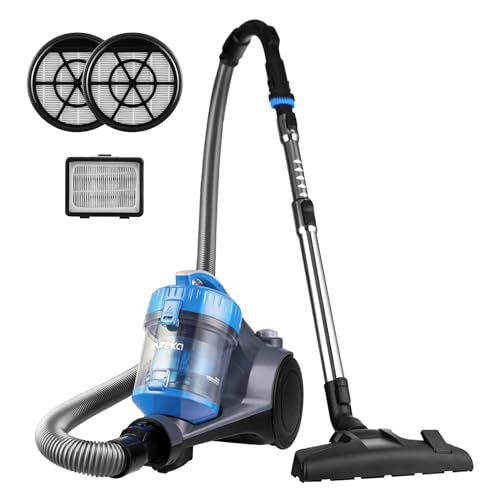
Eureka Whirlwind NEN110B bagless canister vacuum with swivel steering, auto cord rewind, and multi-surface cleaning. Lightweight at 8.15 lbs. Full review!

Eureka WhirlWind NEN110A bagless canister vacuum with 2.5L dust cup, swivel steering, and multi-surface cleaning. Lightweight and easy to use.
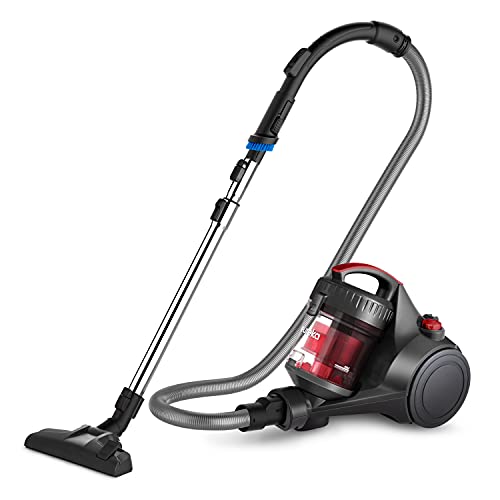
Eureka Whirlwind NEN110D bagless canister vacuum with multi-surface airflow control, auto cord rewind, and swivel steering. See our full expert review!

Eureka NEN180 lightweight bagless canister vacuum with 16 kPa suction, HEPA filtration, and 2L dust cup. Ideal for carpets and hard floors. Full expert review.
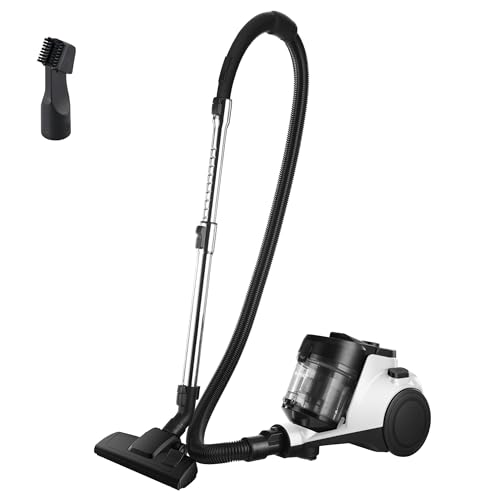
Eureka WhirlWind NEN121WH bagless canister vacuum with 1100W motor, HEPA filter, and swivel steering. Lightweight multi-surface cleaning. Expert review!
Ready to Find Your Perfect Vacuum?
Browse our expertly reviewed vacuum cleaners and make an informed decision
Browse All Vacuums