Quietest Vacuum Cleaners for Apartments: Neighbor-Friendly Picks for 2025
Thin walls and noise-sensitive neighbors make vacuum noise a real concern. Find the quietest vacuums for apartments under 70dB that still clean effectively in 2025.

Table of Contents
Quietest Vacuum Cleaners for Apartments: Neighbor-Friendly Picks for 2025
Apartment living has a lot going for it — until you need to vacuum at 7 PM on a Tuesday and realize that your neighbors on the other side of the drywall can hear every pass of your machine. Thin walls, shared floors and ceilings, proximity to sleeping babies, night-shift workers, and local noise ordinances make vacuum noise a genuine quality-of-life issue for millions of renters.
The good news: vacuum technology has advanced to the point where genuinely quiet cleaning is possible. This guide explains what makes vacuums loud, how to read decibel ratings, and which specific models let you clean effectively without disturbing anyone within earshot.
Why Apartment Vacuuming Is Different
In a detached house, a loud vacuum is an annoyance. In an apartment, it can escalate into a formal complaint, a note under the door, or a confrontation in the hallway. The acoustic dynamics are fundamentally different:
- Shared walls and ceilings transmit both airborne noise (the motor hum you hear through the air) and structure-borne noise (vibrations that travel through floors and walls)
- Open floor plans mean sound travels farther and faster with fewer barriers to absorb it
- Noise ordinances in many cities restrict loud activity during evening and early morning hours — sometimes as strictly as 10 PM to 8 AM
- Building management rules often set their own limits below legal thresholds
- Variable schedules mean your neighbor’s newborn, night-shift nurse, or remote-work call could be happening at any hour
A vacuum that registers 85 decibels — completely normal by industry standards — is as loud as a garbage disposal or a busy restaurant. In a studio apartment with shared walls, that sound is intrusive regardless of the time of day.
What Makes Vacuums Loud
Understanding the sources of vacuum noise helps you choose a machine that is genuinely quiet rather than just marketed as quiet.
Motor Size and Type
The electric motor is the primary source of vacuum noise. Larger motors generate more airflow and suction, but they spin faster and produce more acoustic energy. Brushless DC motors, increasingly common in premium cordless vacuums and robot vacuums, run significantly quieter than traditional carbon-brush motors because there is less friction and mechanical contact during operation.
Brush Roll Agitation
The rotating brush roll that digs debris out of carpet fibers creates its own noise — a high-pitched whirring combined with the mechanical sound of bristles striking the floor surface. On hard floors, this noise is amplified by the lack of carpet to absorb vibration. Many quiet vacuums offer a “soft mode” or allow the brush roll to be disabled entirely for hard floor use.
Airflow Turbulence
Vacuum suction works by creating a pressure differential — air rushes in to equalize pressure, carrying debris with it. The faster and more turbulent that airflow, the louder the resulting noise. Well-engineered airflow paths with smooth internal channels and properly sized filters reduce turbulence noise significantly. Clogged filters force the motor to work harder and push airflow through tighter spaces, increasing noise as a secondary effect.
Vibration and Casing Construction
Cheap plastic casings vibrate in sympathy with motor frequencies, amplifying noise. Higher-quality machines use denser materials, internal dampening, and motor isolation mounts to absorb rather than transmit vibration.
Understanding Decibel Ratings
Decibel measurements are the standard way manufacturers communicate vacuum noise levels, but they require context to be useful.
The dB scale is logarithmic, not linear. A 10 dB increase represents a sound that is perceived as roughly twice as loud. This means the difference between a 60 dB vacuum and an 80 dB vacuum is not a 33% increase in loudness — it is approximately four times louder to the human ear.
Reference points to know:
| Sound Level | Example |
|---|---|
| 30 dB | Whisper |
| 50 dB | Quiet office |
| 60 dB | Normal conversation |
| 70 dB | Library — the quiet vacuum target |
| 75 dB | Average conversation at close range |
| 80 dB | Busy restaurant |
| 85 dB+ | Typical household vacuum |
| 90 dB | Lawnmower |
For apartment use, the target threshold is 70 dB or below. A vacuum in this range runs at library volume — still audible, but not intrusive through walls and certainly not violating noise ordinances. Anything under 65 dB can be run during most evening hours without meaningful impact on neighbors.
A note on manufacturer claims: dB ratings are often measured at a specific distance (typically 1 meter) under controlled conditions. Real-world noise in a reverberant apartment can be slightly higher. Treat any rating above 72 dB with skepticism for apartment use.
The Best Quiet Vacuums for Apartments in 2025
1. eufy RoboVac 11S Max — Best Budget Robot Vacuum for Apartments
Rating: 4.1 stars | 16,000+ reviews
The eufy RoboVac 11S Max is the apartment dweller’s robot vacuum sweet spot. It runs at approximately 55 dB — well below conversation level — making it the type of machine you can run while on a phone call in the next room without raising your voice. The 2.85-inch profile slides under sofas, bed frames, and most low-clearance furniture without manual repositioning.
For apartment use specifically, the self-charging feature is critical: the RoboVac returns to its dock automatically, meaning you can set a schedule and forget it. The 1500 Pa suction handles hardwood, tile, and low-pile carpet effectively. The primary limitation is navigation — it uses a random-pattern algorithm rather than systematic room mapping, so coverage can be inconsistent on larger floor plans.
Best for: Studio and one-bedroom apartments, bare floors and low-pile rugs, noise-sensitive hours
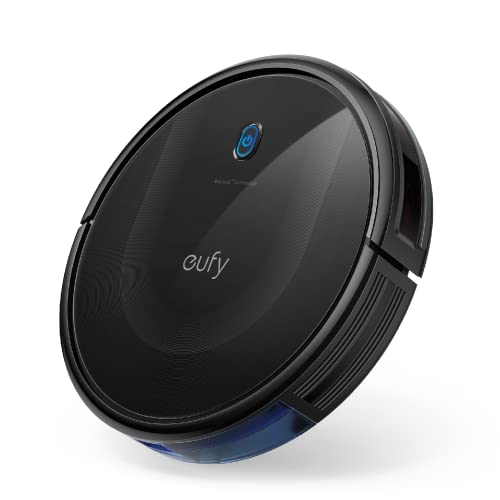
eufy RoboVac 11S Max super-thin robot vacuum with BoostIQ technology, 100-min runtime, and quiet operation. Ideal for hard floors and medium-pile carpets.
2. Lefant M210 Pro Robot Vacuum — Best Ultra-Budget Robot for Quiet Operation
Rating: 4.0 stars
The Lefant M210 Pro is notable for having “quiet” literally in its product positioning, and it delivers. Operating noise is comparable to the eufy 11S Max, with the added benefit of Wi-Fi connectivity and Alexa/Google Home integration — features that let you schedule and control cleaning from your phone without any physical interaction.
The pet hair performance is genuinely good for the price point, with a tangle-free suction inlet design that reduces the clumping that plagues cheaper robot vacuums. At this price, the navigation is basic and the dustbin is small, but for a small apartment on a tight budget, it earns its place.
Best for: Budget-conscious renters, small apartments, pet hair on hard floors

Lefant M210 Pro slim robot vacuum with 6 cleaning modes, 3 suction levels, WiFi/App/Alexa control, self-charging. Great for pet hair and hard floors.
3. Soniclean WhisperJet C2 — Best Canister Vacuum for Quiet Power
Rating: 4.5 stars
The Soniclean WhisperJet C2 is the standout choice for apartment dwellers who need the deep-cleaning capability of a traditional vacuum without the noise. The “WhisperJet” designation is not marketing hyperbole — this canister uses a variable-speed motor with acoustic dampening to achieve low operating noise while retaining genuine suction power.
The ULPA filtration (Ultra-Low Penetration Air) captures particles smaller than standard HEPA certification requires, making this an excellent choice for allergy sufferers. Canister design naturally isolates motor noise better than uprights because the motor is housed in the body you pull behind you rather than the head you push across the floor. The result is a vacuum that combines exceptional cleaning performance with noise levels appropriate for apartment use.
Best for: Apartments with carpet and hard floors, allergy sufferers, users who want traditional vacuum power at reduced noise

German-engineered Soniclean WhisperJet C2 canister vacuum with U15 ULPA filtration and whisper-quiet operation. Shop now for the cleanest home air possible.
4. eufy Omni C20 Robot Vacuum and Mop Combo — Best Premium Robot for Apartments
Rating: 4.2 stars | 80,000+ reviews
With 80,000 reviews and a 4.2-star rating, the eufy Omni C20 has earned its reputation as one of the most capable quiet robot vacuums on the market. The all-in-one station handles both auto-emptying and mop washing, which means the robot itself can run on its cleaning schedule without requiring you to intervene between sessions.
The noise level during cleaning is comparable to the 11S Max, though the self-emptying station produces a brief burst of louder suction when the robot docks — schedule accordingly. The vacuum/mop combination is particularly useful in apartments with tile kitchens and bathrooms adjacent to carpeted living areas, handling both surface types without manual tool changes.
Best for: Larger apartments, combined hard floor and carpet spaces, hands-off cleaning routines

eufy Omni C20 robot vacuum and mop combo with auto emptying, washing, and drying station. 7000Pa suction and 3.35-inch low profile. See the full review!
5. Bissell Featherweight 2033M Stick Vacuum — Best Manual Option for Quick Cleanups
Rating: 4.2 stars
Not every cleaning session requires a robot or a full-size vacuum. The Bissell Featherweight 2033M fills the role of fast, lightweight, low-noise spot cleaning. The motor is deliberately modest in size — the design prioritizes weight (under 3 pounds) over maximum suction — which has the secondary benefit of keeping noise levels well below a typical upright.
For apartments, this is the grab-and-go machine that handles the crumbs under the kitchen counter, the debris near the entryway, or a quick pass before guests arrive. It is not a replacement for deep cleaning, but at this price and weight, it earns a place in any apartment cleaning kit alongside a robot vacuum.
Best for: Quick cleanups, small messes, supplementing a robot vacuum for spot work

Bissell Featherweight 2033M is an ultra-lightweight 3-in-1 bagless stick vacuum for hard floors, carpet, and stairs. Converts to hand vac with crevice tool.
Apartment Vacuum Etiquette: When to Vacuum
Choosing a quiet vacuum is only half the equation. Timing matters as much as decibel levels when it comes to being a considerate neighbor.
The Best Windows for Apartment Vacuuming
Mid-morning (9 AM – 11 AM) on weekdays is generally the most conflict-free time to vacuum. Most neighbors who work standard hours have left for the day, and it is early enough that night-shift workers have had several hours of sleep. Weekend mornings before 9 AM are broadly inconsiderate regardless of how quiet your machine is.
Early afternoon (1 PM – 4 PM) works well on weekends when most neighbors are out running errands or engaged in daytime activities. Noise travels more freely through buildings on quiet weekend afternoons than during busy weekday schedules.
Avoid evening hours after 9 PM even if your local noise ordinance technically allows activity until 10 or 11 PM. Sound perception is more acute when surroundings are quieter, meaning a 65 dB vacuum at 10 PM feels louder to neighbors than the same machine at 2 PM.
Avoid early morning before 8 AM on any day. Even robot vacuums set to run at 6 AM create structure-borne vibration through floors that translates to noise complaints.
The Robot Vacuum Scheduling Advantage
Robot vacuums flip the etiquette equation entirely. Instead of choosing the most convenient time for you, you can schedule cleaning for the most convenient time for your neighbors — even when you are not home.
Ideal robot vacuum schedules for apartments:
- Weekdays between 10 AM and noon while most neighbors are at work
- Set a specific return-to-dock time well before the evening quiet window
- Avoid scheduling self-empty cycles (on auto-empty stations) during sensitive hours — the self-empty mechanism is typically louder than the cleaning cycle itself
- Use the app scheduling feature to skip days when you know your schedule changes and neighbors may be home
The ability to clean your apartment without being present — and at a time that respects your building’s acoustic dynamics — is one of the strongest practical arguments for robot vacuums in apartment settings specifically.
FAQ
What decibel level is safe for apartment vacuuming?
Target vacuums rated at 70 dB or below for apartment use. This is roughly library volume — audible in the same room but not intrusive through walls. Below 65 dB is even better and gives you more scheduling flexibility. Most standard upright vacuums run between 82 and 90 dB, which is too loud for shared-wall living during sensitive hours.
Can I vacuum at night in an apartment?
Most noise ordinances restrict disruptive sound after 10 or 11 PM, but “legal” and “considerate” are not the same thing. Even a 65 dB vacuum at 11 PM can disturb neighbors whose apartments are quiet at that hour. A robot vacuum scheduled to run in the late morning is a better solution than vacuuming manually at night.
Do robot vacuums actually clean as well as regular vacuums?
For maintenance cleaning of hard floors and low-pile carpet, modern robot vacuums perform comparably to a quick manual pass. They do not replace deep cleaning on thick carpets or in high-traffic areas, but for daily or every-other-day maintenance in a typical apartment, a quality robot vacuum keeps floors genuinely clean.
Why is my vacuum so loud even on the low setting?
Vacuum noise on lower power settings is reduced but not eliminated — the motor is still spinning, the brush roll is still turning, and airflow turbulence still exists. If your current vacuum is unacceptably loud even on low, the motor design and casing construction are not optimized for quiet operation. Switching to a purpose-built quiet model will make a meaningful difference that a power setting cannot replicate.
Are canister vacuums quieter than upright vacuums?
Generally yes. Canister vacuums isolate the motor in a separate body that you pull behind you, which puts the noisiest component at greater distance from your ears and reduces structure-borne vibration through the cleaning head. The WhisperJet C2 is a good example of a canister optimized specifically for low noise output.
Does vacuuming more frequently allow me to use a quieter, lower-powered machine?
Yes — this is a practical strategy for apartment dwellers. A robot vacuum running daily on a schedule keeps debris accumulation low enough that you rarely need the brute-force suction of a high-powered upright. Light, frequent cleaning with a quiet machine is often more effective and less disruptive than infrequent deep cleans with a loud one.
What about apartments with carpet throughout?
Carpet is acoustically forgiving in one sense — it absorbs some sound and vibration — but it demands more suction than hard floors, which pushes you toward more powerful (and louder) motors. The Soniclean WhisperJet C2 is the best option for carpeted apartments because it delivers genuine suction power while keeping noise in an acceptable range. Robot vacuums on carpet should be rated for at least 2000 Pa suction to maintain cleaning effectiveness.
The Bottom Line
Apartment living does not have to mean choosing between clean floors and neighborly relations. The combination of a quiet robot vacuum on a smart schedule and a low-noise stick or canister vacuum for occasional manual cleaning covers every apartment cleaning need without pushing past the 70 dB threshold that keeps you in good standing with your neighbors.
For most apartments, the eufy RoboVac 11S Max handles daily maintenance automatically and quietly, while the Soniclean WhisperJet C2 covers the periodic deeper clean that carpets and high-traffic areas occasionally require. The scheduling flexibility of robot vacuums — running while you are out, during hours your neighbors are at work — turns the apartment vacuum etiquette problem from a recurring source of stress into something that manages itself.
Ready to Find Your Perfect Vacuum?
Browse our expertly reviewed vacuum cleaners and make an informed decision
Browse All Vacuums