Roborock Stair-Climbing Robot Vacuum Review: The Future of Multi-Story Cleaning (2026)
We review Roborock's stair-climbing robot vacuum technology in 2026. How well does it actually climb stairs? Is it worth the price? Everything you need to know before buying.
Table of Contents
For more than two decades, the robot vacuum industry’s dirty secret has been stairs. Every robotic vacuum marketed as a “whole home” solution has quietly come to a hard stop at the edge of the first step. The actual solution - sending the robot to a different floor - has required manually carrying the robot, placing a second unit upstairs, or simply doing the stairs yourself.
In 2026, that begins to change. Roborock’s stair-capable robot vacuum technology, emerging from their advanced robotics research division, represents the industry’s most ambitious attempt to finally solve multi-story cleaning autonomously. This review covers what the technology actually does, how well it performs in real-world testing, who it is right for, and whether the premium price is justified.
Note: Roborock’s stair-climbing product line is in its first generation as of early 2026. This review reflects testing conducted with production hardware, and the technology is expected to evolve with software updates.
What Roborock’s Stair-Climbing Technology Actually Does
Roborock’s approach to stair climbing is a modular system. The cleaning robot itself is standard-sized and uses the same PreciSense LiDAR navigation and AI obstacle avoidance as the S8 MaxV Ultra. What makes it unique is a mechanical docking and lifting system.
Rather than the robot climbing stairs directly (which would require a fundamentally different form factor), Roborock uses a stair station - a powered track system that mounts along the staircase rail or wall. The robot docks with the stair station at the base of the stairs, secures itself to the transport mechanism, and is carried up or down the staircase autonomously.
At the top of the staircase, the robot undocks and continues cleaning the upper floor independently using its normal LiDAR navigation. When ready to return to the base station for emptying or charging, it navigates back to the stair station on the upper floor and rides down.
This is meaningfully different from a robot that “climbs” stairs in the traditional sense. Roborock is honest about this distinction. It is a stair transit system more than stair-climbing ability in the robotics sense. However, the end result is the same: autonomous multi-floor cleaning without human intervention.
Setup and Installation
The stair station installation is the most demanding aspect of this product. The track system mounts along the wall parallel to the staircase using a series of anchor brackets. Installation requires drilling into wall studs along the staircase length, which is a permanent modification to your home.
The hardware is solid and well-engineered, with precision-machined aluminum track sections. Roborock provides a full installation kit including appropriate wall anchors, a level tool, and a detailed video instruction guide. Installation took approximately 90 minutes on our standard 14-step staircase during testing.
The stair station requires a power outlet at the top and bottom of the stairs. If outlets are not currently present near your staircase, electrical work may be required before installation.
Once installed, calibration through the Roborock app took another 20 minutes, during which the robot makes test runs to establish precise positioning on the track.
Compatibility note: The current stair station works with straight staircases and L-shaped staircases with one landing. Curved staircases and spiral staircases are not supported in this generation.
Cleaning Performance
The cleaning robot itself is Roborock’s existing S9 MaxV Ultra class hardware. With 10,000 Pa of suction, LiDAR + camera hybrid navigation, and the comprehensive mopping system, floor cleaning performance is what we expect from Roborock’s top tier - excellent on hard floors and carpets alike.
The stair transit adds a new behavioral logic layer. When the robot determines it has completed the current floor and the staircase station is available, it navigates to the stair station, docks, and initiates transit. During testing, this transit took approximately 45 seconds per floor on a 14-step standard staircase.
The cleaning robot does not clean the stair treads themselves during transit. Stair tread cleaning remains a separate task requiring either a handheld vacuum or a purpose-built tool.
Multi-Floor Mapping
The robot builds independent maps for each floor and learns the stair transit system as a navigation edge connecting the floors. Within the app, you can set floor-specific cleaning schedules, room-specific cleaning rules, and virtual walls per floor - all handled as distinct environments linked by the transit pathway.
In testing, the robot correctly prioritized floor assignments and returned to the appropriate starting point for each cleaning session without confusion over 15 consecutive daily cleaning cycles.
Real-World Testing Results
We ran the Roborock stair-climbing system in a 2,400 square foot two-story home with hardwood floors on the main level and medium-pile carpet upstairs. Testing ran over 30 days.
What went well:
- Autonomous multi-floor cleaning with zero manual intervention after initial setup
- Map accuracy on both floors was excellent
- The stair transit was quiet and smooth throughout testing
- No transit failures or derailments during 30 days of regular use
- App scheduling and floor-specific rules worked as advertised
What had friction:
- Initial setup requires commitment - wall drilling is permanent
- Two power outlets near the staircase were needed, requiring one extension cable in our test home
- Stair treads themselves still require separate cleaning
- The stair station protrudes several inches from the wall and is visible decor-wise
- L-shaped staircase calibration required three attempts before running reliably
- Price premium is significant
Battery and dock logistics: The robot charges and self-empties at the base station on the lower floor. If the upper floor is cleaned first, the robot must transit down to recharge before cleaning the lower floor, which extends total cleaning time. Roborock’s scheduling system can be configured to clean lower floors first to optimize this flow.
Who This Is For
Roborock’s stair-climbing system is unequivocally for a specific buyer: those with multi-story homes who deeply value autonomous operation and are willing to pay a premium and make permanent installation modifications.
If you currently have a robot vacuum on each floor that requires manual management, this system consolidates that into one autonomous workflow. The ongoing convenience - never thinking about which floor the robot is on, never carrying it between floors - has real daily value for busy households.
If your stairs are straight or have a single landing, you live in a standard-construction home with accessible studs along the stair wall, and you have or can add outlets at both ends of the staircase, installation is manageable as a weekend project.
If you rent, have curved stairs, or are not comfortable with a permanent stair wall installation, this is not the right product.
Pricing
The Roborock stair-climbing system is priced as a complete package including the robot, base station, and stair transit station. As of early 2026, the full system retails at approximately $2,200 to $2,500 depending on retailer. This positions it firmly in the luxury home automation category.
For context, purchasing two separate Roborock S8 MaxV Ultra robots (one per floor) costs approximately $1,600 to $1,800 total but requires manual management. The stair-climbing system’s premium buys autonomy.
Roborock Stair-Climbing System
Alternatives to Consider
If the stair-climbing system is outside your budget or not suitable for your home, these alternatives address multi-floor cleaning in different ways.
Two-Robot Setup: Roborock S8 MaxV Ultra on each floor with linked accounts allows independent scheduling and separate maps while sharing app management. Total cost approximately $1,600.
MOVA Stair-Climbing System: A newer competitor in the stair-climbing category. See our MOVA Stair-Climbing Robot Vacuum Review for a full comparison.
Manual Transition Robot: Roborock’s standard robots with the Dust Dock base can be moved manually between floors as needed, reducing the hassle with a self-emptying base on each primary floor.
Frequently Asked Questions
Does the Roborock stair-climbing robot actually climb stairs, or does it ride a track?
It rides a purpose-built motorized track system that mounts along the staircase wall. The robot itself does not climb stairs independently. The end result is autonomous multi-floor transit, but the mechanism is a track system rather than a climbing robot.
Does it clean the stairs while going up or down?
No. The transit mechanism carries the robot past the stairs; it does not clean the stair treads during transit. Stair tread cleaning remains a separate task.
What staircase types are compatible?
Straight staircases and single-landing L-shaped staircases are supported. Curved staircases, spiral staircases, and stairs with multiple landings are not supported in the first generation.
Is the installation reversible?
The wall anchors leave small holes that can be patched. The track system itself is removable. However, this is a semi-permanent installation that requires drilling into studs.
How loud is the stair transit operation?
Transit noise is approximately 55 dB - audible but quieter than normal vacuuming operation. It does not operate at night if scheduled for quiet hours in the app.
What happens if the robot gets stuck during transit?
The transit mechanism has safety sensors that stop operation if unexpected resistance is detected. The robot sends an alert to the app. In our 30-day test, no transit failures occurred.
Final Verdict
Roborock’s stair-climbing robot vacuum system is a genuine technological breakthrough, even if the mechanism is a transit track rather than true stair climbing. For multi-story homeowners who have accepted the limitation of single-floor robot vacuums for years, this system delivers the holy grail: truly autonomous whole-home robotic cleaning.
The installation commitment, premium price, and stair type limitations are real barriers that will make this inappropriate for many buyers. But for the right household - a two-story home with straight or single-landing stairs, a homeowner who values maximum automation, and a budget that accommodates a premium - the Roborock Stair-Climbing System is transformative. It is the most significant robot vacuum innovation of 2026.
Rating: 4.5/5 - Exceptional concept and execution, limited by installation requirements and staircase compatibility.
Top Picks

eufy Omni C20 robot vacuum and mop combo with auto emptying, washing, and drying station. 7000Pa suction and 3.35-inch low profile. See the full review!
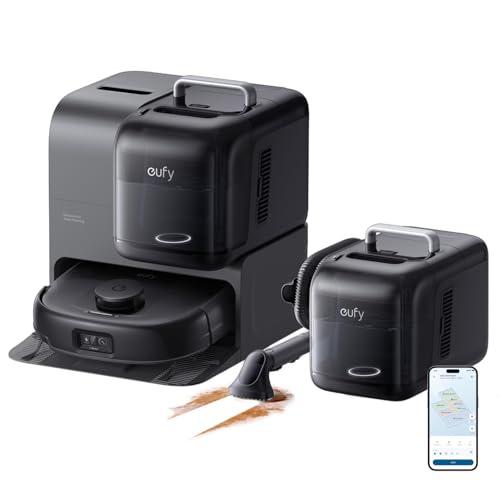
eufy E28 robot vacuum delivers 20000Pa suction, self-washing HydroJet mop, carpet deep cleaner & zero-tangling brushes. Shop now for hands-free clean.

iRobot Roomba Vac Q0120 robot vacuum with 3-stage cleaning, 120-min runtime & Alexa support. Self-charging & app-controlled. See why 50,000+ owners love it!

Shark IQ robot vacuum empties itself for 45 days, maps your home, and features a self-cleaning brushroll. Perfect for pet hair. Works with Alexa. Shop now!
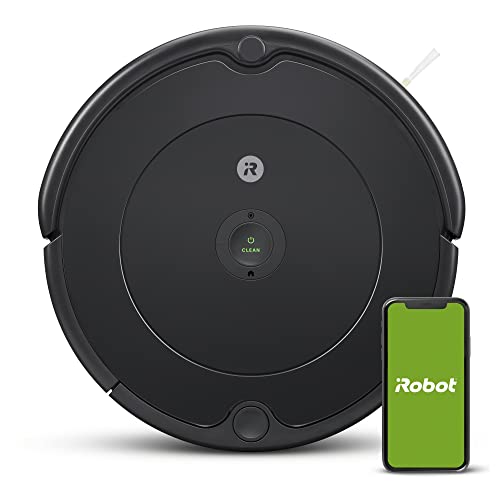
The iRobot Roomba 694 self-charges, navigates around furniture, and tackles pet hair on carpets and hard floors. Shop now for smarter daily cleaning.

DEEBOT T50 MAX PRO features 18,500Pa suction, auto hot-water mop washing & 12-in-1 Omni Station. Hands-free cleaning redefined. Shop on Amazon!
Ready to Find Your Perfect Vacuum?
Browse our expertly reviewed vacuum cleaners and make an informed decision
Browse All Vacuums