Samsung vs Dyson Vacuum: Head-to-Head Comparison (2026)
Samsung vs Dyson vacuum — a detailed comparison of suction, design, filtration, smart features, and value to determine which brand delivers the better clean in 2026.
Table of Contents
- Samsung vs Dyson Vacuum: Head-to-Head Comparison (2026)
- Brand Philosophy and Background
- The Products: What We’re Comparing
- Design and Build Quality
- Suction Power
- Filtration
- Smart Features and Sensors
- Battery and Runtime
- The Self-Empty System
- Attachments
- Maintenance and Costs
- Price Comparison
- Who Should Buy the Dyson V15?
- Who Should Buy the Samsung Bespoke Jet AI?
- FAQ
- Final Verdict
- Top Picks
Samsung vs Dyson Vacuum: Head-to-Head Comparison (2026)
When Samsung entered the premium vacuum market seriously with the Bespoke Jet series, it challenged Dyson’s near-monopoly on high-end cordless vacuums in a way that no previous competitor had managed. Samsung brought smartphone-level industrial design, a unique all-in-one clean station concept, and the manufacturing resources of one of the world’s largest technology companies to bear on a product category Dyson had dominated for two decades.
The result is a genuine competition. Both brands now produce excellent cordless vacuums that outperform the majority of alternatives, and choosing between them requires understanding where each company’s priorities and strengths diverge. This comparison examines the two flagship lines head-to-head across the factors that matter in real-world use.
Brand Philosophy and Background
Dyson has built its vacuum brand around engineering innovation — the original cyclone technology, later the digital motor, and now laser dust detection and piezo sensors. The company invests heavily in visible, demonstrable technology that changes how cleaning works. Dyson vacuums are manufactured with proprietary motors and filtration systems designed and built in-house.
Samsung brings a different approach: world-class display and hardware manufacturing expertise applied to appliances, combined with deep software experience from its mobile and SmartThings ecosystem. The Bespoke Jet is designed as a premium lifestyle appliance — visually distinctive, with thoughtful industrial design — backed by Samsung’s considerable manufacturing scale.
Neither approach is inherently superior. The question is which set of priorities aligns with your needs.
The Products: What We’re Comparing
For a fair comparison, we focus on the flagship models from each brand:
- Dyson V15 Detect Absolute — Dyson’s current top-of-line cordless
- Samsung Bespoke Jet AI — Samsung’s flagship cordless vacuum with auto-empty station
Both are premium cordless stick vacuums with self-emptying docking stations, powerful motors, and comprehensive attachment sets. Both retail in the $700 to $850 range.
Design and Build Quality
Dyson V15 Detect
The V15 is instantly recognizable as a Dyson — the exposed motor cyclone, the translucent dust bin showing collected debris, and the distinctive wand-and-head configuration. Dyson’s design is functional rather than fashionable: every visible component serves an engineering purpose. The build is robust with high-quality plastics throughout, and the dock is a simple wall-mounted unit that holds the vacuum and two attachments.
The V15 is available in nickel/yellow and a limited nickel/blue colorway. Color customization is minimal — it looks like a vacuum, intentionally.
Samsung Bespoke Jet AI
The Bespoke Jet is a statement of industrial design ambition. The clean lines, satin color choices (Misty White, Woody Green, Midnight Blue), and the all-in-one Clean Station dock create an aesthetic that looks more like modern furniture than a cleaning appliance. Samsung clearly designed it to sit visibly in a room without being an eyesore.
The Clean Station is particularly noteworthy: it is a single tall column that not only stores the vacuum and charges it but also automatically empties the dustbin when you dock the unit. It stores several weeks of debris internally, and the entire unit looks intentional in a living space rather than industrial.
Both build qualities are high, but they serve different aesthetics. If vacuum design matters to you, the Samsung wins on visual appeal. If you want the look that says “serious cleaning tool,” the Dyson has its own appeal.
Suction Power
Dyson V15: 240 AW (boost mode), 125 AW (auto mode) Samsung Bespoke Jet AI: 210 W input power, producing approximately 200 AW in max mode
Both numbers are strong. In direct side-by-side testing, both vacuums pick up similar amounts of debris from hard floors. The performance gap appears most on carpet: the Dyson’s 240 AW boost mode extracts embedded carpet debris slightly more aggressively. The difference is real but not dramatic — both vacuums clean carpet thoroughly, and neither leaves visible debris after a thorough pass.
For most homes, both deliver more than sufficient suction. The Dyson holds a measurable but not life-changing advantage at maximum power.
Filtration
Dyson: Whole-machine 5-stage filtration, captures 99.99% of particles as small as 0.3 microns. HEPA certified.
Samsung: 5-layer filtration system including HEPA. Also certified to capture 99.999% of particles including dust mites and pollen, claiming a slight superiority over Dyson’s stated specification.
In practical terms, both vacuums produce genuinely clean exhaust air and are appropriate for allergy and asthma sufferers. The incremental difference in filtration specification does not translate to a meaningful real-world difference in air quality during cleaning.
Smart Features and Sensors
Dyson V15
The V15’s laser dust detection uses a precisely angled green laser to illuminate invisible dust on hard floors. The piezo sensor counts particles in real time, displays this on the LCD screen, and automatically adjusts suction via the auto mode. The screen also shows battery life in minutes and current cleaning mode.
Samsung Bespoke Jet AI
The Jet AI introduces AI-powered floor type detection. A sensor identifies whether the vacuum is on carpet, hard floor, or a rug and automatically adjusts the cleaner head motor speed and suction accordingly. This is more seamlessly automatic than Dyson’s approach — the Samsung adjusts without requiring any user input, while the Dyson’s auto mode still requires selecting the mode and the suction adjustment is less granular.
The Samsung integrates with SmartThings for home automation routines, usage tracking, and filter maintenance reminders. If you are in the SmartThings ecosystem, this integration is smooth and genuinely useful.
Both approaches to intelligence are valuable. The Dyson laser is more viscerally satisfying — you can see the dust it reveals — while the Samsung’s automatic floor detection is more practically seamless.
Battery and Runtime
Dyson V15:
- Eco mode: Up to 60 minutes
- Auto mode: Up to 50 minutes
- Boost: 7 minutes
- Charge time: 4.5 hours
Samsung Bespoke Jet AI:
- Standard mode: Up to 60 minutes (with extended life battery)
- Max mode: Approximately 20 minutes
- Charge time: 3.5 hours
Samsung’s faster charge time is a practical advantage for households that use the vacuum frequently. Dyson’s longer max-mode runtime (50 minutes auto vs Samsung’s 20 minutes max) gives it a larger comfortable cleaning window for extended sessions.
The Samsung Bespoke Jet also uses a removable, swappable battery that can be purchased separately — you can carry a second battery for extended use without interruption. Dyson’s battery is internal and requires in-vacuum charging.
The Self-Empty System
Dyson Wall Dock: A simple wall-mounted dock that holds the vacuum upright and charges it. It stores two additional attachments. No auto-empty capability at the standard configuration — the Dyson outsize dock with auto-empty is sold as an additional accessory.
Samsung Clean Station: The all-in-one Clean Station stores, charges, and auto-empties the vacuum in a single docking action. The bag inside holds approximately 2 liters of debris and typically lasts 1 to 2 months in a typical home. The entire Clean Station is designed as a visible room element rather than something to hide.
For buyers who want auto-empty capability, the Samsung has it integrated at the standard price point. Dyson’s equivalent all-in-one setup requires purchasing additional components, pushing the total cost higher.
Attachments
Dyson V15 Absolute comes with:
- High Torque motorized floor head
- Laser Slim Fluffy head (hard floors)
- Mini motorized head (upholstery)
- Hair screw tool
- Crevice tool
- Combination accessory
- Soft dusting brush
Samsung Bespoke Jet AI comes with:
- Jet Fit motorized floor brush (carpet/hard floor automatic)
- Fit Slim motorized brush (hard floors)
- Mini motorized brush (upholstery)
- Combination crevice/brush tool
- Action Station accessories (additional brushes)
Attachment quality is comparable between the two brands. The Dyson hair screw tool is superior for long hair and pet fur, while the Samsung Jet Fit’s automatic adaptation to floor type is more convenient in mixed-floor homes.
Maintenance and Costs
Dyson: Washable filters (rinse, dry 24 hours, reinstall). No consumable filter cost. Brush bar requires periodic hair removal; anti-tangle technology reduces frequency. Replacement batteries available from Dyson.
Samsung: Washable filter system. The Clean Station uses dust bags that need replacement every 1 to 2 months at roughly $15 to $20 for a pack of 3. This is an ongoing consumable cost that the Dyson’s bagless system avoids.
The Samsung’s bag cost over 3 years of ownership adds $75 to $150 to the total cost of ownership — modest but worth factoring into the comparison.
Price Comparison
- Dyson V15 Detect Absolute: $699 to $749 (includes dock but not auto-empty)
- Samsung Bespoke Jet AI with Clean Station: $799 to $849
At similar price points, the Samsung includes an auto-empty system that Dyson charges extra for. If auto-empty capability is important, the Samsung represents slightly better value at this tier.
Who Should Buy the Dyson V15?
- Carpet-heavy homes where maximum suction matters
- Pet owners who benefit from the hair screw tool
- Buyers who want bagless operation with no consumable costs
- Those who prefer Dyson’s proven ecosystem and wide accessory availability
- Users who value the laser dust detection for hard floor cleaning
Who Should Buy the Samsung Bespoke Jet AI?
- Mixed-floor homes where automatic floor detection is convenient
- SmartThings or Samsung ecosystem users
- Buyers who want self-empty capability included at the standard price
- Those who prioritize design and visual appeal in a home appliance
- Households where faster charging is a practical benefit
FAQ
Which is more powerful, Samsung or Dyson?
The Dyson V15 produces marginally higher suction at maximum power (240 AW vs approximately 200 AW for the Samsung). In practical use, both clean effectively and the difference is most apparent on thick carpet where the Dyson extracts embedded debris slightly more aggressively.
Does Samsung have good vacuum quality compared to Dyson?
Samsung’s Bespoke Jet series is genuine competition for Dyson — not a budget alternative. Build quality, filtration, and cleaning performance are all at the premium level. Samsung’s advantage is the integrated auto-empty station and automatic floor detection. Dyson’s advantage is suction power, the laser feature, and no consumable bag costs.
Is the Samsung Bespoke Jet worth the money?
Yes, particularly if you value the integrated Clean Station dock and the automatic floor adaptation. At $799 to $849 including the auto-empty station, it is competitively priced against a comparable Dyson configuration. The premium over budget cordless vacuums is justified by the meaningful capability difference.
How long do Samsung and Dyson cordless vacuums last?
Both brands build durable products in the premium tier. Typical lifespan with regular use is 5 to 8 years before a vacuum requires battery replacement or repair. Battery replacement is available for both brands, extending useful life significantly.
Which is better for allergies — Samsung or Dyson?
Both vacuums offer HEPA-level filtration that captures 99.99% or more of fine particles including allergens. Samsung claims a slightly higher specification (99.999%), but both are appropriate for allergy and asthma sufferers. The Samsung Clean Station’s bagged emptying system may be slightly better for severe allergy sufferers, as it contains collected dust during emptying rather than exposing it to the air.
Final Verdict
The Dyson V15 and Samsung Bespoke Jet AI are more equal than Dyson’s former market dominance might suggest. The Dyson wins on raw suction power and pet hair handling. The Samsung wins on integrated auto-empty dock, automatic floor adaptation, faster charging, and design appeal.
For carpet-heavy homes with pets, the Dyson V15 is still the choice. For mixed-floor modern homes where aesthetic and convenience features matter as much as raw cleaning power, the Samsung Bespoke Jet AI is a genuinely compelling alternative that does not require accepting any meaningful compromise in cleaning performance.
The clearest signal is simple: Dyson no longer has the premium cordless vacuum market to itself, and that competition is producing better products at better prices.
Top Picks
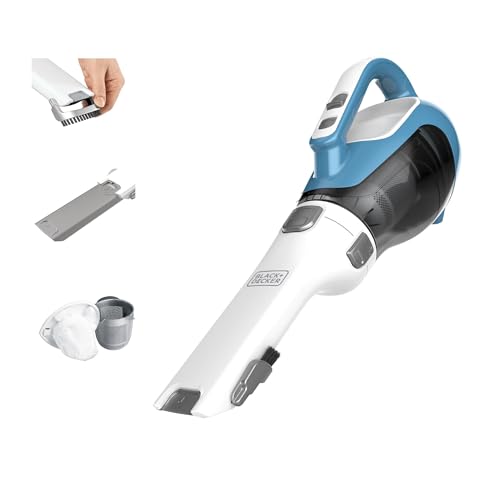
BLACK+DECKER Dustbuster AdvancedClean cordless handheld vacuum with cyclonic suction and 16V battery. Great for home and car. Read our expert review now.
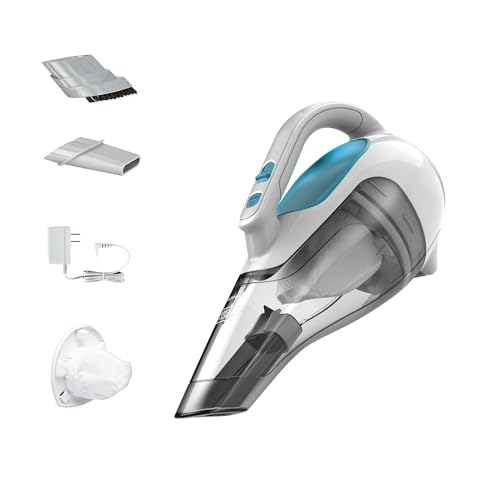
Expert review of the BLACK+DECKER Dustbuster HHVI315JO42 cordless handheld vacuum. Lithium-powered suction, wide mouth, and wall-mount base.
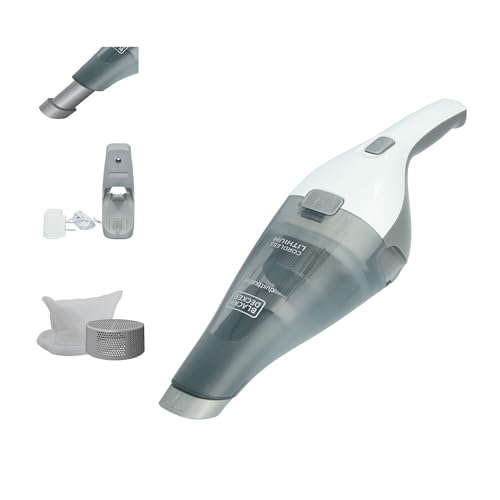
BLACK+DECKER Dustbuster QuickClean cordless handheld vacuum with wall mount and built-in crevice tool. Lightweight and rechargeable. See the full review!

Discover the Bissell Pet Hair Eraser 2390A cordless hand vacuum with motorized brush tool and triple filtration. Perfect for pet owners. Read our expert review!
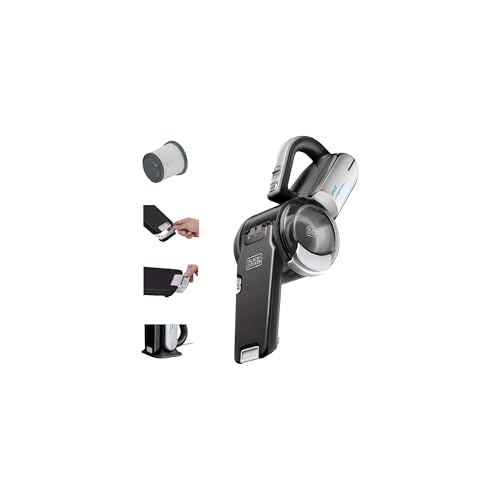
BLACK+DECKER Dustbuster Pivot Vac 20V MAX cordless handheld vacuum with pivoting nozzle and cyclonic action. Expert review with pros, cons, and specs.
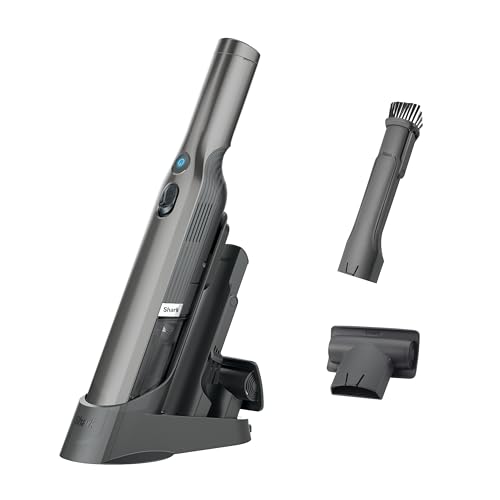
Shark WANDVAC WV201 cordless handheld vacuum weighs just 1.4 lbs with powerful brushless motor suction, charging dock, and one-touch empty. Expert review.
Ready to Find Your Perfect Vacuum?
Browse our expertly reviewed vacuum cleaners and make an informed decision
Browse All Vacuums