Best Robot Vacuum with Obstacle Avoidance 2026: AI Detection Picks
Best robot vacuums with obstacle avoidance in 2026 — AI-powered detection that navigates around cables, toys, and pet waste.
Table of Contents
- Why Obstacle Avoidance Matters More Than Suction Power
- How Robot Vacuum Obstacle Avoidance Technology Works
- Realistic Expectations: What AI Avoidance Can and Cannot Do
- The 6 Best Robot Vacuums with Obstacle Avoidance in 2026
- Pet Waste Avoidance: Which Brands Actually Deliver
- How to Choose: A Quick Decision Framework
- Frequently Asked Questions
- Final Thoughts
If you have owned a robot vacuum for more than a week, you already know the frustration. You come home to find the robot has cheerfully chewed through a charging cable, dragged a sock halfway across the house, or — the worst-case scenario every pet owner dreads — spread something unspeakable across your hardwood floors. The number one complaint about first- and second-generation robot vacuums is not suction power, battery life, or noise. It is that they cannot see what is in front of them.
That has changed dramatically. The best robot vacuums in 2026 use a combination of LiDAR distance mapping, structured light 3D cameras, RGB color cameras, and on-board AI neural networks to identify specific objects — cables, socks, shoes, pet toys, charging bricks, and yes, pet waste — and navigate cleanly around them. This guide breaks down the technology, explains what to realistically expect, and recommends six specific models that lead the field.
Why Obstacle Avoidance Matters More Than Suction Power
Most buyers focus on suction power when shopping for a robot vacuum. A robot rated at 8,000 Pa versus 12,000 Pa sounds like a meaningful upgrade. In practice, for typical household debris on hard floors or low-pile carpet, any robot with 4,000 Pa or more produces adequate results. What actually determines whether a robot vacuum is useful on a day-to-day basis is whether it survives a run without destroying something or creating a biohazard.
Consider a few real-world scenarios that older robots handle badly:
- Phone charger cables left on the floor get sucked into the brush roll, jam the motor, and leave the robot stranded until you manually untangle it.
- Pet toys with long strings or ropes wrap around the brush axle in seconds.
- Socks or underwear get dragged under furniture, increasing the robot’s profile and causing it to wedge itself into gaps.
- Pet waste — dog or cat accidents left on the floor — gets spread across every room the robot visits. This is not a minor inconvenience. It is a serious cleaning disaster that can take hours to address.
Advanced AI obstacle avoidance solves all of these problems to a meaningful degree. It does not achieve perfection — no robot does — but a top-tier obstacle avoidance system reduces these incidents by 80 to 90 percent compared to the bump-and-navigate approach used by older robots.
How Robot Vacuum Obstacle Avoidance Technology Works
Understanding the technology helps you evaluate marketing claims. There are three distinct layers of obstacle avoidance in modern robot vacuums:
1. LiDAR: Room-Level Navigation
LiDAR (Light Detection and Ranging) uses rotating laser pulses to measure distance to walls and large objects. It builds a 2D map of the room — like a floor plan — and calculates efficient cleaning paths that avoid running into furniture. LiDAR is now standard on mid-range and above robot vacuums and is excellent for room-to-room navigation, no-go zone compliance, and multi-floor mapping.
What LiDAR cannot do is identify or classify small objects on the floor. A charging cable lying flat registers as nothing at all. A small toy may look identical to a floor register. LiDAR sees geometry, not objects.
2. Structured Light and 3D Sensors: Floor-Level Object Detection
This is where obstacle avoidance crosses into genuinely useful territory. Structured light systems project a grid or pattern of infrared or near-infrared light onto the floor in front of the robot, then use a camera to analyze how that pattern deforms around objects. The deformation reveals the 3D shape and height of anything in the robot’s path — cables, shoes, clumps of pet hair — even objects that are too small or flat for LiDAR to register reliably.
Roborock calls their implementation Reactive AI (using structured light plus RGB camera). Dreame uses 3D Structured Light navigation. ECOVACS deploys their AIVI 3D system. The underlying physics is similar: project a light pattern, read the distortion, build a 3D point cloud of the immediate floor area ahead.
A robot with structured light can detect a USB cable lying flat on a hardwood floor. That is a real capability that bump-and-navigate robots fundamentally cannot replicate.
3. RGB Cameras and AI Object Recognition: Knowing What It Is
The most advanced systems pair 3D sensors with standard color cameras (RGB) and run on-board AI models trained to recognize specific object types. This is where the number of “recognized object types” comes from — you will see specs like “73 object types,” “120+ object types,” or “200+ object recognition.”
The AI is trained on labeled datasets of common household objects. It can distinguish between a charging cable and a piece of string, between a pet toy and a shoe, between a dog bowl and a dust bunny. Importantly, it can recognize the silhouette of pet waste — which tends to be irregular in shape, with a characteristic color profile — and flag it for avoidance before contact.
Robots like the Roborock S8 MaxV Ultra and NARWAL Freo Z10 Ultra use dual RGB cameras combined with dedicated AI chips. The cameras provide color and texture information that structured light alone cannot supply. This combination is what makes confident pet waste avoidance possible.
Realistic Expectations: What AI Avoidance Can and Cannot Do
Before the product recommendations, a dose of realism is warranted.
AI obstacle avoidance is genuinely excellent at:
- Cables, cords, and charging bricks lying on the floor
- Shoes, slippers, and small clothing items
- Pet toys, balls, and chews
- Pet bowls and water dishes
- Identifying and avoiding pet waste in most lighting conditions
AI obstacle avoidance is imperfect or inconsistent with:
- Very thin, transparent, or reflective objects (fishing line, glass shards)
- Objects in very dark rooms or direct bright sunlight that overexposes the camera
- Fast-moving objects or freshly placed items the robot has not mapped
- Objects flush against walls that the front camera cannot see at an angle
- Extremely unusual or novel objects the AI was not trained on
The honest answer to “which robot never misses an obstacle?” is: none of them. Even the most advanced systems occasionally miss a thin black cable on a dark floor, or misjudge the height of a door threshold. The gap between a robot with no obstacle avoidance and one with mature AI avoidance is enormous — but the gap between a 73-object system and a 200-object system is narrower in practice than the marketing numbers suggest. All six robots recommended here will outperform anything without structured light or camera-based detection by a wide margin.
The 6 Best Robot Vacuums with Obstacle Avoidance in 2026
1. Roborock S8 MaxV Ultra — Best Overall AI Obstacle Avoidance
Rating: 4.1/5 | Suction: 10,000 Pa | Obstacle Tech: Reactive AI 2.0 (3D Structured Light + RGB Camera) | Recognizes: 73 object types
View the Roborock S8 MaxV Ultra
The Roborock S8 MaxV Ultra is the most comprehensive obstacle avoidance package available from a proven platform. Its Reactive AI 2.0 system pairs a forward-facing structured light 3D sensor with an RGB camera, producing a detailed point cloud of the floor ahead while simultaneously running a trained neural network to classify what it sees. The robot identifies 73 specific object types and makes real-time routing decisions — stop and route around, or stop and wait for you to move the object.
The pet waste avoidance is specifically cited in Roborock’s documentation and is the system’s strongest selling point for dog and cat owners. The RGB camera detects the color, shape, and texture profile of waste before the robot makes contact. In practice, it is one of the most reliable pet waste avoidance systems on the market.
Beyond obstacle avoidance, the S8 MaxV Ultra delivers 10,000 Pa of suction, VibraRise 3.0 sonic mopping at 4,000 vibrations per minute with a 20mm mop lift on carpet, and a fully self-maintaining all-in-one dock with hot water mop washing, hot air drying, detergent dispensing, and auto-emptying. The FlexiArm side brush achieves a sub-2mm cleaning margin along walls.
Ideal for: Pet owners prioritizing reliable pet waste avoidance alongside flagship cleaning performance.

Roborock S8 MaxV Ultra delivers 10000Pa suction, hot-air self-drying, AI obstacle avoidance, and detergent dispensing for fully autonomous floor care. Shop now!
2. DREAME L50 Ultra — Most Object Types Recognized (180+)
Rating: 4.2/5 | Suction: 19,500 Pa | Obstacle Tech: AI Action + 3D Structured Light | Recognizes: 180+ object types
The Dreame L50 Ultra fields the largest trained obstacle recognition database in this roundup, with over 180 identified object types. Dreame’s AI Action + 3D Structured Light system combines a structured light projector with a camera-based classification pipeline, giving the robot the ability to make fine distinctions between objects that look geometrically similar but require different responses.
The 19,500 Pa suction is class-leading among non-flagship-tier competitors, and Dreame’s ProLeap chassis system enables the robot to clear obstacles up to 6 cm high — a meaningful advantage over competitors limited to 4 cm. This is useful in homes with thick area rugs, cable ramps, or raised floor registers.
The PowerDock base station automates dust emptying (up to 100 days between bag changes), mop washing with hot water, air drying, and cleaning solution refilling. The HyperStream DuoBrush system handles pet hair without tangling.
Ideal for: Households with diverse obstacle types and a need for the broadest possible recognition library.
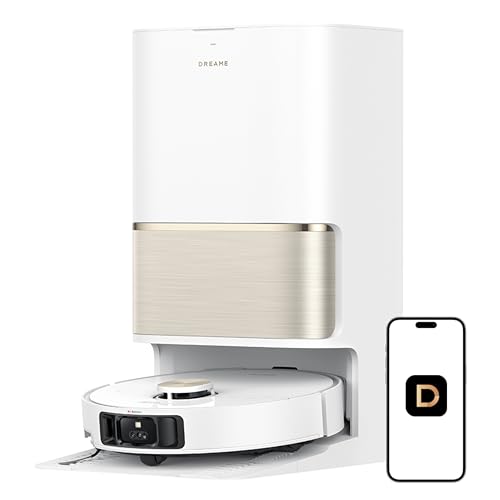
DREAME L50 Ultra robot vacuum and mop in white delivers 19,500Pa suction, self-emptying dock, hot-water mop cleaning, and smart AI obstacle avoidance.
3. NARWAL Freo Z10 Ultra — Best Dual-Camera System for Pet Households
Rating: 4.0/5 | Suction: 18,000 Pa | Obstacle Tech: Dual RGB Cameras + Dual AI Chips | Recognizes: 200+ object types
View the NARWAL Freo Z10 Ultra
NARWAL takes a different architectural approach from Roborock and Dreame. Rather than leading with structured light, the Freo Z10 Ultra uses two independent RGB cameras paired with two dedicated AI processing chips — a redundant configuration that provides wider field-of-view coverage and reduces the blind spots that single-camera systems can exhibit near the robot’s sides.
The result is recognition of 200+ object types, the highest count in this guide, and a dedicated 150mm pet accident detection buffer — meaning the robot stops and avoids a 150mm radius around any detected pet waste, providing a safety margin against the edge of contaminated zones. For households with dogs or cats that have occasional accidents, this is a genuinely meaningful specification.
The EdgeSwing mop arm is another NARWAL differentiator: it physically extends the mop pad beyond the robot’s body profile to clean along wall edges and into corners that fixed-mop robots miss. The base station uses hot water washing up to 167°F (75°C) for genuine bacterial elimination from the mop pads.
Ideal for: Dog owners who prioritize pet waste avoidance above all else, or households with furniture close to walls where edge mopping matters.

NARWAL Freo Z10 Ultra robot vacuum and mop: 18000Pa suction, dual AI cameras, hot-water self-cleaning dock, and edge-to-corner mop coverage. Shop now.
4. ECOVACS DEEBOT X9 Pro Omni — Best for AIVI 3D Object Intelligence
Rating: 4.2/5 | Suction: 16,600 Pa | Obstacle Tech: AIVI 3D 3.0 + LiDAR | Recognizes: 100+ object types
View the ECOVACS DEEBOT X9 Pro Omni
ECOVACS’ AIVI 3D 3.0 (Artificial Intelligence and Visual Intelligence 3D, third generation) has been a flagship differentiator for the brand since its introduction. The X9 Pro Omni represents the most refined implementation of the technology: a combination of front-facing 3D sensing and trained AI object classification that recognizes 100+ object types with reliable, low-latency reaction.
What sets the X9 Pro Omni apart from a pure vacuum standpoint is the OZMO ROLLER continuous self-washing mop system. Unlike robots that return to the dock to clean mop pads periodically, the OZMO ROLLER washes the mop pad continuously while mopping, preventing soil redistribution and odor buildup. This, combined with the Triple Lift System (which independently raises the mop pad, side brush, and main brush for precise surface transitions) makes the X9 Pro Omni one of the best hybrid vacuum-and-mop performers available.
The OMNI Station provides up to 150 days of hands-free maintenance with hot water mop washing. Voice control works through Alexa, Google Assistant, and ECOVACS’ own YIKO-GPT assistant.
Ideal for: Users who want the best mopping performance alongside strong obstacle detection, or those already in the ECOVACS ecosystem.

ECOVACS DEEBOT X9 PRO Omni: 16600Pa BLAST suction, continuous OZMO Roller mop washing & 150-day hands-free station. Top robot vacuum mop for 2025.
5. Roborock Saros 10 — Best Ultra-Slim Design with Reactive AI 3.0
Rating: 4.2/5 | Suction: 22,000 Pa | Obstacle Tech: Reactive AI 3.0 (RGB Camera + ToF + VertiBeam Structured Light) | Height: 3.14 inches
The Roborock Saros 10 runs the most technically sophisticated sensor array in this comparison. Its navigation system combines four distinct technologies: a retractable LDS (Laser Distance Sensor) for room mapping, an RGB camera for object identification, a ToF (Time of Flight) sensor for precise close-range depth measurement, and VertiBeam — a lateral structured light system that scans vertically to detect the edges of thin objects like cables that other sensors can miss at floor level.
This four-sensor fusion approach powers Reactive AI 3.0, which represents a meaningful step up from the Reactive AI 2.0 found in the S8 MaxV Ultra. The additional ToF sensor reduces the probability of thin, dark, or low-contrast objects going undetected in marginal lighting conditions.
At 3.14 inches (7.98 cm) tall, the Saros 10 also reaches under furniture that defeats all standard-height robot vacuums — including sofas, low-profile bed frames, and kitchen cabinets with minimal clearance. The 22,000 Pa suction is among the highest available, with SGS-certified zero-tangle brush performance and a RockDock Ultra station that washes mop pads with 176°F (80°C) hot water and dries them with 140°F (60°C) heated air.
Ideal for: Homes with a mix of low-clearance furniture and demanding obstacle environments, where the combination of slim profile and advanced detection solves two problems simultaneously.
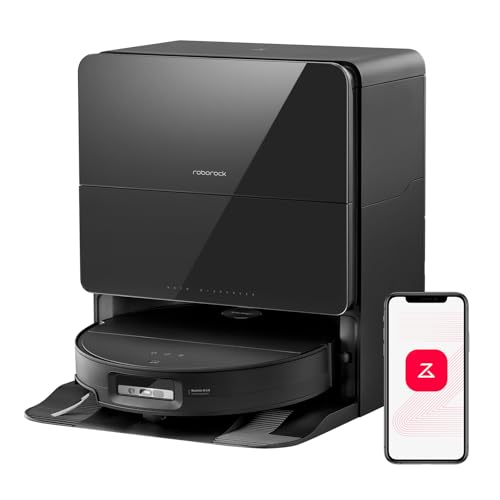
roborock Saros 10 offers 22,000Pa suction, 3.14-inch ultra-thin design, hot water mopping, AI obstacle avoidance & self-cleaning dock. Ultimate smart clean.
6. Dreame L40s Ultra AE — Best Value Flagship with AI 3D Avoidance
Rating: 4.2/5 | Suction: 19,000 Pa | Obstacle Tech: AI 3D | Recognizes: 120+ object types
The Dreame L40s Ultra AE brings AI 3D obstacle avoidance capable of recognizing 120+ object types at a price point that typically sits meaningfully below the Roborock S8 MaxV Ultra or Saros 10. For buyers who want AI-powered detection without paying for the absolute top tier, the L40s Ultra AE is the natural starting point.
The TriCut Brush system — Dreame’s answer to brush roll tangling — handles long pet hair and human hair without the wrap-around that plagues traditional bristle brushes. Mopping is handled by a dual-pad system with MopExtend technology that physically extends the mop coverage to reach wall edges, and the PowerDock Base hot-washes the pads at 149°F, with an even hotter 167°F washboard for the final rinse cycle.
The 100-day auto-empty dust bag capacity means you genuinely set it and forget it for months at a time. Smart pet-friendly modes include carpet boost, automatic mop lift, and real-time two-way pet monitoring via the Dreame app.
Ideal for: Value-focused buyers who want legitimate AI obstacle avoidance and all-in-one dock features without flagship pricing.
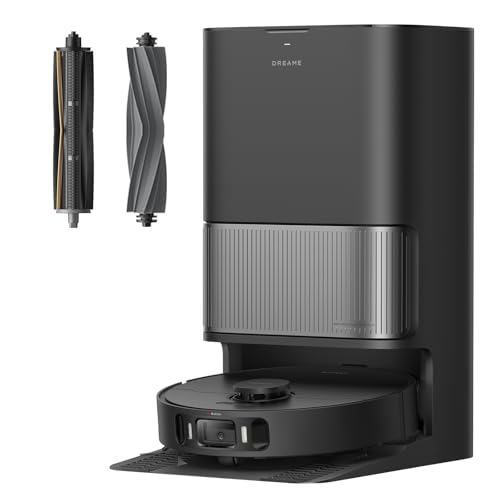
Dreame L40s Ultra AE robot vacuum & mop with 19,000Pa suction, self-emptying, 167°F hot wash, MopExtend, AI obstacle avoidance. The ultimate clean. Shop now.
Pet Waste Avoidance: Which Brands Actually Deliver
Pet waste avoidance is the highest-stakes obstacle avoidance scenario, so it deserves direct treatment. Here is an honest assessment of the robots in this guide:
Most reliable pet waste avoidance:
- NARWAL Freo Z10 Ultra — The dedicated 150mm avoidance buffer and dual-camera system with dual AI chips make this the most conservative approach to pet waste. The wide buffer means the robot gives accidents a wide berth even if detection is slightly delayed.
- Roborock S8 MaxV Ultra — Reactive AI 2.0 with RGB camera has been specifically tested and documented for pet waste avoidance by both Roborock and independent reviewers. The combined structured light plus color camera gives the system the contrast information it needs to detect waste even on dark floors.
- Roborock Saros 10 — The four-sensor Reactive AI 3.0 system provides the most technically complete detection, though real-world documentation of pet waste performance specifically is less extensive than the S8 MaxV Ultra at the time of writing.
Strong but less documented:
- DREAME L50 Ultra / L40s Ultra AE — Dreame’s 3D structured light systems are highly capable, and the 180+ / 120+ object recognition counts suggest waste is in the training set. However, independent real-world pet waste avoidance testing is less comprehensive than for the Roborock systems.
- ECOVACS DEEBOT X9 Pro Omni — AIVI 3D 3.0 includes pet waste detection, and ECOVACS has demonstrated this in controlled settings. Performance on very dark floors or in low light is less consistent.
Practical advice for pet owners: Even with the best AI avoidance available, schedule your robot runs at times when you can verify the floor is clear. AI avoidance is a safety net, not a guarantee. Most experienced robot vacuum users with pets check their floors quickly before a scheduled run — a 30-second sweep of high-traffic areas dramatically reduces the already-small probability of an incident.
How to Choose: A Quick Decision Framework
| Your situation | Best pick |
|---|---|
| Pet owner, waste avoidance is the top priority | NARWAL Freo Z10 Ultra |
| Pet owner, balanced approach with mopping | Roborock S8 MaxV Ultra |
| Most object types, largest recognition library | Dreame L50 Ultra |
| Best mopping + avoidance combo | ECOVACS DEEBOT X9 Pro Omni |
| Low clearance furniture + advanced avoidance | Roborock Saros 10 |
| AI avoidance on a value-oriented flagship budget | Dreame L40s Ultra AE |
Frequently Asked Questions
Q: Does obstacle avoidance affect cleaning thoroughness?
A: Modern systems handle this gracefully. When the robot detects an obstacle, it routes around it and continues cleaning — it does not skip the area entirely. For objects it cannot navigate around (a chair leg in the middle of a room, for instance), it cleans as close as it can. FlexiArm and MopExtend technologies on Roborock and Dreame models further recover coverage near obstacles.
Q: How many object types does a robot need to recognize to be practical?
A: The difference between a robot that recognizes 30 object types and one that recognizes 73 is significant in everyday use. The difference between 73 and 200 is narrower than the numbers imply — both systems handle the 15 to 20 object types that actually appear in most homes (cables, shoes, toys, socks, dishes, etc.). Chase recognition counts as a differentiator only if your home has genuinely unusual objects on the floor regularly.
Q: Can obstacle avoidance work in the dark?
A: Structured light systems (Roborock, Dreame, ECOVACS AIVI 3D) work well in the dark because they project their own light source. RGB cameras require ambient light for color classification — most AI systems fall back to shape-only detection in very dark conditions, which reduces but does not eliminate their avoidance capability. If you run your robot overnight, structured light plus RGB (Roborock’s approach) is more robust than pure-camera systems.
Q: What happens when the robot detects an obstacle it cannot avoid?
A: Behavior varies by brand and setting. Most robots stop, attempt a different route, and if they cannot pass, log the obstacle in the app with an optional notification to you. Some (like Roborock with camera-equipped models) can send you a photo of the blocked area so you know exactly what to move. The robot then skips that zone and continues cleaning the rest of the home.
Q: Does a robot vacuum with obstacle avoidance need a physical boundary strip?
A: No — virtual no-go zones set in the app replace physical boundary strips in all of the robots recommended here. You can designate areas to avoid (a pet feeding station, a cluttered closet entry, a child’s toy corner) directly in the map. Physical strips are only needed on very basic robots without camera or LiDAR mapping.
Q: Is the obstacle avoidance system the same as the navigation system?
A: No, though they work together. Navigation (typically LiDAR) handles room-level mapping, path planning, and efficient coverage. Obstacle avoidance (structured light + camera + AI) handles close-range, real-time detection of objects that are too small or low for navigation sensors to register. You need both working together for a robot that is both efficient and safe around household clutter.
Q: Which robot is best for a home with children’s toys scattered everywhere?
A: The Dreame L50 Ultra, with 180+ recognized object types and a 6cm ProLeap chassis clearance, is the strongest all-rounder for chaotic floor environments. The NARWAL Freo Z10 Ultra’s dual-camera, dual-AI-chip approach also handles high-clutter environments reliably. In either case, picking up sharp or very small objects (LEGO pieces, craft beads) before a run is still recommended — no robot avoidance system handles 3mm objects reliably.
Final Thoughts
The jump from an older bump-and-navigate robot to a current AI-equipped model is one of the most noticeable quality-of-life improvements in home tech. Cables stay intact. Socks stay where they land. Pet owners can run their robot unsupervised without holding their breath. The technology is mature enough now that AI obstacle avoidance is the feature worth paying for — more so than the last few thousand Pascals of suction power.
For most households, the Roborock S8 MaxV Ultra or Dreame L40s Ultra AE will be the natural endpoints of this buying journey. Pet owners who need the highest possible confidence in waste avoidance should look seriously at the NARWAL Freo Z10 Ultra. And for those who want the technical pinnacle of what obstacle detection can do in 2026, the Roborock Saros 10 stands alone.
For more context on how these robots navigate and map your home, read our guide to how robot vacuum mapping works. If you are deciding between two of the top brands, our Roborock vs Dreame comparison covers the full picture.
Ready to Find Your Perfect Vacuum?
Browse our expertly reviewed vacuum cleaners and make an informed decision
Browse All Vacuums