How to Clean Carpet With a Vacuum: Dry Pickup and the Right Settings
Learn how to vacuum carpet by checking the care instructions, preparing the floor, choosing the correct head and maintaining airflow. Separate dry pickup from stain treatment.
As an Amazon Associate we earn from qualifying purchases. Our recommendations are based on editorial research; we identify hands-on testing when performed. Read our methodology.
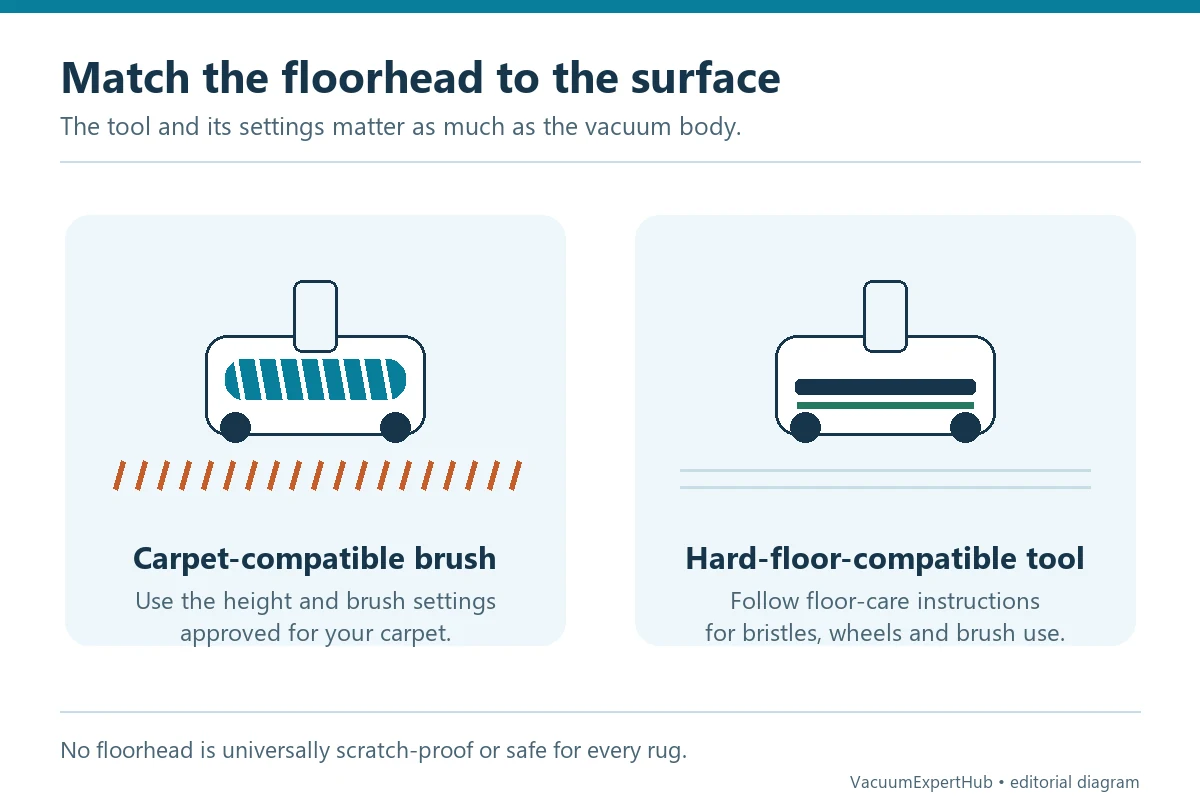
Table of Contents
To clean carpet with a vacuum, use a permitted head on a prepared, dry surface and keep the collection and airflow system in working condition. Start with the carpet’s care instructions and the exact appliance guide. Vacuuming collects permitted dry debris; stain treatment and wet extraction require their own methods.
This guide draws on the original sources linked below, checked November 25, 2026. It does not promise a fixed percentage of dirt removal or a universal number of passes.
1. Establish the permitted head and settings
Identify your carpet’s product or collection, construction and care requirements. Check whether it permits a rotating brush and which height or suction adjustments it requires. A low-pile label or soft-looking surface does not identify every necessary setting.
Compare those requirements with the actual supplied head. A passive tool, an air-driven brush and an electrically powered nozzle are different mechanisms. A height adjustment is also different from brush shutoff. The CRI home-care guidance treats regular vacuuming as part of a wider carpet-care routine; use the carpet maker’s product instructions for the actual equipment choice.
2. Prepare the route and inspect the machine
Remove loose cords, small objects and debris outside the vacuum’s permitted scope. Identify rug edges or other materials adjoining the carpet so you can change tools or settings where required. Route a cord clear of the working head and leave a practical path around furniture.
With power disconnected as the manual directs, check the cup or bag, required filters and accessible inlet. Close compartments and seat tools correctly. If the carpet is wet, stop and establish the appropriate drying or extraction process; see vacuuming wet carpet.

3. Cover the area systematically
Work in a sequence you can follow, covering adjacent sections without rushing past visible debris. Use the appliance and carpet makers’ movement and adjustment instructions. Where permitted, modest overlap helps you keep track of coverage; this is a route-planning suggestion, not a measured cleaning multiplier.
Watch for difficult movement, catching pile, lifting edges or unusual sound. Stop and resolve the head, adjustment or maintenance issue rather than forcing the machine. Higher suction is not automatically the right usable setting for every construction.
For a specific example, the original BISSELL 2254/2256 guide provides its own head-height instructions and notes continued floor-brush rotation during tool use. Follow those instructions for that platform; they do not describe every upright or establish a stopped brush at the highest setting.
4. Treat edges and separate surfaces deliberately
Use a compatible accessory permitted for the carpet edge or furniture task. Position and support the body as its manual requires. Do not pull the machine by a hose or leave a working floorhead resting against another object.
Movable rugs need their own care decision. Fringe, backing and a loose edge change the route. Use the area-rug guide rather than assuming the wall-to-wall carpet setting suits every rug in the room. For steps, use stair vacuuming guidance.
5. Finish with the right care
Switch off before changing or inspecting parts and follow the model’s disconnection instructions. Empty or replace collection media at its indicated condition, clear permitted tangles and inspect the head for collected objects. Only wash components that the exact guide identifies as washable, then follow its drying requirements.
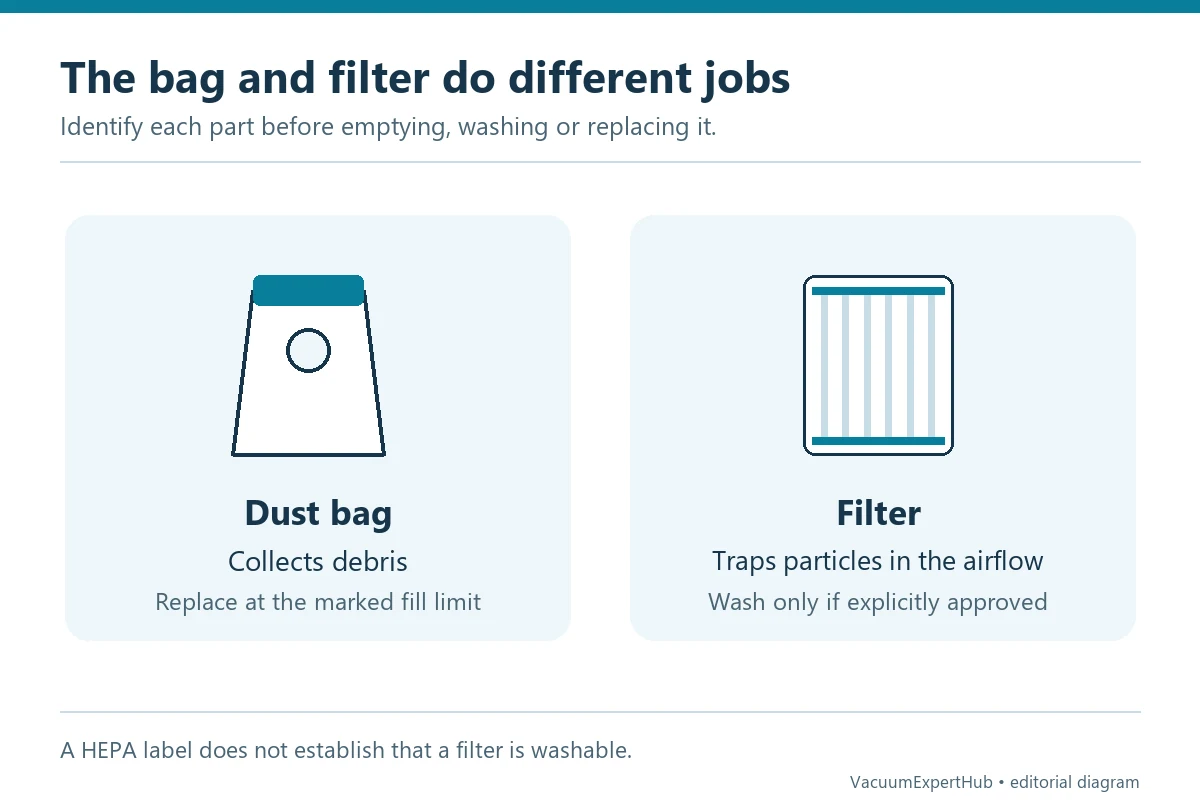
If pickup becomes weaker despite the correct head, use the loss-of-suction guide to separate collection, filter, hose and nozzle questions. Adding repeated passes does not resolve a blocked machine.
How often should I vacuum carpet?
Use the care schedule and your observed traffic, debris and household needs. CRI highlights greater attention to high-traffic areas. A single schedule cannot describe every room and carpet product.
Will vacuuming remove a stain?
Dry pickup and stain treatment are separate tasks. Use the carpet maker’s permitted spot procedure and establish compatibility before adding any solution or moisture.
Should I add powder first?
Only use a product and collection method permitted by both the carpet and vacuum instructions. A deodorizing or cleaning label does not establish appliance compatibility.
Keep reading
Vacuum for Low-Pile Carpet: Match Agitation to Construction
Choose a low-pile carpet vacuum by cut or loop construction, permitted brush action, edge access and maintained airflow, without wattage-based cleaning claims.
Vacuum for Area Rugs: Match the Head to the Rug's Care Instructions
Choose an area-rug vacuum by construction, permitted brush action, suction control and fringe access, with documented care sources and a model example.
Vacuum Maintenance Guide: A Practical Checklist by Symptom
A model-aware vacuum maintenance checklist for bags, filters, hoses, brush rolls, odors, and lost suction, with links to detailed fixes.
Ready to Find Your Perfect Vacuum?
Compare vacuum features, tradeoffs, and documented product information
Browse All Vacuums